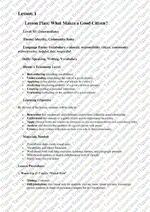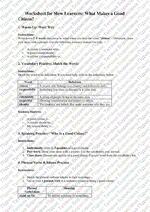
The lesson "What Makes a Good Citizen?" was thoughtfully designed to engage students in understanding the qualities and responsibilities of a good citizen. The objectives were clearly defined, focusing on vocabulary related to identity, responsibility, and community roles, while also aiming to develop speaking and writing skills. By the end of the lesson, students were expected to not only grasp the key vocabulary but also apply it in real-life contexts.
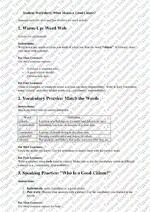
One of the strengths of the lesson was its incorporation of both speaking and writing activities. The Think-Pair-Share exercise encouraged students to engage in meaningful dialogue, discussing their personal definitions of a good citizen. This activity allowed students to share ideas and refine their understanding of the topic. The use of vocabulary cards also helped reinforce the meaning of key terms, ensuring that students could use them in sentences and discussions.
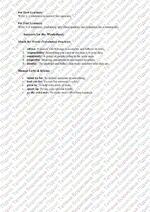
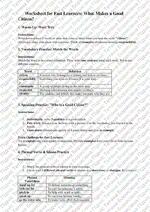
The introduction of phrasal verbs and idioms (e.g., “stand up for,” “go the extra mile,”) was another highlight. It added a layer of depth to the lesson, challenging students to think beyond basic vocabulary and incorporate more complex expressions into their speech and writing. Differentiation strategies were well implemented, with tailored worksheets for fast learners and slow learners. This ensured that all students could progress at their own pace, with more support for those who needed it.
Overall, the lesson was engaging and well-paced, fostering a reflective and interactive classroom atmosphere. It successfully built students' understanding of citizenship while improving their language skills in a meaningful context.