тест розроблений за чинними вимогами Міністерства освіти і науки України. Дає гарну можливість потренуватися для учнів перед НМТ.
Бажаю успіху!


тест розроблений за чинними вимогами Міністерства освіти і науки України. Дає гарну можливість потренуватися для учнів перед НМТ.
Бажаю успіху!
тест розроблений за чинними вимогами Міністерства освіти і науки України. Дає гарну можливість потренуватися для учнів перед НМТ.
Бажаю успіху!
1
Read the texts below. Match choices . There are three choices you do not need to use.

a community garden

a kitchen gadget
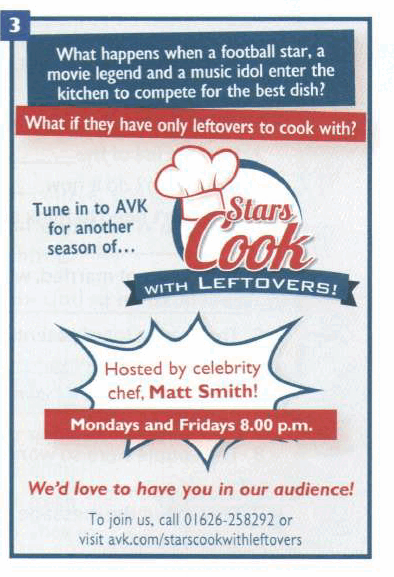
a food magazine

a catering service

an innovative restaurant
a food shop
a cooking class
a reality show
2
Read the text below. For each question choose the correct answer.
THOMAS MORE
Sir Thomas More was the most brilliant Englishman of his age. He scaled the heights in law, in philosophy and literature, and attained high political rank as Chancellor. But the most challenging thing about this man is nothing that he achieved in life but the nature of his death. The facts are well known. He was executed by King Henry VIII in 1534 for refusing to accept Henry as head of the church in England.
It will be remembered that King Henry VIII was, for the most of his life, an ardent Catholic. But his desperation for a male heir led Henry to divorce his first wife, Catherine of Aragon, in favour of the younger Ann Boleyn who offered the promise of a son. High politics among the crowned heads of Europe meant that this could only be achieved by a break with Rome and the acceptance of Protestantism in England.
Traditional Catholic writers, such as Friar Anthony Foley, have cast More as a martyr who stood up for the cause of Catholicism and perished for the true religion. This interpretation was convenient for the Catholic church, then as now, and resulted in More being made a saint. It also does not explain why More chose to take a stand, and effectively commit suicide. Even under the teachings of the Catholic church he could have sworn the necessary oath to Henry because he was under duress. More's personal beliefs were his own but refusal to take the oath is what condemned him.
Other writers, such as the psychotherapist Bill Blake, see More's demise as an example of depressive illness. Melancholy was widely known at the time but not seen as an illness. It is not implausible that under the strain of work and the profile of his position as Chancellor, he succumbed to depression and, let death sweep over him. But contemporary reports are odds with this. He made every effort to comfort and cheer up his own relatives and never appeared lost or undecided.
Since More himself left no explanation we will probably never really know what his motivation was. However, Hardy's observations are very true in some respects in that More lived in a very different world. Life could be very cheap 500 years ago especially if one held high political office of intellectual views at odds with the establishment. After a lifetime of good fortune, considerable luxury and achievement, the wheel of fortune had turned, and More acceptedhis fate with good grace in the hope of an even better life in the hereafter.
More was not an expert in _________ .
3
Read the text below. For each question choose the correct answer.
THOMAS MORE
Sir Thomas More was the most brilliant Englishman of his age. He scaled the heights in law, in philosophy and literature, and attained high political rank as Chancellor. But the most challenging thing about this man is nothing that he achieved in life but the nature of his death. The facts are well known. He was executed by King Henry VIII in 1534 for refusing to accept Henry as head of the church in England.
It will be remembered that King Henry VIII was, for the most of his life, an ardent Catholic. But his desperation for a male heir led Henry to divorce his first wife, Catherine of Aragon, in favour of the younger Ann Boleyn who offered the promise of a son. High politics among the crowned heads of Europe meant that this could only be achieved by a break with Rome and the acceptance of Protestantism in England.
Traditional Catholic writers, such as Friar Anthony Foley, have cast More as a martyr who stood up for the cause of Catholicism and perished for the true religion. This interpretation was convenient for the Catholic church, then as now, and resulted in More being made a saint. It also does not explain why More chose to take a stand, and effectively commit suicide. Even under the teachings of the Catholic church he could have sworn the necessary oath to Henry because he was under duress. More's personal beliefs were his own but refusal to take the oath is what condemned him.
Other writers, such as the psychotherapist Bill Blake, see More's demise as an example of depressive illness. Melancholy was widely known at the time but not seen as an illness. It is not implausible that under the strain of work and the profile of his position as Chancellor, he succumbed to depression and, let death sweep over him. But contemporary reports are odds with this. He made every effort to comfort and cheer up his own relatives and never appeared lost or undecided.
Since More himself left no explanation we will probably never really know what his motivation was. However, Hardy's observations are very true in some respects in that More lived in a very different world. Life could be very cheap 500 years ago especially if one held high political office of intellectual views at odds with the establishment. After a lifetime of good fortune, considerable luxury and achievement, the wheel of fortune had turned, and More acceptedhis fate with good grace in the hope of an even better life in the hereafter.
Henry VIII executed More because _________ .
Запитання №4 З однією правильною відповіддю
Запитання №5 З однією правильною відповіддю
Запитання №6 З однією правильною відповіддю
Запитання №7 З однією правильною відповіддю
Запитання №8 З однією правильною відповіддю
Запитання №9 З однією правильною відповіддю
Запитання №10 З однією правильною відповіддю
Запитання №11 З однією правильною відповіддю
Запитання №12 З однією правильною відповіддю
Запитання №13 З однією правильною відповіддю
Запитання №14 З однією правильною відповіддю
Запитання №15 З однією правильною відповіддю
Запитання №16 З однією правильною відповіддю
Запитання №17 З однією правильною відповіддю
Запитання №18 З однією правильною відповіддю
Запитання №19 З вибором правильної відповіді у тексті
Запитання №20 З вибором правильної відповіді у тексті
Рефлексія від 1 учня
Сподобався:
Так: 1
Ні: 0
Зрозумілий:
Так: 1
Ні: 0
Потрібні роз'яснення:
Ні: 1
Так: 0