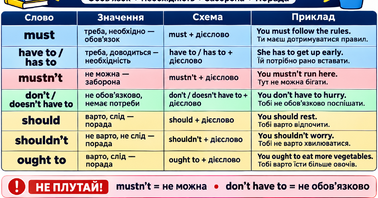

MODALS: OBLIGATION, NECESSITY AND ADVICE (1)
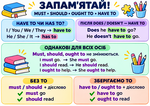
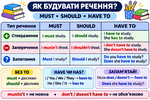
must, should, ought to • The form of these modal verbs does not change. They go before the infinitive of another verb. I must have a shower. You should eat more vegetables. He ought to wear a coat. We mustn’t go into the house. She shouldn’t worry so much. •
We don’t often use ought not to. have to • This modal verb does change its form. It goes before the infinitive of another verb
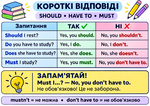
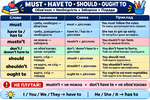
Obligation and necessity work? • Must and have / has to mean that it is absolutely necessary to do something. You must rest your leg for five days. I have to leave home at seven o’clock to get the bus. • Mustn’t means that it is very important not to do something. You mustn’t go into that room. He mustn’t cycle without a helmet. • Don’t / Doesn’t have to means that it is not necessary to do something. I don’t have to get to school before eight. My mother doesn’t have to work at weekends. Advice • Should and ought to mean that it is a good idea to do something. They are not as strong as must and have to. You should try to relax before your exam. We ought to finish our homework before we go out. • Shouldn’t means that it is a bad idea to do something. It is not as strong as mustn’t. GRAMMAR REFERENCE AND PRACTICE You shouldn’t go out when you’ve got homework to do. I shouldn’t eat sweets before a meal.