Тест:
К4 76

12.11.2021

Вміст тесту:
1
2
3
4
5
6
7
8
9
10
11
12
13
14
Тест містить питання скопійовані з: (Копія) К4 44, (Копія) K4 46, К4 76.
1
12 з 157 балів
Translate the words into English. Mind the articles and particles "to".
1. Незамінний, необхідний
2. Спілкуватися з
3. Приручати
4. Оволодіти
5. Зовнішніть
6. Красивий (про чоловіків)
7. Жадібний
8. Дотепний
9. Дурний, тупий
10. Нечемний
11. Гарний, миловидний про жінок
12. Лікувати
2
12 з 157 балів
Decipher the words.
1. hlpfl -
2. rthr -
3. ll-brd -
4. slfsh -
5. gd-lkng -
6. hnst -
7. nrvs -
8. ntllgnt -
9. prtctr -
10. clm -
3
1 з 157 балів
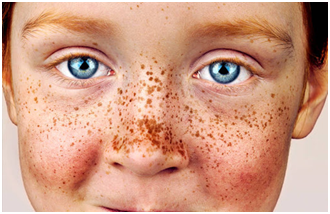
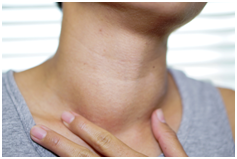
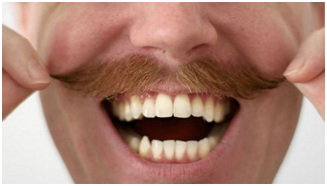
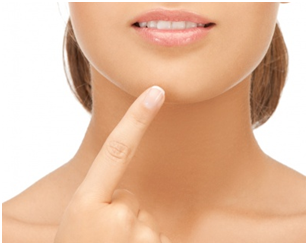
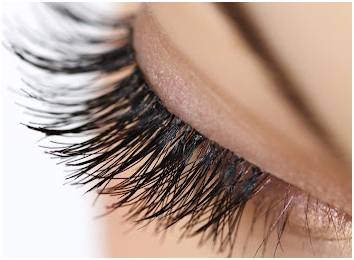
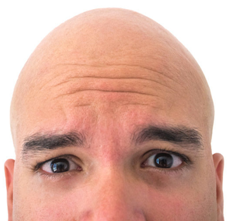
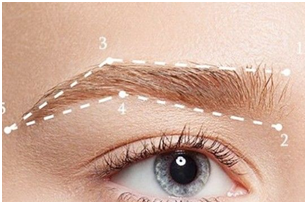
Match the words to the pictures.
1
a neck
А
2
a chin
Б

3
freckled
В
4
a beard
Г
5
turned-up
Ґ

6
a moustache
Д

7
stout
Е
8
bald
Є
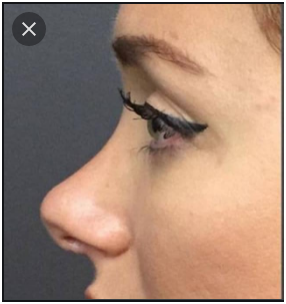
9
slim
Ж
10
a cheek
З
11
a forehead
И

12
an eyelash
І
13
wavy hair
К
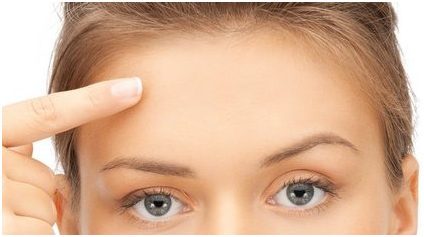
14
an eyebrow
Л
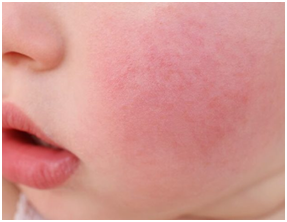
4
12 з 157 балів
Fill in the table with the opposites.
ill-bred |
|
untidy |
|
clever |
|
quiet |
|
stupid |
|
hard-working |
|
impolite |
|
helpful |
|
dark-haired |
|
curly |
|
stout |
|
unattractive |
|
5
12 з 157 балів
Open the brackets and characterize people in one word from the table.

1. Sam is a student. He is (розумний) .......... , (працелюбний) .......... , (досвічений) ........... . He knows a lot and always (отримує гарні оцінки ) ........... . Sam is ......... .
2. Mag is a nurse. She is (чемна) ........ , (чесна) .......... , (охайна) ........ , (спокійна) .......... . She always comes to the office in time. She is ....... .
3. Max is a pupil. He is (активний) ......... , and (галасливий) ......... . It's (важко) ......... for him to sit (спокійно) ......... at his desks at the lessons. Max is ......... .
4. Liz is a pupil. She is (жадібна) ........ , (нечемна) ....... ,(неохайна) .......... , (егоїстична) ........... . She doesn't have any friends. Liz is ........... .
5. Brenda is a teacher. She is (добра) ......... , (дружелюбна) ......... , (працьовита) ........ . She always helps parents and friends. Brenda is ......... .
6
12 з 157 балів
Mark all the time indicators of The Present Perfect Tense
7
12 з 157 балів
Match the tenses and the formulae for the different types of the sentences.
1
Present Simple/affirmative
А
Shall/Will+S+V+SPS?
2
Present Simple/negative
Б
S+ have/has+ V(-ed/3d form)+ SPS.
3
Present Simple/interrogative
В
Have/has+S+V(-ed/3d form)+SPS?
4
Present Perfect/affirmative
Г
S+V(-s/-es)+SPS.
5
Past Simple/negative
Ґ
Did+S+V+SPS?
6
Past Simple/interrogative
Д
S+shall/will+V+SPS.
7
Future Simple/affirmative
Е
S+am/is/are+V+ing+SPS.
8
Present Perfect/negative
Є
S+did+not+V+SPS.
9
Future Simple/interrogative
Ж
Am/Is/Are+S+V+ing+SPS?
10
Present Continuous/affirmative
З
Do/Does+S+V+SPS?
11
Present Perfect/interrogative
И
S+has/have+not+V (-ed/3d form)+SPS.
12
Present Continuous/interrogative
І
S+do/does+not+V+SPS?
8
12 з 157 балів
Complete the sentences with the following prepositions.
in (2x) for (2x) to of since by from on |
1. He has been absent ___ Monday.
2. I am not interested _____ buying a new car now.
3. I haven't been to the theatre ___ a long time.
4. What are the main ingredients ______ this salad?
5. He goes ___ school by car.
6. My parents have been married ______ forty-nine years.
7. He usually travels to Philadelphia _______ train.
8. The new term begins ___ June 1st.
9. I told Mom we'd be home ______ an hour or so.
10. The professor _______ South Africa amazed the American students with her stories.
9
12 з 157 балів
Complete the sentences with the following prepositions.

1. I will have a bath _____ I go to bed.
2. I’m coming to London tomorrow. I’ll ring you _____ I arrive.
3. _____ it is a nice day tomorrow, we can go swimming.
4. Wait here _____ I get back.
5. _____ you have any problem, just ask for help.
6. I want to get home _____ Jim comes back.
7. I’m going to have driving lessons _____ I pass my test.
8. Give me your address _____ you go home.
9. Please turn out the lights _____ you go to bed.
10. _____ you are the first person up in the morning, make me a cup of coffee.
11. I’m going to keep asking you to marry me _____ you say “Yes”.
12. _____ the lesson ends, I’ll go home.
10
12 з 157 балів
Open the brackets.
1. We'll stay here till she (return)
2. Please, call us when you (arrive)
3. I'm going to tell her before she (leave)
4. I'll tell you know when the party (start)
5. He'll drive you there whenever you (need)
6. I am going to take the exam after I (study) all these books.
7. As soon as I (be) in Mumbai, I'll let you know.
8. I'll call you as soon as I (get) home.
11
12 з 157 балів
Complete the adverbial clauses of time.

1. We'll get there. We will send a message.
Soon after we ........ there, we ....... a message.
2. I'd like to finish it. It will get dark.
I'd like to finish it before it .......... dark.
3. We are going to have a rest. We'll be on holiday.
We are going to have a rest while we ........ on holiday.
4. He will not regret it. She'll move away.
He will not regret it until she ........ away.
5. Can you water the flowers? We'll leave the house.
Can you water the flowers when we ....... the house?
6. Get in touch with him. I'm going to write to him.
Get in touch with him as soon as I ....... to him.
7. I will find the opener. I will open the bottle.
The moment I .......... the opener, I ........ the bottle.
8. I'll have finished my lesson by noon. I'll come round.
After I .........
my lesson by noon, I ..........
round.
12
12 з 157 балів
General Test
Choose the correct answer.
1. When you read this email, I [will give, give, would give, gave] you an answer when I have one.
2. I'll call you as soon as I [will arrive, arrive, arriving, arrived]
3. When you read this email, I ...... on a plane to Germany. [will be, would be, am, being]
4. He won't stop until he ....... what he wants. [gets, get, will get, getting]
5. ........ if I give you the address? [Will you go, Do you go, Did you go, Shall you go]
6. “Can I ask you something?” “Not now. _____ a moment.” [at, on, in, for]
7. I live _____ the third floor. [at, on, by, in]
8. I met my classmates _____ the party. [in, for, on, at]
9. “Why does Jane look so happy?” “Because she’s _____ love.” [at, on, in, by]
10. Let’s go _____ a walk. [on, to, in, for]
11. We arrived _____ the station five minutes late. [to, at, for, on]
12. I arrived _____ England last month. [at, to, in, for]
13. I’m going out before the shops _____. [shuts, will shut, are shutting, shut]
14. “ Here’s a birthday present _____ you.” “Oh, thank you!” [by, in, for, at]
15. “Why did you open my letter?” “I’m sorry. I did it _____ mistake.” [with, at, by, on]
16. I can’t understand the instructions. They’re _____ Chinese. [on, in, into, at]
17. “Romeo and Juliet” is a play _____ William Shakespeare. [for, by, with, on]
18. “Is Mr. James _____ work this week?” “No. He’s _____ holiday.” [on / in, at / in, in / for, at / on]
19. Do you come to school _____ bus? [on, by, at, in]
20. What’s _____ TV tonight? [in, on, at, by]
21. I spoke to her _____ the phone last week. [on, by, with, at]
22. My cousin ......................... his leg last Saturday. [break, broke, breaked, broken]
23. I ’ve been here for a week. I came here ......................... . [before a week, after a week, a week later, a week ago]
24. My father loves his old car. ......................... it for 20 years! [He has, He had, He’s had, He’s have]
25. There’s ......................... sugar in this coffee. Could I have some more, please? [too much, too many, enough, not enough]
26. ......................... umbrella is this? Is it your mother’s? [Who, Who's, Whose, Whoes]
27. I enjoy our history lessons. At the moment ......................... about the Russian Revolution. [we learned, we learn, we’re learning, we’ve learned]
28. If our team ......................... the match tonight, I’ll take you out for a meal! [wins, will win, would win, won]
29. Ben Nevis is the ......................... mountain in Britain. [higher, most high, highest, more high]
30. What time ......................... to bed last night? [you went, did you go, you gone, did you went]
13
12 з 157 балів
Listening
Listen and choose the correct answer.
Part I
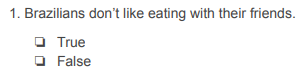 [True, False]
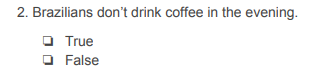 [True, False]
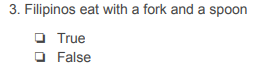 [True, False]
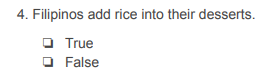 [True, False]
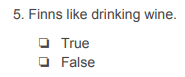 [True, False]
Part II
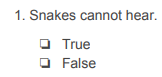 [True, False]
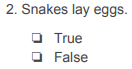 [True, False]
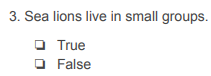 [True, False]
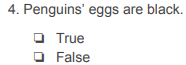 [True, False]
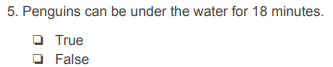 [True, False]
Part III
 [A, B, C, D, E, F, G, H]
 [A, B, C, D, E, F, G, H]
 [A, B, C, D, E, F, G, H]
 [A, B, C, D, E, F, G, H]
 [A, B, C, D, E, F, G, H]
14
12 з 157 балів
Read the texts 1-6. What does each text say? Choose the correct letter A, B or C.
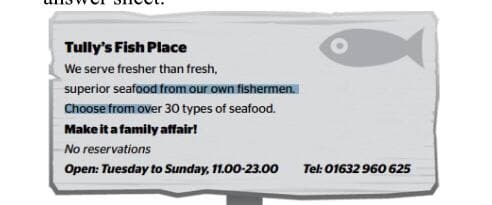
1. [A, B, C]
A. This place offers the best frozen seafood in the area.
B. You can’t book a table.
C. Tully’s Fish Place is open every day
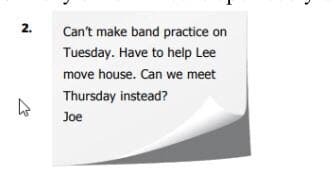
2. [A, B, C]
A. Joe is moving house.
B. Joe can’t make band practice this week.
C. Joe wants to change the band practice to a different day.
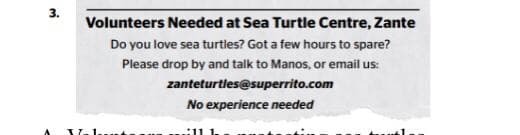
3. [A, B, C]
A. Volunteers will be protecting sea turtles.
B. Volunteers will have to work all day.
C. Manos will email the volunteers.
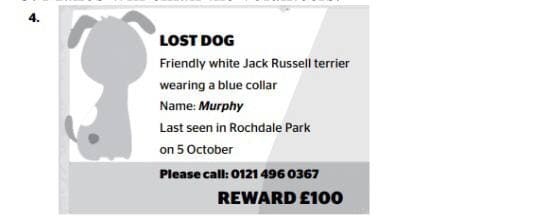
4. The person who placed this ad [A, B, C]
A. will pay £100 to buy a terrier.
B. was lost in Rochdale Park.
C. is looking for their pet.

5. [A, B, C]
A. You mustn’t leave children alone in the pool.
B. You must take a shower after swimming in the pool.
C. You can dive into the pool if you are over 12.

6. Why has Lucy written this postcard? [A, B, C]
A. to ask how Fiona is
B. to invite Fiona to join her and Martin
C. to tell Fiona how she’s spending her time away

Doctor, doctor...
Did you know that we forget about 80% of the medical information a doctor might give us? This interesting finding came to light as a result of a study carried out by Utrecht University. What is even more interesting is that almost half of what we think we remember is wrong. Why do you think this happens? Well, going to the doctor can make most people nervous, and when we are stressed we are more likely to concentrate on the diagnosis rather than on the treatment. Therefore, we know what is wrong with us but have no idea what to do about it. Here are some good tips to keep in mind when seeing a doctor. Always bring along a notepad to write down important pieces of information, such as how to take prescribed medication or how to prepare for any medical tests you might need.
What would be even better is if your doctor agreed to let you record him. In this way, you could replay his advice at home, where you are more likely to be able to understand it. If you believe the situation is serious or you’re really worried, get a family member or a close friend to come with you to listen in. Regardless of what you choose to do, there is one golden rule which you need to take into account. To communicate effectively, you need to ask the right questions. The Partnership for Clear Health Communication (PCHC) recommends you ask three questions every time you talk to a medical professional: ‘What is my main problem?’, ‘What do I need to do?’ and ‘Why is it important for me to do this?’ These will help you identify the problem and deal with it in a rational way.
7. Patients remember most of the medical information a doctor gives them. [A, B]
8. If patients feel nervous, it is likely they will forget the diagnosis. [A, B]
9. Patients should give the doctor a notepad so he can note down what he says. [A, B]
10. It may be easier for patients to make sense of a doctor’s advice if they listen to it at home. [A, B]
11. Friends or relatives should always accompany patients to the doctor. [A, B]
12. The PCHC suggests asking specific questions when visiting a doctor. [A, B]
Рефлексія від 2 учнів
Сподобався:
0
Так: 2
Ні: 0
Зрозумілий:
0
Так: 2
Ні: 0
Потрібні роз'яснення:
0
Ні: 2
Так: 0