- Всеосвіта›
- Бібліотека тестів›
- Англійська мова›
- HS1 2021 unit3 p34 act3

Тест:
HS1 2021 unit3 p34 act3

19.11.2021


Вміст тесту:
1
2
3
4
5
6
7
8
9
10
11
Тест містить питання скопійовані з: HS1 2021 Unit2 p33 act38, К4 61, (Копія) К4 55.
1
12 з 132 балів
Unscramble the words. Mind the usage of articles and particles 'to'
mdru
prah
leelkuu
lufet
onipa
ollec
traigu
slacbym
oiviln
pturtem
2
12 з 132 балів
Translate the words into English, mind the ARTICLES and PARTICLE TO where necessary.
коротко
дозволяти
прогульщик
директор
семестр
відставати
плата за навчання
ліцей
Наука
провалити іспит
відноситись до
скарга
3
12 з 132 балів
"Where is the ball?"
Match the pictures with the correct prepositions
1
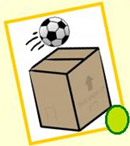
А
over
2
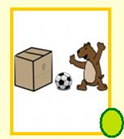
Б
between
3
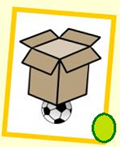
В
in
4
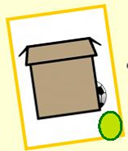
Г
in front of
5
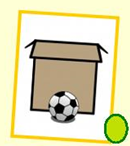
Ґ
below
6
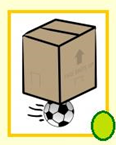
Д
on
7
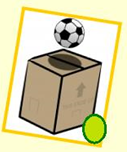
Е
under
8
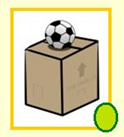
Є
above
9
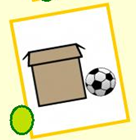
Ж
near/at
10
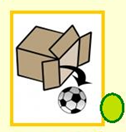
З
into
11
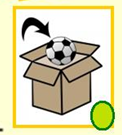
И
out
12
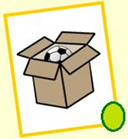
І
behind
4
12 з 132 балів
Choose the correct preposition:
1 Did you hear the storm [while, during, between] the night?
2 Yesterday he couldn’t remember where the front [of, from, by] his report was.
3 Yesterday I heard the interview with the Prince of Wales [from, on, at]the radio this morning?
4 They are moving to a new comfortable office now. There are four rooms in it. It is located [on, in, at]the seventh floor of the building.
5 Last winter, temperature was 20 degrees [under, below, behind]zero.
6 The librarian ran [down, in, across] the stairs.
7 We were standing [at, in, along] a queue for half an hour and at last we got into the cinema.
8 They drove [on, at the back of, through] a 250-metre-long tunnel, turned right and stopped the car at/in/on the end of the street.
9 Nursery and elementary schools are usually free [of, in, -] charge.
10 [on, in, at]short, the report says that more money should be spent on education.
11 Their neighbour called in the police as he heard the strange noise [at, in, while] the night.
12 [from, by, over] 200 000 tourists come to this monumentThe British Museum, the Tate Gallery every year.
13 I want to show you something interesting. There is my family [on, in, at]the picture.
14 Can you see a plane up [in, on, along]the sky?
15 You can see the authors of the stories [in, on, at]the bottom of the page.
5
12 з 132 балів
Fill in the gaps with the correct articles.
[the, -]Plaza Hotel.
[the, -]Europe of [the, -]Middle Ages
[the, -]St James’s Park
[the, -]Netherlands
At [the, -]first sight
[the, -]blind
[the, -]Police
Ask [the, -] permission
[the, -]nineties
Go to [the, -] college
[the, -]University of Virginia
[the, -]Classic (cinema)
[the, -] Earth
out of [the, -]question
[the, -]St.Paul's Cathedral
[the, -]guitar
[the, -]Philippines
6
12 з 132 балів
Fill in the gaps with the words from the box. Mind the grammar tense.
secondary and higher education | to be fluent in his subject | to assign |
a school-leaving party | a truant | to browse |
optional subjects | school curriculum | to pass the exams |
free of charge | to fail the exam | by mistake |
half an hour | extracurricular activities | compulsory |
in the original | to include | fee |
1 If school-leavers , they won`t go to .
2 They worked for and then began to read а historical novel.
3 Our class teacher often us some extra tasks that’s why we .
4 in our country is mostly . I don`t pay the at all.
5 Betty The Daily Telegraph in the Internet the whole evening yesterday.
6 Jack is a real . He has skipped a lot of lessons this term.
7 The headmaster wanted to read that book but he took the wrong one .
8 What are there in this term? They arts, athletics, clubs and doing them is .
9 Our gives us an opportunity to successfully without any tutors.
10 Lambton college has a lot of . So, not everyone can study there.
7
12 з 132 балів
Open the brackets and put the verbs into the correct form (Mind the special cases of usage of Present Simple and Present Continuous):
Today more and more people (to graduate) from different universities.
He (not to pay) for his extracurricular activities last month.
I won’t be here tomorrow. I (to take) an exam.
All her peers (to choose) higher educational establishments already.
Because of your busy schedule, you always (to fall) behind.
I hope our teacher (not to assign) us any task in Physics.
The principle (not to hire) a new Biology teacher yet.
Sally always (to complain) about her head teacher.
That truant (to browse) the books while his friends (to look) on the people in the park.
Primary education (to be) going to be compulsory soon.
(Rob/to attend) his school-leaving party last week? – No, he .
The term in primary school (to end) in May.
8
12 з 132 балів
Choose the correct answer.
We bought some cheese and ham. - [the, a, -] cheese was delicious.
It's [an, the, a] interesting book.
There was [a, the] document on the table.
Experts say that [a, -, the] coffee can be good for your health.
Alice [has drunk, drank, has drinken] a glass of milk.
It [are, is, be] necessary to eat rice and vegetables to be healthy.
My family [lived, lives, has lived] in this flat since 1998.
Last year we made a tour [at, near, of] Europe.
Our train arrived [to, at, in] the station at 6 o’clock.
I decided to go to the airport to see my friend [off, of, from] .
Let’s walk [from, to, along] the main street of our town.
When will the tourists arrive [at, in, to the] Kyiv?
Can I book a ticket [in, on, to] Madrid, please?
My room in the hotel was [so, such, as] comfortable.
Bob’s bus tour was more expensive than [my, mine, me].
I want to keep fit. I want to be healthy [either, too, neither].
My little nephew can ride [neither nor, either, neither] a scooter nor a bike.
Our new car is [such, as, so] expensive!
What is your favourite ways [from, in, of] travelling?
I don't have [a, the, -]car.
Can you pass me [a, the, -] water?
[a, the, -]president visited our school.
My father is [a, the, -] police officer.
Everybody knows that [a, the, -]cats are very independent animals.
She picked me up at [a, the, -] airport.
Where [did, does, do] you usually buy tickets?
He is [so, not so, such] a good football player!
The tour of Europe was [so, such, as] interesting!
Our basketball team is not [so, as, -] good as yours.
He has never been [in, at, on] a diet.
My mother [do, is, does] not like fruit.
I think that [vegetables, fries, fruit] is unhealthy food.
We [have not seen, did not see, did not seen] Bill for many years.
My sister [consider, conside, considers] that vitamins are not very useful for her health.
My family [do not eat, do eat, does not eat] low-calorie food.
Our school team took part [in, on, of] the swimming competitions last month.
The children will run on the playground [in, along, at] their break time tomorrow.
Boxing is a very violent sport, [doesn't it, is it, isn’t it]? – Yes, it is.
Mary is going to the theatre [on, in, at]Friday.
Work is always more stressful [in, on, at]the end of the month.
I start work [in, on, at] 8.30 every morning.
Julia goes to her fitness class [in, on, at]Tuesdays.
9
12 з 132 балів
Read the text below. Choose from (A-H) the one which best fits each space (1-6). There are two choices you do not need to use.
PROM AND HOMECOMING
"Prom" is the name for a special dance held at the end of the high school academic year. Traditionally the prom is a special night for the junior and senior classes. Younger guests may go to the prom only (1) [a, b, c, d, e, f, g, h] . Prom is a memorable and important night for most high school students. Some feel that it is the most romantic night of their lives and the highlight of their senior year!
Shopping for the prom dress (2) [a, b, c, d, e, f, g, h]. Both girls and boys wear formal. Sometimes there is a prom theme and couples dress according to the theme . The prom festivities generally include dinner and a dance. The prom is often held at the school; (3) [a, b, c, d, e, f, g, h] or - more unusual venues such as a cruise boat to host prom night. A prom king and queen are announced and crowned during the night. Traditionally the prom queen and king are chosen by their fellow students. Campaigns are held in the weeks before the prom and cast votes for (4) [a, b, c, d, e, f, g, h]. The king and the queen are crowned and dance together to celebrate their election.
Homecoming is another annual academic tradition that happens in high 11 and colleges. Homecoming is largely associated with football. People, towns, high schools and colleges come together, usually in late September or October, (5)
[a, b, c, d, e, f, g, h]. The activities consist of a football game played on the school's football field, activities for students and alumni, (6)
[a, b, c, d, e, f, g, h] , and the coronation of a homecoming queen and king, similar to the prom queen and king.
A to celebrate the romantic event
В however, some schools rent ballrooms
C to welcome back alumni
D can be an event of its own
E a parade featuring the school's marching band
F who they want to be king and queen
G who they invite to the prom
H if their date is a junior or a senior
10
12 з 132 балів
Cars
Can you imagine our world without cars? We have only had cars for about 20 years. People laughed at the first cars. They were slow and noisy. Two German engineers, Daimler and Benz, made the first car with a gasoline engine in 1885. It had only three wheels. From about 1905, companies like Rolls-Royce started to make cars. They were very expensive because people made each car by hand. Then, in 1913, the Ford Motor Company started to make their Medel T car in a special factory. Ford's factories produced cars quickly, so the Model T was less expensive than other cars. By 1927, there were more than 15 million Model Ts on the roads.
Gasoline in the USA was cheap and people wanted to travel long distances, so by 1950, American cars were large. In Europe and Asia, drivers preferred small cars that were better in city traffic.
Sports cars, like the Bugatti Veyron, are low. This helps the car to go, fast because air can move easily over it. The Bugatti Veyron goes faster than 400 kilometres per hour. It costs 1,5 million american dollars, and the people who make the car have only sold a few hundred since they started to produce them in 2005.
The Peel P50 is the smallest car in the world. It was first made in 1963. It is 134 centimetres long and 99 centimetres wide. Its top speed is 61 kilometre per hour.
The world's longest car is the American Dream. It has 24 wheels and it is 30,5 metres long! It has a swimming pool and a helicopter can land on it.
Task 1Are the statements true or false? Write T(true) or F(false)
The Ford Model T was expensive to produce.
Rolls-Royce sold 15 million cars between 1913 and 1927.
Small cars are good in city traffic.
People in the USA travelled the long distances because of the cheap gasoline.
The Bugatti Veyron is 134 centimetres long.
The top speed of the smallest car is 61 kilometres per hour
Task2Find the English equivalents in the text.
уявляти
найменша машина у світі
вони почали виробляти їх у 2005
люди ходіти подорожувати на довгі дистанції
сміятися
американські машини були величезні
11
12 з 132 балів
Listening
Task 1.Listen to the text and put the following sentences into the correct order.
a. It’s a shame that in many rich countries, many children don’t want to learn.
b. An education can bring us knowledge and make us rich.
c. It’s sad that in many parts of the world, children want to learn but can’t.
d. Education is one of the most important things in our lives.
e. Education is the key to a better future.
f. In Japan, children start learning from a very young age.
1 [a, b, c, d, e, f]
2 [a, b, c, d, e, f]
3 [a, b, c, d, e, f]
4 [a, b, c, d, e, f]
5 [a, b, c, d, e, f]
6 [a, b, c, d, e, f]
Task 2. You will hear five conversations. For each question choose A, B or C.
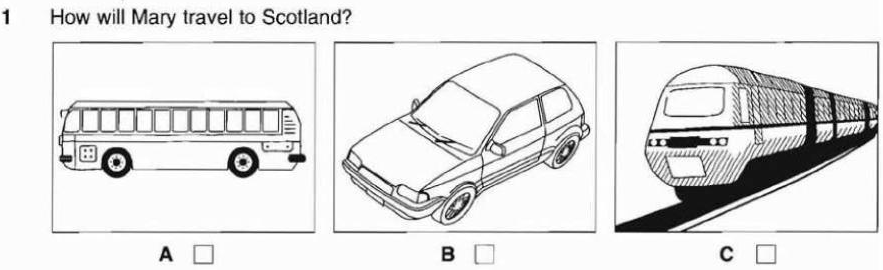 [a, b, c]
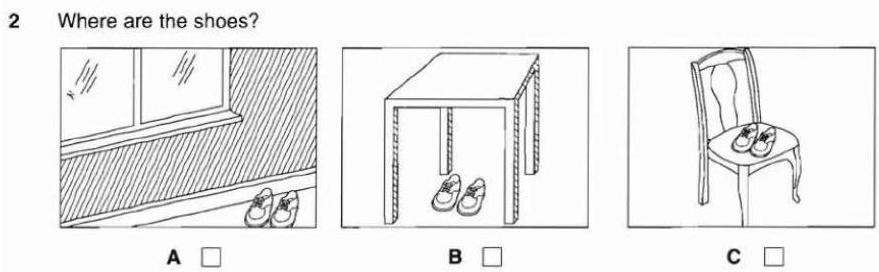 [a, b, c]
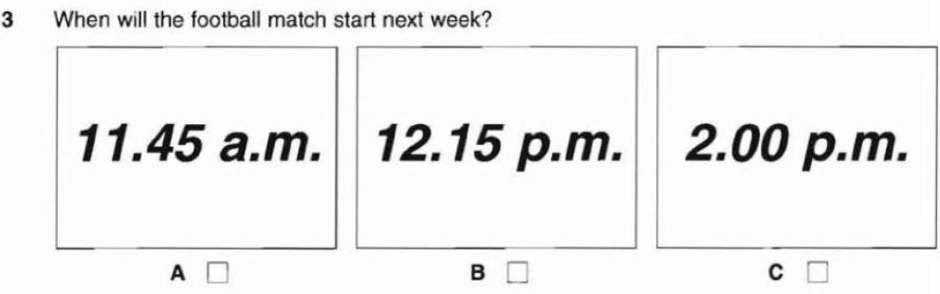 [a, b, c]
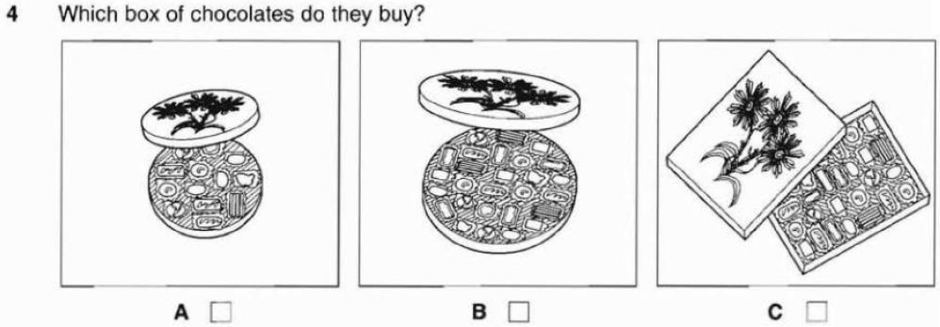 [a, b, c]
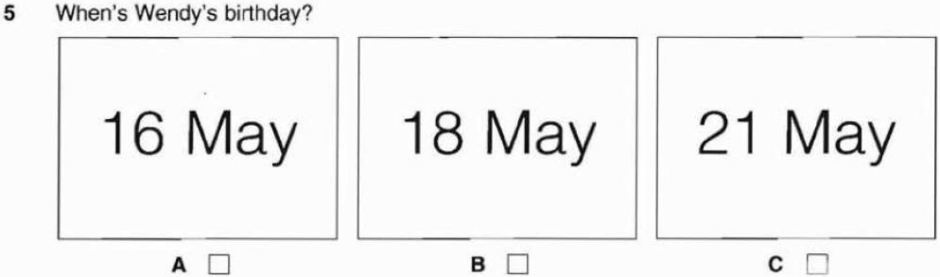 [a, b, c]
Task 3. Listen to Pete talking to a friend about his holiday. What was the weather like each day?
WEATHER:
A cloud B cold C fog D rain E snow F sun G warm H wind
6 Tuesday [a, b, c, d, e, f, g, h]
7 Wednesday [a, b, c, d, e, f, g, h]
8 Thursday [a, b, c, d, e, f, g, h]
9 Friday [a, b, c, d, e, f, g, h]
10 Saturday [a, b, c, d, e, f, g, h]
Task 4. Listen to Michael talking to Marina about a new sports centre. For each question, choose A, B or C.
 [a, b, c]
 [a, b, c]
 [a, b, c]
 [a, b, c]
 [a, b, c]
Рефлексія від 6 учнів
Сподобався:
0
Так: 6
Ні: 0
Зрозумілий:
0
Так: 6
Ні: 0
Потрібні роз'яснення:
0
Ні: 6
Так: 0