Introduction Schools are in a unique position to help children and adolescents get the nationally recommended 60 minutes of physical activity each day.1,2 Through the Whole School, Whole Community, Whole Child (WSCC) model, schools can provide many opportunities for students to be physically active.3 The WSCC model includes physical education and physical activity. It also helps to promote: ■ The opportunities offered to students to be physically active before, during, and after school. The policies and practices schools use to provide physical education and physical activity before, during, and after school. A Comprehensive School Physical Activity Program (CSPAP) is a framework for planning and organizing activities for school physical education and physical activity.4 It can help schools be strategic in addressing this aspect of the WSCC model. The goal of a CSPAP is to increase physical activity opportunities before, during, and after school and to increase students’ overall physical activity and health. Healthy and physically active students tend to have better grades, school attendance, cognitive performance (e.g., memory), and classroom behaviors (e.g., on-task behavior).5,6 This document explains the CSPAP framework for school physical education and physical activity and identifies key professional development opportunities and resources to help schools implement this framework.
Бібліотека методичних матеріалів
- Всеосвіта›
- Бібліотека методичних матеріалів›
- Фізична культура›
- ЗБІЛЬШЕННЯ ФІЗИЧНОГО ВИХОВАННЯ ТА ФІЗИЧНОЇ АКТИВНОСТІ: КЕРІВНИЦТВО ДЛЯ ШКІЛ (ENG)

Матеріал:
ЗБІЛЬШЕННЯ ФІЗИЧНОГО ВИХОВАННЯ ТА ФІЗИЧНОЇ АКТИВНОСТІ: КЕРІВНИЦТВО ДЛЯ ШКІЛ (ENG)
pdf 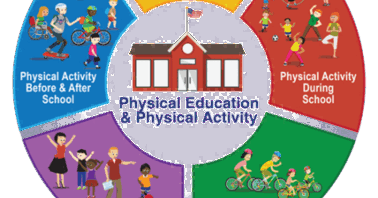
18.02.2024
1 Клас, 2 Клас, 3 Клас, 4 Клас, 5 Клас, 6 Клас, 7 Клас, 8 Клас, 9 Клас, 10 Клас, 11 Клас, 12 Клас, Змішаний
232
0
0
Опис методичного матеріалу:
Вміст матеріалу:
показано 3 з 12 сторінок

Доступ до плеєра. Вбудувати плеєр: