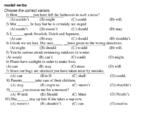
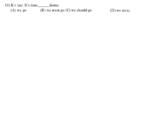
Test "Modal verbs"
A test on "Modal verbs" typically assesses a person's understanding and usage of modal verbs in English. Modal verbs are a specific category of auxiliary verbs that express necessity, possibility, permission, ability, and other related meanings. Common modal verbs include can, could, may, might, must, shall, should, will, and would.
A test on modal verbs may include various types of questions and exercises to evaluate your knowledge and ability to use these verbs correctly. Here are some common types of questions you might find on a modal verbs test:
Fill in the Blank: You might be given sentences with gaps and asked to choose the appropriate modal verb (e.g., can, could, may, must, should) to complete the sentence correctly.
Multiple Choice: You could be presented with sentences and asked to select the correct modal verb from a list of options.
True or False: You may encounter statements about modal verbs and be asked to determine if they are true or false based on your knowledge of modal verbs.
Sentence Transformation: These questions may require you to rewrite a sentence using a different modal verb while retaining the original meaning.
Usage in Context: You might have to read a passage or dialogue and choose the most suitable modal verb for specific situations or requests.
Creating Sentences: Some tests may ask you to create sentences or short paragraphs that use modal verbs to convey certain meanings or situations.
Overall, a modal verbs test evaluates your understanding of how these verbs function in English and your ability to use them effectively to express various shades of meaning. It's important to be familiar with the different modal verbs and their typical uses in different contexts to do well on such a test.