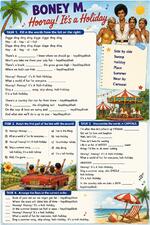
The primary aim of song worksheets is to transform passive music listening into an active learning experience. Depending on the subject matter, they are most commonly used to improve language skills (in ESL/EFL classrooms), analyze literary themes, or build foundational music theory knowledge.
1. Language Acquisition & Literacy (ESL / EFL)
In language learning, song worksheets act as highly engaging tools to contextualize communication.
Sharpen Listening Skills: Training the ear to identify specific words, native accents, and natural speech pacing through gap-fill (cloze) exercises.
Contextualize Grammar: Highlighting specific structural patterns, such as the past simple tense in Queen's "We Are the Champions" or present simple in traditional tracks.
Expand Vocabulary: Introducing idiomatic expressions, slang, synonyms, and rhyming words in an easily memorable format.
Correct Pronunciation: Helping students notice connected speech, silent letters, and rhythm in spoken language.
2. Literary & Critical Analysis
For English language arts, worksheets help students treat lyrics as complex poetry.
Deconstruct Figurative Language: Prompting students to identify and annotate metaphors, similes, and personification.
Evaluate Themes: Encouraging deep thinking about the message, historical context, or societal commentary behind the lyrics.
Assess Structural Form: Teaching students to map out verses, choruses, hooks, and bridges.