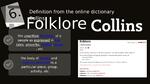
American Folklore Society: "Folklore is the traditional art, literature, knowledge, and practice that is disseminated largely through oral communication and behavioral example. Every group, from the largest and most complex urban society to the smallest tribal or rural community, has its own body of folklore, which expresses its way of life, its history, its values, and its sense of beauty."
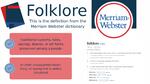
Merriam-Webster Dictionary: "Folklore refers to traditional customs, tales, sayings, dances, or art forms preserved among a people. It is usually passed along orally from one generation to another and includes legends, myths, fairy tales, proverbs, superstitions, and other cultural expressions."
Encyclopedia Britannica: "Folklore is the body of traditional customs, beliefs, rituals, and expressions shared within a cultural group. It encompasses oral traditions such as myths, legends, folktales, and fairy tales, as well as material culture, like folk art and folk music. Folklore often serves to preserve and transmit a group's cultural heritage and identity."
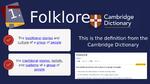
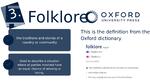
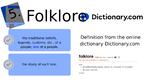
These definitions highlight the essence of folklore as a repository of traditional knowledge, beliefs, stories, and practices passed down through generations within a cultural or social group. Folklore reflects the values, history, and identity of these groups and is typically transmitted orally or through cultural expressions.