The article explores how emotional intelligence and cognitive skills can be developed
simultaneously in the context of bilingual education. The aim of the study is to examine how
bilingualism influences the formation of students’ emotional intelligence within the broader scope of
their cognitive development. General scientific methods were used in the course of the research:
analysis, synthesis, induction, deduction, comparison, generalization and interpretation of academic
sources. The results show that while the impact of bilingualism on the development of emotional
intelligence and cognitive abilities remains a subject of discussion, a number of studies indicate
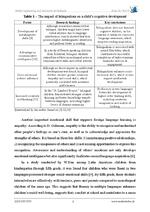
positive tendencies. In particular, it has been demonstrated that bilingualism contributes to the
formation of metalinguistic skills, strengthens communicative intelligence and indirectly stimulates
intellectual development through its connection with social skills. It has also been established that
bilingual children exhibit higher levels of creativity, mental flexibility and the ability to transfer
knowledge across languages, which is the result of diverse linguistic experience. Regarding
emotional intelligence, studies point to its multifactorial nature. Bilingualism has been shown to
positively affect the development of empathy, enrich social-emotional skills and enhance emotional
understanding through intercultural interaction and lexical diversity. Especially notable is the
development of cultural empathy and openness to others. However, children from displaced families
who grow up in conditions of social stress show lower levels of emotional stability. This is attributed
not so much to bilingualism itself as to adverse social factors. In addition, it has been established
that cultural differences in modes of emotional regulation influence the outcomes: open emotional
expression, typical of Western cultures, differs from the restraint characteristic of Eastern traditions.
Therefore, the impact of bilingualism on emotional intelligence is not universal and depends on a
wide range of contextual variables. The practical significance of the study lies in the possibility of
applying its findings to optimize bilingual education programs with consideration for students’
emotional development.