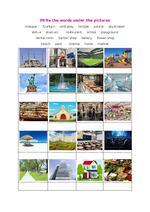
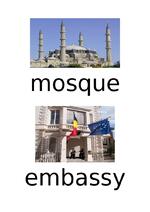
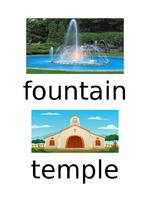
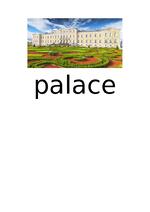
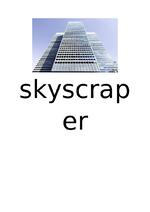
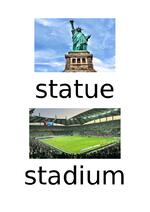
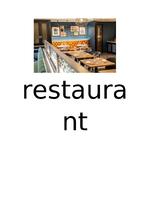
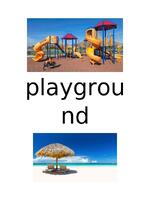
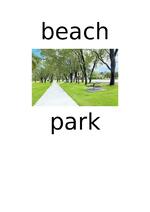
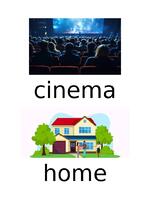
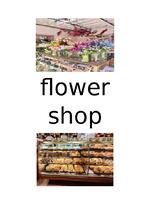
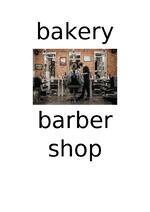
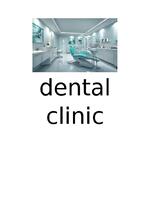
To work with city place flashcards, use them for active recall (front: place name/picture, back: definition/description), vocabulary building (matching words to pictures), and conversational practice (describing what happens at a place) for learning new locations like bank, park, or museum, enhancing language skills, and building community awareness, often by pairing words with images for visual learners. Key methods involve self-testing, saying answers aloud, combining visuals, and using them for games like matching or bingo to reinforce learning.
Self-Testing/Recall:
Front: Picture of a fire station or the word "Fire Station."
Back: "Where firefighters live and work to put out fires."
Vocabulary Building (Matching):
Match picture cards (e.g., a cinema) with word cards (e.g., "Cinema") or descriptions.
Descriptions & Conversation:
Use a card (e.g., "Grocery Store") and describe what you do there or what you see (people shopping, shelves of food).
Games:
Bingo: Create bingo cards with city places and call out descriptions or names.
Memory/Concentration: Flip two cards at a time to find matching pairs (word & picture).
Contextual Learning:
Take the flashcards on a walk in your own city and point out the real-life places, making connections between the cards and your surroundings.
One Idea Per Card: Keep each card focused on a single place or concept.
Use Pictures & Words: Combine visuals with text for stronger memory encoding.
Say it Aloud: Verbally answering helps with pronunciation and recall.
Mix Them Up: Reorder cards to avoid memorizing sequences and truly test your knowledge.
Use in Activities: Combine flashcards with worksheets, videos, or games for varied practice.