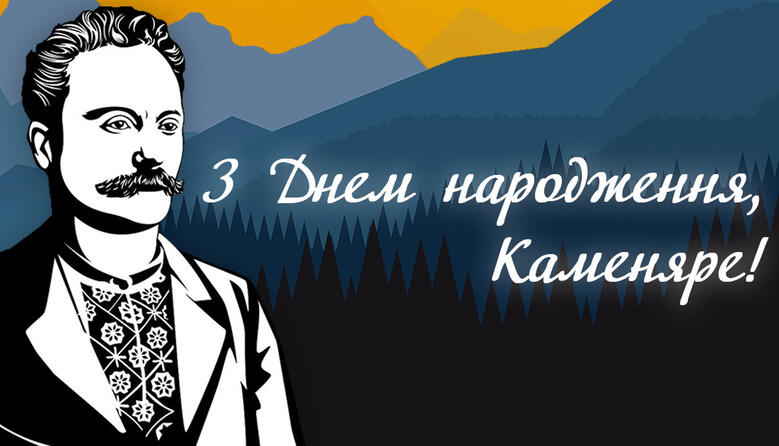

27 серпня 1856 року народився Іван Якович Франко. З нагоди 166-ї річниці від народження видатного українського поета, прозаїка, драматурга, літературного критика, публіциста, перекладача, науковця, громадського і політичного діяча публікуємо роботу переможця обласного конкурсу на краще знання іноземних мов, якими володів Іван Франко, 2021. Есе «Іван Франко та англійська література» написав Ігор Кондрацький, випускник (одинадцятикласник на час написання) Чернівського ЗЗСО І-ІІІ ступенів ім. Т.Г. Шевченка.
Ivan Franko and English Literature
It is impossible to express the greatness of Ivan Franko in simple words. This incredible man, who can only be compared to a superhero, is an example of a true patriot who worked hard and used all his talent to make the world a better place. He sincerely wanted Ukraine to be open to the world, so he studied foreign languages and translated many works of world literature.
I would like to mention Ivan Franko's translations from English. I think that only an exceptionally talented and brave man could translate Shakespeare. And I'm sure Franko was like that. How much he appreciated Shakespeare's works is evidenced at least by the memories of Marko Cheremshyna, who met Ivan Franko in Vienna, later they traveled together by train and Ivan Franko began to ask Marko Cheremshyna about Byron and Shakespeare and noted that literature actually begins with these two giants. Ivan Franko began to translate the works of William Shakespeare in 1879 and then once in a while turned to him throughout his life. He completely translated Shakespeare's tragic comedy "The Merchant of Venice" and was the first in Ukraine, who turned to his lyrics, translating twelve sonnets. It is difficult for me to compare Shakespeare's sonnets in the original and Franko's translation, because in both cases these lines evoke admiration and unique emotions. Romantic lines of the twenty-ninth sonnet Franko very successfully translated into our melodious language:
For thy sweet love remember'd such wealth brings
That then I scorn to change my state with kings.
Як лиш твою любов солодку нагадаю,
Своєї долі я й за трон не заміняю.
Ivan Franko also translated excerpts from the dramas "King Lear" and "Storm". He foundedShakespearean studies in Ukraine and also did a lot as an editor of translations of Shakespeare's works by Panteleimon Kulish and Yuri Fedkovych. Ivan Franko was one of the greatest connoisseurs of Byron's works in Ukraine. In 1879 Byron's dramatic poem "Cain" was published, translated by Ivan Franko, but he not only translated, but also drew inspiration from this work. Ten years later, Ivan Franko published his own philosophical legend, "The Death of Cain". As for the plot, Franko's legend is like a continuation of Byron's mystery, which ends with the murder of Abel. Franko's work begins with Cain's wanderings around the world, but it is not just a continuation of Byron's mystery. Byron's Cain remains a proud individualist in his denial of the unjust world. And Franko’s Cain appears at the end of the work as a person inseparable from the human community. Franko's translation of Byron's poem "The Isles of Greece" entitled "Modern Greek Song" was very successful too. Ivan Franko created a holistic concept of Byron's work and its rebellious, revolutionary significance in the world historical and literary process and expressed his views in the introductory explorations to his own translation of "Cain". Franko wrote that Byron had a huge influence on poets of other nationalities, including Slavic.
Robert Burns also deserved the attention of Franko the translator. Ivan Franko translated and published in the magazine "Life and Word" (“Zhytie i Slovo”) an article by the Austrian literary critic Karl Federn about Robert Burns (in 1896, on the occasion of the hundredth anniversary of the death of the Scottish poet). He added his own translations of six Burns’ poems to the article, including "A man is a man whatever happens". The lines of this poetry made a great impression on me. Franko became interested in the work of Charles Dickens in his youth. In his works, the researcher paid attention to the fact that the English writer was a great master of individualization, deep psychological analysis. Charles Dickens and his heroes are also mentioned in the works of Ivan Franko.
Ivan Franko claimed that translations of works of world literature had made them part of Ukrainian culture. I believe that his works and his life example have had an extremely positive impact on our literature, education and culture and many future generations of Ukrainians will appreciate his work.