Бібліотека вебквестів
- Всеосвіта›
- Бібліотека вебквестів›
- Англійська мова›
- Halloween. Reading. True or false

Вебквест:
Halloween. Reading. True or false
06.10.2024
Змішаний
2 рівнів
24 підказок
Час виконання:
необмежений
28
510
11
15
Вміст вебквесту:
Налаштування гри
Реакція об'єктів при наведенні: Всі об'єкти неактивні, при наведенні жодним чином не виказують себе
Привітання на початку гри (показується учням)
Embark on a spooky adventure through the world of Halloween! In this webquest, you will explore the history and traditions of this spooky holiday
Прочитавши текст, вам потрібно буде виконати вправи "Правда/Неправда". У поле для відповіді завжди вводьте першу літеру або повне слово. True або t; false або f
Рівень №1 — Halloween Fun переглянути шаблон
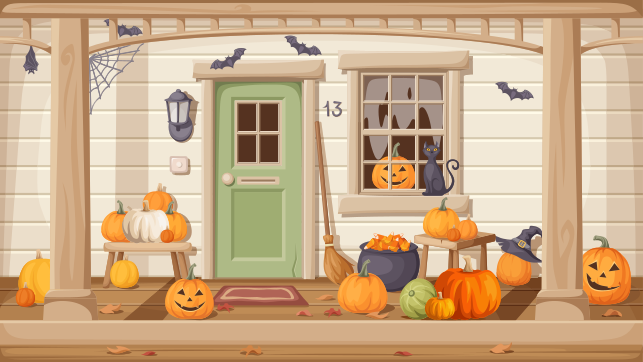
Цей рівень містить 13 інтерактивних об'єктів:
1 вихід.
12 сповіщень з введенням відповіді.
Інтерактивні об’єкти на цьому рівні:
Мітка №1/13
Світильник
Вихід з рівня
Для виходу достатньо відкрити підказки з відповідями
Повідомлення перед виконанням умов виходу з рівня:
Boo! You've made it through the Halloween quest.
Фінальне повідомлення:
You're a Halloween champion! You've completed all the challenges.
Мітка №2/13
Гарбуз 12 Завдання з відповіддю
Завдання:
Halloween is a fun holiday that people celebrate on October 31st. Children dress up in costumes and go trick-or-treating. They visit houses in their neighborhood and say, "Trick or treat!" Then, people give them candy. Popular costumes include witches, ghosts, and superheroes.
Many people decorate their homes for Halloween. They put pumpkins outside their doors. Some people carve faces into pumpkins to make jack-o'-lanterns. They put candles inside to make them glow at night. Other decorations include fake spider webs, skeletons, and bats.
Halloween parties are common. People play games like bobbing for apples and telling scary stories. Some towns have Halloween parades where people show off their costumes. It's a time for fun, candy, and spooky things!
True or false "Halloween is celebrated on December 25th"?
Правильні варіанти відповіді:
f false
Відповідь на завдання:
Halloween's origins can be traced back to the ancient Celtic festival of Samhain. This pagan holiday marked the end of summer and the beginning of winter. Celts believed that on this night, the boundary between the worlds of the living and the dead became blurred, allowing spirits to roam the Earth.
Мітка №3/13
Кажан Завдання з відповіддю
Завдання:
Halloween is a fun holiday that people celebrate on October 31st. Children dress up in costumes and go trick-or-treating. They visit houses in their neighborhood and say, "Trick or treat!" Then, people give them candy. Popular costumes include witches, ghosts, and superheroes.
Many people decorate their homes for Halloween. They put pumpkins outside their doors. Some people carve faces into pumpkins to make jack-o'-lanterns. They put candles inside to make them glow at night. Other decorations include fake spider webs, skeletons, and bats.
Halloween parties are common. People play games like bobbing for apples and telling scary stories. Some towns have Halloween parades where people show off their costumes. It's a time for fun, candy, and spooky things!
True or false "Children wear costumes on Halloween"?
Правильні варіанти відповіді:
t true
Відповідь на завдання:
The word "Halloween" is a contraction of "All Hallows' Eve," the night before All Saints' Day.
Мітка №4/13
Шляпа Завдання з відповіддю
Завдання:
Halloween is a fun holiday that people celebrate on October 31st. Children dress up in costumes and go trick-or-treating. They visit houses in their neighborhood and say, "Trick or treat!" Then, people give them candy. Popular costumes include witches, ghosts, and superheroes.
Many people decorate their homes for Halloween. They put pumpkins outside their doors. Some people carve faces into pumpkins to make jack-o'-lanterns. They put candles inside to make them glow at night. Other decorations include fake spider webs, skeletons, and bats.
Halloween parties are common. People play games like bobbing for apples and telling scary stories. Some towns have Halloween parades where people show off their costumes. It's a time for fun, candy, and spooky things!
True or false "People give out vegetables when trick-or-treating"?
Правильні варіанти відповіді:
f false
Відповідь на завдання:
Jack-o'-lanterns originated from Irish folklore. The tradition involves carving a face into a turnip or rutabaga and placing a candle inside. Irish immigrants brought this custom to America, where they began using pumpkins.
Мітка №5/13
Гарбуз 19 Завдання з відповіддю
Завдання:
Halloween is a fun holiday that people celebrate on October 31st. Children dress up in costumes and go trick-or-treating. They visit houses in their neighborhood and say, "Trick or treat!" Then, people give them candy. Popular costumes include witches, ghosts, and superheroes.
Many people decorate their homes for Halloween. They put pumpkins outside their doors. Some people carve faces into pumpkins to make jack-o'-lanterns. They put candles inside to make them glow at night. Other decorations include fake spider webs, skeletons, and bats.
Halloween parties are common. People play games like bobbing for apples and telling scary stories. Some towns have Halloween parades where people show off their costumes. It's a time for fun, candy, and spooky things!
True or false "Witches and ghosts are popular Halloween costumes"?
Правильні варіанти відповіді:
t true
Відповідь на завдання:
Trick-or-treating is a relatively modern tradition. It gained popularity in the United States during the 1950s.
Мітка №6/13
Віник Завдання з відповіддю
Завдання:
Halloween is a fun holiday that people celebrate on October 31st. Children dress up in costumes and go trick-or-treating. They visit houses in their neighborhood and say, "Trick or treat!" Then, people give them candy. Popular costumes include witches, ghosts, and superheroes.
Many people decorate their homes for Halloween. They put pumpkins outside their doors. Some people carve faces into pumpkins to make jack-o'-lanterns. They put candles inside to make them glow at night. Other decorations include fake spider webs, skeletons, and bats.
Halloween parties are common. People play games like bobbing for apples and telling scary stories. Some towns have Halloween parades where people show off their costumes. It's a time for fun, candy, and spooky things!
True or false "Jack-o'-lanterns are made from watermelons"?
Правильні варіанти відповіді:
f false
Відповідь на завдання:
Black cats are often associated with Halloween and are considered to be bad luck. This superstition dates back to the Middle Ages when black cats were believed to be companions of witches.
Мітка №7/13
Казан Завдання з відповіддю
Завдання:
Halloween is a fun holiday that people celebrate on October 31st. Children dress up in costumes and go trick-or-treating. They visit houses in their neighborhood and say, "Trick or treat!" Then, people give them candy. Popular costumes include witches, ghosts, and superheroes.
Many people decorate their homes for Halloween. They put pumpkins outside their doors. Some people carve faces into pumpkins to make jack-o'-lanterns. They put candles inside to make them glow at night. Other decorations include fake spider webs, skeletons, and bats.
Halloween parties are common. People play games like bobbing for apples and telling scary stories. Some towns have Halloween parades where people show off their costumes. It's a time for fun, candy, and spooky things!
True or false "People decorate their homes with fake spider webs"?
Правильні варіанти відповіді:
t true
Відповідь на завдання:
Halloween is the second-largest commercial holiday in the United States, after Christmas.
Мітка №8/13
Гарбуз 7 Завдання з відповіддю
Завдання:
Halloween is a fun holiday that people celebrate on October 31st. Children dress up in costumes and go trick-or-treating. They visit houses in their neighborhood and say, "Trick or treat!" Then, people give them candy. Popular costumes include witches, ghosts, and superheroes.
Many people decorate their homes for Halloween. They put pumpkins outside their doors. Some people carve faces into pumpkins to make jack-o'-lanterns. They put candles inside to make them glow at night. Other decorations include fake spider webs, skeletons, and bats.
Halloween parties are common. People play games like bobbing for apples and telling scary stories. Some towns have Halloween parades where people show off their costumes. It's a time for fun, candy, and spooky things!
True or false "Halloween parties never include games"?
Правильні варіанти відповіді:
f false
Відповідь на завдання:
Approximately 2 billion dollars are spent on Halloween costumes in the United States each year.
Мітка №9/13
Гарбуз 6 Завдання з відповіддю
Завдання:
Halloween is a fun holiday that people celebrate on October 31st. Children dress up in costumes and go trick-or-treating. They visit houses in their neighborhood and say, "Trick or treat!" Then, people give them candy. Popular costumes include witches, ghosts, and superheroes.
Many people decorate their homes for Halloween. They put pumpkins outside their doors. Some people carve faces into pumpkins to make jack-o'-lanterns. They put candles inside to make them glow at night. Other decorations include fake spider webs, skeletons, and bats.
Halloween parties are common. People play games like bobbing for apples and telling scary stories. Some towns have Halloween parades where people show off their costumes. It's a time for fun, candy, and spooky things!
True or false "Bobbing for apples is a Halloween game"?
Правильні варіанти відповіді:
t true
Відповідь на завдання:
The color orange is strongly associated with Halloween. This is likely due to the association with pumpkins and fall foliage.
Мітка №10/13
Гарбуз 15 Завдання з відповіддю
Завдання:
Halloween is a fun holiday that people celebrate on October 31st. Children dress up in costumes and go trick-or-treating. They visit houses in their neighborhood and say, "Trick or treat!" Then, people give them candy. Popular costumes include witches, ghosts, and superheroes.
Many people decorate their homes for Halloween. They put pumpkins outside their doors. Some people carve faces into pumpkins to make jack-o'-lanterns. They put candles inside to make them glow at night. Other decorations include fake spider webs, skeletons, and bats.
Halloween parties are common. People play games like bobbing for apples and telling scary stories. Some towns have Halloween parades where people show off their costumes. It's a time for fun, candy, and spooky things!
True or false "Towns never have Halloween parades"?
Правильні варіанти відповіді:
f false
Відповідь на завдання:
Apple bobbing is a popular Halloween game. It is believed to have originated in ancient Rome.
Мітка №11/13
Листочок 1 Завдання з відповіддю
Завдання:
Halloween is a fun holiday that people celebrate on October 31st. Children dress up in costumes and go trick-or-treating. They visit houses in their neighborhood and say, "Trick or treat!" Then, people give them candy. Popular costumes include witches, ghosts, and superheroes.
Many people decorate their homes for Halloween. They put pumpkins outside their doors. Some people carve faces into pumpkins to make jack-o'-lanterns. They put candles inside to make them glow at night. Other decorations include fake spider webs, skeletons, and bats.
Halloween parties are common. People play games like bobbing for apples and telling scary stories. Some towns have Halloween parades where people show off their costumes. It's a time for fun, candy, and spooky things!
True or false "Trick-or-treating happens during the day"?
Правильні варіанти відповіді:
f false
Відповідь на завдання:
Halloween is celebrated in many countries around the world, but with different traditions and customs.
Мітка №12/13
Кажан Завдання з відповіддю
Завдання:
Halloween is a fun holiday that people celebrate on October 31st. Children dress up in costumes and go trick-or-treating. They visit houses in their neighborhood and say, "Trick or treat!" Then, people give them candy. Popular costumes include witches, ghosts, and superheroes.
Many people decorate their homes for Halloween. They put pumpkins outside their doors. Some people carve faces into pumpkins to make jack-o'-lanterns. They put candles inside to make them glow at night. Other decorations include fake spider webs, skeletons, and bats.
Halloween parties are common. People play games like bobbing for apples and telling scary stories. Some towns have Halloween parades where people show off their costumes. It's a time for fun, candy, and spooky things!
True or false "Skeletons are a common Halloween decoration"?
Правильні варіанти відповіді:
t true
Відповідь на завдання:
The tradition of wearing costumes on Halloween is thought to have originated from the Celtic belief that wearing masks would disguise people from evil spirits.
Мітка №13/13
Гарбуз 10 Завдання з відповіддю
Завдання:
Halloween is a fun holiday that people celebrate on October 31st. Children dress up in costumes and go trick-or-treating. They visit houses in their neighborhood and say, "Trick or treat!" Then, people give them candy. Popular costumes include witches, ghosts, and superheroes.
Many people decorate their homes for Halloween. They put pumpkins outside their doors. Some people carve faces into pumpkins to make jack-o'-lanterns. They put candles inside to make them glow at night. Other decorations include fake spider webs, skeletons, and bats.
Halloween parties are common. People play games like bobbing for apples and telling scary stories. Some towns have Halloween parades where people show off their costumes. It's a time for fun, candy, and spooky things!
True or false "Halloween is all about being serious and sad"?
Правильні варіанти відповіді:
f false
Відповідь на завдання:
Witches are a common Halloween theme. They are often depicted as old women with pointed hats and broomsticks.
Рівень №2 — The Origins of Halloween переглянути шаблон
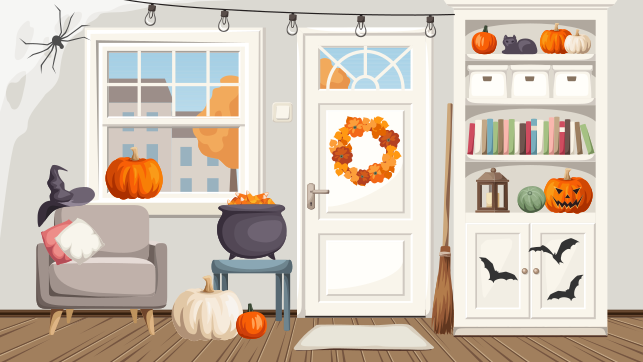
Цей рівень містить 13 інтерактивних об'єктів:
1 вихід.
12 сповіщень з введенням відповіді.
Інтерактивні об’єкти на цьому рівні:
Мітка №1/13
Коробка 3
Вихід з рівня
Для виходу достатньо відкрити підказки з відповідями
Повідомлення перед виконанням умов виходу з рівня:
You've made it to the end of the haunted trail! Give yourself a pat on the back.
Фінальне повідомлення:
You're a Halloween hero! Thank you for solving all the spooky puzzles.
Мітка №2/13
Цукерки Завдання з відповіддю
Завдання:
Halloween has a long and interesting history. It began over 2,000 years ago with the ancient Celtic festival of Samhain. The Celts lived in what is now Ireland, the United Kingdom, and northern France. They celebrated their new year on November 1st, marking the end of summer and harvest and the beginning of the dark, cold winter.
The Celts believed that on the night before the new year, the boundary between the worlds of the living and the dead became blurred. On October 31st, they celebrated Samhain, when they thought the ghosts of the dead returned to earth. To commemorate this event, people would gather to light bonfires, offer sacrifices to their deities, and wear costumes, typically consisting of animal heads and skins.
As the Roman Empire conquered Celtic lands, Samhain was combined with two Roman festivals: Feralia, a day in late October when the Romans traditionally commemorated the passing of the dead, and Pomona, a day to honor the Roman goddess of fruit and trees.
In the 8th century, Pope Gregory III designated November 1st as a day to honor all saints. Soon, All Saints Day incorporated some of the traditions of Samhain. The evening before was known as All Hallows Eve, and later Halloween.
True or false "Halloween originated from a Celtic festival called Samhain"?
Правильні варіанти відповіді:
t true
Відповідь на завдання:
Vampires, ghosts, and zombies are other popular Halloween themes.
Мітка №3/13
Книга 15 Завдання з відповіддю
Завдання:
Halloween has a long and interesting history. It began over 2,000 years ago with the ancient Celtic festival of Samhain. The Celts lived in what is now Ireland, the United Kingdom, and northern France. They celebrated their new year on November 1st, marking the end of summer and harvest and the beginning of the dark, cold winter.
The Celts believed that on the night before the new year, the boundary between the worlds of the living and the dead became blurred. On October 31st, they celebrated Samhain, when they thought the ghosts of the dead returned to earth. To commemorate this event, people would gather to light bonfires, offer sacrifices to their deities, and wear costumes, typically consisting of animal heads and skins.
As the Roman Empire conquered Celtic lands, Samhain was combined with two Roman festivals: Feralia, a day in late October when the Romans traditionally commemorated the passing of the dead, and Pomona, a day to honor the Roman goddess of fruit and trees.
In the 8th century, Pope Gregory III designated November 1st as a day to honor all saints. Soon, All Saints Day incorporated some of the traditions of Samhain. The evening before was known as All Hallows Eve, and later Halloween.
True or false "The Celts lived in modern-day South America"?
Правильні варіанти відповіді:
f false
Відповідь на завдання:
Halloween is a time for telling spooky stories and watching horror movies.
Мітка №4/13
Гарбуз 8 Завдання з відповіддю
Завдання:
Halloween has a long and interesting history. It began over 2,000 years ago with the ancient Celtic festival of Samhain. The Celts lived in what is now Ireland, the United Kingdom, and northern France. They celebrated their new year on November 1st, marking the end of summer and harvest and the beginning of the dark, cold winter.
The Celts believed that on the night before the new year, the boundary between the worlds of the living and the dead became blurred. On October 31st, they celebrated Samhain, when they thought the ghosts of the dead returned to earth. To commemorate this event, people would gather to light bonfires, offer sacrifices to their deities, and wear costumes, typically consisting of animal heads and skins.
As the Roman Empire conquered Celtic lands, Samhain was combined with two Roman festivals: Feralia, a day in late October when the Romans traditionally commemorated the passing of the dead, and Pomona, a day to honor the Roman goddess of fruit and trees.
In the 8th century, Pope Gregory III designated November 1st as a day to honor all saints. Soon, All Saints Day incorporated some of the traditions of Samhain. The evening before was known as All Hallows Eve, and later Halloween.
True or false "Samhain marked the Celtic New Year"?
Правильні варіанти відповіді:
t true
Відповідь на завдання:
Many people believe that Halloween is a night when ghosts and other supernatural beings are more active
Мітка №5/13
Осінній букет Завдання з відповіддю
Завдання:
Halloween has a long and interesting history. It began over 2,000 years ago with the ancient Celtic festival of Samhain. The Celts lived in what is now Ireland, the United Kingdom, and northern France. They celebrated their new year on November 1st, marking the end of summer and harvest and the beginning of the dark, cold winter.
The Celts believed that on the night before the new year, the boundary between the worlds of the living and the dead became blurred. On October 31st, they celebrated Samhain, when they thought the ghosts of the dead returned to earth. To commemorate this event, people would gather to light bonfires, offer sacrifices to their deities, and wear costumes, typically consisting of animal heads and skins.
As the Roman Empire conquered Celtic lands, Samhain was combined with two Roman festivals: Feralia, a day in late October when the Romans traditionally commemorated the passing of the dead, and Pomona, a day to honor the Roman goddess of fruit and trees.
In the 8th century, Pope Gregory III designated November 1st as a day to honor all saints. Soon, All Saints Day incorporated some of the traditions of Samhain. The evening before was known as All Hallows Eve, and later Halloween.
True or false "The Celts believed ghosts returned to Earth during Samhain"?
Правильні варіанти відповіді:
t true
Відповідь на завдання:
The color black is often associated with Halloween, as it is seen as a mysterious and spooky color.
Мітка №6/13
Шляпа Завдання з відповіддю
Завдання:
Halloween has a long and interesting history. It began over 2,000 years ago with the ancient Celtic festival of Samhain. The Celts lived in what is now Ireland, the United Kingdom, and northern France. They celebrated their new year on November 1st, marking the end of summer and harvest and the beginning of the dark, cold winter.
The Celts believed that on the night before the new year, the boundary between the worlds of the living and the dead became blurred. On October 31st, they celebrated Samhain, when they thought the ghosts of the dead returned to earth. To commemorate this event, people would gather to light bonfires, offer sacrifices to their deities, and wear costumes, typically consisting of animal heads and skins.
As the Roman Empire conquered Celtic lands, Samhain was combined with two Roman festivals: Feralia, a day in late October when the Romans traditionally commemorated the passing of the dead, and Pomona, a day to honor the Roman goddess of fruit and trees.
In the 8th century, Pope Gregory III designated November 1st as a day to honor all saints. Soon, All Saints Day incorporated some of the traditions of Samhain. The evening before was known as All Hallows Eve, and later Halloween.
True or false "Roman festivals had no influence on Halloween traditions"?
Правильні варіанти відповіді:
f false
Відповідь на завдання:
The number 13 is considered to be unlucky by many people, and is often associated with Halloween.
Мітка №7/13
Свіча Завдання з відповіддю
Завдання:
Halloween has a long and interesting history. It began over 2,000 years ago with the ancient Celtic festival of Samhain. The Celts lived in what is now Ireland, the United Kingdom, and northern France. They celebrated their new year on November 1st, marking the end of summer and harvest and the beginning of the dark, cold winter.
The Celts believed that on the night before the new year, the boundary between the worlds of the living and the dead became blurred. On October 31st, they celebrated Samhain, when they thought the ghosts of the dead returned to earth. To commemorate this event, people would gather to light bonfires, offer sacrifices to their deities, and wear costumes, typically consisting of animal heads and skins.
As the Roman Empire conquered Celtic lands, Samhain was combined with two Roman festivals: Feralia, a day in late October when the Romans traditionally commemorated the passing of the dead, and Pomona, a day to honor the Roman goddess of fruit and trees.
In the 8th century, Pope Gregory III designated November 1st as a day to honor all saints. Soon, All Saints Day incorporated some of the traditions of Samhain. The evening before was known as All Hallows Eve, and later Halloween.
True or false "People wore plant costumes during Samhain celebrations"?
Правильні варіанти відповіді:
f false
Відповідь на завдання:
Some people believe that Halloween is a time when the veil between the living and the dead is thin, allowing spirits to communicate with the living.
Мітка №8/13
Гарбуз 2 Завдання з відповіддю
Завдання:
Halloween has a long and interesting history. It began over 2,000 years ago with the ancient Celtic festival of Samhain. The Celts lived in what is now Ireland, the United Kingdom, and northern France. They celebrated their new year on November 1st, marking the end of summer and harvest and the beginning of the dark, cold winter.
The Celts believed that on the night before the new year, the boundary between the worlds of the living and the dead became blurred. On October 31st, they celebrated Samhain, when they thought the ghosts of the dead returned to earth. To commemorate this event, people would gather to light bonfires, offer sacrifices to their deities, and wear costumes, typically consisting of animal heads and skins.
As the Roman Empire conquered Celtic lands, Samhain was combined with two Roman festivals: Feralia, a day in late October when the Romans traditionally commemorated the passing of the dead, and Pomona, a day to honor the Roman goddess of fruit and trees.
In the 8th century, Pope Gregory III designated November 1st as a day to honor all saints. Soon, All Saints Day incorporated some of the traditions of Samhain. The evening before was known as All Hallows Eve, and later Halloween.
True or false "The Roman festival Feralia was related to honoring the dead"?
Правильні варіанти відповіді:
t true
Відповідь на завдання:
Halloween is a time for people to have fun and let their imaginations run wild.
Мітка №9/13
Павутиння Завдання з відповіддю
Завдання:
Halloween has a long and interesting history. It began over 2,000 years ago with the ancient Celtic festival of Samhain. The Celts lived in what is now Ireland, the United Kingdom, and northern France. They celebrated their new year on November 1st, marking the end of summer and harvest and the beginning of the dark, cold winter.
The Celts believed that on the night before the new year, the boundary between the worlds of the living and the dead became blurred. On October 31st, they celebrated Samhain, when they thought the ghosts of the dead returned to earth. To commemorate this event, people would gather to light bonfires, offer sacrifices to their deities, and wear costumes, typically consisting of animal heads and skins.
As the Roman Empire conquered Celtic lands, Samhain was combined with two Roman festivals: Feralia, a day in late October when the Romans traditionally commemorated the passing of the dead, and Pomona, a day to honor the Roman goddess of fruit and trees.
In the 8th century, Pope Gregory III designated November 1st as a day to honor all saints. Soon, All Saints Day incorporated some of the traditions of Samhain. The evening before was known as All Hallows Eve, and later Halloween.
True or false "Pomona was the Roman goddess of the moon"?
Правильні варіанти відповіді:
f false
Відповідь на завдання:
No matter what your beliefs are, Halloween is a fun and festive time of year for people of all ages.
Мітка №10/13
Книга 1 Завдання з відповіддю
Завдання:
Halloween has a long and interesting history. It began over 2,000 years ago with the ancient Celtic festival of Samhain. The Celts lived in what is now Ireland, the United Kingdom, and northern France. They celebrated their new year on November 1st, marking the end of summer and harvest and the beginning of the dark, cold winter.
The Celts believed that on the night before the new year, the boundary between the worlds of the living and the dead became blurred. On October 31st, they celebrated Samhain, when they thought the ghosts of the dead returned to earth. To commemorate this event, people would gather to light bonfires, offer sacrifices to their deities, and wear costumes, typically consisting of animal heads and skins.
As the Roman Empire conquered Celtic lands, Samhain was combined with two Roman festivals: Feralia, a day in late October when the Romans traditionally commemorated the passing of the dead, and Pomona, a day to honor the Roman goddess of fruit and trees.
In the 8th century, Pope Gregory III designated November 1st as a day to honor all saints. Soon, All Saints Day incorporated some of the traditions of Samhain. The evening before was known as All Hallows Eve, and later Halloween.
True or false "Pope Gregory III established All Saints Day in the 8th century"?
Правильні варіанти відповіді:
t true
Відповідь на завдання:
The tradition of trick-or-treating can be traced back to the ancient Celtic festival of Samhain. Children would go door-to-door asking for food, similar to the modern-day practice.
Мітка №11/13
Гарбуз 7 Завдання з відповіддю
Завдання:
Halloween has a long and interesting history. It began over 2,000 years ago with the ancient Celtic festival of Samhain. The Celts lived in what is now Ireland, the United Kingdom, and northern France. They celebrated their new year on November 1st, marking the end of summer and harvest and the beginning of the dark, cold winter.
The Celts believed that on the night before the new year, the boundary between the worlds of the living and the dead became blurred. On October 31st, they celebrated Samhain, when they thought the ghosts of the dead returned to earth. To commemorate this event, people would gather to light bonfires, offer sacrifices to their deities, and wear costumes, typically consisting of animal heads and skins.
As the Roman Empire conquered Celtic lands, Samhain was combined with two Roman festivals: Feralia, a day in late October when the Romans traditionally commemorated the passing of the dead, and Pomona, a day to honor the Roman goddess of fruit and trees.
In the 8th century, Pope Gregory III designated November 1st as a day to honor all saints. Soon, All Saints Day incorporated some of the traditions of Samhain. The evening before was known as All Hallows Eve, and later Halloween.
true or false "All Hallows Eve later became known as Halloween"?
Правильні варіанти відповіді:
t true
Відповідь на завдання:
The color black is often associated with Halloween because it's symbolic of death and the unknown.
Мітка №12/13
Книга 18 Завдання з відповіддю
Завдання:
Halloween has a long and interesting history. It began over 2,000 years ago with the ancient Celtic festival of Samhain. The Celts lived in what is now Ireland, the United Kingdom, and northern France. They celebrated their new year on November 1st, marking the end of summer and harvest and the beginning of the dark, cold winter.
The Celts believed that on the night before the new year, the boundary between the worlds of the living and the dead became blurred. On October 31st, they celebrated Samhain, when they thought the ghosts of the dead returned to earth. To commemorate this event, people would gather to light bonfires, offer sacrifices to their deities, and wear costumes, typically consisting of animal heads and skins.
As the Roman Empire conquered Celtic lands, Samhain was combined with two Roman festivals: Feralia, a day in late October when the Romans traditionally commemorated the passing of the dead, and Pomona, a day to honor the Roman goddess of fruit and trees.
In the 8th century, Pope Gregory III designated November 1st as a day to honor all saints. Soon, All Saints Day incorporated some of the traditions of Samhain. The evening before was known as All Hallows Eve, and later Halloween.
True or false "The Celtic new year was celebrated on December 31st"?
Правильні варіанти відповіді:
f false
Відповідь на завдання:
The color orange is tied to Halloween due to its association with fall harvest and pumpkins.
Мітка №13/13
Коробка 2 Завдання з відповіддю
Завдання:
Halloween has a long and interesting history. It began over 2,000 years ago with the ancient Celtic festival of Samhain. The Celts lived in what is now Ireland, the United Kingdom, and northern France. They celebrated their new year on November 1st, marking the end of summer and harvest and the beginning of the dark, cold winter.
The Celts believed that on the night before the new year, the boundary between the worlds of the living and the dead became blurred. On October 31st, they celebrated Samhain, when they thought the ghosts of the dead returned to earth. To commemorate this event, people would gather to light bonfires, offer sacrifices to their deities, and wear costumes, typically consisting of animal heads and skins.
As the Roman Empire conquered Celtic lands, Samhain was combined with two Roman festivals: Feralia, a day in late October when the Romans traditionally commemorated the passing of the dead, and Pomona, a day to honor the Roman goddess of fruit and trees.
In the 8th century, Pope Gregory III designated November 1st as a day to honor all saints. Soon, All Saints Day incorporated some of the traditions of Samhain. The evening before was known as All Hallows Eve, and later Halloween.
True or false "The boundary between the living and dead was thought to blur during Samhain"?
Правильні варіанти відповіді:
t true
Відповідь на завдання:
Halloween is celebrated in many countries around the world, but with unique traditions. For instance, in Mexico, they celebrate Dia de los Muertos (Day of the Dead) with colorful altars dedicated to loved ones who have passed.
Рефлексія від 1 учня
Сподобався:
0
Так: 1
Ні: 0
Зрозумілий:
0
Так: 1
Ні: 0
Потрібні роз'яснення:
0
Ні: 1
Так: 0