- Всеосвіта›
- Бібліотека тестів›
- Англійська мова›
- WW2 Unit 3 Group B Reading "The King of African Animals?"

Тест:
WW2 Unit 3 Group B Reading "The King of African Animals?"
05.03.2023
Вміст тесту:
1
2
3
4
5
6
1
1 з 7 балів
Read the article and complete the note below. Use NO MORE THAN THREE words in the gap.
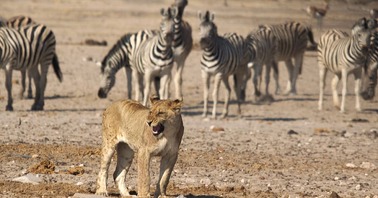
In the African grasslands, we generally think that the most dangerous animal, and the one that all other animals don’t want to meet, is the lion. But now, the king of predators has some competition – from teenage zebras! The grasslands are a dangerous place for zebras. That’s why they have their distinctive black and white stripes – to hide in long grass. We all know that teenagers love to do dangerous things now and then. Well, it seems that zebras are no different. When young zebras realise that lions are near, they don’t run away and hide, but walk towards them, and follow them, sometimes for more than seventy minutes. Some other species, including fish and birds, do the same thing with their predators. Scientists think the cheeky teenagers have a very good reason for doing this – it reduces the chance of the lions attacking them. Lions catch the animals they eat by hiding and getting as close as possible before they attack. The lions surprise the zebras or antelopes. If the prey animal is looking at them, or even following them, they lose this advantage. Zebras only use this strategy with animals that surprise them to attack. Adult zebras sometimes do a similar thing. But the danger is much greater for teenage zebras who aren’t as strong or as clever as the adults. Only 1 in 5,000 adult zebras that try this approach die, but 1 in 400 teenagers do. Even so, scientists believe that taking these chances is an essential part of their learning.
Most dangerous African animal: - .
2
1 з 7 балів
Read the article and complete the note below. Use NO MORE THAN THREE words in the gap.
In the African grasslands, we generally think that the most dangerous animal, and the one that all other animals don’t want to meet, is the lion. But now, the king of predators has some competition – from teenage zebras! The grasslands are a dangerous place for zebras. That’s why they have their distinctive black and white stripes – to hide in long grass. We all know that teenagers love to do dangerous things now and then. Well, it seems that zebras are no different. When young zebras realise that lions are near, they don’t run away and hide, but walk towards them, and follow them, sometimes for more than seventy minutes. Some other species, including fish and birds, do the same thing with their predators. Scientists think the cheeky teenagers have a very good reason for doing this – it reduces the chance of the lions attacking them. Lions catch the animals they eat by hiding and getting as close as possible before they attack. The lions surprise the zebras or antelopes. If the prey animal is looking at them, or even following them, they lose this advantage. Zebras only use this strategy with animals that surprise them to attack. Adult zebras sometimes do a similar thing. But the danger is much greater for teenage zebras who aren’t as strong or as clever as the adults. Only 1 in 5,000 adult zebras that try this approach die, but 1 in 400 teenagers do. Even so, scientists believe that taking these chances is an essential part of their learning.
Reason for zebras’ colouring: to grass
3
2 з 7 балів
Read the article and complete the note below. Use NO MORE THAN THREE words in the gap.
In the African grasslands, we generally think that the most dangerous animal, and the one that all other animals don’t want to meet, is the lion. But now, the king of predators has some competition – from teenage zebras! The grasslands are a dangerous place for zebras. That’s why they have their distinctive black and white stripes – to hide in long grass. We all know that teenagers love to do dangerous things now and then. Well, it seems that zebras are no different. When young zebras realise that lions are near, they don’t run away and hide, but walk towards them, and follow them, sometimes for more than seventy minutes. Some other species, including fish and birds, do the same thing with their predators. Scientists think the cheeky teenagers have a very good reason for doing this – it reduces the chance of the lions attacking them. Lions catch the animals they eat by hiding and getting as close as possible before they attack. The lions surprise the zebras or antelopes. If the prey animal is looking at them, or even following them, they lose this advantage. Zebras only use this strategy with animals that surprise them to attack. Adult zebras sometimes do a similar thing. But the danger is much greater for teenage zebras who aren’t as strong or as clever as the adults. Only 1 in 5,000 adult zebras that try this approach die, but 1 in 400 teenagers do. Even so, scientists believe that taking these chances is an essential part of their learning.
Zebras’ dangerous behaviour: They lions and them.
Запитання №4 Із заповненням пропусків у тексті
Запитання №5 Із заповненням пропусків у тексті
Запитання №6 Із заповненням пропусків у тексті
Рефлексія від 26 учнів
Сподобався:
0
Так: 24
Ні: 2
Зрозумілий:
0
Так: 23
Ні: 3
Потрібні роз'яснення:
0
Ні: 21
Так: 5