Тестові завдання на удосконалення навичок читання
- Всеосвіта›
- Бібліотека тестів›
- Англійська мова›
- The causes of floods. Reading Test

Тест:
The causes of floods. Reading Test
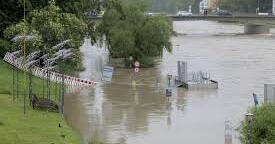
26.01.2025
Опис тесту (учням цей опис не показується):
Вміст тесту:
1
2
3
4
5
6
7
8
9
10
11
12
13
1
1 з 11 балів
Read the text and choose the best answer(s) for each question
Floods are second only to fire as the most common of all natural disasters. They occur almost everywhere in the world, resulting in widespread damage and even death. Consequently, scientists have long tried to perfect their ability to predict floods. So far, the best that scientists can do is to recognize the potential for flooding in certain conditions. There are a number of conditions, from deep snow on the ground to human error, that cause flooding.
When deep snow melts it creates a large amount of water. Although deep snow alone rarely causes floods, when it occurs together with heavy rain and sudden warmer weather it can lead to serious flooding. If there is a fast snow melt on top of frozen or very wet ground, flooding is more likely to occur than when the ground is not frozen. Frozen ground or ground that is very wet and already saturated with water cannot absorb the additional water created by the melting snow. Melting snow also contributes to high water levels in rivers and streams. Whenever rivers are already at their full capacity of water, heavy rains will result in the rivers overflowing and flooding the surrounding land.
Rivers that are covered in ice can also lead to flooding. When ice begins to melt, the surface of the ice cracks and breaks into large pieces. These pieces of ice move and float down the river. They can form a dam in the river, causing the water behind the dam to rise and flood the land upstream. If the dam breaks suddenly, then the large amount of water held behind the dam can flood the areas downstream too.
Broken ice dams are not the only dam problems that can cause flooding. When a large human-made dam breaks or fails to hold the water collected behind it, the results can be devastating. Dams contain such huge amounts of water behind them that when sudden breaks occur, the destructive force of the water is like a great tidal wave. Unleashed dam waters can travel tens of kilometres, cover the ground in metres of mud and debris, and drown and crush every thing and creature in their path.
Although scientists cannot always predict exactly when floods will occur, they do know a great deal about when floods are likely, or probably, going to occur. Deep snow, ice-covered rivers, and weak dams are all strong conditions for potential flooding. Hopefully, this knowledge of why floods happen can help us reduce the damage they cause.
Which of the following words are natural disasters?
2
1 з 11 балів
Read the text and choose the best answer(s) for each question
Floods are second only to fire as the most common of all natural disasters. They occur almost everywhere in the world, resulting in widespread damage and even death. Consequently, scientists have long tried to perfect their ability to predict floods. So far, the best that scientists can do is to recognize the potential for flooding in certain conditions. There are a number of conditions, from deep snow on the ground to human error, that cause flooding.
When deep snow melts it creates a large amount of water. Although deep snow alone rarely causes floods, when it occurs together with heavy rain and sudden warmer weather it can lead to serious flooding. If there is a fast snow melt on top of frozen or very wet ground, flooding is more likely to occur than when the ground is not frozen. Frozen ground or ground that is very wet and already saturated with water cannot absorb the additional water created by the melting snow. Melting snow also contributes to high water levels in rivers and streams. Whenever rivers are already at their full capacity of water, heavy rains will result in the rivers overflowing and flooding the surrounding land.
Rivers that are covered in ice can also lead to flooding. When ice begins to melt, the surface of the ice cracks and breaks into large pieces. These pieces of ice move and float down the river. They can form a dam in the river, causing the water behind the dam to rise and flood the land upstream. If the dam breaks suddenly, then the large amount of water held behind the dam can flood the areas downstream too.
Broken ice dams are not the only dam problems that can cause flooding. When a large human-made dam breaks or fails to hold the water collected behind it, the results can be devastating. Dams contain such huge amounts of water behind them that when sudden breaks occur, the destructive force of the water is like a great tidal wave. Unleashed dam waters can travel tens of kilometres, cover the ground in metres of mud and debris, and drown and crush every thing and creature in their path.
Although scientists cannot always predict exactly when floods will occur, they do know a great deal about when floods are likely, or probably, going to occur. Deep snow, ice-covered rivers, and weak dams are all strong conditions for potential flooding. Hopefully, this knowledge of why floods happen can help us reduce the damage they cause.
Which of the following are included as causes for floods in the reading passage?
3
1 з 11 балів
Read the text and choose the best answer(s) for each question
Floods are second only to fire as the most common of all natural disasters. They occur almost everywhere in the world, resulting in widespread damage and even death. Consequently, scientists have long tried to perfect their ability to predict floods. So far, the best that scientists can do is to recognize the potential for flooding in certain conditions. There are a number of conditions, from deep snow on the ground to human error, that cause flooding.
When deep snow melts it creates a large amount of water. Although deep snow alone rarely causes floods, when it occurs together with heavy rain and sudden warmer weather it can lead to serious flooding. If there is a fast snow melt on top of frozen or very wet ground, flooding is more likely to occur than when the ground is not frozen. Frozen ground or ground that is very wet and already saturated with water cannot absorb the additional water created by the melting snow. Melting snow also contributes to high water levels in rivers and streams. Whenever rivers are already at their full capacity of water, heavy rains will result in the rivers overflowing and flooding the surrounding land.
Rivers that are covered in ice can also lead to flooding. When ice begins to melt, the surface of the ice cracks and breaks into large pieces. These pieces of ice move and float down the river. They can form a dam in the river, causing the water behind the dam to rise and flood the land upstream. If the dam breaks suddenly, then the large amount of water held behind the dam can flood the areas downstream too.
Broken ice dams are not the only dam problems that can cause flooding. When a large human-made dam breaks or fails to hold the water collected behind it, the results can be devastating. Dams contain such huge amounts of water behind them that when sudden breaks occur, the destructive force of the water is like a great tidal wave. Unleashed dam waters can travel tens of kilometres, cover the ground in metres of mud and debris, and drown and crush every thing and creature in their path.
Although scientists cannot always predict exactly when floods will occur, they do know a great deal about when floods are likely, or probably, going to occur. Deep snow, ice-covered rivers, and weak dams are all strong conditions for potential flooding. Hopefully, this knowledge of why floods happen can help us reduce the damage they cause.
How does deep snow cause flooding?
Запитання №4 З однією правильною відповіддю
Запитання №5 З однією правильною відповіддю
Запитання №6 З однією правильною відповіддю
Запитання №7 З однією правильною відповіддю
Запитання №8 З однією правильною відповіддю
Запитання №9 З однією правильною відповіддю
Запитання №10 З однією правильною відповіддю
Запитання №11 З полем для вводу відповіді
Запитання №12 З полем для вводу відповіді
Запитання №13 З полем для вводу відповіді
Рефлексія від 14 учнів
Сподобався:
0
Так: 14
Ні: 0
Зрозумілий:
0
Так: 14
Ні: 0
Потрібні роз'яснення:
0
Ні: 14
Так: 0