- Всеосвіта›
- Бібліотека тестів›
- Англійська мова›
- Semester 2 Reading Test

Тест:
Semester 2 Reading Test

14.05.2023
Вміст тесту:
1
2
3
4
5
6
7
8
1
4 з 34 балів
Read the texts below. Choose the correct option.
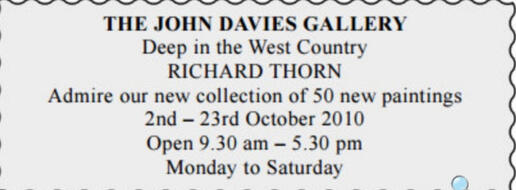
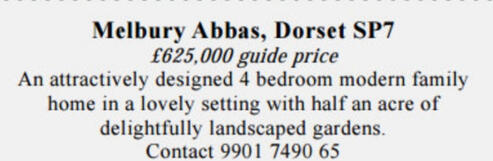
What are the advertisements about?

[Holidaymaking, Educational services, Art exhibition, Health care, Properties for sale]
[Properties for sale, Holidaymaking, Art exhibition, Health care, Educational services]
[Properties for sale, Handicraft art, Art exhibition, Educational services, Holidaymaking]
[Educational services, Holidaymaking, Art exhibition, Health care, Properties for sale]


2
4 з 34 балів
Read this article to find out about the history of street art. Match the paragraphs with the best paragraph headings. One heading is not needed.
The first drawings on walls appeared in caves thousands of years ago. Later the Ancient Romans and Greeks wrote their names and protest poems on buildings. Modern graffiti seems to have appeared in Philadelphia in the early 1960s, and by the late sixties it had reached New York. The new art form really took off in the 1970s, when people began writing their names, or ‘tags’, on buildings all over the city. In the mid seventies it was sometimes hard to see out of a subway car window, because the trains were completely covered in spray paintings known as ‘masterpieces’.
In the early days, the ‘taggers’ were part of street gangs who were concerned with marking their territory. They worked in groups called ‘crews’, and called what they did ‘writing’ – the term ‘graffiti’ was first used by The New York Times and the novelist Norman Mailer. Art galleries in New York began buying graffiti in the early seventies. But at the same time that it began to be regarded as an art form, John Lindsay, the then mayor of New York, declared the first war on graffiti. By the 1980s it became much harder to write on subway trains without being caught, and instead many of the more established graffiti artists began using roofs of buildings or canvases.
The debate over whether graffiti is art or vandalism is still going on. Peter Vallone, a New York city councillor, thinks that graffiti done with permission can be art, but if it is on someone else’s property it becomes a crime. ‘I have a message for the graffiti vandals out there,’ he said recently. ‘Your freedom of expression ends where my property begins.’ On the other hand, Felix, a member of the Berlin-based group Reclaim Your City, says that artists are reclaiming cities for the public from advertisers, and that graffiti represents freedom and makes cities more vibrant.
For decades graffiti has been a springboard to international fame for a few. Jean-Michel Basquiat began spraying on the street in the 1970s before becoming a respected artist in the ’80s. The Frenchman Blek le Rat and the British artist Banksy have achieved international fame by producing complex works with stencils, often making political or humorous points. Works by Banksy have been sold for over £100,000. Graffiti is now sometimes big business.
Paragraph
Heading
1
paragraph 1
А
The future of graffiti
2
paragraph 2
Б
Increasing exposure and attention.
3
paragraph 3
В
Art or vandalism?
4
paragraph 4
Г
Famous graffiti artists
Ґ
Not just a modern phenomenon.
3
3 з 34 балів
Read what four people have to say about their working hours. Choose the best answer.
Ronan
I work in a fairly traditional office environment doing a typical nine-to-five job. I like my job, but it's annoying that my commute to work takes an hour and a half each way and most of my work could really be done online from home. But my boss doesn't seem to trust that we will get any work done if left to our own devices, and everyone in the company has to clock in and out every day. It's frustrating that they feel the need to monitor what we do so closely instead of judging us based on our task performance, like most companies do these days.
Jo
I used to do a typical five-day week, but after I came out of my parental leave, I decided that I wanted to spend more time with my children before they start school. After negotiating with my boss, we decided to cut my working week down to a three-day work week. This of course meant a significant cut in my pay too, as I'm paid on a pro-rata basis. I've since noticed, though, that my workload hasn't decreased in the slightest! I'm now doing five days' worth of work in three days, but getting paid much less for it! I find myself having to take work home just so that I can meet the deadlines. It's wearing me out trying to juggle work with looking after my children and my family, but I don’t dare to bring this up with my boss because I think he feels as if he's made a huge concession letting me come in only three days a week.
Ronan would prefer it if he could work from home [and wasn't left to his own devices., and spend more time commuting., and be judged based on task performance., and trust his boss more.]
Jo wanted to reduce her working hours because she [thought she would be more efficient., wanted to bring her work home., wanted to go on parental leave., wanted to spend time with her children.]
Jo is unhappy with her three-day work week because her workload has remained the same [but change would affect her economically, she has to spend more time with children, she has more deadlines to meet., although she has reduced her hours.]
Запитання №4 З вибором правильної відповіді у тексті
Запитання №5 З вибором правильної відповіді у тексті
Запитання №6 З вибором правильної відповіді у тексті
Запитання №7 На послідовність
Запитання №8 Сортування по категоріях (перетягування в кошик)
Рефлексія від 27 учнів
Сподобався:
0
Так: 22
Ні: 5
Зрозумілий:
0
Так: 22
Ні: 5
Потрібні роз'яснення:
0
Ні: 23
Так: 4