Checking reading skills
- Всеосвіта›
- Бібліотека тестів›
- Англійська мова›
- READING TEST FOCUS 3 (Planet Earth)

Тест:
READING TEST FOCUS 3 (Planet Earth)

07.11.2024
Опис тесту (учням цей опис не показується):
Вміст тесту:
1
2
3
4
5
6
7
8
9
10
11
12
13
14
15
16
Опис, який учні побачать перед початком тестування
Read the texts carefully and choose the correct options.
1
1 з 16 балів
 1.The author decided to go camping because he
2
1 з 16 балів
 2.He
2.He
3
1 з 16 балів
 3.During the night
4
1 з 16 балів
 4.He
4.He
5
1 з 16 балів
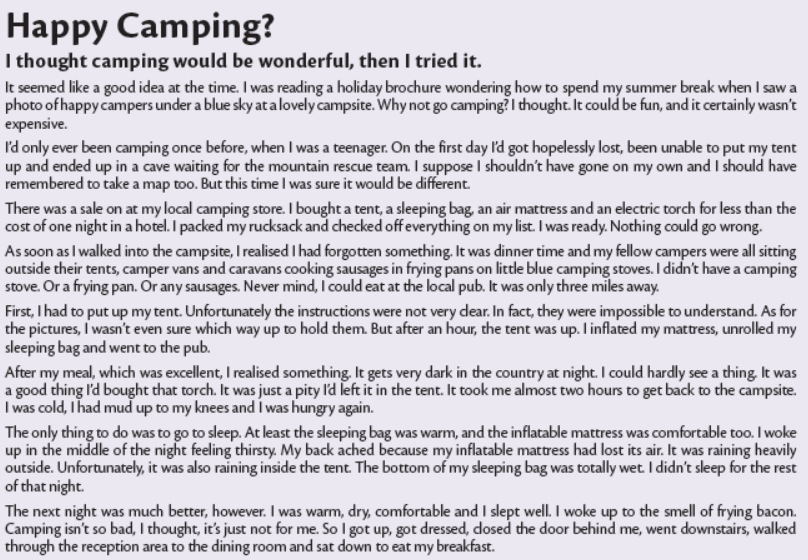 5.It took him a long time to return to the campsite because
6
1 з 16 балів
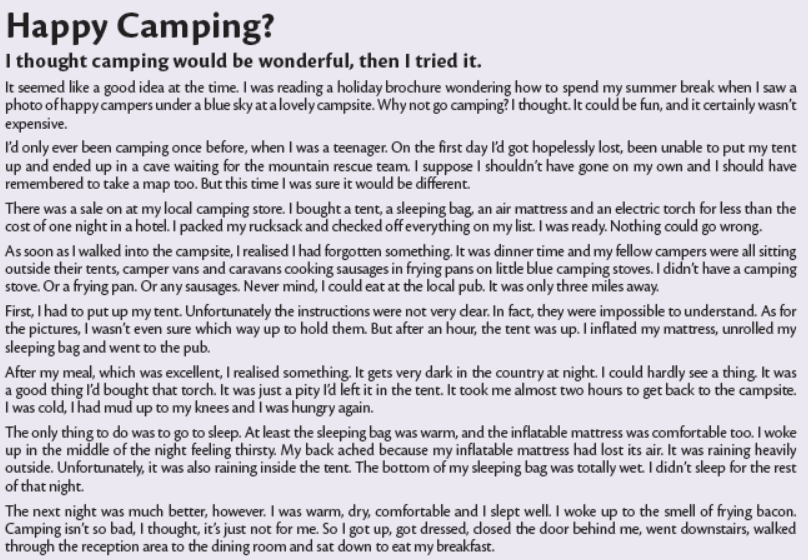 6.He spent the second night in
7
1 з 16 балів
MISSING SUN
Pollution in many of the world’s cities is becominga major health problem. One of the worst affected is Beijing, the capital of China. Air quality was dangerously low on fifty-eight days last year. The winter months are especially bad. This is the time of year when more coal is burned to heat people’s homes. There is also less wind to blowthe smog away. At this time of year, pollution levels are sometimestwenty times higher than the WHO (World Health Organization) considerssafe. This causes illnesses and on the worst days old people and children are advised to stay indoors. Visibility is sometimes so bad that motorways have to closebecause of the danger of accidents.
In early 2014, some newspapersand websites showed a frightening vision of the future.On a smoggy morning, residents of Beijing watched the sunrise. However, as the real one was hidden, they had to do this on giant TV screens. The smog was so thick that the real sunrise was completely invisible. While this might seem shocking, the film of the sunrise was nothing unusual. The screens show adverts all the time. The one that the people were watching that morning was for a holiday company. The same advert is shown quite often, whatever the weather. Either the photographer was lucky or he knew exactly how the image would look and waited until he got the photo he wanted. Although the news reporting wasinaccurate, it mighthave done something to raise awareness of how bad the problemhas become. Politicians, too, have finallydecided that something must be done to reduce pollution levels.
The first idea is to reduce the amount of coal that people use. Factories will also be moved to areas further away from cities. Another target is older, more polluting cars. The worst offenders will be banned. In their place, greener and cleaner forms of transport will be encouraged.
Will thesechanges help? The Chinese know from experience that it is possible to improve air quality very quickly if necessary. Before the 2008 OlympicGames, pollution in Beijing was reduced greatly. As well as reducing traffic levels and closing factories, other methods to reduce pollution were used. These included pouring water onto roads to reduce the amount of dust flying in the air. To help with this, scientists were even able to make clouds drop morerain. Since then, things have got worse rather than better but, at last, the governmentseems to be determined to do somethingabout the problem. For the peopleof Beijing and other large cities this will make a huge difference to their lives.
7 Winter in Beijing
8
1 з 16 балів
MISSING SUN
Pollution in many of the world’s cities is becominga major health problem. One of the worst affected is Beijing, the capital of China. Air quality was dangerously low on fifty-eight days last year. The winter months are especially bad. This is the time of year when more coal is burned to heat people’s homes. There is also less wind to blowthe smog away. At this time of year, pollution levels are sometimestwenty times higher than the WHO (World Health Organization) considerssafe. This causes illnesses and on the worst days old people and children are advised to stay indoors. Visibility is sometimes so bad that motorways have to closebecause of the danger of accidents.
In early 2014, some newspapersand websites showed a frightening vision of the future.On a smoggy morning, residents of Beijing watched the sunrise. However, as the real one was hidden, they had to do this on giant TV screens. The smog was so thick that the real sunrise was completely invisible. While this might seem shocking, the film of the sunrise was nothing unusual. The screens show adverts all the time. The one that the people were watching that morning was for a holiday company. The same advert is shown quite often, whatever the weather. Either the photographer was lucky or he knew exactly how the image would look and waited until he got the photo he wanted. Although the news reporting wasinaccurate, it mighthave done something to raise awareness of how bad the problemhas become. Politicians, too, have finallydecided that something must be done to reduce pollution levels.
The first idea is to reduce the amount of coal that people use. Factories will also be moved to areas further away from cities. Another target is older, more polluting cars. The worst offenders will be banned. In their place, greener and cleaner forms of transport will be encouraged.
Will thesechanges help? The Chinese know from experience that it is possible to improve air quality very quickly if necessary. Before the 2008 OlympicGames, pollution in Beijing was reduced greatly. As well as reducing traffic levels and closing factories, other methods to reduce pollution were used. These included pouring water onto roads to reduce the amount of dust flying in the air. To help with this, scientists were even able to make clouds drop morerain. Since then, things have got worse rather than better but, at last, the governmentseems to be determined to do somethingabout the problem. For the peopleof Beijing and other large cities this will make a huge difference to their lives.
8.In Beijing, people were photographed watching the sunrise on TV screens because
9
1 з 16 балів
MISSING SUN
Pollution in many of the world’s cities is becominga major health problem. One of the worst affected is Beijing, the capital of China. Air quality was dangerously low on fifty-eight days last year. The winter months are especially bad. This is the time of year when more coal is burned to heat people’s homes. There is also less wind to blowthe smog away. At this time of year, pollution levels are sometimestwenty times higher than the WHO (World Health Organization) considerssafe. This causes illnesses and on the worst days old people and children are advised to stay indoors. Visibility is sometimes so bad that motorways have to closebecause of the danger of accidents.
In early 2014, some newspapersand websites showed a frightening vision of the future.On a smoggy morning, residents of Beijing watched the sunrise. However, as the real one was hidden, they had to do this on giant TV screens. The smog was so thick that the real sunrise was completely invisible. While this might seem shocking, the film of the sunrise was nothing unusual. The screens show adverts all the time. The one that the people were watching that morning was for a holiday company. The same advert is shown quite often, whatever the weather. Either the photographer was lucky or he knew exactly how the image would look and waited until he got the photo he wanted. Although the news reporting wasinaccurate, it mighthave done something to raise awareness of how bad the problemhas become. Politicians, too, have finallydecided that something must be done to reduce pollution levels.
The first idea is to reduce the amount of coal that people use. Factories will also be moved to areas further away from cities. Another target is older, more polluting cars. The worst offenders will be banned. In their place, greener and cleaner forms of transport will be encouraged.
Will thesechanges help? The Chinese know from experience that it is possible to improve air quality very quickly if necessary. Before the 2008 OlympicGames, pollution in Beijing was reduced greatly. As well as reducing traffic levels and closing factories, other methods to reduce pollution were used. These included pouring water onto roads to reduce the amount of dust flying in the air. To help with this, scientists were even able to make clouds drop morerain. Since then, things have got worse rather than better but, at last, the governmentseems to be determined to do somethingabout the problem. For the peopleof Beijing and other large cities this will make a huge difference to their lives.
9.The photograph
10
1 з 16 балів
MISSING SUN
Pollution in many of the world’s cities is becominga major health problem. One of the worst affected is Beijing, the capital of China. Air quality was dangerously low on fifty-eight days last year. The winter months are especially bad. This is the time of year when more coal is burned to heat people’s homes. There is also less wind to blowthe smog away. At this time of year, pollution levels are sometimestwenty times higher than the WHO (World Health Organization) considerssafe. This causes illnesses and on the worst days old people and children are advised to stay indoors. Visibility is sometimes so bad that motorways have to closebecause of the danger of accidents.
In early 2014, some newspapersand websites showed a frightening vision of the future.On a smoggy morning, residents of Beijing watched the sunrise. However, as the real one was hidden, they had to do this on giant TV screens. The smog was so thick that the real sunrise was completely invisible. While this might seem shocking, the film of the sunrise was nothing unusual. The screens show adverts all the time. The one that the people were watching that morning was for a holiday company. The same advert is shown quite often, whatever the weather. Either the photographer was lucky or he knew exactly how the image would look and waited until he got the photo he wanted. Although the news reporting wasinaccurate, it mighthave done something to raise awareness of how bad the problemhas become. Politicians, too, have finallydecided that something must be done to reduce pollution levels.
The first idea is to reduce the amount of coal that people use. Factories will also be moved to areas further away from cities. Another target is older, more polluting cars. The worst offenders will be banned. In their place, greener and cleaner forms of transport will be encouraged.
Will thesechanges help? The Chinese know from experience that it is possible to improve air quality very quickly if necessary. Before the 2008 OlympicGames, pollution in Beijing was reduced greatly. As well as reducing traffic levels and closing factories, other methods to reduce pollution were used. These included pouring water onto roads to reduce the amount of dust flying in the air. To help with this, scientists were even able to make clouds drop morerain. Since then, things have got worse rather than better but, at last, the governmentseems to be determined to do somethingabout the problem. For the peopleof Beijing and other large cities this will make a huge difference to their lives.
10.What does the government plan to do to reduce pollution levels?
11
1 з 16 балів
MISSING SUN
Pollution in many of the world’s cities is becominga major health problem. One of the worst affected is Beijing, the capital of China. Air quality was dangerously low on fifty-eight days last year. The winter months are especially bad. This is the time of year when more coal is burned to heat people’s homes. There is also less wind to blowthe smog away. At this time of year, pollution levels are sometimestwenty times higher than the WHO (World Health Organization) considerssafe. This causes illnesses and on the worst days old people and children are advised to stay indoors. Visibility is sometimes so bad that motorways have to closebecause of the danger of accidents.
In early 2014, some newspapersand websites showed a frightening vision of the future.On a smoggy morning, residents of Beijing watched the sunrise. However, as the real one was hidden, they had to do this on giant TV screens. The smog was so thick that the real sunrise was completely invisible. While this might seem shocking, the film of the sunrise was nothing unusual. The screens show adverts all the time. The one that the people were watching that morning was for a holiday company. The same advert is shown quite often, whatever the weather. Either the photographer was lucky or he knew exactly how the image would look and waited until he got the photo he wanted. Although the news reporting wasinaccurate, it mighthave done something to raise awareness of how bad the problemhas become. Politicians, too, have finallydecided that something must be done to reduce pollution levels.
The first idea is to reduce the amount of coal that people use. Factories will also be moved to areas further away from cities. Another target is older, more polluting cars. The worst offenders will be banned. In their place, greener and cleaner forms of transport will be encouraged.
Will thesechanges help? The Chinese know from experience that it is possible to improve air quality very quickly if necessary. Before the 2008 OlympicGames, pollution in Beijing was reduced greatly. As well as reducing traffic levels and closing factories, other methods to reduce pollution were used. These included pouring water onto roads to reduce the amount of dust flying in the air. To help with this, scientists were even able to make clouds drop morerain. Since then, things have got worse rather than better but, at last, the governmentseems to be determined to do somethingabout the problem. For the peopleof Beijing and other large cities this will make a huge difference to their lives.
11.Since the 2008 Beijing Olympic Games
12
1 з 16 балів
AMAZING FACTS ABOUT SHARKS
A shark does not have a single bone in its body. Its skeleton is made of cartilage which is a tough elastic material, like the material that shapes your ear.
A swell shark, found in New Zealand, barks like a dog. Weird things have been found inside a shark, such as a nail, a bottle of wine, a treasure chest, coats, a suit of armour, a drum and a torpedo.
A shark’s skin is covered with denticles, which are like small, razor-sharp teeth. They can be removed from a shark’s body, after that the remaining skin can be made into very strong leather. A pair of shoes made of shark leather can last up to four times longer than shoes made of cowhide.
Sharks don’t see well, but their poor eyesight is balanced by other senses. Sometimes a shark is called «a swimming nose» for its great sense of smell. Sharks can easily smell prey which is buried in the sand or invisible in the dark. A shark also has a remarkable sensitivity to vibrations in the water. It can feel the movements made by other animals that are hundreds of feet away. They can hear sounds from thousands of feet away. Sharks can tell the direction from where the sound is coming, too.
Sharks cannot eat puffer fish, because the puffer fish inflates like a balloon and pokes the shark’s mouth with its sharp needles. Most sharks give birth to their babies. Only a few sharks lay eggs.
Most sharks have six to twelve babies at a time, but the hammerhead and tiger shark can have as many as 40 babies at a time.
Most species of sharks can swim up to 20—40 miles per hour. A mako shark has been recorded at more than 60 miles per hour.
A shark has three types of fins. They have two dorsal fins on their back, one fin beneath their body, called the pectoral fin (not all species have it), and the caudal fin is the tail.
The whale shark is the biggest fish in the world. A whale shark has more than 4,000 teeth, but each is less than 1/8 inch long. A shark may go through 1,000 sets of teeth during its lifetime. When a shark loses a tooth, another one replaces it.
A whale shark weighs about 90,000 pounds. The second largest shark is the basking shark. It can be up to 40 feet in length.
Question: What is more dangerous to people, a shark or a wasp/bee? Answer: a wasp/bee.
Every year, 100 people die from wasp or bee stings, yet hundreds of millions of people go swimming, and sharks kill only about six people. Only about 25 sharks have been known to actually attack people. Every year, people kill thousands of sharks for food, oil, skins and just for sports.
12 Which strange things were not found inside a shark?
13
1 з 16 балів
AMAZING FACTS ABOUT SHARKS
A shark does not have a single bone in its body. Its skeleton is made of cartilage which is a tough elastic material, like the material that shapes your ear.
A swell shark, found in New Zealand, barks like a dog. Weird things have been found inside a shark, such as a nail, a bottle of wine, a treasure chest, coats, a suit of armour, a drum and a torpedo.
A shark’s skin is covered with denticles, which are like small, razor-sharp teeth. They can be removed from a shark’s body, after that the remaining skin can be made into very strong leather. A pair of shoes made of shark leather can last up to four times longer than shoes made of cowhide.
Sharks don’t see well, but their poor eyesight is balanced by other senses. Sometimes a shark is called «a swimming nose» for its great sense of smell. Sharks can easily smell prey which is buried in the sand or invisible in the dark. A shark also has a remarkable sensitivity to vibrations in the water. It can feel the movements made by other animals that are hundreds of feet away. They can hear sounds from thousands of feet away. Sharks can tell the direction from where the sound is coming, too.
Sharks cannot eat puffer fish, because the puffer fish inflates like a balloon and pokes the shark’s mouth with its sharp needles. Most sharks give birth to their babies. Only a few sharks lay eggs.
Most sharks have six to twelve babies at a time, but the hammerhead and tiger shark can have as many as 40 babies at a time.
Most species of sharks can swim up to 20—40 miles per hour. A mako shark has been recorded at more than 60 miles per hour.
A shark has three types of fins. They have two dorsal fins on their back, one fin beneath their body, called the pectoral fin (not all species have it), and the caudal fin is the tail.
The whale shark is the biggest fish in the world. A whale shark has more than 4,000 teeth, but each is less than 1/8 inch long. A shark may go through 1,000 sets of teeth during its lifetime. When a shark loses a tooth, another one replaces it.
A whale shark weighs about 90,000 pounds. The second largest shark is the basking shark. It can be up to 40 feet in length.
Question: What is more dangerous to people, a shark or a wasp/bee? Answer: a wasp/bee.
Every year, 100 people die from wasp or bee stings, yet hundreds of millions of people go swimming, and sharks kill only about six people. Only about 25 sharks have been known to actually attack people. Every year, people kill thousands of sharks for food, oil, skins and just for sports.
13 Which of the sharks’ senses is the weakest?
14
1 з 16 балів
AMAZING FACTS ABOUT SHARKS
A shark does not have a single bone in its body. Its skeleton is made of cartilage which is a tough elastic material, like the material that shapes your ear.
A swell shark, found in New Zealand, barks like a dog. Weird things have been found inside a shark, such as a nail, a bottle of wine, a treasure chest, coats, a suit of armour, a drum and a torpedo.
A shark’s skin is covered with denticles, which are like small, razor-sharp teeth. They can be removed from a shark’s body, after that the remaining skin can be made into very strong leather. A pair of shoes made of shark leather can last up to four times longer than shoes made of cowhide.
Sharks don’t see well, but their poor eyesight is balanced by other senses. Sometimes a shark is called «a swimming nose» for its great sense of smell. Sharks can easily smell prey which is buried in the sand or invisible in the dark. A shark also has a remarkable sensitivity to vibrations in the water. It can feel the movements made by other animals that are hundreds of feet away. They can hear sounds from thousands of feet away. Sharks can tell the direction from where the sound is coming, too.
Sharks cannot eat puffer fish, because the puffer fish inflates like a balloon and pokes the shark’s mouth with its sharp needles. Most sharks give birth to their babies. Only a few sharks lay eggs.
Most sharks have six to twelve babies at a time, but the hammerhead and tiger shark can have as many as 40 babies at a time.
Most species of sharks can swim up to 20—40 miles per hour. A mako shark has been recorded at more than 60 miles per hour.
A shark has three types of fins. They have two dorsal fins on their back, one fin beneath their body, called the pectoral fin (not all species have it), and the caudal fin is the tail.
The whale shark is the biggest fish in the world. A whale shark has more than 4,000 teeth, but each is less than 1/8 inch long. A shark may go through 1,000 sets of teeth during its lifetime. When a shark loses a tooth, another one replaces it.
A whale shark weighs about 90,000 pounds. The second largest shark is the basking shark. It can be up to 40 feet in length.
Question: What is more dangerous to people, a shark or a wasp/bee? Answer: a wasp/bee.
Every year, 100 people die from wasp or bee stings, yet hundreds of millions of people go swimming, and sharks kill only about six people. Only about 25 sharks have been known to actually attack people. Every year, people kill thousands of sharks for food, oil, skins and just for sports.
14 Sharks can hear the sounds from
15
1 з 16 балів
AMAZING FACTS ABOUT SHARKS
A shark does not have a single bone in its body. Its skeleton is made of cartilage which is a tough elastic material, like the material that shapes your ear.
A swell shark, found in New Zealand, barks like a dog. Weird things have been found inside a shark, such as a nail, a bottle of wine, a treasure chest, coats, a suit of armour, a drum and a torpedo.
A shark’s skin is covered with denticles, which are like small, razor-sharp teeth. They can be removed from a shark’s body, after that the remaining skin can be made into very strong leather. A pair of shoes made of shark leather can last up to four times longer than shoes made of cowhide.
Sharks don’t see well, but their poor eyesight is balanced by other senses. Sometimes a shark is called «a swimming nose» for its great sense of smell. Sharks can easily smell prey which is buried in the sand or invisible in the dark. A shark also has a remarkable sensitivity to vibrations in the water. It can feel the movements made by other animals that are hundreds of feet away. They can hear sounds from thousands of feet away. Sharks can tell the direction from where the sound is coming, too.
Sharks cannot eat puffer fish, because the puffer fish inflates like a balloon and pokes the shark’s mouth with its sharp needles. Most sharks give birth to their babies. Only a few sharks lay eggs.
Most sharks have six to twelve babies at a time, but the hammerhead and tiger shark can have as many as 40 babies at a time.
Most species of sharks can swim up to 20—40 miles per hour. A mako shark has been recorded at more than 60 miles per hour.
A shark has three types of fins. They have two dorsal fins on their back, one fin beneath their body, called the pectoral fin (not all species have it), and the caudal fin is the tail.
The whale shark is the biggest fish in the world. A whale shark has more than 4,000 teeth, but each is less than 1/8 inch long. A shark may go through 1,000 sets of teeth during its lifetime. When a shark loses a tooth, another one replaces it.
A whale shark weighs about 90,000 pounds. The second largest shark is the basking shark. It can be up to 40 feet in length.
Question: What is more dangerous to people, a shark or a wasp/bee? Answer: a wasp/bee.
Every year, 100 people die from wasp or bee stings, yet hundreds of millions of people go swimming, and sharks kill only about six people. Only about 25 sharks have been known to actually attack people. Every year, people kill thousands of sharks for food, oil, skins and just for sports.
15 ____sharks lay eggs.
16
1 з 16 балів
AMAZING FACTS ABOUT SHARKS
A shark does not have a single bone in its body. Its skeleton is made of cartilage which is a tough elastic material, like the material that shapes your ear.
A swell shark, found in New Zealand, barks like a dog. Weird things have been found inside a shark, such as a nail, a bottle of wine, a treasure chest, coats, a suit of armour, a drum and a torpedo.
A shark’s skin is covered with denticles, which are like small, razor-sharp teeth. They can be removed from a shark’s body, after that the remaining skin can be made into very strong leather. A pair of shoes made of shark leather can last up to four times longer than shoes made of cowhide.
Sharks don’t see well, but their poor eyesight is balanced by other senses. Sometimes a shark is called «a swimming nose» for its great sense of smell. Sharks can easily smell prey which is buried in the sand or invisible in the dark. A shark also has a remarkable sensitivity to vibrations in the water. It can feel the movements made by other animals that are hundreds of feet away. They can hear sounds from thousands of feet away. Sharks can tell the direction from where the sound is coming, too.
Sharks cannot eat puffer fish, because the puffer fish inflates like a balloon and pokes the shark’s mouth with its sharp needles. Most sharks give birth to their babies. Only a few sharks lay eggs.
Most sharks have six to twelve babies at a time, but the hammerhead and tiger shark can have as many as 40 babies at a time.
Most species of sharks can swim up to 20—40 miles per hour. A mako shark has been recorded at more than 60 miles per hour.
A shark has three types of fins. They have two dorsal fins on their back, one fin beneath their body, called the pectoral fin (not all species have it), and the caudal fin is the tail.
The whale shark is the biggest fish in the world. A whale shark has more than 4,000 teeth, but each is less than 1/8 inch long. A shark may go through 1,000 sets of teeth during its lifetime. When a shark loses a tooth, another one replaces it.
A whale shark weighs about 90,000 pounds. The second largest shark is the basking shark. It can be up to 40 feet in length.
Question: What is more dangerous to people, a shark or a wasp/bee? Answer: a wasp/bee.
Every year, 100 people die from wasp or bee stings, yet hundreds of millions of people go swimming, and sharks kill only about six people. Only about 25 sharks have been known to actually attack people. Every year, people kill thousands of sharks for food, oil, skins and just for sports.
5 The biggest fish in the world is
Рефлексія від 6 учнів
Сподобався:
0
Так: 5
Ні: 1
Зрозумілий:
0
Так: 5
Ні: 1
Потрібні роз'яснення:
0
Ні: 6
Так: 0