text https://kids.nationalgeographic.com/animals/birds/facts/great-horned-owl
photo https://ebird.org/species/grhowl
word definitions https://www.oxfordlearnersdictionaries.com
Конструктор тестів


text https://kids.nationalgeographic.com/animals/birds/facts/great-horned-owl
photo https://ebird.org/species/grhowl
word definitions https://www.oxfordlearnersdictionaries.com
text https://kids.nationalgeographic.com/animals/birds/facts/great-horned-owl
photo https://ebird.org/species/grhowl
word definitions https://www.oxfordlearnersdictionaries.com
1
Read the text.
Great Horned Owl
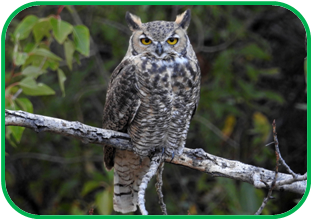
photo https://kids.nationalgeographic.com/animals/birds/facts/great-horned-owl
The great horned owl has no horns! It is named for the tufts of feathers that sit on top of its head, called plumicorns.
Scientists don’t know why these owls sport tufts of feathers on top of their heads, but they do have a few theories. The tufts might help members of their own species to recognize each other among the forest around them, or they may use the tufts to blend into their surroundings, making them look more like broken tree branches than a tasty meal.
Are these sentences true or false?
The great horned owl has horns. [True, False]
The great horned owls use the tufts to blend into their surroundings. [True, False]
2
Complete the text with words from the box.
territory - habitats - owls - hoots - sounds
The great horned owl is one of the most common in North America, found in a range of that includes forests, swamps, deserts, tundra edges, tropical rain forests, cities, suburbs, and parks. If you live in North America, there’s a good chance you’ve heard the deep, soft, stuttering of this owl: hoo-h’HOO-hoo-hoo. This owl uses this hoot to advertise its . It can also make a variety of other , including whistles, barks, shrieks, hisses, coos, and wavering cries.
3
Read and choose the correct words.
You are most likely to hear [a, an] owl hoot [at, in] night because they [is, are] nocturnal birds. They have big eyes and wide pupils that allow them to spot [their, theirs] prey. Unlike [peoples', people’s] eyes, their eyes don’t move in their sockets, but the owls can swivel their heads to look in any direction. Their short but wide wings allow them to fly through the forest, and their soft feathers help them approach prey very [quiet, quietly].
Запитання №4 Із заповненням пропусків у тексті
Запитання №5 На встановлення відповідності
Рефлексія від 2 учнів
Сподобався:
Так: 2
Ні: 0
Зрозумілий:
Так: 2
Ні: 0
Потрібні роз'яснення:
Ні: 2
Так: 0