- Всеосвіта›
- Бібліотека тестів›
- Англійська мова›
- NMT Task 1

Тест:
NMT Task 1

15.04.2024

Вміст тесту:
1
2
3
4
5
6
1
5 з 10 балів
Read the texts below. Match choices (A-H) to (1-5). There are three choices you do not need to use.
Which advertisement is about
1

А
a backpacking holiday
2

Б
a self-catering holiday
3

В
a package holiday
4

Г
a cultural holiday
5
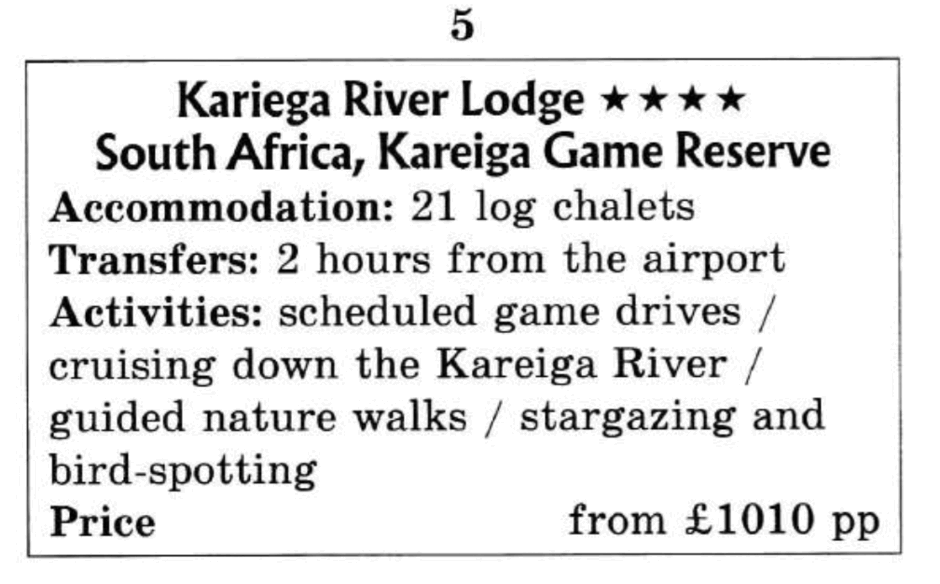
Ґ
an adventure holiday
Д
a weekend city break
Е
a homestay
Є
a safari
2
1 з 10 балів
Healthy Ageing
It's difficult to define ageing. The most widely accepted concept behind the idea of ageing is that it is just a part of the life cycle: birth, childhood, adolescence, adulthood and, in the end, old age. As we age, various physiological changes occur in our body since our organs start to lose their changes in intellectual functioning.
The way people age differs considerably, and this difference increases with age. Some people age more quickly with a dramatic level of decline, while others age more slowly with much less significant changes. Why?
Gerontology, the science dealing with the study of the ageing process, cannot yet give us a clear answer about what causes the ageing process. There are many ageing theories but none of them can explain satisfactorily why biological organisms age. The best we can say is that the ageing process depends on both genetic and environmental factors.
Genetic factors primarily define the maximum lifespan of a species; humans may very occasionally live for 120 years, mice only 4 years, butterflies 1 weeks. Furthermore, genetic factors are responsible for important morphological and physiological changes of the ageing process. With advancing age, they come into the picture and make our arteries, muscles, and skin lose elasticity, impair our vision and hearing. Moreover, there are certain cognitive and personality changes associated with ageing. Most aged people start to experience memory problems and become preoccupied with their inner life and personal feelings rather than the outside world.
Environmental factors are also very important as they determine the rate of the ageing process. This has become quite clear in the twentieth century, during which life expectancy in developed countries has increased considerably due to the reduction of infant mortality, improvements to working conditions, introduction of hygienic and nutritional measures and infection control. In contrast to the developed countries, the life expectancy in Nigeria is limited to 54 years by high death rate during childbirth, starvation, infections, absence of proper nutrition.
A major problem, however, remains the lack of good health in old age. On the average we live longer, but many of the extra years are often accompanied by chronic diseases such as osteoarthritis, diabetes, hypertension, and others. However, theoretical gerontology and anti-ageing medicine may eventually discover there is no limit to human life span.
What idea is NOT expressed in PARAGRAPH 1?
3
1 з 10 балів
Healthy Ageing
It's difficult to define ageing. The most widely accepted concept behind the idea of ageing is that it is just a part of the life cycle: birth, childhood, adolescence, adulthood and, in the end, old age. As we age, various physiological changes occur in our body since our organs start to lose their changes in intellectual functioning.
The way people age differs considerably, and this difference increases with age. Some people age more quickly with a dramatic level of decline, while others age more slowly with much less significant changes. Why?
Gerontology, the science dealing with the study of the ageing process, cannot yet give us a clear answer about what causes the ageing process. There are many ageing theories but none of them can explain satisfactorily why biological organisms age. The best we can say is that the ageing process depends on both genetic and environmental factors.
Genetic factors primarily define the maximum lifespan of a species; humans may very occasionally live for 120 years, mice only 4 years, butterflies 1 weeks. Furthermore, genetic factors are responsible for important morphological and physiological changes of the ageing process. With advancing age, they come into the picture and make our arteries, muscles, and skin lose elasticity, impair our vision and hearing. Moreover, there are certain cognitive and personality changes associated with ageing. Most aged people start to experience memory problems and become preoccupied with their inner life and personal feelings rather than the outside world.
Environmental factors are also very important as they determine the rate of the ageing process. This has become quite clear in the twentieth century, during which life expectancy in developed countries has increased considerably due to the reduction of infant mortality, improvements to working conditions, introduction of hygienic and nutritional measures and infection control. In contrast to the developed countries, the life expectancy in Nigeria is limited to 54 years by high death rate during childbirth, starvation, infections, absence of proper nutrition.
A major problem, however, remains the lack of good health in old age. On the average we live longer, but many of the extra years are often accompanied by chronic diseases such as osteoarthritis, diabetes, hypertension, and others. However, theoretical gerontology and anti-ageing medicine may eventually discover there is no limit to human life span.
What does the author say about genetic and environmental factors?
Запитання №4 З однією правильною відповіддю
Запитання №5 З однією правильною відповіддю
Запитання №6 З однією правильною відповіддю
Рефлексія від 2 учнів
Сподобався:
0
Так: 2
Ні: 0
Зрозумілий:
0
Так: 1
Ні: 1
Потрібні роз'яснення:
0
Ні: 2
Так: 0