- Всеосвіта›
- Бібліотека тестів›
- Англійська мова›
- (Копія) Reading. Form 10. Semester 2

Тест:
(Копія) Reading. Form 10. Semester 2

18.05.2023

Вміст тесту:
1
2
3
4
5
6
7
8
9
10
11
12
Тест містить питання скопійовані з: Reading. Form 10. Semester 2.
1
1 з 12 балів
1. Read the text on the next page about social networking sites and decide if the statements are True or False.
SOCIAL NETWORKING SITES
As social networking sites are becoming more and more popular, researchers are starting to worry that we may be turning into addicted users. This may actually be true. Take a quick look around you and you’ll see for yourself: people are constantly checking their smartphones to keep up with their friends’ recent posts on social networking sites. They are also commenting on and sharing that information with other friends.
Since social networking sites appeared in the late 1990s, they have become a part of everyday life. Initially, people used them to stay in touch with family and friends through instant messaging applications. They also created professional profiles online so they could search for jobs. In addition, they started making new friends who had similar interests or found old classmates through a name search.
Nowadays, however, although all of the above still apply, social networking sites have also become a place for posting personal details the public has no interest in. According to psychologists, users obsessively post bits of their life online because this gives them the illusion of having an audience. Does the post ‘Kathy is drinking tea with her sister Jo at Maxwell shopping centre’ sound familiar?
In this scenario, there would even be a photo of Kathy and her sister drinking that tea at that shopping centre. Then, chances are, those girls would constantly check how many people ‘liked’ their photo.
Researchers have repeatedly stressed the dangers of making our private life available online. There have been many cases of kidnappers who posed as someone younger to make friends with a child, using a false name and photo, for example. There is no way of knowing who is behind an online profile. This is why, experts warn, we should never accept a friend request from people we don’t know and, of course, never agree to meet them. The same goes for sharing personal information such as addresses and telephone numbers online. At the end of the day, what we should be asking ourselves before posting anything is: does the world really care or need to know where I am or what I’m doing right now?
1. The writer thinks the addiction to social networking sites is not as serious as researchers argue.
2
1 з 12 балів
1. Read the text on the next page about social networking sites and decide if the statements are True or False.
SOCIAL NETWORKING SITES
As social networking sites are becoming more and more popular, researchers are starting to worry that we may be turning into addicted users. This may actually be true. Take a quick look around you and you’ll see for yourself: people are constantly checking their smartphones to keep up with their friends’ recent posts on social networking sites. They are also commenting on and sharing that information with other friends.
Since social networking sites appeared in the late 1990s, they have become a part of everyday life. Initially, people used them to stay in touch with family and friends through instant messaging applications. They also created professional profiles online so they could search for jobs. In addition, they started making new friends who had similar interests or found old classmates through a name search.
Nowadays, however, although all of the above still apply, social networking sites have also become a place for posting personal details the public has no interest in. According to psychologists, users obsessively post bits of their life online because this gives them the illusion of having an audience. Does the post ‘Kathy is drinking tea with her sister Jo at Maxwell shopping centre’ sound familiar?
In this scenario, there would even be a photo of Kathy and her sister drinking that tea at that shopping centre. Then, chances are, those girls would constantly check how many people ‘liked’ their photo.
Researchers have repeatedly stressed the dangers of making our private life available online. There have been many cases of kidnappers who posed as someone younger to make friends with a child, using a false name and photo, for example. There is no way of knowing who is behind an online profile. This is why, experts warn, we should never accept a friend request from people we don’t know and, of course, never agree to meet them. The same goes for sharing personal information such as addresses and telephone numbers online. At the end of the day, what we should be asking ourselves before posting anything is: does the world really care or need to know where I am or what I’m doing right now?
2. When social networking sites first appeared, people used them for fewer things compared to today.
3
1 з 12 балів
1. Read the text on the next page about social networking sites and decide if the statements are True or False.
SOCIAL NETWORKING SITES
As social networking sites are becoming more and more popular, researchers are starting to worry that we may be turning into addicted users. This may actually be true. Take a quick look around you and you’ll see for yourself: people are constantly checking their smartphones to keep up with their friends’ recent posts on social networking sites. They are also commenting on and sharing that information with other friends.
Since social networking sites appeared in the late 1990s, they have become a part of everyday life. Initially, people used them to stay in touch with family and friends through instant messaging applications. They also created professional profiles online so they could search for jobs. In addition, they started making new friends who had similar interests or found old classmates through a name search.
Nowadays, however, although all of the above still apply, social networking sites have also become a place for posting personal details the public has no interest in. According to psychologists, users obsessively post bits of their life online because this gives them the illusion of having an audience. Does the post ‘Kathy is drinking tea with her sister Jo at Maxwell shopping centre’ sound familiar?
In this scenario, there would even be a photo of Kathy and her sister drinking that tea at that shopping centre. Then, chances are, those girls would constantly check how many people ‘liked’ their photo.
Researchers have repeatedly stressed the dangers of making our private life available online. There have been many cases of kidnappers who posed as someone younger to make friends with a child, using a false name and photo, for example. There is no way of knowing who is behind an online profile. This is why, experts warn, we should never accept a friend request from people we don’t know and, of course, never agree to meet them. The same goes for sharing personal information such as addresses and telephone numbers online. At the end of the day, what we should be asking ourselves before posting anything is: does the world really care or need to know where I am or what I’m doing right now?
3. Professionals don’t use social networking sites to find jobs any more.
4
1 з 12 балів
1. Read the text on the next page about social networking sites and decide if the statements are True or False.
SOCIAL NETWORKING SITES
As social networking sites are becoming more and more popular, researchers are starting to worry that we may be turning into addicted users. This may actually be true. Take a quick look around you and you’ll see for yourself: people are constantly checking their smartphones to keep up with their friends’ recent posts on social networking sites. They are also commenting on and sharing that information with other friends.
Since social networking sites appeared in the late 1990s, they have become a part of everyday life. Initially, people used them to stay in touch with family and friends through instant messaging applications. They also created professional profiles online so they could search for jobs. In addition, they started making new friends who had similar interests or found old classmates through a name search.
Nowadays, however, although all of the above still apply, social networking sites have also become a place for posting personal details the public has no interest in. According to psychologists, users obsessively post bits of their life online because this gives them the illusion of having an audience. Does the post ‘Kathy is drinking tea with her sister Jo at Maxwell shopping centre’ sound familiar?
In this scenario, there would even be a photo of Kathy and her sister drinking that tea at that shopping centre. Then, chances are, those girls would constantly check how many people ‘liked’ their photo.
Researchers have repeatedly stressed the dangers of making our private life available online. There have been many cases of kidnappers who posed as someone younger to make friends with a child, using a false name and photo, for example. There is no way of knowing who is behind an online profile. This is why, experts warn, we should never accept a friend request from people we don’t know and, of course, never agree to meet them. The same goes for sharing personal information such as addresses and telephone numbers online. At the end of the day, what we should be asking ourselves before posting anything is: does the world really care or need to know where I am or what I’m doing right now?
4. People use social networks to announce daily activities that other people do not care about.
5
1 з 12 балів
1. Read the text on the next page about social networking sites and decide if the statements are True or False.
SOCIAL NETWORKING SITES
As social networking sites are becoming more and more popular, researchers are starting to worry that we may be turning into addicted users. This may actually be true. Take a quick look around you and you’ll see for yourself: people are constantly checking their smartphones to keep up with their friends’ recent posts on social networking sites. They are also commenting on and sharing that information with other friends.
Since social networking sites appeared in the late 1990s, they have become a part of everyday life. Initially, people used them to stay in touch with family and friends through instant messaging applications. They also created professional profiles online so they could search for jobs. In addition, they started making new friends who had similar interests or found old classmates through a name search.
Nowadays, however, although all of the above still apply, social networking sites have also become a place for posting personal details the public has no interest in. According to psychologists, users obsessively post bits of their life online because this gives them the illusion of having an audience. Does the post ‘Kathy is drinking tea with her sister Jo at Maxwell shopping centre’ sound familiar?
In this scenario, there would even be a photo of Kathy and her sister drinking that tea at that shopping centre. Then, chances are, those girls would constantly check how many people ‘liked’ their photo.
Researchers have repeatedly stressed the dangers of making our private life available online. There have been many cases of kidnappers who posed as someone younger to make friends with a child, using a false name and photo, for example. There is no way of knowing who is behind an online profile. This is why, experts warn, we should never accept a friend request from people we don’t know and, of course, never agree to meet them. The same goes for sharing personal information such as addresses and telephone numbers online. At the end of the day, what we should be asking ourselves before posting anything is: does the world really care or need to know where I am or what I’m doing right now?
5. According to research, users like posting online because they enjoy the attention.
6
1 з 12 балів
1. Read the text on the next page about social networking sites and decide if the statements are True or False.
SOCIAL NETWORKING SITES
As social networking sites are becoming more and more popular, researchers are starting to worry that we may be turning into addicted users. This may actually be true. Take a quick look around you and you’ll see for yourself: people are constantly checking their smartphones to keep up with their friends’ recent posts on social networking sites. They are also commenting on and sharing that information with other friends.
Since social networking sites appeared in the late 1990s, they have become a part of everyday life. Initially, people used them to stay in touch with family and friends through instant messaging applications. They also created professional profiles online so they could search for jobs. In addition, they started making new friends who had similar interests or found old classmates through a name search.
Nowadays, however, although all of the above still apply, social networking sites have also become a place for posting personal details the public has no interest in. According to psychologists, users obsessively post bits of their life online because this gives them the illusion of having an audience. Does the post ‘Kathy is drinking tea with her sister Jo at Maxwell shopping centre’ sound familiar?
In this scenario, there would even be a photo of Kathy and her sister drinking that tea at that shopping centre. Then, chances are, those girls would constantly check how many people ‘liked’ their photo.
Researchers have repeatedly stressed the dangers of making our private life available online. There have been many cases of kidnappers who posed as someone younger to make friends with a child, using a false name and photo, for example. There is no way of knowing who is behind an online profile. This is why, experts warn, we should never accept a friend request from people we don’t know and, of course, never agree to meet them. The same goes for sharing personal information such as addresses and telephone numbers online. At the end of the day, what we should be asking ourselves before posting anything is: does the world really care or need to know where I am or what I’m doing right now?
6. Some people have used social networking sites to commit crimes.
7
1 з 12 балів
2. Read the texts. What does each text say? Choose the correct letter A, B or C.

Why is Millie disappointed?
8
1 з 12 балів
2. Read the texts. What does each text say? Choose the correct letter A, B or C.

9
1 з 12 балів
2. Read the texts. What does each text say? Choose the correct letter A, B or C.

The tennis class
10
1 з 12 балів
2. Read the texts. What does each text say? Choose the correct letter A, B or C.

The successful candidate must___
11
1 з 12 балів
2. Read the texts. What does each text say? Choose the correct letter A, B or C.

The guests_____
12
1 з 12 балів
2. Read the texts. What does each text say? Choose the correct letter A, B or C.
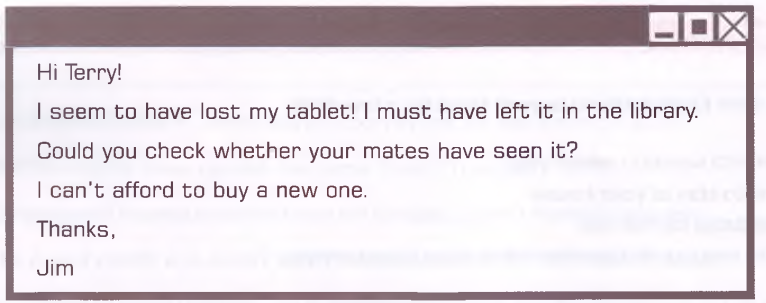
What does Jim want Terry to do?
Рефлексія від 5 учнів
Сподобався:
0
Так: 3
Ні: 2
Зрозумілий:
0
Так: 3
Ні: 2
Потрібні роз'яснення:
0
Ні: 4
Так: 1