- Всеосвіта›
- Бібліотека тестів›
- Англійська мова›
- (Копія) K3 78

Тест:
(Копія) K3 78

28.01.2022
Вміст тесту:
1
2
3
4
5
6
7
8
9
10
11
12
13
14
1
12 з 168 балів
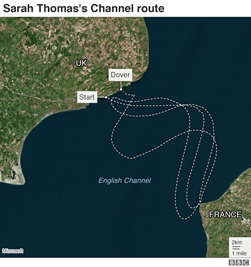
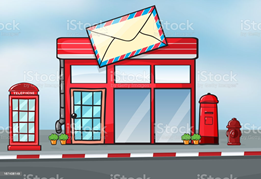
Match the picture with the right word.
1
an ocean
А

2
a channel
Б
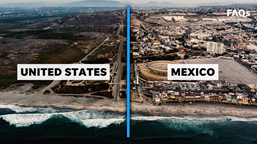
3
an island
В

4
in the north
Г
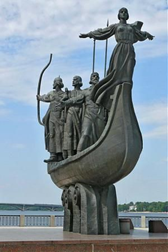
5
to border on
Ґ

6
to be washed by
Д
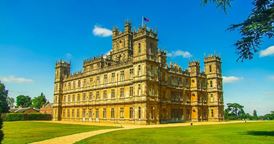
7
a library
Е

8
a supermarket
Є
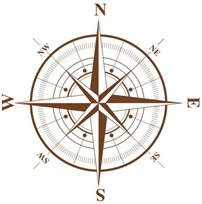
9
a post office
Ж
10
a bank
З

11
a monument
И

12
a palace
І
2
12 з 168 балів
1. Guess the words. Write them down. Mind the usage of the particle to and articles.
1. [ˈsuːpəmɑːkɪt]
2. [ˈɒpəzɪt]
3. [ˈdraɪvə]
4. [fraɪd]
5. [ˈiːvnɪŋ]
6. [ˈspeɪʃəs]
7. [streɪt]
8. [ˈlaɪbrərɪ]
9. [ɪkˈspensɪv]
10. [raɪt]
11. [juːnɪˈvɜːsɪtɪ]
12. [ˈpælɪs]
3
12 з 168 балів
Unscramble the words and phrases. Mind the usage of articles and particles 'to'.
I ma resu
I vebeeil
I peho
itvena
owtorrmo
onso
dernmo
atgre
ot teg ot
xten
4
12 з 168 балів
Translate the phrases.
1. збиратись щось робити
2. столиця Великобританії
3. оживлене місто
4. фешенебельні готелі
5. розкішні пам’ятники
6. розташовуватися на річці Темза
7. повертати ліворуч
8. йти прямо
9. на розі вулиці
10. дешеве кафе
11. сучасний кінотеатр
12. рідне місто
5
12 з 168 балів
Complete the sentences.
1. They (відвідувати Карпатські гори) next week.
2. I (не пити смачну каву) (в затишному кафе просто неба) tomorrow.
3. Jack (брати цікаву книгу) (з найсучаснішої бібліотеки міста) the day after tomorrow?
4. My sister and I (зустрічати своїх батьків) (біля станції метро) in two hours.
5. Kate (купувати) (розкішний автомобіль) soon.
6. Our manager (не приносити) (новий комп’ютер в офіс) tomorrow.
7. Your relatives (відпочивати) (на півдні нашої країни) next summer?
8. He (не їхати на вокзал) (автобусом) in some minutes.
9. My daughter (носити привабливі сукні) next spring.
10. You (малювати (фарбами)) (найбільш відомі визначні місця) next Saturday?
11. Her nephew (вчитися в університеті) next year.
12. Bill (плавати в Дніпрі) in three days?
6
12 з 168 балів
Open the brackets. Use the Future Simple Tense
1) A: There's someone at the door.B: I (get) it. |
2) Joan thinks the Conservatives (win) the next election. |
3) A: I'm moving house tomorrow.B: I (come) and help you. |
4) Where (to have, you) lessons tomorrow? |
5) I (be) there by four o'clock I promise. |
6) A: I'm cold.B: I (turn on) the fire. |
7) A: She's late.B: Don;t worry. She (come) . |
8) The meeting (take) place at 6pm. |
9) If you eat all of that cake, you (feel) sick. |
10) They (not, be) home at 10 o'clock. |
7
12 з 168 балів
Put the questions to the underlined words.
1. My friends will go to a fashionable shop to buy new clothes next Sunday.
to a fashionable shop to buy new clothes?
My friends will go to a fashionable shop to buy new clothes next Sunday.
to a fashionable shop next Sunday?
2. My grandparents and I will have a great time in the Carpathian Mountains in some days.
in the Carpathian Mountains in some days?
My grandparents and I will have a great time in the Carpathian Mountains in some days.
have a great time in some days?
3. Nick’s sister will dance at the party next Wednesday.
at the party next Wednesday?
Nick’s sister will dance at the party next Wednesday.
at the party next Wednesday?
8
12 з 168 балів
Correct the mistakes.
Shall Jack go to the circus at the weekend? - I hope, he is
They will going to Scotland next week.
Which of your relatives shall visit that modern museum? - My cousin did .
He are going to learn French in a month.
I saw that interesting film two month ago.
It took her fifteen minutes to get to school every day.
Which of your friend will have a great time tomorrow?
Kyiv stand on the Dnieper.
Ukraine borders with Poland.
Who did visit a modern circus last month?
I believe you went to the post office with me the day after tomorrow.
His cousin gets only good marks in German last week.
9
12 з 168 балів
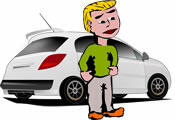
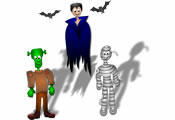
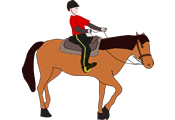
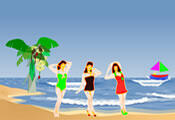
Open the brackets. Use the structure to talk about intentions and plans.
|
He (to buy) a car. |
|
It (to eat) the green grass. |
|
We (to go out) for a walk. |
|
It (to rain). |
|
You( to ride) a horse. |
|
They (to swim) . |
|
You (to go) to school. |
|
She (to watch) television. |
|
I (to write) a note. |





10
12 з 168 балів
Fill in the table with two forms of the verbs. Mind the usage of the particle 'to'
Translation | The Indefinite | The Past Indefinite |
приходити |
|
|
робити |
|
|
мати |
|
|
писати |
|
|
пити |
|
|
бігати |
|
|
переказувати |
|
|
говорити, розмовляти |
|
|
починати |
|
|
плавати |
|
|
11
12 з 168 балів
Choose the correct item to complete the sentences.
1. How long [do it takes, does it takes, does it take] us to go to the supermarket? – It [take, takes, took]us fifteen minutes to get there by car.
2. We [mustn’t to speak, mustn’t speak, mustn’t speaks] on the phone in the bank.
3. That driver [didn’t have, didn’t had, didn't has]to eat fried fish yesterday evening.
4. My son [consider, considers, considering] that spacious hotel is the best in our city.
5. Go along this street, [turn right, turn in right, turn to right] and you can see a library opposite the university.
6. My sister and I mustn’t go to school [by taxi, on taxi, in taxi] because it’s expensive.
7. This student [is going write, is going to write, is going writing] an interesting story about his university.
8. Last year the girls visited famous palaces [at the west, on the west, in the west]of England.
9.Turkey is washed by [Black Sea, the Black Sea, a Black Sea]
10.Germany [border, will border, borders] on France
11.That wonderful island is [situated, situatid, setuated] in the ocean.
12.They [am, is, are] going to swim in the pool next Friday.
13.I'm [sue, sure, shure] , he will get a good mark.
14.I hope, they [will visit, wil be visit, visit]that modern museum in a week.
15.My sister likes to walk along [the Shevchenko Street, Shevchenko Street, a Shevchenko Street]
16.This post office is [modern, moderner, more modern] that that cinema.
17.They saw wonderful bridges [in, over, under] the river Dnieper.
18.There [is, are, was] many wonderful fountains in this city.
19.His family likes to have dinner in this new [restaurent, restourant, restaurant]
20.His car is [expensive, more expensive, the most expensive] than my car.
21.It often [take, takes, took] them 20 minutes to get to the railway station.
22.His cousin likes to get to school [on foot, by foot, at foot]
23.There [is, are, were] a lot of underground stations in the city 10 years ago.
24.She had [good, better, the best] day in her life the day before yesterday.
25.That church is very popular [at, with, in] old people.
12
12 з 168 балів
Read the text.
a finger – палець
quite – досить, цілком, зовсім
usual - звичайний
to illustrate – показувати, ілюструвати
a traveller– мандрівник
for the first time in his life – вперше в житті
a fool– дурень, телепень, дурний
nature – природа
enough – достатній
to joke – жартувати
a pocket – кишеня
Forks and Fingers
Now when you eat with fork, you think it’s quite a usual thing. But it was different many years ago. Not always did people eat with forks.
Here is a story to illustrate it.
It was many years ago, in 1608. Thomas Coryat, an English traveller, went to Italy. There, for the first time in his life, he saw forks. People in Italy ate meat with them.
When Thomas Coryat came back to England, he brought some forks with him. He showed them to his friends and told them that people in Italy ate meat with forks. His English friends laughed very much. They said that people in Italy were fools. “It’s very good to eat with fingers,” they said. Then Thomas Coryat said, “Look here! It’s very good to eat with forks, not with fingers, because people don’t always have clean hands”.
“Do you think that people in England don’t wash their hands before eating?” asked one of his friends.
“Aren’t the ten fingers that nature gave us enough for us?” asked his second friend.
Then Thomas Coryat got angry. He wanted to show them how to eat with a fork. He took some meat with a fork but the meat fell down. His friends laughed and laughed and joked about it. So Thomas Coryat put the fork back into his pocket.
We are sure you can eat with a fork, can’t you?
Match two parts of the sentences.
1. For the first time in his life | [a, b, c, d, e, f, g, h, i, j, k] | a) ate with forks |
2. When Thomas Coryat came | [a, b, c, d, e, f, g, h, i, j] | b) went to Italy in 1608 |
3. When you eat with a fork | [a, b, c, d, e, f, g, h, i, j] | c) to eat with fingers |
4. It’s very good to eat with | [a, b, c, d, e, f, g, h, i, j] | d) he brought some forks with him |
5. His English friends | [a, b, c, d, e, f, g, h, i, j] | e) your think it’s a usual thing |
6. Not always people | [a, b, c, d, e, f, g, h, i, j] | f) Thomas Coryat saw forks |
7. It’s very good | [a, b, c, d, e, f, g, h, i, j] | g) laughed very much |
8. An English traveller | [a, b, c, d, e, f, g, h, i, j] | h) ate meat with forks |
9. People in Italy | [a, b, c, d, e, f, g, h, i, j] | i) because the hands aren’t always clean |
10. Coryat showed his friends | [a, b, c, d, e, f, g, h, i, j] | j) how to eat with a fork |
Connect the Ukrainian phrases with the English equivalents.
1. Багато років тому це було по-іншому. | [a, b, c, d, e, f, j, h, i, j, k] | a) When he came back to England, he brought some forks with him. |
2. уперше в житті | [a, b, c, d, e, f, g, h, i, j, k] | b) We are sure you can eat with a fork, can’t you? |
3. Це досить звичайне явище. | [a, b, c, d, e, f, g, h, i, j, k] | c) People in Italy ate meat with forks. |
4. Коли вiн повернувся до Англії, він привіз iз собою декілька виделок. | [a, b, c, d, e, f, g, h, i, j, k] | d) It was different many years ago. |
5. коли ви їсте виделкою | [a, b, c, d, e, f, g, h, i, j] | e) It’s very good to eat with forks, not with fingers. |
6. Дуже добре їсти виделками, а не пальцями. | [a, b, c, d, e, f, g, h, i, j, k] | f) when you eat with a fork |
7. Італійці їли м’ясо виделками. | [a, b, c, d, e, f, g, h, i, j, k] | g) Aren’t the ten fingers that nature gave us enough for us? |
8. перед їжею | [a, b, c, d, e, f, g, h, i, j, k] | h) laughed and joked |
9. Хіба нам нe вистачає десяти пальців, які нам дала природа? | [a, b, c, d, e, f, g, h, i, j, k] | i) It’s quite a usual thing. |
10. сміялися та жартували | [a, b, c, d, e, f, g, h, i, j, k] | J) before eating |
11. Ми впевнені, що ви можете їсти виделкою, чи не так? | [a, b, c, d, e, f, g, h, i, j, k] | k) for the first time in his life |
13
12 з 168 балів
Listen to the dialogue and complete the sentences.
-Hello, what is ?
-My is John. And yours?
-My name is . Where are you , John?
-I'm from . I want to tell you about my .
-Oh, it is very , tell me, please.
-England on a . It is by the Atlantic Ocean in the north and , by the North Sea in the and by the English in the and south-west.
- that your country is very and . Do you like it?
-I like my most of all.
-I'm going to visit and next summer.
- I shall see you there soon.
14
12 з 168 балів
Listen to the dialogue and complete the sentences.
-Hi, Tom! I haven't seen you for ages!
- , Ben! Last month I was in
-Oh, I'm going to visit it . What are there? Did you all of them?
-No, I didn't. I visited St.Andrew , St.Sophia Cathedral, Kyiv-Pechersk Lavra, St.Volodymyr Cathedral. I liked Khreschatyk very much. It is in the of the city.
-Oh, are there any , museums in the ?
-Yes, .
-I'm sure they are . I'd like to visit them.
-Have a good weekend.
-
-
Рефлексія від 0 учнів
Сподобався:
0
Так: 0
Ні: 0
Зрозумілий:
0
Так: 0
Ні: 0
Потрібні роз'яснення:
0
Ні: 0
Так: 0