Тест:
K4 25

26.04.2024

Вміст тесту:
1
2
3
4
5
6
7
8
9
10
11
12
13
Тест містить питання скопійовані з: K4 25.
1
12 з 156 балів
Guess the words and write them into blanks. Mind particle "to".
ltl
sndrd
stw
lrd
smkd
jst
bk
rcntl
frsh
bkd
smk
stwd
2
12 з 156 балів
Fill in the blanks with the English equivalents. Mind the articles and particle "to".
тушкований
вже
свіжий
пекти
щойно
несвіжий
коптити
нещодавно, недавно, днями
печений
нещодавно, останнім часом
тушкувати (ся)
висушений на сонці, в'ялений
3
12 з 156 балів
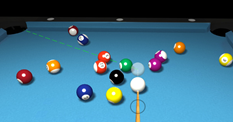
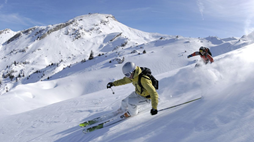
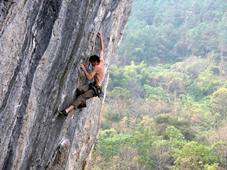
Match the picture with the right word.
1
hockey
А

2
basketball
Б

3
football
В

4
volleyball
Г

5
swimming
Ґ

6
climbing
Д

7
skating
Е
8
body building
Є

9
skiing
Ж

10
cricket
З
11
surfing
И

12
billiards
І
4
12 з 156 балів
Correct the mistake if necessary. Mind the articles and particle "to".
orgenizd
aither
to sky
helth
amount
a looser
a rok
outdors
skateboarding
anforgetable
a suvenir
to deside
5
12 з 156 балів
Choose the correct variant.
I [have already cleaned, have cleaned already, already cleaned] my room.
Jim [have just painted, has just painted, was just painted] a wonderful picture.
The children [played, has played, have played] different games today.
Helen [already has washed, has already washed, has washed already] the dishes.
The pupils [have already gone, already went, has already gone] home.
Granny [has just baket, has just baked, just has baked] a tasty pie.
The boy [already brushed, have already brushed, has already brushed] his teeth.
Mother [has just watered, have just watered, was just watered] the flowers.
We [has had, have had, have hat] five tests this week.
I [have today done, has already done, have already done] my homework.
She [has cooked, have cooked, had cooked] a lot of smoked fish recently.
Kate [have had, has had, had had] two cups of coffee this morning.
6
12 з 156 балів
Correct the mistakes in the sentences. Mind the tense form of the verb.
She have been to Italy this summer.
My friends have gone to school yesterday.
We will go to the expensive restaurant two days ago.
I am doing my morning exercises every day.
That manager can climb high mountains ten years ago.
He have done this exercise today.
They weren't go to the park last week.
What is you going to do at the weekend?
We have just have our tasty breakfast.
She must sweep the floor in the kitchen last Saturday.
7
12 з 156 балів
Choose the correct variant:
1.a) Last spring he decided to lose weight.
b) Last spring he has decided to lose weight. [a, b]
2.a) He started trainings two month ago.
b)He starts trainings two month ago. [a, b]
3.a) Mike goes to the sports club three times a week.
b)Mike go to the sports club three times a week. [a, b]
4.a)They are going to visit splendid island in the Pacific Ocean soon.
b)They are going to visit a splendid island in the Pacific Ocean soon. [a, b]
5.a) The day before yesterday Jane bought one-way plane tickets.
b) The day before yesterday Jane has bought one-way plane tickets. [a, b]
6.a) Jack isn't singing now. Mile isn't singing, too.
b) Jack isn't singing now. Mile isn't singing either. [a, b]
7.a) Tom is a fan of football. Bob is a football fan, too.
b) Tom is a fan of football. Bob is a football fan either. [a, b]
8.a) Helen has already washed up the dishes.
b) Helen already washed up the dishes. [a, b]
8
12 з 156 балів
Match the sentence and the tense:
1
I have already washed the dishes.
А
Future Simple / interrogative
2
Frank and Peter often spend their summer holidays in Great Britain.
Б
Past Simple / affirmative
3
We were writing the dictation at 2 p.m. yesterday.
В
Present Perfect / affirmative
4
We travelled to the seaside by car last month.
Г
Present Simple / affirmative
5
My friends are taking a trip to London at this moment.
Ґ
Present Continuous / affirmative
6
Who will climb the Carpathian Mountains on holidays?
Д
Past Continuous / affirmative
7
You won't see a beautiful monument near the bank.
Е
Past Simple / interrogative
8
When did you use this type of transport last time?
Є
Present Perfect / negative
9
How often do you usually play tennis?
Ж
Future Simple / negative
10
She hasn't won the competition yet.
З
Present Simple / interrogative
9
12 з 156 балів
Choose the right variant.
What [do, does, is] he usually do in summer?
They often play [outdoor, outdoors, autdoor] games on the playground.
She [goes, went, is going] to the sports club at the moment.
Her granny often cooks [fried, fries, fraid] fish at the weekend.
They have [was, were, been] to the USA this month.
Their little brother is good [in, on, at] painting.
Cricket is [much, more, the most] popular game in Great Britain.
You can always play football [on, at, in] the stadium.
That accountant likes to play [naither, neether, neither] hockey nor chess.
The pupils have done a lot of [dificult, diffecult, difficult] exercises this week.
The [near, nearer, nearest] supermarket is situated opposite my house.
My father woke [down, up, at] at six a.m. yesterday.
Her sister always gets up [early, erly, aerly] in the morning.
They [can, could, coud] ski in the mountains last winter.
My family and I went to [Black Sea, Black See, the Black Sea] last summer.
Their nephew [booked, has booked, books] a ticket to London recently.
I must get to my work on foot because I have [miss, mised, missed] my bus.
Their relatives won the first place in the [skateboarding, skeatboarding, skateboording] competition.
They [catch, caught, will catch] a plane in ten minutes.
If you want to make a tour you must buy a ticket in the [booking office, bookin office, booking ofice]
The [suvenirs, souvenirs, sovenirs] from Spain are splendid!
I prefer indoor games [at, with, to] outdoor games.
The Crimea [is washed by, is washed at, washes by] the Black Sea.
Did you [see, saw, sea] many places of interest in Washington?
Her relatives live in a [quite, quiet, quit] street.
Your cousins don't like to play snowballs [too, either, also]
Is your brother fond [of, at, off] golf?
Their team has just come back [at, from, in]the capital of Ukraine.
Eating [helthy, healthy, health] food is very good for you body.
Oh! Look! That wonderful girl is giving me [a wink, a winck, wink]
10
12 з 156 балів
Read and translate the words.
a conversation - розмова, бесіда
to shake hands - потискати руки
to hug - міцно обіймати, стискати в обіймах
Listen to the text.
Choose the right variant according to the text.
When people meet in the street, they usually [don't talk with each other, stop and talk for a few minutes, don't look at each other]
They talk about [their families and their lives, the weather, the relatives]
Men usually [hug each other, ask about family, shake hands]
Women [hug each other, shake hands, talk about animals]
The conversation often begins with ["Thanks", "Hi", "Goodbye"]
The conversation often ends with ["I haven't seen you for ages", "Hello", "See you soon"]
When you meet your friend, you can [go with him/her, invite him/her, play with him/her]
11
12 з 156 балів
Read and translate the words.
a car accident - автомобільна аварія
tiring - той, що стомлює, виснажливий
peaceful - мирний
adults - дорослі
to surf - займатися серфінгом
to argue- сперечатися
a guest house - (невеликий) готель, будинок для гостей
Listen to the speakers.
Choose the right variant according to the text.
What did Jess do last summer? [She went to Greece with her friends, She spent time at a hospital in Greece, She didn’t go to Greece.]
How was John's family holiday? [relaxing, tiring, fun]
When was the weather bad for John? [on his family and his walking holiday, on his family holiday only, on his walking holiday only]
Which is true about Claire's family holiday? [Her family will go here next year, Her family stayed together all the time, They spent some time watching animals]
Who in Claire’s family likes to go to bars in the evening? [Claire, her son, her daughter]
What is true about Jaden’s holiday? [The first week was better than the 2nd, The second week was better than the 1st, Both weeks were great.]
Which activity did Jaden NOT enjoy? [fishing, visiting bars, having parties on the boat]
12
12 з 156 балів
Read and translate the words.
to check - перевіряти
occasionally - інколи, час від часу
to leave - залишати, йти
a nap - (легкий) сон
typically - зазвичай, типово
a tablet - планшет
Read the text.
The daily routines of a sportswoman
Janet is an athlete, and she wakes up at 4:30 am every weekday morning. She spends the first 30 minutes reading and then 15 minutes meditating. At 5:15 am Janet checks her email for only 30 minutes and then goes for her first run of the day. She runs for an hour and a half along the lake near her house. After running, Janet has a shower and then prepares breakfast, which is usually cereal and fruit. However, she occasionally has a less healthy breakfast.
She usually finishes breakfast at around 8 am. If it is a weekday, she always leaves the house at 8:20 and goes to training. Her training starts at 9 am, and she needs 30 minutes to drive to the gym. She trains for 3 hours with her team and then goes home for lunch. She always eats a very big and healthy lunch. As soon as she finishes lunch, she has a nap for one hour.
After her nap, she likes to go for a walk around the lake and look at nature. She sometimes reads or meditates at the lake in the afternoon. In the evening, during the week, she meets up with friends. Most of her friends are athletes too, so they have a lot to talk about.
She typically goes to bed at 9 pm because she prefers to be awake in the morning than at night. She sometimes falls asleep listening to music, but she never watches the television or reads anything on her tablet. She always makes sure her alarm is set and is almost always asleep by 9:45 pm.
Choose the right variant according to the text.
What time does she finish checking her emails? [5:30 am., 5:45 am., 6:00 am.]
How long does she run for in the morning? [45 minutes., 60 minutes., 90 minutes.]
Janet [always, occasionally, usually] has a healthy breakfast.
How often does she meditate? [Once or twice a day., Once a day., Rarely.]
What does Janet do to help her get to sleep? [listen to music, read on her tablet, watch TV]
What is the last thing she does before going to sleep? [She reads., She sets her alarm., She checks the time.]
13
12 з 156 балів
Read and translate the words.
scary - страхітливий
probably - вірогідно
dangerous - небезпечний
worries - переживання
benefits - переваги
to disappear - зникати
experience - досвід
creatures - створіння
an apartment - квартира
customs - звичаї
Read the text.
Tips for travelling alone
Travelling alone seems scary if it’s the first time you are going to leave the comfort of home. You will probably think about the potential risks or difficult situations. What happens if I get ill, or have an accident? Isn’t it dangerous to go out alone at night? What happens if I get attacked? Isn’t it strange to eat at restaurants alone all the time?
Most travellers have these worries and more before their first trip alone, but all these fears disappear when they see all the benefits of this great experience. Here I’m going to give you 3 tips on how to travel alone and have a good time.
Speak the language
Humans are sociable creatures. We all need to talk to other people. If you are travelling alone, it’s a good idea to go somewhere you speak the language.
Sleep with the locals
Hotels are comfortable but very lonely, and hostels are perfect for people who travel alone, but you will only speak with other tourists. Try to rent a room in an apartment. This will give you a connection with local residents and they can give you a lot of tips on what you can do.
Don’t be shy
Don’t be afraid of asking. Ask for directions in the street, or ask about the place, the culture or the customs to the local people that you find in bars, parks, etc. You will be surprised how much people like to talk about their town or their culture. Remember you are alone. Asking can be an effective way to start a conversation and meet new people.
Choose the right variant according to the text.
The writer thinks that travelling alone is... [worse than staying at your great home, dangerous., a good idea.]
The writer wants to... [help people who want to travel alone., talk about the risks of travelling alone, talk about his experiences travelling]
If you travel alone, it’s a good idea... [to learn the language of the place, to go to a place where you can speak, to speak to other tourists.]
The writer thinks that if you travel alone, hostels are... [the best option., very good but not the best option., worse than hotels.]
The local residents can help you... [to find a good hotel or hostel., giving you ideas for your trip., to find a cheap room that you can rent.]
The best thing about asking is that... [you get the information you need., you can find the needed places, you can talk to the local people.]
Рефлексія від 2 учнів
Сподобався:
0
Так: 2
Ні: 0
Зрозумілий:
0
Так: 2
Ні: 0
Потрібні роз'яснення:
0
Ні: 2
Так: 0