Тест:
К3 20

08.10.2021
Вміст тесту:
1
2
3
4
5
6
7
8
9
10
1
12 з 120 балів
Name the pictures according to the types of the weather. You don't need to write any punctuation.
|
|
|
|
|
|
|
|
|
|
|
|
|
|
|
|


2
12 з 120 балів
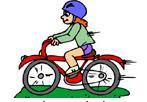
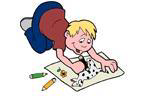
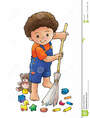
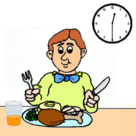
Match the pictures.
1
А
to go to school
2

Б
to take a shower
3
В
to have lunch
4

Г
to sweep the floor
5

Ґ
to take pictures
6
Д
to ride a bike
7

Е
to draw the picture
8

Є
to do shopping
9
Ж
to swim
3
12 з 120 балів
Make the order of the events right.
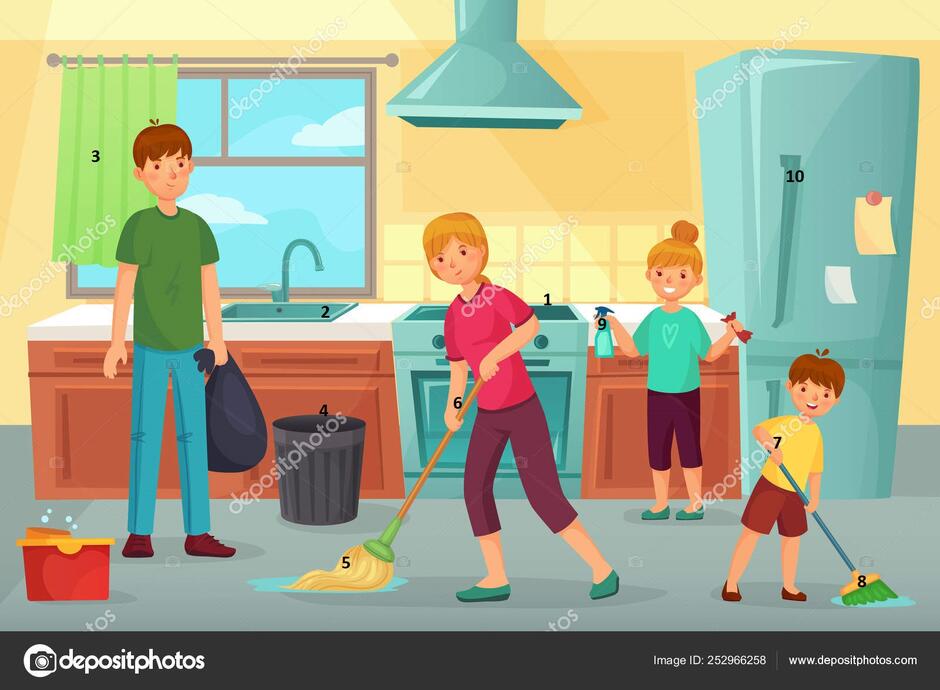
a mop
a sink
to sweep
a gas stove
a bucket
to mop
curtains
a broom
a fridge
to dust the furniture
4
12 з 120 балів
Match the time the clocks show.
1
14:10
А
It is twenty-five past three a.m.
2
03:25
Б
It is ten past two p.m.
3
12:55
В
It is three past four a.m.
4
04:03
Г
It is a quarter to four p.m.
5
08:30
Ґ
It is five to one p.m.
6
15:45
Д
It is half past eight a.m.
7
02:58
Е
It is twenty to twelve.
8
07:45
Є
It is two to three a.m.
9
11:40
Ж
It is a quarter to eight.
5
12 з 120 балів
Fill in the correct modal verb.
She [may, can, must] speak German very well.
This girl [can’t, may not, mustn’t] help you to translate this text. She doesn’t know French well.
The pupils [may, can, must]come to school in time.
I [can’t, mustn’t] play the guitar. I can play the piano.
We [may, must]dust the furniture in the classroom every week.
The little children [can’t, may not, mustn’t] play in the yard late in the evening.
I am hungry. [May, Can, Must] I take this sandwich?
That girl [may, can] mop the floor well.
He is thirsty. [can, may] he drink some water?- Yes, he [can, may] .
My little brother [can, must, may] say many English words.
Jane [can’t, may not, mustn’t] play the piano. She can play the guitar.
The pupils [may, must] clean the blackboard in the classroom every day.
Helen [can’t, may not, mustn’t] help her granny to lay the table. She is at school.
The little children [can’t, may not, mustn’t] play computer games late in the evening.
Who [can, must] sweep the floor in the classroom? – Tanya [can, must] .She is doing nothing.
You [may, must] leave your coat on the sofa. It’s hot in this room.
6
12 з 120 балів
Open the brackets and put the verb “to be” into the Past Simple Tense. Choose the correct variant
1. That manager’s wife [was, were]in the swimming pool the day before yesterday.
2. Good workers [wasn't, weren't] late for work last morning.
3. Her granny [was, were] in that supermarket yesterday evening.
4. Our parents [wasn't, weren't]in Kyiv last winter.
5. The weather [was, were] warm and sunny the other day.
6. His kittens [was, were]very active and naughty some weeks ago.
7. [Was, Were] your sister at school last Monday? – No, she [wasn't, weren't].
8. My aunt’s vegetables [wasn't, weren't] in the fridge yesterday afternoon.
9. There [was, were] many animals on the farm last month.
10. [Was, Were] your coffee hot? – Yes, it [was, were].
11. Her new pencils [wasn't, weren't] in the pencil-box two days ago.
12. [Was, Were] those famous models hungry yesterday? – No, they [wasn't, weren't].
13. I [wasn't, weren't] at home yesterday evening. I [was, were] at the office.
14. Their friends [wasn't, weren't] at the party the day before yesterday.
15. [Was, Were]His favourite footballers in that cosy café? – Yes, they [was, were].
16. The new scooters and bikes [was, were] in the shop some days ago.
7
12 з 120 балів
Open the brackets. Put the verbs into the correct form. You don't need to write any punctuation. (Відкрийте дужки. Поставле дієслова у правильну форму. Вам НЕ потрібно писати жодних розділових знаків (крапки, коми, тощо))
My clock (показувати) ten minutes to three.
Every evening our Granny (накривати на стіл)
What is Paul doing now? - He (включати) a computer.
Ann (спізнюватися) the lessons every day.
She often (підмітати підлогу) with (віник).
The weather (бути дощовою).
The film (бути не поганий) yesterday.
The weather (бути кепсько) the other day? – Yes, .
8
12 з 120 балів
Choose the correct variant.
It is Sunday morning. The children [still sleep, still sleeps, are still sleeping]. They [don’t get up, doesn’t get up, aren’t getting up] early in the morning on Sunday.
What can’t you [do, does, doing]? – I can’t [wash, washes, washing] and iron.
Is the mother [wash up or cook breakfast, washes up or cooks breakfast, washing up or cooking breakfast]? – She is [wash up, washes up, washing up].
She can [speak, speaks, speaking] French very well.
Those little children can’t [swim, swims, swiming].
Tom [am, is, are] hungry. May he [eat, eats, eating] a banana? – Yes, he may.
Mary must [clean, cleans, cleaning] her room.
[Was, Were] it windy yesterday? – No, it [was, were] not.
I can’t [play, plays, playing] the piano.
His cousin can [paint, paints, painting] well.
What must Tom [do, does, doing] now? – He must [help, helps, helping] the parents about the house.
Can these children [mop, mops, moping] the floor? – No, they can’t.
May I [drink, drinks, drinking] apple juice? – Yes, please.
I can’t [iron, irons, ironing] shirts and trousers.
What [is, was, were] the weather like today? – It [is, was, were] nasty.
The mother usually [do shopping, does shopping, doing shopping]. But now she [am, is, are] in the office. She [work, works, is working].
Liz and Jack [aren't, wasn't, weren't] at home in the morning yesterday, they [are, was, were] in the park.
His mother [was, were] in the shop and his father [was, were] in the swimming pool.
What is the granny [do, does, doing] in the kitchen? – She is [cook, cooks, cooking] supper.
Can Sam [iron, irons, ironing] his shirts well? – No, he can’t
I am thirsty. May I [drink, drinks, drinking] juice? – Yes, you may.
Can your mother [cook, cooks, cooking] fish soup? – Yes, certainly.
Who must [do shopping, does shopping, doing shopping] in your family?
What can he [do about the house, does about the house, doing about the house] well? – He can [vacuum, vacuums, vacuuming] the carpets well.
Pupils mustn't [speak, speaks, speaking] on the phone at the lesson.
What must Liz [do, does, doing] now? – She must [do, does, doing] her homework now.
May John [switch on, switches on, switching on] a DVD player? – Yes, he may.
9
12 з 120 балів
Read the text bellow about Tom’s working day and answer the questions that follow:
My working day:
In the morning I get up at a quarter past seven when I have lessons. On Saturdays and Sundays I don’t have lessons, so I get up at nine o’clock. I always go to the bathroom and take a shower, I also brush my teeth and my hair and dress. I usually have breakfast at home.
I usually go to school by bus. When it’s raining my father drives me. At half past eight I sometimes have English and at ten o’clock I have a break. For lunch I have a sandwich and a cake. I play with my friends.
After lunch I do my homework . I play with my friends or I play computer games. Sometimes I help my mother about the house. Sweep the floor and vacuum the carpets are my duties. I don't iron my shirts. My mother does it. Before dinner I watch TV and I lay the table. I always have dinner at half past eight in the evening. After dinner I help my mother to wash the dishes.
I go to bed at 10 o’clock.
What time does Tom get up? | [He gets up at a quarter to seven ., He gets up at a quarter past seven ., He gets up at nine o’clock.] |
Does he have lessons at night? | [Yes, he has., No, he hasn't] |
What time does Tom get up if it’s a weekend? | [He gets up at a quarter to seven ., He gets up at a quarter past seven ., He gets up at nine o’clock] |
What does he do before going to school? | [He does his morning exercises., He has breakfast., He doesn't take a shower.] |
What does he do after lunch? | [He goes to bed., He doesn't play with his friends., He does his home work.] |
What is his duties? | [His duties are iron and mop., His duties are sweep and vacuum., His duties are wash and tidy up.] |
What time does he have dinner? | [He has dinner at half past eight a.m., He has dinner at half to eight p.m., He has dinner at half past eight p.m.] |
Choose the correct variant.
He [get up, gets up, getting up] at a quarter past seven.
On Saturdays and Sundays He [don’t have, doesn’t have, isn't having] lessons.
He sometimes [have, has, is having] English.
Sometimes He [help, helps, is helping] his mother about the house.
Before dinner He [watch TV, watches TV, is watching TV] and [lay the table, lays the table, laying the table].
10
12 з 120 балів
Listen to the text .
V:
to be able to see the breath - мати змогу побачити дихання
difficult to keep - важко зберегти
hiking - піші прогулянки
alive - живий
sights - пам'ятки
empty - пустий
anywhere - де завгодно
CORRECT THE SPELLING:
Winter is my favourite oeanss.
I like the cold ertewah, which always makes the sky seem so blue.
It's easy to keep wmra.
I really like hiking in tewirn.
Winter is a really good emti to go on vacation.
Translate the words.
зима
пора року
тепло
холодно
улюблений
Рефлексія від 0 учнів
Сподобався:
0
Так: 0
Ні: 0
Зрозумілий:
0
Так: 0
Ні: 0
Потрібні роз'яснення:
0
Ні: 0
Так: 0