- Всеосвіта›
- Бібліотека тестів›
- Англійська мова›
- HS2 2019 unit9 p160 act10

Тест:
HS2 2019 unit9 p160 act10

09.05.2022
Вміст тесту:
1
2
3
4
5
6
7
8
9
10
11
12
13
14
Тест містить питання скопійовані з: HS2 2019 unit9 p160 act10.
1
12 з 168 балів
Reading 1
Read the text below. Match choices (A-H) to (1-5). There are three choices you don't need to use.
A Be prepared.
B Don't waste resources.
C But what is ecotourism?
D Have respect for local culture.
E Provide an experience that tourists want to pay for.
F Let's look at an example of an ecotour.
G Choose your holiday carefully.
H Benefit the local people.
ECOTOURISM
Nowadays, many of us try to live in a way that will damage the environment as little as possible. We recycle our newspapers and bottles, we take public transport to get to work, we try to buy locally produced fruit and vegetables and we stopped using aerosol sprays years ago. And we want to take these attitudes on holiday with us. This is why alternative forms of tourism are becoming more popular all over the world.
(1) [A, B, C, D, E, F, G, H]There are lots of names for these new forms of tourism: responsible tourism, alternative tourism, sustainable tourism, nature tourism, adventure tourism, educational tourism and more. Ecotourism probably involves a little of all of them. Everyone has a different definition but most people agree that ecotourism must:
1) conserve the wildlife and culture of the area;
2) involve the local community;
3) make a profit without destroying natural resources.
(2) [A, B, C, D, E, F, G, H]Tourists stay in local houses with local people, not in specially built hotels. So they experience the local culture and do not take precious energy and water away from the local population. They travel on foot, by boat, bicycle or elephant so that there is no pollution. And they have a special experience that they will remember all of their lives.
This type of tourism can only involve small numbers of people so it can be expensive. But you can apply the principles of ecotourism wherever you go for your holiday. Just remember these basic rules.
(3) [A, B, C, D, E, F, G, H]Learn about the place that you're going to visit. Find out about its culture and history. Learn a little of the native language, at least basics like «Please», «Thank you», and «Good morning». Think of your holiday as an opportunity to learn something.
(4) [A, B, C, D, E, F, G, H]Wear clothes that will not offend people. Always ask permission before you take a photograph. Remember that you are a visitor.
Stay in local hotels and eat in local restaurants. Buy local products whenever possible and pay a fair price for what you buy.
(5) [A, B, C, D, E, F, G, H]If the area doesn't have much water, don't take two showers every day. Remember the phrase: «Leave nothing behind you except footprints and take nothing away except photographs». Take as much care of the places that you visit as you take of your own home. Don't buy souvenirs made of endangered animals or plants.
Walk or use other non-polluting forms of transport whenever you can.
Don't be afraid to ask the holiday company about what they do that is «eco». Remember that «eco» is very fashionable today and a lot of holidays that are advertised as ecotourism are not much better than traditional tourism.
But before you get too enthusiastic, think about how you are going to get to your dream «eco» paradise. Flying is one of the biggest man-made sources of carbon dioxide in the atmosphere. Friends of the Earth say that one return flight from London to Miami puts as much carbon dioxide into the atmosphere as the average British car driver produces during a year. So don’t forget that you don't have to fly to exotic locations for your «eco» holiday. There are probably places of natural beauty and interest in your own country that you've never visited.
Reading 2
Read the text below. For questions (6-11) choose the correct answer (A, B, Cor D).
Lady Diana Spencer was born in 1961. She had a normal, quiet upbringing. It could never have prepared her for the fame and glamour of being a British princess. Within a few years, she changed from being a shy teenager to the most photographed person on the planet. She hit newspaper headlines around the world, but the biggest one was for her death at the age of 36.
Diana was a kindergarten teacher in London when she caught the interest of Prince Charles. She won the hearts of a nation with her shy smiles and natural beauty. The whole world watched the fairy-tale royal wedding in 1981. A year later, she gave birth to Prince William, the first of her two sons.
Diana was nervous at first in public, but soon she developed a charming manner. She took a strong interest in many charities and important causes. She highlighted the sufferings of the homeless and AIDS victims. She also campaigned for the abolition of landmines and many countries banned them.
Diana and Charles divorced in 1996. She struggled with depression and eating disorders for many years after. She finally found happiness with an Egyptian film producer, Dodi Al-Fayed. Their romance was closely followed by paparazzi, which led to the fatal car crash that killed her in Paris in 1997. At her funeral, British Prime Minister Tony Blair called her the «People's Princess. To many, she was simply the «Queen of Hearts»,
6 What is the best title for this text? [A, B, C, D]
A British royal family.
B The 1ife of a princess.
C Diana and Charles: unhappy love story.
D Profile: Lady Diana.
7 Lady Diana Spencer [A, B, C, D]
A prepared for being a princess from an early age.
B was brought up as an ordinary child.
C was an active teenager.
D liked being photographed.
8 Where did Diana work before becoming a princess? [A, B, C, D]
A In a nursery school.
B In a secondary school.
C In a high school.
D At the University of London.
9 What was Diana interested in? [A, B, C, D]
A Charity.
B Politics.
C International activity
D Medicine.
10 How did Diana feel after the divorce? [A, B, C, D]
A Rather calm and quiet.
B Disappointed.
C Depressed.
D Free and happy.
11 How did she die? [A, B, C, D]
A In a ship.
B In a car crash.
C In hospital from an illness.
D She was assassinated.
Reading 3
Read the text below. Match choices (A-H) to (17-21). There are three choices you don't need to use.
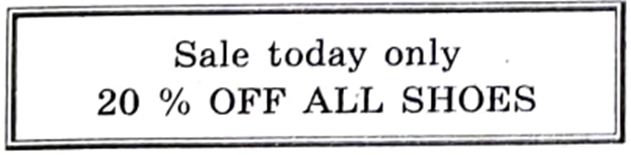
What is the purpose of the pieces of writing above?
A To tell about the date by which something should be completed.
B To offer an opportunity to become a member of a musical group.
C To notify that an activity has been called off.
D To invite a friend.
E To offer somebody to participate in a song contest.
F To inform about a temporary discount.
G To advertise a job.
H To keep somebody informed about weather conditions.
17 [A, B, C, D, E, F, G, H]

18 [A, B, C, D, E, F, G, H]

19 [A, B, C, D, E, F, G, H]
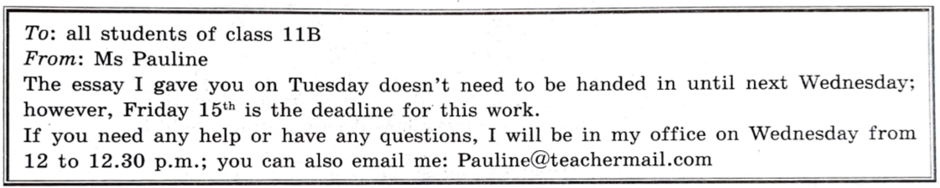
20 [A, B, C, D, E, F, G, H]

21 [A, B, C, D, E, F, G, H]
Reading 4
Read the text below. Choose from (A-H) the one which best fits each space (33-38). There are two choices you do not need to use.
A who had an old donkey
B was worth the trouble of saving
C the donkey had disappeared
D was rather the vital necessity
E to encourage himself
F in which he handled his misfortune
G and yet not solve a single problem for anyone
H throwing dirt into the well
A long time ago there was a farmer (33) [A, B, C, D, E, F, G, H]. One day the farmer could not find him. The farmer was searching for him here and there, but it looked like (34) [A, B, C, D, E, F, G, H]. The farmer was about to give up, when he heard a sound coming from the well. That's the place where the donkey was!
Having considered the situation carefully, the farmer decided that neither the donkey nor the well (35) [A, B, C, D, E, F, G, H]. Instead, he called his neighbours together, told them what had happened, and asked them to help bring dirt to bury the old donkey in the well.
When the old donkey heard that, he was terrified! But as the farmer and his neighbours started (36) [A, B, C, D, E, F, G, H], he came up with an idea. He realized that it was possible to shake the dirt off and step up!
So he started doing that. «Shake it off and step up... shake it off and step up... shake it off and step up!» he repeated (37) [A, B, C, D, E, F, G, H]. No matter how distressing the situation looked, the old donkey fought panic and just kept right on shaking it off and stepping up.
It wasn't long before the old donkey, battered and exhausted, stepped triumphantly over the wall of that well! What seemed like it would bury him actually helped him... all because of the manner (38) [A, B, C, D, E, F, G, H].
In fact life is like that. If we face our problems and refuse to give in to panic, bitterness, or self-pitty, we manage to deal with them effectively.
2
12 з 168 балів
Listening 1
1. Where does the man think he last saw his keys? [a, b, c]
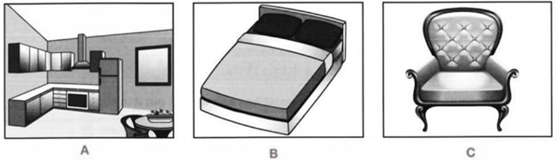
2. What does the man want to eat more of? [a, b, c]
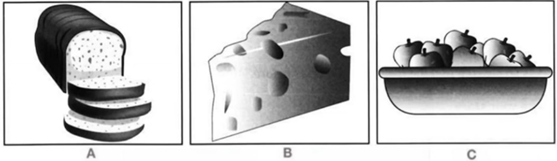
3. What is the woman going to d next Wednesday? [a, b, c]
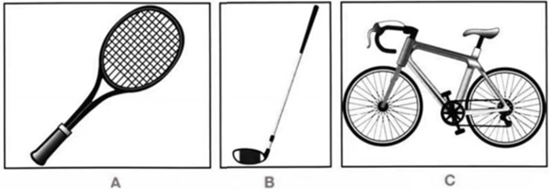
4. What is the woman interested in buying? [a, b, c]
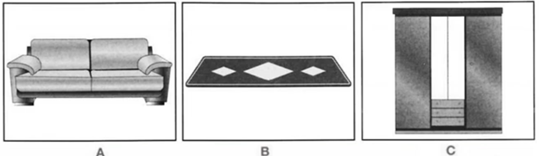
5. Why has the walk been cancelled? [a, b, c]
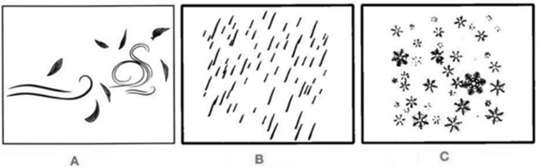
6. What did the woman enjoy most about holiday? [a, b, c]
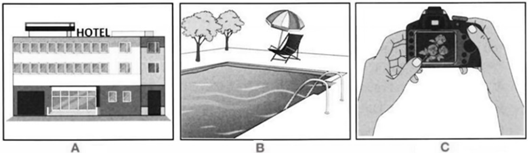
7. Which day does the man want to meet? [a, b, c]

Listening 2
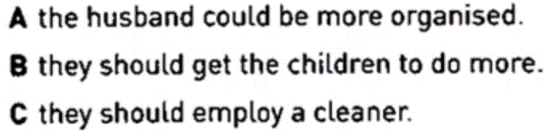
8. You will hear a wife and her husband talking about housework. The woman thinks [a, b, c]
9. You will hear two friends talking about a university. What does the man think about the woman’s choice? [a, b, c]

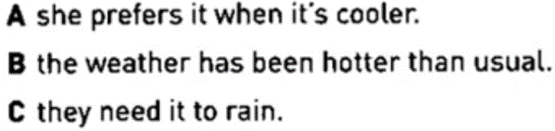
10. You will hear two friends talking about the weather. The woman says [a, b, c]
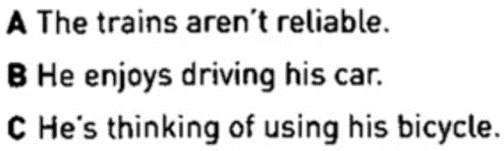
11. You will hear two friends talking about a journey to work. What does the man say? [a, b, c]
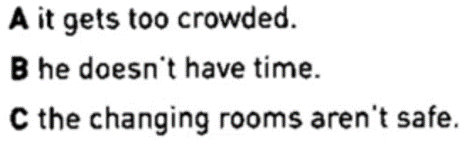
12. You will hear two friends talking about the local swimming pool. The man doesn’t use it because [a, b, c]
13. You will hear two friends talking about visiting someone in hospital. What does the woman decide to do? [a, b, c]
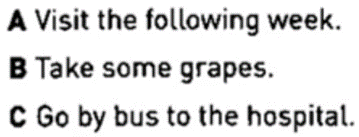
Listening 3
You will hear an interview with a man called Matt Jennings, who helps people with online security.
20. Matt says that [a, b, c]

21. What does Matt say about some emails. [a, b, c]
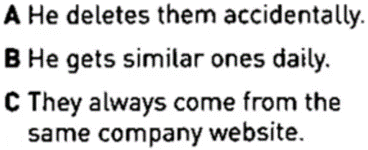
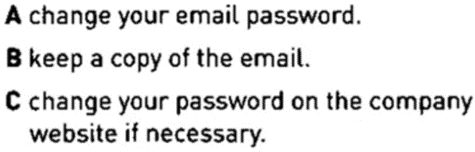
22. When you receive an email telling you to change your password, Matt says you should [a, b, c]
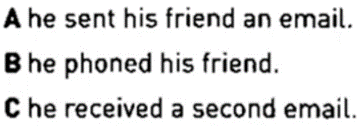
23. What does Matt say about an email he received? [a, b, c]
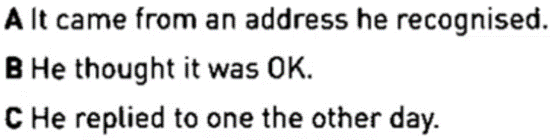
24. After Matt received the email. [a, b, c]
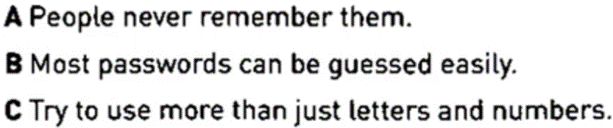
25. What does Matt say about passwords? [a, b, c]
3
12 з 168 балів
Words 1
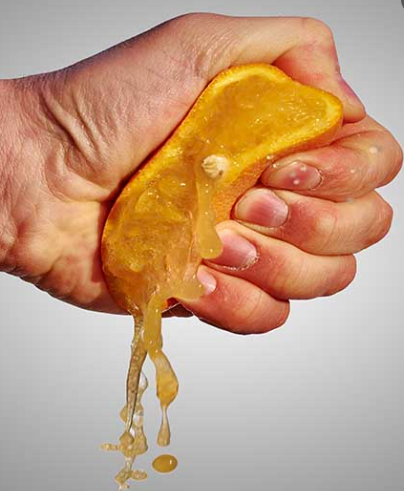
Match Kitchen Verbs With The Pictures. 1
1

А
to knead
2
Б
to melt
3

В
to drain
4

Г
to boil
5

Ґ
to spread
6

Д
to fry
7

Е
to squeeze
Запитання №4 На встановлення відповідності
Запитання №5 З вибором правильної відповіді у тексті
Запитання №6 Із заповненням пропусків у тексті
Запитання №7 На встановлення відповідності
Запитання №8 Із заповненням пропусків у тексті
Запитання №9 На встановлення відповідності
Запитання №10 З вибором правильної відповіді у тексті
Запитання №11 Із заповненням пропусків у тексті
Запитання №12 Із заповненням пропусків у тексті
Запитання №13 Із заповненням пропусків у тексті
Запитання №14 З вибором правильної відповіді у тексті
Рефлексія від 0 учнів
Сподобався:
0
Так: 0
Ні: 0
Зрозумілий:
0
Так: 0
Ні: 0
Потрібні роз'яснення:
0
Ні: 0
Так: 0