- Всеосвіта›
- Бібліотека тестів›
- Англійська мова›
- HS2 2019 unit8 p149 act18

Тест:
HS2 2019 unit8 p149 act18

26.04.2022
Вміст тесту:
1
2
3
4
5
6
7
8
9
10
11
12
13
Тест містить питання скопійовані з: HS2 2019 unit8 p149 act18.
1
12 з 156 балів
Reading 1
Read the article about climbing Mount Everest and answer the questions.
Rebecca Stevens was the first woman to climb Mount Everest. Before she went up the highest mountain in the world, she was a journalist and lived in a small flat in south London.
In 1993, Rebecca left her job and her family and travelled to Asia with some other climbers. She found that life on Everest is hard. 'You must carry everything on your back,' she explained, 'so you can only take things that you will need. You can't wash on the mountain, and in the end, I didn't even take a toothbrush. I'm usually a clean person, but there is no water, only snow. Water is very heavy, so you only take enough to drink!'
When Rebecca reached the top of Mount Everest on May 17 1993, it was the best moment of her life. Suddenly, she became famous.
Now she has written a book about the trip and people often ask her to talk about it. She has a new job too, for a science programme on television.
Rebecca is well-known today, and she has more money, but she still lives in the little flat in south London, among her pictures and books about mountains!
1. Before Rebecca climbed Everest, she worked for [a, b, c]
a)a bookshop
b)a newspaper
c)a TV station
2. Rebecca didn't take much luggage because she [a, b, c]
a)didn't have many things.
b)had a bad back.
c)had to carry it herself.
3. Rebecca didn't wash on Everest because [a, b, c]
a)it was too cold.
b)there was not enough water.
c)she is a dirty person
4. Rebecca carried water for [a, b, c]
a)drinking.
b)cooking.
c)cleaning her teeth.
5. Rebecca became famous when she [a, b, c]
a)got to the highest place in the world.
b)wrote a book about her trip.
c)was on a television programme.
2
12 з 156 балів
Reading 2
For each question, choose the correct word.
A Dog’s Life
How does a dog’s lifespan compare to a human’s? Simply multiply the dog’s age (1) [to, by, in] seven and you can see (2) [when, what, which] it equals in human years. During years one and two of a dog’s life, it is still a puppy. It acts like a baby, eats a lot, and has nonstop energy. It also (3) [has, goes, must] try things many times before it learns them, just like you. Years three to five are the young adult years. Dogs this age are usually confident, healthy, and strong. Age six to eight marks a dog’s middle-age years. They still like to play, be trained, and go for (4) [walks, runs, jogs] but may like to relax a bit more, too. By (5) [it, there, this] stage of life, a dog is happily part of your family. If your dog is nine or ten years old, then your pal is really a senior citizen. Senior dogs are sweet and not demanding. They may (6) [be, also, to] have more health problems. Most dogs this age just like to be by your side and to be petted a lot.
Reading 3
Read the text below. For questions (1-6) choose the correct answer (А, В, C or D).
RUNNING FREE
Barefoot Training
In the world of running shoes, the trend has been toward more cushion, more support, more comfort. But, to a small group of running coaches and foot specialists, modern athletic shoes are doing to feet what plush living room sofas and TV remotes have been doing to people: making them lazy, physically underdeveloped and more prone to injuries.
A few years ago when Nike was looking for the next big advance in running shoe design, they asked some of the world’s most respected track and field coaches for advice. A common response must have made their heads spin a little: We don’t need any more shoe, we need less shoe, in fact, maybe we need no shoe. Give us the bare human foot.
Legendary Stanford track coach Vin Lananna said, “I believe that athletes that have been training barefoot run faster and have fewer injuries. It’s just common sense.” Vin regularly put his athletes through their paces barefoot on the grass of the university’s practice golf course. Other coaches agree, and point to the foot/ ankle strength and resistance to injury seen in African and Caribbean runners who have grown up playing and running barefoot much of the time.
So, the research and development team at Nike set out to make a shoe that acted like it wasn’t there; one that trained and worked the foot as nature intended. What’s the point, you may ask? Why not just train in your bare feet? Well, that’s fine if you have a finely groomed golf course to run on, but most athletes train in the street, in the gym, on the track, or out on the trails. This still calls for a shoe that not only offers protection from glass and pebbles, but also from the strike of the foot on hard bruising surfaces.
The first step was to measure exactly what happened to the bare foot when it ran: what the contact areas were between the foot and the ground, how the ankle and toes moved. Once they collected the data, the next step was to create a shoe that could reproduce the natural foot movement. The design team, led by Toby Hatfield and Eric Evar, struggled through innumerable concepts and finally came up with an entirely new kind of shoe. Deep slices in the sole, virtually no ankle support and room for the toes to spread out and move; all head-turning designs. Then it was off to testing again, to make sure the shoe really imitated barefoot running. There was a lot of “back to the drawing board” fine tuning but eventually the Nike Free was created and ready for real-world testing.
Earlier this year, in Germany at the University of Cologne the results of a season-long research study of university track athletes showed enhanced performance and speed by training in the Nike Free shoes. One key point is that Nike Free is a “training shoe,” and Nike Free and barefoot training are tools to make you stronger.
0) The author compares sneakers with plush sofas and TV remotes to argue that modern athletic shoes may [A, B, C, D].
A bring harmful comfort
В support athlete’s feet
C cushion any blows
D protect against injuries
1) How did Nike designers’ react to the experts’ advice? [A, B, C, D]
A They were enthusiastic.
В They were confused.
C They were skeptical.
D They were set against.
2) According to Vin Lananna, which of the following explains the need for a shoe that could reproduce the barefoot movement? [A, B, C, D]
A Training barefoot is just common sense.
В It was a request by the design team at Nike.
C The traditional sneakers design was on the way out.
D Training barefoot improves runners’ stamina.
3) Why cannot modern athletes just train in bare feet? [A, B, C, D]
A They don’t see the point.
В They are used to shoes.
C They may get injured.
D They haven’t thought of it.
4) The word ‘head-turning’ (designs) in the text is closest in meaning to [A, B, C, D]
A attractive
В sophisticated
C breakthrough
D incredible
5) By mentioning “back to the drawing board” fme tuning” the author means that the Nike designers [A, B, C, D]
A used the drawings of the previous models
В had to start the procedures all over again
C made a lot of drawings before fme tuning
D tested their new concept back and forth
6) According to the text which of the following is true of the Nike Free model? [A, B, C, D]
A It needs a finely-groomed track.
В It lacks real-world testing.
C It relieves stress from trainings.
D It boosts training efficiency.
Reading 4
Read the text below. For questions (1-12) choose the correct answer (А, В, C or D).
THE CATCHER IN THE RYE
The (0) [A, B, C, D] in this book are so believable, you’ll think the author has been crawling around in your mind. Haven’t you read or heard something and thought: “That’s exactly how I feel, but I just couldn’t put it into (1) [A, B, C, D] ?” That idea keeps coming to mind as you read. This guy in the book (2) [A, B, C, D] in, but doesn’t (3) [A, B, C, D]fit in. He conforms on the outside — most of the time — but resists conformity on the inside and resents the people he (4) [A, B, C, D] to get along (5) [A, B, C, D].
Everybody’s pushing and he wants to (6) [A, B, C, D] back, but doesn’t openly — most of the time. Society says: “Get in step. Stay in (7) [A, B, C, D].” And he does — most of the time.
“But I’m not like the rest,” he thinks. Or is he? He can’t (8) [A, B, C, D] out who he is or what he wants to become.
The story may not (9) [A, B, C, D] you at first. Keep going! It’s worth the (10) [A, B, C, D].
You think nobody ever felt the way you do about growing (11) [A, B, C, D]? Reading this will (12) [A, B, C, D] your mind.
0 | A | characters | В | persons | C | members | D | participants • |
1 | A | practice | В | reality | C | words | D | ideas |
2 | A | adjusts | В | fits | C | comes | D | gets |
3 | A | hardly | B | rarely | C | factually | D | really |
4 | A | has | B | is | C | must | D | is about |
5 | A | with | B | off | C | at | D | for |
6 | A | move | B | get | C | push | D | be |
7 | A | love | B | touch | C | time | D | line |
8 | A | get | B | count | C | figure | D | miss |
9 | A | take | B | grab | C | seize | D | clutch |
10 | A | effort | B | text | C | mind | D | book |
11 | A | off | B | away | C | on | D | up |
12 | A | amend | B | alter | C | change | D | vary |
3
12 з 156 балів
Listening 1
Listen to the conversations and choose the correct item.
1. What time is Emma going out?
|
|
|
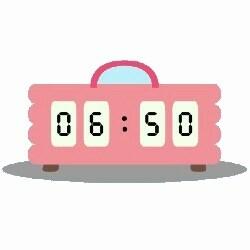
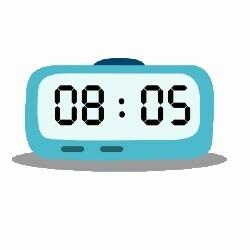
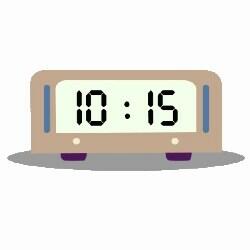
A B C
[A, B, C]
2. Who is Matt talking to on his mobile?
|
|
|



A B C
[A, B, C]
3. Why is the girl tired?
|
|
|
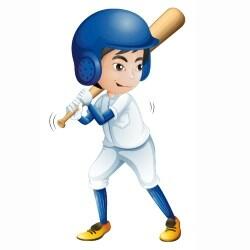
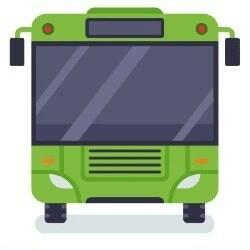
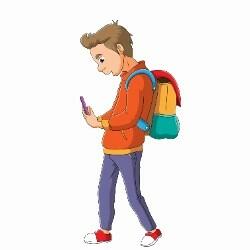
A B C
[A, B, C]
4. What will the weather be like on Saturday?
|
|
|


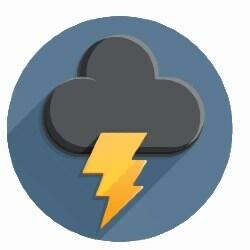
A B C
[A, B, C]
5. Which subject will they have first today?
|
|
|
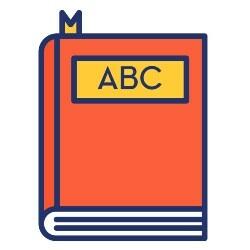

A B C
[A, B, C]
Запитання №4 Із заповненням пропусків у тексті
Запитання №5 З вибором правильної відповіді у тексті
Запитання №6 На встановлення відповідності
Запитання №7 Із заповненням пропусків у тексті
Запитання №8 На встановлення відповідності
Запитання №9 Із заповненням пропусків у тексті
Запитання №10 Із заповненням пропусків у тексті
Запитання №11 З вибором правильної відповіді у тексті
Запитання №12 З вибором правильної відповіді у тексті
Запитання №13 З вибором правильної відповіді у тексті
Рефлексія від 0 учнів
Сподобався:
0
Так: 0
Ні: 0
Зрозумілий:
0
Так: 0
Ні: 0
Потрібні роз'яснення:
0
Ні: 0
Так: 0