- Всеосвіта›
- Бібліотека тестів›
- Англійська мова›
- HS2 2019 unit7 p130 act11 (28.01.22)

Тест:
HS2 2019 unit7 p130 act11 (28.01.22)

16.01.2022
Вміст тесту:
1
2
3
4
5
6
7
8
9
1
12 з 108 балів
Write the following words correctly. Use NO article or particle "to".
subordinasion -
vitaly -
commetment -
incorporaite -
antiqity -
vail -
phidelity -
pjurity -
proccesional -
procparity -
furtilyti -
amacs -
2
12 з 108 балів
Match the English and the Ukrainian variant.
1
to avoid early marriage
А
врахувати вартість весільної церемонії
2
the drawbacks of late marriage
Б
залежати від когось фінансово
3
huge responsibilities on our shoulders
В
уникати раннього шлюбу
4
to depend on smb. financially
Г
зростаюча кількість розлучень
5
life full of uncertainty
Ґ
відволікати увагу від цілей навчання
6
to divert one’s mind from academic goals
Д
відхиляти ідею шлюбу
7
best time for the marriage
Е
недоліки пізнього шлюбу
8
to fulfill the demands
Є
сприймати речі досить серйозно
9
life changing decisions
Ж
величезні обов'язки на наших плечах
10
to take into consideration the cost of the wedding ceremony
З
найкращий час для одруження
11
to take things pretty seriously
И
змінити ставлення та переконання щодо шлюбу
12
to change attitudes and beliefs of the marriage
І
рішення, що змінюють життя
13
an increasing number of divorces
К
життя, повне непевності
14
to dismiss the idea of marriage
Л
відповідати / виконувати вимоги
3
12 з 108 балів
Choose the correct item.
1) If I do / will [do, will] my homework quickly, I will / would [will, would]play on сomputer.
2) Witty showed / would show [showed, would show]you her picture if she finish / finished [finish, finished]it.
3) He always wants / will want [wants, will want]to eat when he feels / would feel [feels, would feel]nervous.
4) My parents don't / wouldn't [don't, wouldn't]buy me a present if I didn't / wouldn't [didn't, wouldn't]get a good mark for the test.
5) He won't / didn't [won't, didn't]repair the car if you didn't / don't [didn't, don't]help him.
6) If Helen wouldn't / didn't [wouldn't, didn't]eat a dirty apple she wouldn't / didn't [wouldn't, didn't]have a stomachache.
7) We will / would [will, would]leave the town today if he manage / managed [manage, managed]to buy the train tickets.
8) If I have / has [have, has]some eggs and butter I will / would [will, would]bake a cake.
9) If he take / took [take, took]his camera, we will / would [will, would]make wonderful photos.
10) I will / would [will, would]buy this dress if it was / were [was, were]the right size.
4
12 з 108 балів
Match two parts of the sentences.
1
When she comes to our town,
А
if the weather is hot.
2
He will pass the exams successfully
Б
when our lessons are over.
3
If it gets dark,
В
if you want to lose weight.
4
They always go to the country
Г
you shouldn’t drink it.
5
You should keep to the diet
Ґ
she always stays in the hotel.
6
We drink a lot of water
Д
when they are on holidays.
7
If milk isn’t fresh,
Е
we will turn on the light.
8
We will go to the gym
Є
if he studies hard.
5
12 з 108 балів
Rewrite the sentences using First Conditional as in the example.
Example: You shouldn’t eat so much or you’ll put on weight. - If you eat so much, you’ll put on weight.
1) You shouldn't speak quickly or they won't understand you.
, they won't understand you.
2) She should take her umbrella or she'll get wet.
, she'll get wet.
3) He shouldn't forget about the meeting or his boss will be very angry.
, his boss will be very angry.
4) You shouldn't drive so fast or you will have an accident.
, you will have an accident.
5) You should leave now or you will be late for the train.
, you will be late for the train.
6) They should train a lot so that they will win the competition.
, they will win the competition.
7) She should consult the dictionary or she won't translate such a difficult text.
, she won't translate such a difficult text.
8) We should take a rest or we won't reach the camp before night.
, we won't reach the camp before night.
9) They should hurry or they will miss the beginning of the performance.
, they will miss the beginning of the performance.
6
12 з 108 балів
Read the letter below and choose the correct word for each gap.
I'm sorry for (A) [having, taking, being] such a long time to write back. I've been so busy at work lately. I've also not been studying very hard and my French exam is next month! To (B) [tell, say, speak]you the truth, I'm getting a bit nervous and will have to (C) [work, make, do] some revision! The good news is I'm going on holiday with my parents before the exam, so if I (D) [get, win, take] the chance I'm going to try to (E) [make, give, do]an effort and work on my French. Anyway, the reason I'm writing is to ask you if you would like to come to the UK. I know you haven't been here before and we could (F) [make, go, do] sightseeing. Let me know what you think.
7
12 з 108 балів
General Grammar Test. Choose the correct variant.
1. Plants die if you … them. [a, b, c, d]
a) won’t water
b) don’t water
c) wouldn’t water
d) didn’t water
2. I … the same if I were in your shoes. [a, b, c, d]
a) would do
b) will do
c) would have done
d) do
3. If I had seen her, I … to her. But I didn’t see her. [a, b, c, d]
a) spoke
b) would speak
c) speak
d) would have spoken
4. Hurry up! We … good seats if we arrive late. [a, b, c, d]
a) don’t get
b) won’t get
c) didn’t get
d) get
5. If I had known that you were coming, I … you the airport. [a, b, c, d]
a) would have met
b) met
c) will meet
d) would meet
6. If Columbus … such a passion for travelling, he wouldn’t have discovered America in 1492. [a, b, c, d]
a) hadn’t
b) wouldn’t have had
c) hadn’t had
d) hasn’t
7. Nick, look at that man! If he had worked harder at school, he … the streets now. [a, b, c, d]
a) wouldn’t have swept
b) won’t sweep
c) won’t be sweeping
d) wouldn’t be sweeping
8. If we … out of money, we’ll get a job. [a, b, c, d]
a) will run
b) would run
c) run
d) ran
9. When we … to a big city, I’ll send you a post card. [a, b, c, d]
a) got
b) will get
c) would get
d) get
10. If we … afford it, we’ll buy a new car. [a, b, c, d]
a) can
b) could
c) will
d) will be able
11. I promise that I will be here when you come back, but I'm afraid everyone else … by then. [a, b, c, d]
a) were leaving
b) leave
c) will have left
d) are leaving
12. Do you have any idea what she … at this time tomorrow? [a, b, c, d]
a) has done
b) will be doing
c) was doing
d) has been doing
13. We … an interesting program before they came. [a, b, c, d]
a) had been watching
b) have been watching
c) are going to watch
d) have watched
14. He … from the university in 1995. Then, he … two years in the army. [a, b, c, d]
a) has graduated / has spent
b) had graduated / has spent
c) graduated / has spent
d) graduated / spent
15. They … each other for a long time before they finally decided to get married. [a, b, c, d]
a) have known
b) had known
c) were knowing
d) have been knowing
16. Nobody … him for weeks. I wonder where he … these days. [a, b, c, d]
a) has seen / was hanging about
b) saw / was hanging about
c) has seen / is hanging about
d) had seen / has been hanging about
17. You … when I … on you that early, … you? [a, b, c, d]
a) won’t be sleeping / call / will
b) are sleeping / am calling / weren’t
c) were sleeping / had called / hadn’t
d) didn’t sleep / have called / did
18. Everyone objected to her coming along with us, …? [a, b, c, d]
a) did anyone
b) did no one
c) did someone
d) didn’t they
19. The statistics … in your article … to be incorrect. [a, b, c, d]
a) giving / appears
b) given / appear
c) are given / appears
d) are being given / appears
20. I'm not really sure where the cat is, but I think she … in the kitchen. [a, b, c, d]
a) used to play
b) might have played
c) might be playing
d) needs to play
21. Jordan, together with six other Arab countries, … said to be ready for peace negotiations with Israel. [a, b, c, d]
a) is
b) have been
c) are
d) were
22. Her brothers, … lives in Manisa, come to visit her every so often. [a, b, c, d]
a) both of whom
b) whom both
c) either of whom
d) neither of whom
23. I asked two people the way to the station, but … could help me. [a, b, c, d]
a) both of whom
b) either of whom
c) neither of them
d) both of them
24. The results of the research … that, presently, several East Asian countries … rapidly. [a, b, c, d]
a) have indicated / were developing
b) indicate / are developing
c) were indicated / had developed
d) had indicated / developed
25. Understandably, her friends … when Julia married someone else after being engaged to John for two years. [a, b, c, d]
a) were surprised
b) are surprising
c) surprised
d) will be surprised
26. The document … when the secretary returns from lunch. [a, b, c, d]
a) will be sent
b) is going to send
c) should have sent
d) was being sent
27. Animals … to survive in the wild, rather than kept in captivity. [a, b, c, d]
a) are helping
b) have been helping
c) ought to have helped
d) should be helped
28. Because James … to physical work, he … after he had spent a week on the farm. [a, b, c, d]
a) isn’t accustomed / might be exhausted
b) wasn’t accustomed / was exhausted
c) won’t be accustomed / will be exhausted
d) hasn’t accustomed / has exhausted
29. I listened to some news on … radio about … man arrested last Tuesday. [a, b, c, d]
a) every / the
b) the / -
c) a / a
d) the / the
30. I was thinking of buying a pregnancy dress …, but … was given one as a present by my husband. [a, b, c, d]
a) it / she
b) me / mine
c) myself / I
d) itself / me
31. Due to … rainy weather we've had recently, I didn't have to water … garden of our house every day. [a, b, c, d]
a) the / the
b) a / -
c) the / a
d) a / the
32. A very close relative … has just arrived from a trip during which he experienced many interesting adventures. [a, b, c, d]
a) to me
b) of mine
c) of me
d) to myself
33. American Indians often sold … land to white people or gave it away without realizing that it would no longer be … . [a, b, c, d]
a) theirs / them
b) their / theirs
c) its / its
d) their / themselves
34. Monkeys are famous for … eagerness to approach people and playfully interact with … especially in the circus. [a, b, c, d]
a) themselves / us
b) its / you
c) our / theirs
d) their / them
35. … had I got out of the bank … I saw the thieves running through the tunnel. [a, b, c, d]
a) Hardly / when
b) Both / and
c) Either / or
d) Not until / but
36. On the job application, I was asked to list my level of education, … any relevant training I had undergone. [a, b, c, d]
a) as
b) providing
c) as well as
d) except for
37. Heine is best known as a poet; …, he also wrote prose, most of which was satirical criticism of his age. [a, b, c, d]
a) however
b) owing to the fact that
c) thus
d) because
38. The tobacco production of Rize is not very important … its tea production. [a, b, c, d]
a) similar to
b) in particular
c) moreover
d) in comparison with
39. We're so late for the meeting that … we take a cab to the station, we can’t get there on time. [a, b, c, d]
a) though
b) even if
c) meanwhile
d) since
40. My mother’s or father’s mother is my … . [a, b, c, d]
a) mother
b) grandfather
c) grandmother
d) father
41. My mother’s sister is my … . [a, b, c, d]
a) nephew
b) aunt
c) niece
d) uncle
42. My wife’s mother is my … . [a, b, c, d]
a) mother-in-law
b) grandmother
c) daughter
d) granddaughter
43. My uncle’s or aunt’s child is my … . [a, b, c, d]
a) niece
b) nephew
c) brother-in-law
d) cousin
44. My female parent is my … . [a, b, c, d]
a) grandmother
b) father
c) mother
d) daughter
45. My sister’s husband is my … . [a, b, c, d]
a) brother-in-law
b) brother
c) cousin
d) nephew
8
12 з 108 балів
Reading 1
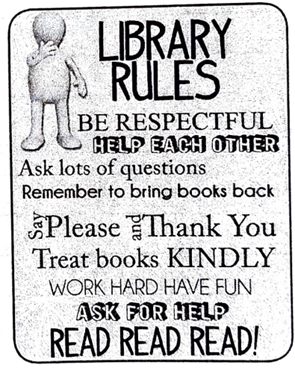
Read the text below. Match choices (A-H) to (1-5), There are three choices you do not need to use.
Which notice says this?
A No cells phones are allowed in library.
B You mustn't make a noise in the library.
C You mustn't eat or drink in the library.
D This is the place where you borrow the books.
E This is the place where you give back the books.
F This is library's daily schedule.
G This tells you how to behave in the library.
H You are not allowed to talk in the library.
1. [A, B, C, D, E, F, G, H]
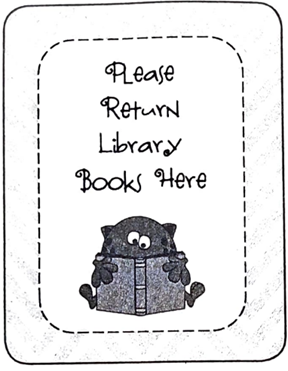
2. [A, B, C, D, E, F, G, H]
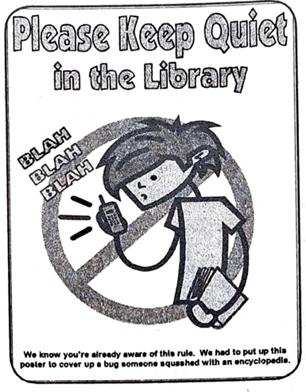
3. [A, B, C, D, E, F, G, H]
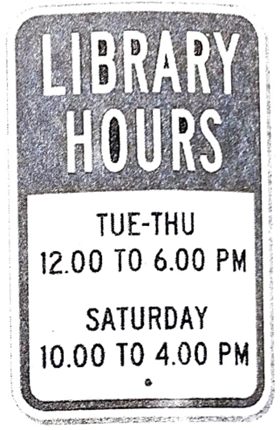
4. [A, B, C, D, E, F, G, H]
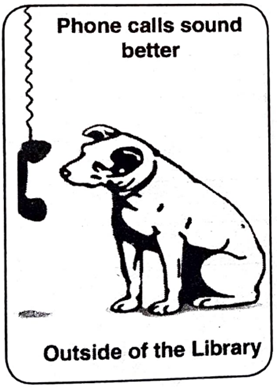
5. [A, B, C, D, E, F, G, H]
Reading 2
Read the text below. For questions (6-10) choose the correct answer (A, B, C or D).
The Broken Pot
In a certain place there lived a Brahman by the name of Svabhâvakripana, which means "luckless by his very nature." By begging he acquired a quantity of rice gruel, and after he had eaten what he wanted, there was still a potful left. He hung this pot on a nail in the wall above his bed. As night progressed, he could not take his eyes from the pot. All the while he was thinking:
This pot is filled to overflowing with rice gruel. If a famine should come to the land, then I could sell it for a hundred pieces of silver. Then I could buy a pair of goats. They have kids every six months, so I would soon have an entire herd of goats. Then I would trade the goats for cattle. As soon as the cows had calved, I would sell the calves. Then I would trade the cattle for buffalo. And the buffalo for horses. And when the horses foaled, I would own many horses. From their sale I would gain a large amount of gold. With this gold I would buy a house with four buildings in a rectangle.
Then a Brahman would enter my house and give me a very beautiful girl with a large dowry for my wife. She will give birth to a son, and I will give him the name Somasarman. When he is old enough to be bounced on my knee, I will take a book, sit in the horse stall, and read. In the meantime, Somasarman will see me and want to be bounced on my knee. He will climb down from his mother's lap and walk toward me, coming close to the horses hooves. Then, filled with anger, I will shout at my wife, "Take the child! Take the child!"
But she, busy with her housework, will not hear me. So I will jump up and give her a kick!
And, buried in his thoughts, he struck out with his foot, breaking the pot, and painting himself white with the rice gruel that had been in it. Therefore I say:
He who dreams about unrealistic projects for the future will have the same fate as Somasarman's father: He will find himself lying there painted white with rice gruel.
6 Where did the story probably take place? [A, B, C, D]
A In Egypt
B In India
C In Europe
D In Africa
7 In what way did the man get his food? [A, B, C, D]
A He worked much.
B He asked in the streets.
C He had a rich wife.
D He lived in the palace.
8 What is the meaning of the word “gruel”? [A, B, C, D]
A peasant’s work
B flour
C porridge
D soup
9 How many children did the man in the story have? [A, B, C, D]
A one
B two
C ten
D none
10 What message does the story convey? [A, B, C, D]
A One should not build castles in the air.
B Everyone should dream much.
C Don’t put all your eggs in one basket.
D Try to please everyone, and you will please no one.
Reading 3
Read the text below. Choose from (A-H) the one which best fits each space (17-22). There are two choices you do not need to use.
Nespresso
A used in the machines
B to compensate for its carbon footprint
C guaranteed by the manufacturers
D living in coffee communities
E is called 'The Positive Cup'
F needed for the device
G of the Nestlé group of companies
H is expected to happen soon
The coffee company Nespresso has announced ambitious new plans to help make its operations more sustainable. The company is a brand name (17) [A, B, C, D, E, F, G, H]____. It makes and sells espresso coffee machines and the single-use containers of coffee (18) [A, B, C, D, E, F, G, H]_____. Its new initiative on sustainability (19) [A, B, C, D, E, F, G, H]___. This aims to source one of its ranges of coffee through totally sustainable methods, while helping some of the world's poorest coffee farmers. It will invest just over $16 million in Ethiopia, Kenya and South Sudan. A company spokesperson said it, "aims to protect the future of the highest quality coffees and secure the livelihoods of the farmers that grow them".
A main component of the campaign is to recycle all of the aluminium capsules (20) [A, B, C, D, E, F, G, H]____. The company will collect the capsules "wherever the company does business" and "increase recycling rates". The company also said it would become "100 per cent carbon neutral" by 2020 by planting trees (21) [A, B, C, D, E, F, G, H]_____. CEO Jean-Marc Duvoisin said: "Our sustainability approach has always been designed to do more than simply minimise impacts." Hollywood actor George Clooney said: "The investment…in South Sudan's coffee sector, even while the conflict is ongoing, is providing much-needed income for hundreds of farmers and their families (22) [A, B, C, D, E, F, G, H]_____."
9
12 з 108 балів
Listening 1
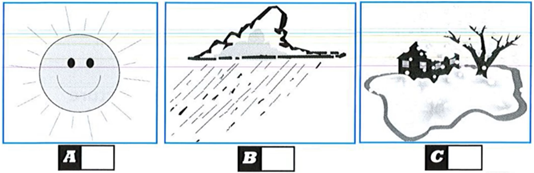
1. What is the weather like in Sydney? [a, b, c]
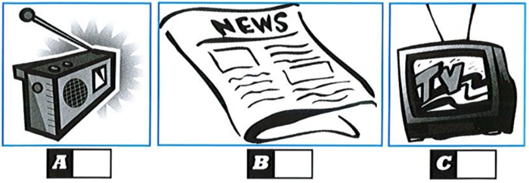
2. How did the woman learn about the accident? [a, b, c]
3. What will they eat at the restaurant? [a, b, c]
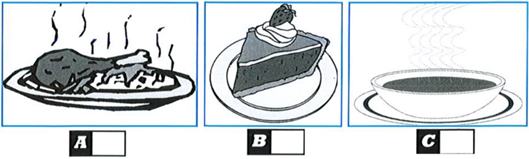
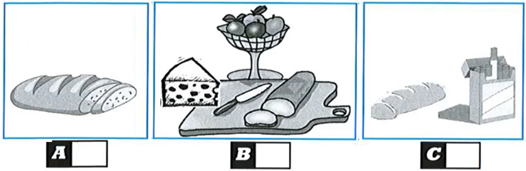
4. What did the man buy from the supermarket? [a, b, c]
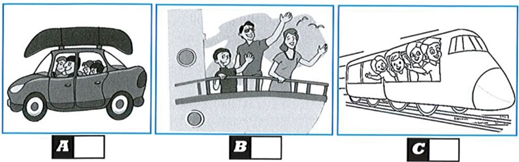
5. How are tourists advised to travel? [a, b, c]
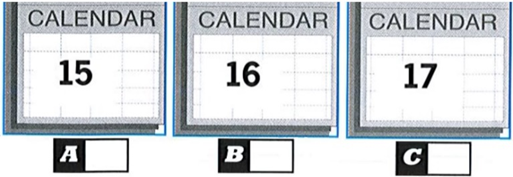
6. On what date is the birthday party? [a, b, c]
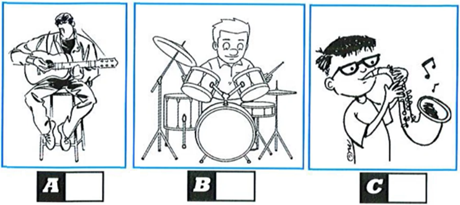
7. Which instrument can Ben play? [a, b, c]
Listening 2
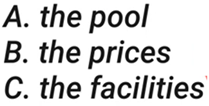
8. You will hear two friends talking about a new sports center. What amazed the girl most? [a, b, c]
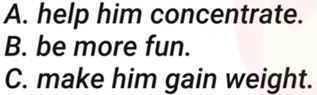
9. You will hear two friends talking about a test. The boy thinks studying for a test together with the girl will [a, b, c]
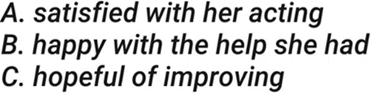
10. You will hear two friends talking about a school theatre group. How did the girl feel about it? [a, b, c]
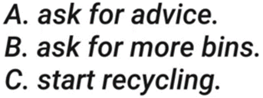
11. You will hear two friends talking about rubbish at school. The girl advises the boy to [a, b, c]
12. You will hear two friends talking about an article they read. They agree that social media [a, b, c]
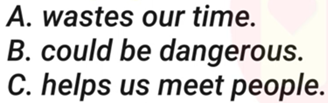
13. You will hear two friends talking about the weekend. The boy advises the girl to [a, b, c]
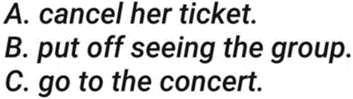
Listening 3
20. What does Adam like about his job? [a, b, c]
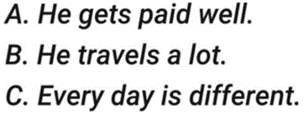
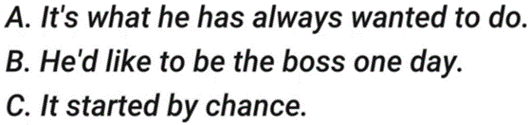
21. What does Adam sometimes find difficult about his job? [a, b, c]
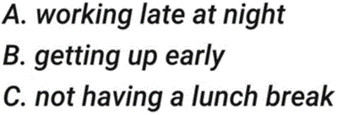
22. What does Adam say about his career? [a, b, c]
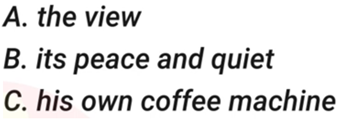
23. What does Adam like most about his new office? [a, b, c]
24. What does Adam say about his boss? [a, b, c]

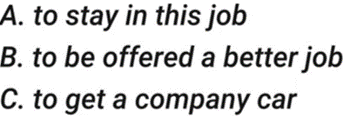
25. What is Adam hoping for in the future? [a, b, c]
Рефлексія від 8 учнів
Сподобався:
0
Так: 7
Ні: 1
Зрозумілий:
0
Так: 8
Ні: 0
Потрібні роз'яснення:
0
Ні: 7
Так: 1