- Всеосвіта›
- Бібліотека тестів›
- Англійська мова›
- HS2 2019 Unit7 p127 act3

Тест:
HS2 2019 Unit7 p127 act3

13.06.2022
Вміст тесту:
1
2
3
4
5
6
7
8
9
10
Тест містить питання скопійовані з: HS2 2019 Unit7 p127 act3.
1
12 з 120 балів
Reading 1
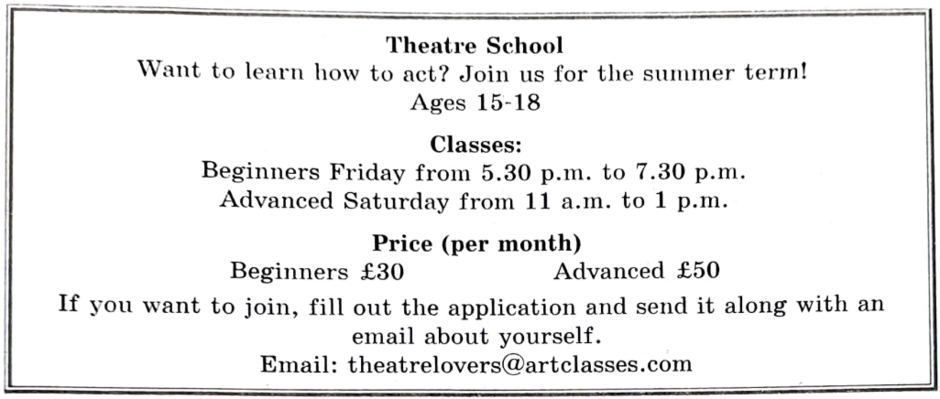
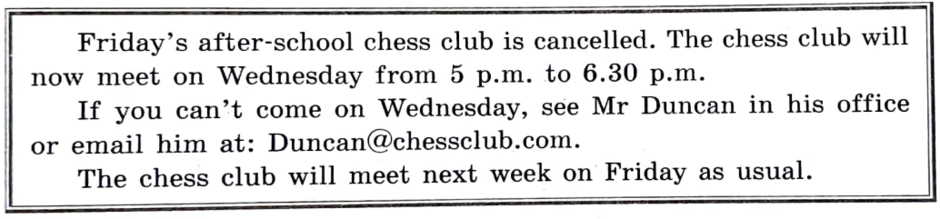
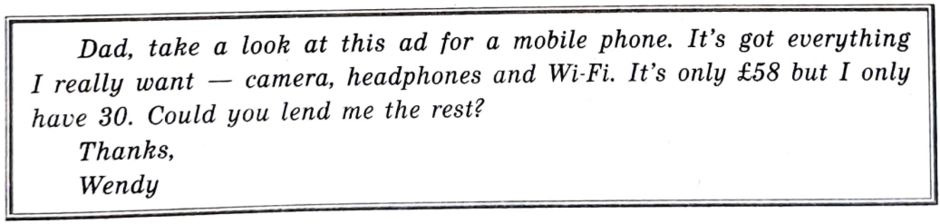
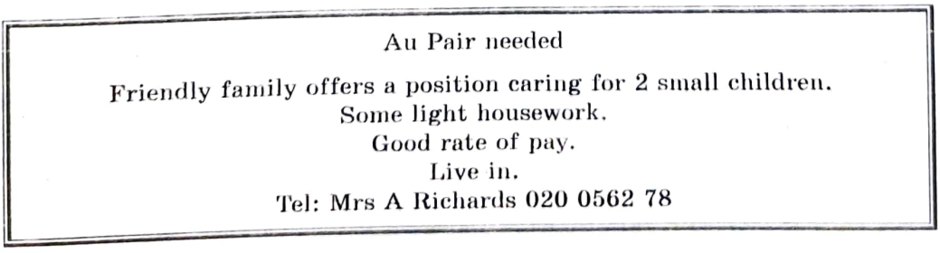
Read the text below. Match choices (A-H) to (1-5), There are three choices you do not need to use.
What is the purpose of the pieces of writing below?
A To ask for financial support.
B To tell about some changes in a timetable.
C To advertise classes for a particular age group.
D To invite a friend.
E To offer a job.
F To ask for information.
G To inform that a service is only for people of a particular area.
H To provide information about a meeting.
1. [A, B, C, D, E, F, G, H]
2. [A, B, C, D, E, F, G, H]

3. [A, B, C, D, E, F, G, H]
4. [A, B, C, D, E, F, G, H]
5. [A, B, C, D, E, F, G, H]
Reading 2
Read the text below. For questions (6-10) choose the correct answer (A, B, C or D).
Many parents in Britain try to get their kids to study more by giving them money. However, it does not help students to get better marks for their exams. Surprisingly, the promise of a trip to a nice and interesting place could encourage students to try harder and do better at school.
Researchers from the University of Bristol in England looked at how promises of cash and tickets to events affected students' studying and learning. Over 10,000 pupils took part in the research. There was an improvement in classwork and homework, but this did not result in better test scores.
Education expert Dr Kevan Collins said good teachers were better than promises of rewards to get children to study, especially for children from low-income families.
He added that some pupils have a lot of goals and believe that education is a way of getting what they want out of life, but there are kids who think that working hard doesn't make a difference.
He wrote: «What really makes the difference is how students are taught.»
6 The text is [A, B, C, D]
A an article.
B a review.
C a story.
D a fable.
7 According to the text [A, B, C, D]
A money can t improve students' results in the exams.
B students show better exam results when they are paid for it.
C all the students who study well are taken to nice trips.
D parents always pay their children if they get good marks.
8 All the students who took part in the experiment [A, B, C, D]
A showed better results in tests.
B were from the University of Bristol.
C had some improvement in classwork and homework.
D went to a trip.
9 What does the word «this» in line 8 refer to? [A, B, C, D]
A Research.
B Classwork.
C Improvement.
D Homework.
10 Dr Kevan Collins [A, B, C, D]
A is a teacher.
B believes that a good teaching method is crucial for the student's performance.
C says that most children are determined.
D doesn't think a method of teaching makes the difference.
Reading 3
Read the text below. Choose from (A-H) the one which best fits each space (11-16). There are two choices you do not need to use.
CHRISTMAS
A over the door
B Oxford Street and Regent Street
C go from house to house
D the day before Christmas
E go to midnight mass
F except 1969
G A few years after
H which is broadcast on radio and television
There are lots of Christmas traditions in Britain. For example ...
1) London's Christmas decorations.
Every year the people of Norway give the city of London a present. It's a big Christmas tree and it stands in Trafalgar Square. Also in central London, (11) [A, B, C, D, E, F, G, H]always have beautiful decorations at Christmas. Thousands of people come to look at them.
2) Cards, trees and decorations.
In 1846 the first Christmas cards appeared in Britain. That was five years after the first Christmas tree. Queen Victoria's husband, Prince Albert, brought this German tradition (he was German) to Britain. He and the Queen had a Christmas tree at Windsor Castle in 1841. (12) [A, B, C, D, E, F, G, H], nearly every house in Britain had one. Traditionally people decorate their tree on Christmas Eve - that's December 24th. They take down the decorations twelve days later, on the Twelfth Night (January 5th).
3) An old tradition is Christmas mistletoe.
People put a piece of this green plant with its white berries (13) [A, B, C, D, E, F, G, H]. Mistletoe brings good luck, people say. Also, at Christmas people kiss each other under the mistletoe.
4) Christmas carols.
Before Christmas, groups of singers (14) [A, B, C, D, E, F, G, H]. They collect money and sing traditional Christmas songs or carols. There're a lot of very popular British Christmas carols. Three most famous ones are: Good King Wenceslas, The Holly and the Ivy and We, Three Kings.
5) Christmas Day.
A traditional feature of Christmas afternoon is the Queen's Christmas message. At three o'clock in the afternoon, the Queen gives her Christmas message to the nation (15) [A, B, C, D, E, F, G, H].
The Queen's message is also broadcast throughout the British Commonwealth. The first televised broadcast of the Queen's Christmas message was in 1957, but it is a tradition begun on the radio in 1932 by George V. The Queen has made a Christmas broadcast to the Commonwealth every year of her reign (16) [A, B, C, D, E, F, G, H], when a repeat of the film «Royal Family» was shown and a written message from the Queen issued.
Reading 4
Read the text below. For each of the empty spaces (23-34) choose the correct answer (A, B, C or D).
PLACES OF NORTHERN IRELAND
(23) [a, b, c, d]Scotland it is only 2.5 hours by (24) [a, b, c, d], or less than an hour by plane, to Northern Ireland. The area of Northern Ireland is (25) [a, b, c, d]you can get anywhere in less than 2.5 hours. The two main cities are Belfast, the (26) [a, b, c, d], and Londonderry. You will (27) [a, b, c, d]think of the Northern Irish as an unfortunate people, divided by race, religion and history. But you'll be pleasantly (28) [a, b, c, d]at how warm and friendly they are. Belfast has many fine buildings and all the (29) [a, b, c, d]of a big city. Londonderry, or Derry as it's also called, is a fine, old city, full of history. Bellycastle is (30) [a, b, c, d]of the lovely bustling market towns.
But perhaps the greatest appeal of Northern Ireland is its scenery. Its lakes, hills and rural (31) [a, b, c, d]offer peace and quiet despite its troubles.
There are lots of ways of taking (32) [a, b, c, d]of all this fine scenery.
Don't worry, there are excellent opportunities for (33) [a, b, c, d]energetic pursuits. The coastline is magnificent. On the north-east coast there is «The Giant's Causeway». The legend has it that it's the remains of a road built by a giant to cross the sea to Scotland, and nearby there is the organ that he played. Just along the (34) [a, b, c, d]there is Dunluce Castle, a romantic ruin that merges with the cliffs. You may have noticed other castles on our journey - every corner of Britain has them, with, of course, their ghosts. But there's also a building that is not a castle - it's the Bushmill's Distillery, where Irish whiskey is made.
A | B | C | D | |
23 | At | On | Till | From |
24 | train | ferry | foot | bike |
25 | huge | enormous | bit | small |
26 | capital | suburb | country | town |
27 | sure | certain | probably | may |
28 | amazing | astonishment | surprise | pleased |
29 | amenities | buildings | sights | shops |
30 | emblematic | standardized | typical | conversational |
31 | geography | topography | territory | landscapes |
32 | help | improvement | plus | advantage |
33 | fewer | little | less | lesser |
34 | bank | coast | side | sands |
2
12 з 120 балів
Listening 1
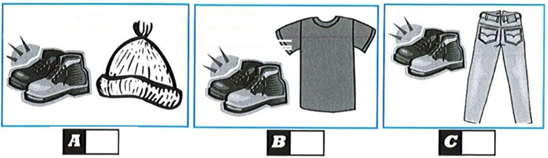
1. What did the boy’s uncle buy him for Christmas? [a, b, c]
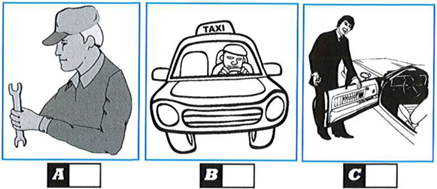
2. What job does Michelle’s father do? [a, b, c]
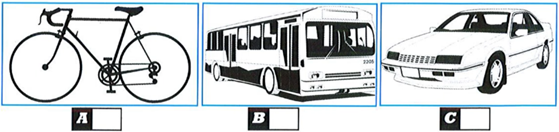
3. How will Steve get to school tomorrow? [a, b, c]
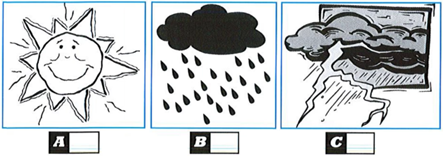
4. What will the weather be like on Saturday? [a, b, c]
5. Who robbed the bank? [a, b, c]
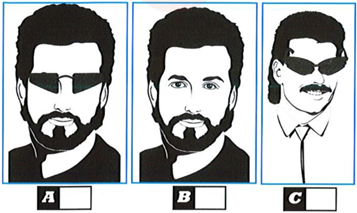
6. What will the woman do last? [a, b, c]
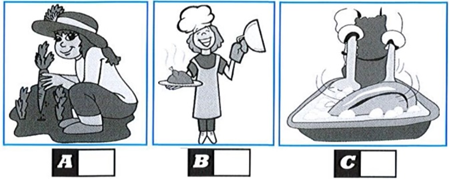
7. What does the man want to do at the weekend? [a, b, c]
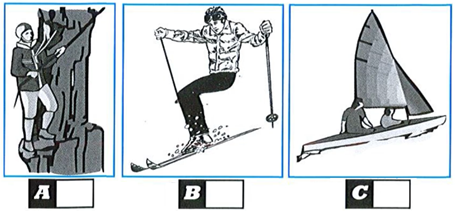
Listening 2
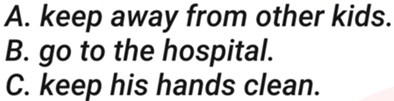
8. You will hear a girl talking about her illness. The girl advises the boy to [a, b, c]
9. You will hear two friends discussing a band. They agree that the band [a, b, c]

10. You hear a boy telling his friend about a movie he saw. How did he feel after watching it? [a, b, c]
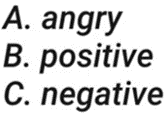
11. You will hear two friends talking about a new teacher. The girl thinks that the Maths teacher is [a, b, c]

12. You will hear two friends talking about language learning. How does the girl feel about language learning? [a, b, c]
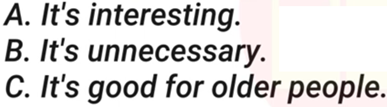
13. You will hear two friends talking about their plans. They agree that they should [a, b, c]

Listening 3
20. When did George first get interested in athletics? [a, b, c]
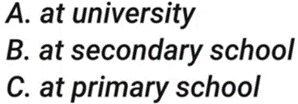
21. Who has helped George most with his athletics career? [a, b, c]
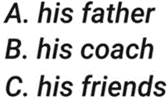
22. How did George feel when he won his first gold medal? [a, b, c]
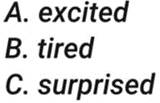
23. What does George find difficult? [a, b, c]
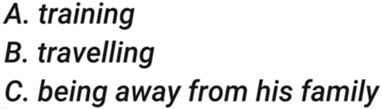
24. What does George really enjoy? [a, b, c]
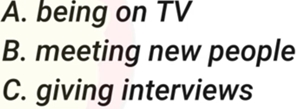
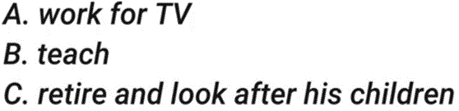
25. What does George think he will do in the next few years? [a, b, c]
3
12 з 120 балів
Read the following sentences and define the Conditional.
If you go to the cinema, you will have fun. [Zero conditional, First conditional, Second conditional, Third conditional]
If I had revised more for the exam, I would have passed. [Zero conditional, First conditional, Second conditional, Third conditional]
If it snows tomorrow, I will make a snowman. [Zero conditional, First conditional, Second conditional, Third conditional]
If I bought that car, I would drive fast. [Zero conditional, First conditional, Second conditional, Third conditional]
If I lived by the sea, I would swim every day. [Zero conditional, First conditional, Second conditional, Third conditional]
If they had known about the bomb, they would have run away. [Zero conditional, First conditional, Second conditional, Third conditional]
If you drink too much, you will have hangover. [Zero conditional, First conditional, Second conditional, Third conditional]
If you feed pigeons rice, they explode. [Zero conditional, First conditional, Second conditional, Third conditional]
If we do business with the Japanese, we will be successful. [Zero conditional, First conditional, Second conditional, Third conditional]
If people drink too much, they get ill. [Zero conditional, First conditional, Second conditional, Third conditional]
If I study for one hour every night, I will be a genius. [Zero conditional, First conditional, Second conditional, Third conditional]
If the report was more accurate, we would have got the account. [Zero conditional, First conditional, Second conditional, Third conditional]
Запитання №4 Із заповненням пропусків у тексті
Запитання №5 Із заповненням пропусків у тексті
Запитання №6 На встановлення відповідності
Запитання №7 Із заповненням пропусків у тексті
Запитання №8 З вибором правильної відповіді у тексті
Запитання №9 Із заповненням пропусків у тексті
Запитання №10 З вибором правильної відповіді у тексті
Рефлексія від 0 учнів
Сподобався:
0
Так: 0
Ні: 0
Зрозумілий:
0
Так: 0
Ні: 0
Потрібні роз'яснення:
0
Ні: 0
Так: 0