- Всеосвіта›
- Бібліотека тестів›
- Англійська мова›
- HS2 2019 unit7 p121 act6

Тест:
HS2 2019 unit7 p121 act6

15.03.2022

Вміст тесту:
1
2
3
4
5
6
7
8
9
10
Тест містить питання скопійовані з: HS2 2019 unit7 p121 act6.
1
12 з 120 балів
Reading 1
Read the text below. Match choices (A-H) to (1-5), There are three choices you do not need to use.
SUCCESS
A Start a blog.
B Some of your thoughts and ideas are rather stable and permanent in nature.
C Success is in your mind.
D Care about the others.
E Do something useful.
F Take time to think.
G Get into the habit of writing.
H However, there are thoughts and ideas which are usually temporary.
(1) [A, B, C, D, E, F, G, H]Regardless of your definition of success, most people would agree that success starts with your thoughts, your ideas and your beliefs in other words, your mind. The understanding that the source of success is contained in something as abstract as thoughts and ideas can be both exciting and frightening at the same time. It is a great feeling to realise that with the power of your mind alone you can achieve anything you want, and you can reach the success that you desire. On the other hand, ideas and thoughts are somewhat intangible they quickly come and go away.
Is success something that can be obtained or lost as easily as a thought that passes through your head in an instant? I think, the answer can be «yes» and «no».
(2) [A, B, C, D, E, F, G, H]These are the beliefs, the habits, the behaviour, and all the other details of the mind that make up the core of who you are. Knowledge, skills and abilities are other components of your mind that have a somewhat permanent component. However, some knowledge and skills can lose their strength if not put to practice, and new skills and knowledge can be gained through study, practice and experience. A person's beliefs, habits, personalities, knowledge, skills and abilities are important components of success that will not disappear or be lost in a passing moment.
(3) [A, B, C, D, E, F, G, H]These are the ideas that flash through your head in a moment of inspiration. Most people don't pay much attention to these temporary thoughts when your mind reveals to you something that could result in a good opportunity.
(4) [A, B, C, D, E, F, G, H]Successful people understand the importance of spending time doing high-level thinking. You should plan to have a time period for at least 30 minutes to one hour each day when you are alone and your mind is free from fuss and disorder. Use this time to let your mind flow and reveal to you the interesting ideas which you may dismiss when you are busy with other things. When those thoughts come to you, don't reject them. Let them fill your mind with the possibilities and with your dreams of success, unrestricted by any constraints.
(5) [A, B, C, D, E, F, G, H]You never know when great ideas will pop in your head. Therefore, it is very important that you always carry with you a notebook and pen to write down your ideas as soon as they come to you. This notebook can also be very useful for writing down observations that will help you become successful. If you run into a successful person that you admire, write down the habits and qualities, or anything else about this person. If you observe something that is done with excellence, or high quality, be it a product or a service, write it down. Fill your notebook with lessons learned, conclusions you have reached, resolutions you have made, goals you have established, observations you have made, and just anything that will help you fix your thoughts around success.
Reading 2
Read the text below. Match choices (A-H) to (6-11), There are two choices you do not need to use.
A who completed the 11,000-mile journey
B At key points along the way
C who wrote Frankenstein
D It's thought
E military commanders in history
F generally brought shame
G that all before the age of 20
H he was 16
FAMOUS TEENS IN HISTORY
It's an adults' world. They make the decisions, create the laws, make money, and have all of the freedoms, but that hasn't always been the case. We're taking a look back through history to discover the most powerful, influential, and important teenagers of all time!
ALEXANDER THE GREAT
Alexander the Great was one of the most successful (6) [A, B, C, D, E, F, G, H]. He was best famous for conquering almost all of the world known to the ancient Greeks including Syria, part of India, Egypt, and way more around 300 BC. Alexander was the son of King Philip II of Macedonia. By the time (7) [A, B, C, D, E, F, G, H]Alexander had founded his first colony and named it Alexandroupolis.
POPE JOHN XII
While modern-day Popes are well-known for being oldies, John XII was only 18 when his papacy began in the year 955. Unfortunately, Pope John XII was known for being quite immoral and (8) [A, B, C, D, E, F, G, H]to the papacy. It is rumoured that he was killed by the husband of a woman he was having an affair with.
MARY SHELLEY
Mary Shelley is the acclaimed British author (9) [A, B, C, D, E, F, G, H]in 1818 when she was only 19 years old! The book was first published anonymously and it was generally assumed to be written by her husband, Percy Bysshe Shelley, until it was published under her own name in 1831.
JOAN OF ARC
It wasn't easy being a girl in the 1400s, but Joan of Arc didn't let that stop her from becoming a national heroine in France (and, later, a saint). Joan was a peasant girl who led the French army to several important victories during the Hundred Years' War after claiming to have visions from God. She was later captured by the English and executed for heresy, (10) [A, B, C, D, E, F, G, H]. About 500 years later she was made a saint by Pope Benedict XV.
KING TUTANKHAMUN
King Tutankhamun (popularly referred to as King Tut) was an Egyptian pharaoh between 1333 BC - 1324 BC. (11) [A, B, C, D, E, F, G, H]King Tut was only eight or nine years old when he became a pharaoh and died before he was 19. His tomb in the Valley of the Kings is the most complete ancient Egyptian tomb ever found.
Reading 3
Read the text below. For questions (12-21) choose the correct answer (A, B, C or D).
One beautiful spring day a red rose blossomed in the forest. It (12) [a, b, c, d]its head and remarked, «It seems that I am the most beautiful plant in this forest». A sunflower raised its yellow head and asked, «(13) [a, b, c, d]do you say that? In this forest there are many beautiful plants. You are just one of them.» The red rose replied, «I see everyone looking at me and admiring me. » Then the rose looked (14) [a, b, c, d]a cactus and said, «Look at that ugly plant full of thorns!» The pine tree said, «Red rose! Who can say what beauty is? You have thorns, too.»
The proud red rose looked (15) [a, b, c, d]at the pine and said, «I thought you had good taste! You do not know what beauty is at all. You cannot compare my thorns to those of the cactus.»
The rose tried to move its roots (16) [a, b, c, d]from the cactus, but it could not move. As the days (17) [a, b, c, d], the red rose would look at the cactus and say (18) [a, b, c, d]things, like: «This plant is useless» and «How sorry I am to be his neighbour».
Spring passed, and the weather became very warm. Life became difficult in the forest, as thee plants and animals needed water and no rain (19) [a, b, c, d]. The red rose began to wilt. One day the rose saw sparrows stick their beaks into the cactus and then fly away, refreshed. This was puzzling, and the red rose asked the pine tree what the birds were (20) [a, b, c, d] . The pine tree explained that the birds got water from the cactus. «Does it not hurt when they make holes?» asked the rose.
Yes, but the cactus does not like to see any birds suffer, replied the pine.
The rose opened its eyes in wonder and said, «Does the cactus have water?»
«Yes, you can also drink from it. The sparrow can bring water to you if you ask the cactus for help.»
The red rose felt too ashamed of its past words and behaviour to ask for water from the cactus, but then it finally did ask the cactus for help. The cactus kindly agreed and the birds filled their beaks with water and watered the rose's roots. Thus the rose learned a lesson and never judged anyone by their (21) [a, b, c, d] again.
A | B | C | D | |
12 | turned | tuned | tube | turning |
13 | What | Why | Which | Who |
14 | on | for | at | after |
15 | angrily | angry | angrily | anger |
16 | to | for | forward | away |
17 | went | came | got | passed |
18 | offensive | hurt | upset | disappoint |
19 | fall | falling | fell | fallen |
20 | do | did | done | doing |
21 | appearance | appear | appearing | appeal |
Reading 4
Read the text below. For questions (22-31) choose the correct answer (A, B, C or D).
ICE SCULPTURE FESTIVAL
Ice Sculpture Festival (22) [a, b, c, d]place in a picturesque Belgian town of Bruges that always tries to offer some new and innovative experiences to its visitors. There you (23) [a, b, c, d]visit the World's First Digital Ice Art Museum. It has an amazing combination of works by 40 artists, 3,000 ice blocks, 100 projections and 523 m2 LED Wall - all in one Ice Palace. And for (24) [a, b, c, d]an experience Bruges is the place to go. Besides, you can enjoy (25) [a, b, c, d]annual event the Ice Sculpture Festival. Every year it gathers artists from all over the world, who turn the town of Bruges (26) [a, b, c, d]Winter Wonderland. The fascinating snow and ice sculptures represent characters from different stories.
A | B | C | D | |
22 | gets | participates | has | takes |
23 | can | are able | ought | suppose |
24 | so | such | same | some |
25 | other | another | others | other’s |
26 | on | in | into | for |
SCHOOL STRIKE FOR CLIMATE
Recently school children across the globe (27) [a, b, c, d]a movement called School Strike Climate. (28) [a, b, c, d]of going to school, students gather to participate in a protest against the climate changes. The movement (29) [a, b, c, d]in August 2018 when a photo of student Greta Thunberg standing outside Sweden's government and holding a sign that read: «School strike for climate» went viral on social media. At present the movement (30) [a, b, c, d]worldwide. In 2019, strikes have taken place across Europe, North America and Australia.
Many scientists, politicians and teachers congratulated the students for their activism. (31) [a, b, c, d]not everyone is on the students’ side. Australia's leader called for «more learning in schools and less activism».
A | B | C | D | |
27 | have started | has started | had started | started |
28 | Until | Unless | Instead | Interestingly |
29 | begin | began | begun | begined |
30 | is growing | was growing | will grow | grow |
31 | Although | Whereas | During | However |
2
12 з 120 балів
Listening 1
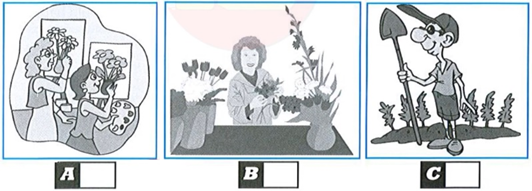
1. What is the woman talking about? [a, b, c]
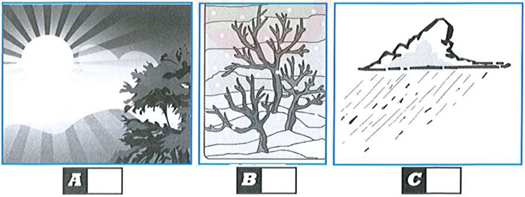
2. What is the current weather? [a, b, c]
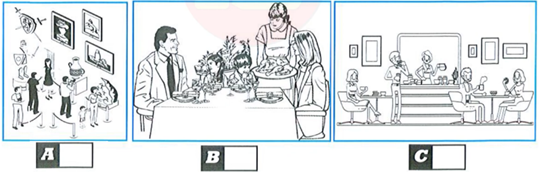
3. Where are they? [a, b, c]
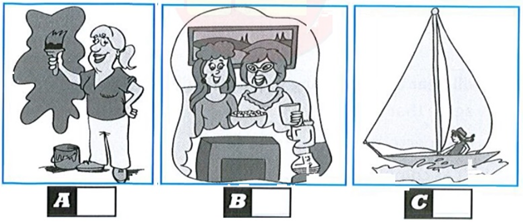
4. What is the woman going to do on Sunday? [a, b, c]
5. What are the people talking about? [a, b, c]
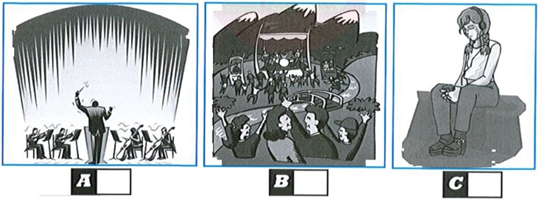
6. Where do the people work? [a, b, c]
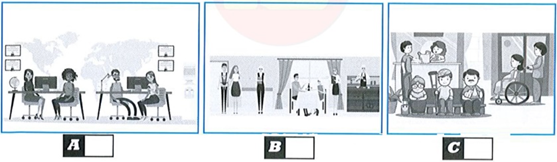
7. At which time is the plumber available? [a, b, c]

Listening 2
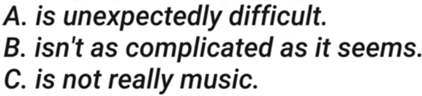
8. You will hear two friends talking about learning to play the drums. They agree that playing drums. [a, b, c]
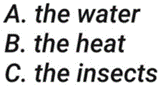
9. You will hear two friends talking about a river bout trip. What did the boy like the least about it? [a, b, c]
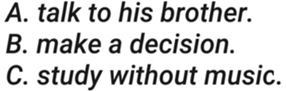
10. You will hear two friends talking about revising for exams. The girl advises the boy to [a, b, c]
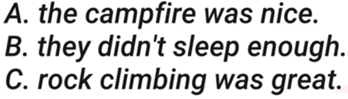
11. You will hear two friends talking about an adventure weekend. They agree that [a, b, c]
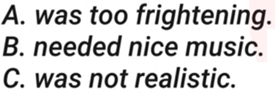
12. You will hear two friends talking about a movie they saw. The girl thanks that the movie [a, b, c]
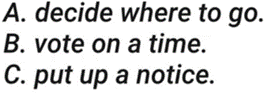
13. You will hear two friends arranging a meeting. The girl thinks that first they should [a, b, c]
Listening 3
20. How long has the shopping centre been open? [a, b, c]
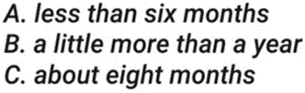
21. One advantage of the shopping is [a, b, c]

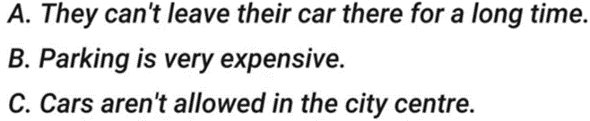
22. What problem might drivers have in the city centre? [a, b, c]
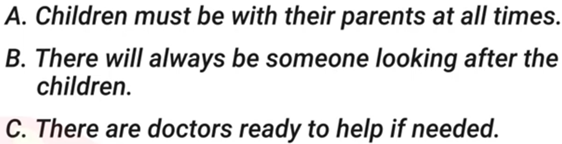
23. What is true about the play area? [a, b, c]
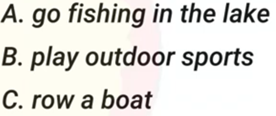
24. What can you do in the gardens? [a, b, c]
25. What is said about the zoo? [a, b, c]
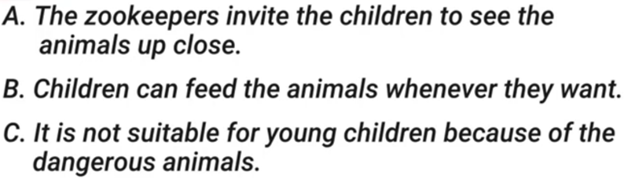
3
12 з 120 балів
Match to complete the following word combinations.
1
a … holiday moment
А
link
2
an … discovery
Б
meaningful
3
a profound … to
В
сhatter
4
the … to the ancestors
Г
memorable
5
an eternal …
Ґ
grounding
6
a … of self-definition
Д
pass
7
to contribute to … being
Е
innocent
8
to lose the …
Є
laughter
9
to honor …
Ж
back
10
within a … legacy
З
mystery
11
a predictable …
И
balance
12
lineages … stable
І
connection
13
peals of …
К
well
14
а … of grown-ups
Л
traditions
15
to keep …
М
stay
16
to … down
Н
process
17
a flash …
О
outcome
Запитання №4 На встановлення відповідності
Запитання №5 На встановлення відповідності
Запитання №6 На встановлення відповідності
Запитання №7 Із заповненням пропусків у тексті
Запитання №8 Із заповненням пропусків у тексті
Запитання №9 З вибором правильної відповіді у тексті
Запитання №10 З вибором правильної відповіді у тексті
Рефлексія від 5 учнів
Сподобався:
0
Так: 4
Ні: 1
Зрозумілий:
0
Так: 4
Ні: 1
Потрібні роз'яснення:
0
Ні: 4
Так: 1