- Всеосвіта›
- Бібліотека тестів›
- Англійська мова›
- HS2 2019 unit6 p109 act3

Тест:
HS2 2019 unit6 p109 act3

26.11.2021

Вміст тесту:
1
2
3
4
5
6
7
8
9
10
11
12
1
12 з 144 балів
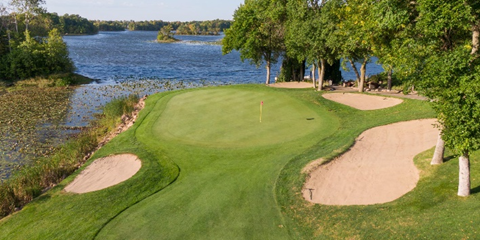
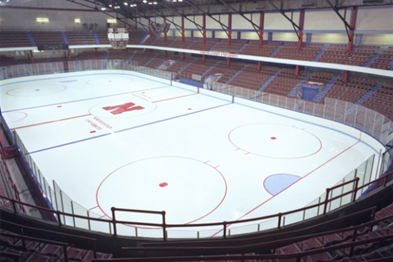
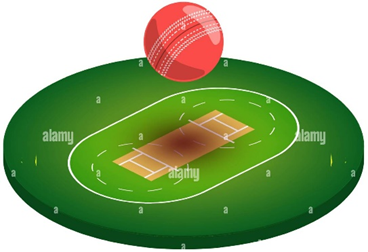
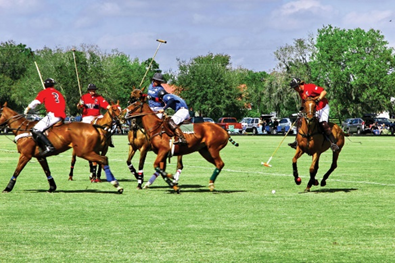
Match the Field or Ground Sports with their Names.
1
Athletics
А
2
Baseball
Б
3
Boxing
В
4
Basketball
Г

5
Cricket
Ґ

6
Football
Д
7
Golf
Е
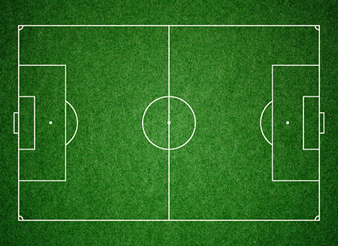
8
Ice Hockey
Є
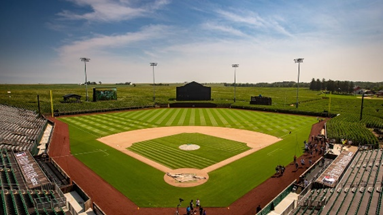
9
Tennis
Ж
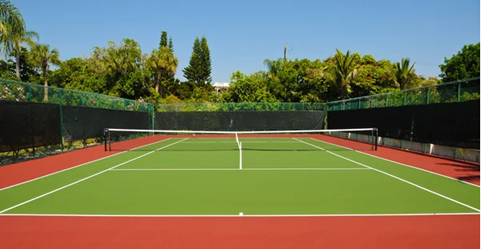
10
Polo
З
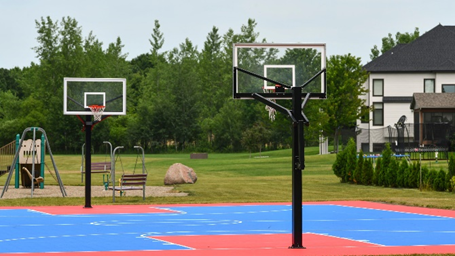
11
Wrestling
И
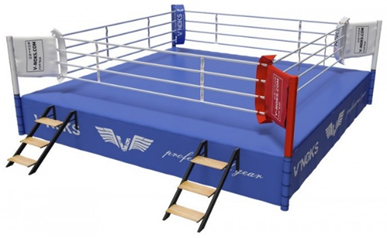
2
12 з 144 балів
Vocabulary Test About SPORTS Choose The Correct Answer
1. I met Pete ........... his bicycle along the pavement. [pulling, rolling, turning, wheeling]
2. He was ........... from the competition because he had not complied with the rules. [banished, disqualified, forbidden, outlawed]
3. Some of the best golf ........... are to be found in England. [courses, courts, pitches, tracks]
4. Sport is a good ........... for aggression. [let off, offshoot, outlet, way out]
5. This is the running ........... where the first 4 minute mile was run. [circle, course, ring, track]
6. Have you been able to book us a tennis ........... for tomorrow? [field, pitch, court, course]
7. He has always been ........... supporter of his local rugby team. [a forcible, a staunch, an unbeaten, a sure]
8. They stood glowering at each other, their fists ........... ready for action. [clasped, grasped, joined, clenched]
9. It seems that the world record for this event is almost impossible to ........... [balance, beat, compare, meet]
10. He ran four ........... of the course in half an hour. [hurdles, sprints, rings, laps]
11. Most ........... tennis stars learn the game at an early age. [hopeful, prospective, will-be, willing]
12. I always feel ........... before the start of a race. [calm, relaxed, excitable, easygoing]
3
12 з 144 балів
Choose and tick the Formal Letter Phrases.
4
12 з 144 балів
Fill in the gaps with the words from the box.
What are the benefits of international sports events?
events - disabilities - several - life-changing - cultures - - inspire - relationships - achieve - involved - contest |
I think there are major benefits of international sporting competitions. Firstly, it helps to build between people of different nationalities and . This is so important in our divided world. While the competitors may be rivals during competitions, there is friendship when the is over. You can see this and the respect they have for each other when you watch big sporting on TV.
Secondly, when top international athletes compete together, they motivate and each other. This is why new world records are often set at events such as the Olympics and many athletes personal bests.
Finally, international sporting events encourage people to get in sport themselves, especially the younger generation. The TV coverage of competitions for disabled sportspeople in recent years has led to a massive increase in people with taking up sports which is for them.
5
12 з 144 балів
General Grammar Test. Choose the correct item.
1. Honey, can you change the baby’s NAPPY? [a, b]
a) British
b) American
2. Why is there so much garbage in here? [a, b]
a) British
b) American
3. What’s the area code for this town? [a, b]
a) British
b) American
4. I called the ATTORNEY to get the information. [a, b]
a) British
b) American
5. Take a left at the second CROSSROADS. [a, b]
a) British
b) American
6. "I'm going to Istanbul tomorrow." he said. He said … going to Istanbul … . [a, b, c, d]
a) I was / the next day
b) he was / the previous day
c) he is / tomorrow
d) he was / the next day
7. "I'll give you half of the money if you keep your mouth shut," he said to me. He … mouth shut. [a, b, c, d]
a) reminded me that half of the money I could keep
b) promised me half of the money for my
c) offered me half of the money if I kept my
d) advised me to keep half of the money for my
8. "I am sorry I am late," he said "My car broke down". He … and … . [a, b, c, d]
a) accused himself of being late/ excused himself
b) apologized for being late / explained that his car had broken down
c) proposed being late/ complained that his car was broken
d) threatened to be late/ excused himself
9. He … so often in New York. [a, b, c, d]
a) asked why prices went up
b) wanted to learn
c) wondered what prices go up
d) asked why the prices is going up
10. "How far is it?" he said "and how long will it take me to get there?" He … to get there. [a, b, c, d]
a) asked how far and how long it would take me
b) asked how far and how long it would take him
c) asked how far it was and how much
d) asked how far it was and how long it would take
11. You’d never say such a thing behind my back, … you? [a, b, c, d]
a) should
b) would
c) did
d) had
12. We’ve met before, …? [a, b, c, d]
a) didn’t we
b) aren’t we
c) are we
d) haven’t we
13. What a pleasant holiday this one has been, … it? [a, b, c, d]
a) wasn’t
b) doesn’t
c) hasn’t
d) isn’t
14. The … that he was responsible for the crash turned out to be false. [a, b, c, d]
a) claim
b) experiment
c) implication
d) correspondence
15. She tried hard to solve the … between the two friends but she couldn't succeed it. [a, b, c, d]
a) relationship
b) discussion
c) conflict
d) indication
16. Human being very much relies on water in order to survive because he can die because of a(n) … of water. [a, b, c, d]
a) inaptitude
b) deficiency
c) inactivity
d) incompetence
17. Everybody made … but does nothing about the degradation of our environment. [a, b, c, d]
a) pollution
b) interruptions
c) solutions
d) complaints
18. I don't know the scheduled time of … , but I do know that the plane to Istanbul has already left. [a, b, c, d]
a) departure
b) purchase
c) accommodation
d) reference
19. James is threatening to resign, but I don’t think he will … it really. [a, b, c, d]
a) go on with
b) go in for
c) go through with
d) go along with
20. What a lovely tie! And it … (matches) your jacket too! [a, b, c, d]
a) goes off
b) goes with
c) makes out
d) gets over
21. I had to put … having the party because I was ill. [a, b, c, d]
a) up
b) through
c) on
d) off
22. We’ll have to sell the piano, darling. It … (occupies) too much room. [a, b, c, d]
a) makes out
b) takes up
c) takes away
d) fills in
23. I was … with Alvin for arguing with the waiter about our bill. [a, b, c, d]
a) put off
b) put down
c) put on
d) put out
24. … computers, ecologists have simulated communities containing various plants and animals. [a, b, c, d]
a) According to
b) Seeing that
c) Since
d) By means of
25. … children get older, their questions get harder to answer. [a, b, c, d]
a) Because of
b) However
c) As
d) In order that
26. Ecologists try to find out how the Earth's environments can be preserved … living things will continue to survive on the planet. [a, b, c, d]
a) so that
b) thanks to
c) now that
d) in case
27. - How long are you going to stay? - I … we … here for a week at least. [a, b, c, d]
a) expected / shall be
b) expect / shall be
c) expect / are
d) expect / will be
28. - Is this your first visit to London? - No, I … here several times before and I … quite at home in London. [a, b, c, d]
a) have been / feel
b) had been / felt
c) has been / felt
d) were / have felt
29. I don’t know when she … but when she … I’ll give her your book. [a, b, c, d]
a) will come / will come
b) comes / will come
c) come / will come
d) will come / comes
30. You … here until your mother … ready to leave. [a, b, c, d]
a) would stay / is
b) stayed / will be
c) will stay / is
d) have stayed / would be
31. Many changes … place since I … in my native town 10 years ago. [a, b, c, d]
a) took / was
b) are taking / had been
c) have taken / was
d) has taken / was
32. The companies … to apply the regulations so as to make the working conditions better in the managing directors’ summit. [a, b, c, d]
a) have made
b) were made
c) have been making
d) are making
33. The Alligator Mound … on a prominent point at the southern extension of a long glaciated ridge in Licking County. [a, b, c, d]
a) is located
b) has located
c) locates
d) was located
34. He … to learn that his proposal … . [a, b, c, d]
a) was delighted / had been accepted
b) is delighted / will accept
c) was delighted / having accepted
d) should be delighted / accepted
35. Digital memories … all people to tell their life stories to their descendants in a compelling fashion that until now … solely for the rich and famous. [a, b, c, d]
a) could enable / has reserved
b) can enable / has been reserved
c) should enable / is being reserved
d) is enabled / reserves
36. Is it possible to find a country where the beauty, the history and the variety in the scenery … in such perfect harmony? [a, b, c, d]
a) were combined
b) combined
c) combining
d) are combined
37. As a child grows older, he becomes more convinced that science could do … or nothing to explain the world of spirituality. [a, b, c, d]
a) few
b) little
c) some
d) a few
38. In December last year, the health secretary and five … cabinet ministers signed an agreement proposing a transformation of social care. [a, b, c, d]
a) the other
b) others
c) another
d) other
39. The artists of the Spanish Market work with many different kinds of materials. … weave cloth on looms. … make their own pottery or carve objects out of bone. [a, b, c, d]
a) All / None
b) Whole / Others
c) Some / Others
d) Many / The other
40. What happened? You … terrible! Are you hurt? [a, b, c, d]
a) look
b) are
c) be
d) feel
41. He … a doctor after he graduated. [a, b, c, d]
a) is
b) became
c) is getting
d) will be
42. I'm sorry I said it. I … so bad about it. Please forgive me. [a, b, c, d]
a) appear
b) look
c) feel
d) was
43. Read … following sentences aloud. [a, b, c, d]
a) a
b) an
c) the
d) -
44. We are planning to go to Italy … next summer. [a, b, c, d]
a) a
b) an
c) the
d) -
45. Tom's teacher says that he … play the violin pretty well in half a year. [a, b, c, d]
a) will have to
b) will be able to
c) can
d) could
6
12 з 144 балів
Reading 1
THE POWER OF LUCK
A Unlucky people miss chance opportunities because they're too busy looking for something else.
В Again, the unlucky people missed it.
C Does this technique work?
D Can thoughts and behaviour enhance good fortune?
E So why do we pass this and other superstitions down from generation to generation?
F On average, unlucky people spent about two minutes on this exercise;
G The results were dramatic:
H You compete, do well, and win a bronze medal.
For centuries, people have recognized the power of luck and have done whatever they could to seize it. Such superstitions as knocking on wood or looking for a four-leaf clover aimed at receiving help from powerful gods.
1. [A, B, C, D, E, F, G, H] And can we actually do anything to attract good luck? Lucky people, as psychologists say, get that way via some basic principles — taking chance opportunities; creating self-fulfilling prediction through positive expectations; and adopting a flexible attitude that turns bad luck around.
Let's take chance opportunities, for example: lucky people regularly have them; unlucky people don't.
(2) [A, B, C, D, E, F, G, H] Lucky people see what is there rather than just what they're looking for. Another important principle concerns the way in which lucky and unlucky people deal with misfortune. Imagine representing your country in the Olympics.
(3) [A, B, C, D, E, F, G, H] Now imagine the second Olympics. This time you do even better and win a silver medal. How happy do you think you'd feel? Most of us think we'd be happier after winning the silver medal.
But research suggests athletes who win bronze medals are actually happier. This is because silver medalists think that if they'd performed slightly better, they might have won a gold medal. In contrast, bronze medalists focus on how if they'd performed slightly worse, they wouldn't have won anything. Psychologists call this ability to imagine what might have happened, rather than what actually happened, «counter-factual» thinking. This kind of thinking makes people feel better about themselves, keeps expectations high, and increases the chance of continuing to live a lucky life.
(4) [A, B, C, D, E, F, G, H] The researchers answer in the affirmative. An experiment was held during which the participants were taught how to be more open to opportunities around them, how to break routines, and how to deal with bad luck by imagining things being worse. They were asked to carry out specific exercises for a month and then report back.
(5) [A, B, C, D, E, F, G, H] 80 per cent were happier and more satisfied with their lives — and luckier. One «unlucky» lady said that after making her attitude more positive — expecting good fortune, not stressing on the negative — her bad luck had disappeared. One day, she went shopping and found a dress she liked. But she didn't buy it, and when she returned to the store in a week, it was gone. Instead of slinking away disappointed, she looked around and found a better dress — and for less price. Events like that made her a much happier person.
Her experience shows how thoughts and behaviour affect the good and bad fortune we encounter. It proves that the effective way of taking advantage of the power of luck is available to all of us.
7
12 з 144 балів
Reading 2
Read the text below. Choose from (A-H) the one which fits each space (1-6) best. There are two choices you do not need to use.
EDUCATION IN GREAT BRITAIN
A might be interested
В at university or college
C give general education
D the quantity of transmitted information
E from 5 to 16 years old
F Master's and Doctor's degrees
G as they want to
H reading, writing and arithmetic
In Great Britain education is compulsory for all children (1) [A, B, C, D, E, F, G, H] . There are three stages in education. The first stage is primary education; the second is secondary education; the third is further education (2) [A, B, C, D, E, F, G, H]. Before 5 some children attend Nursery Schools, while most children start their basic education in an Infant School which is the first stage of primary education. In Infant Schools children don't have real classes. They get acquainted with the classroom, desks, they mostly play and learn through playing. From 7 to 11 they attend Junior Schools, the second stage of primary education. In Primary Schools children are taught the so-called 3R's — (3) [A, B, C, D, E, F, G, H], as well as elementary science and information technology. They also have music, physical training and art classes.
At the age of eleven children transfer to Comprehensive Schools. These schools (4) [A, B, C, D, E, F, G, H] and a wide range of academic courses leading to the public examinations taken at 16. They also provide some vocational courses.
After five years of secondary education, pupils take the General Certificate of Secondary Education examination. Pupils take «О-levels» — Ordinary levels — in as many subjects
(5) [A, B, C, D, E, F, G, H] ; some take just one or two, others take as many as nine or ten. If you get good «О-level» results, you can stay on at school until you are 18. Here you prepare for Advanced Level Exams («A-levels»). Three good «А-level» exams lead to universities.
Higher education begins at 18 and usually lasts for three or four years. Students go to universities, polytechnics or colleges. The leading universities in England are Oxford, Cambridge and London. After three years of study, a student receives a Bachelor's degree. Some may continue their studies for two or more years to get their (6) [A, B, C, D, E, F, G, H] .
British education has many different faces but one goal. Its aim is to realise the potential of all for the good of the individual and society as a whole.
8
12 з 144 балів
Reading 3
Read and complete the text below. For each of the empty spaces (1-12) choose the correct answer (A, B, C or D).
DAVID BECKHAM
David Beckham is an English footballer who has (1) [A, B, C, D] for Manchester United and Real Madrid, (2) [A, B, C, D] representing his country 100 times. He moved to Los Angeles Galaxy in 2007 to increase the profile of football in America. He married «Spice Girl» Victoria Beckham and has become a worldwide (3) [A, B, C, D] , an advertising brand and a fashion icon.
Beckham was (4) [A, B, C, D]in London in 1975. His parents were fanatical Manchester United (5) [A, B, C, D]. His talent was obvious from an early (6) [A, B, C, D]and he signed with Manchester United on his fourteenth birthday. He helped the youth (7) [A, B, C, D] to win several trophies and made his first team debut in 1995. He helped his team to (8) [A, B, C, D]considerable success in his eleven seasons with them.
Beckham has been runner-up twice as world football's best player. He (9) [A, B, C, D] many trophies with Manchester United, including the Champions League, and won a league title with Real Madrid. He also captained his club and country. He was famously sent off in a match against Argentina in the 1998 World Cup. In 2003, Beckham (10) [A, B, C, D] an honour for services to football from Britain's Queen.
Beckham has many interests off the soccer pitch and is rarely (11) [A, B, C, D] of the headlines, especially concerning his marriage and children. He has established football academies in Los Angeles and London. In 2006 he was (12) [A, B, C, D] a judge for the British Book Awards. He lives near Tom Cruise and the two are best friends. Beckham is also a United Nations Goodwill Ambassador.
A | B | C | D | |
1 | stayed | played | won | lost |
2 | as well as | in order to | as soon as | hardly ever |
3 | fame | celebrated | outstanding | celebrity |
4 | born | come | birthday | bear |
5 | devoted | sponsors | supporters | enthusiastic |
6 | epoch | era | age | period |
7 | team | class | game | band |
8 | took | ran | achieve | realise |
9 | came first | prevailed | lost | won |
10 | collected | granted | gave | received |
11 | on | at | out | in |
12 | named | labelled | told | identified |
9
12 з 144 балів
Reading 4
Read and complete the text below. For each of the empty spaces (1-12) choose the correct answer (A, B, C or D).
MERCURY AND THE WORKMEN
A Workman, (1) [A, B, C, D] wood by the side of a river, let his axe drop by accident into a deep pool. So feeling unhappy and (2) [A, B, C, D], he (3) [A, B, C, D] down on the bank and started (4) [A, B, C, D] for his hard fate. Mercury appeared and demanded the cause of his tears. After he (5) [A, B, C, D] him his misfortune, Mercury (6) [A, B, C, D] into the stream, and, bringing up a golden axe, inquired if that (7) [A, B, C, D] the one he had lost. On his saying that it was not his, Mercury disappeared beneath the water a second time, returned with a silver axe in his hand, and again asked the Workman if it was his. When the Workman said it was not, he dived into the pool (8) [A, B, C, D]the third time and brought up the axe that had been lost. The Workman claimed it and expressed his joy at its recovery. Mercury, pleased with his honesty, gave him the golden and silver axes in addition to his own.
The Workman, on his return to his house, related to his companions all that (9) [A, B, C, D] . One of them at once resolved to try and secure the same good fortune for himself. He ran to the river and (10) [A, B, C, D] his axe on purpose into the pool at the same place, and sat down on the bank to weep. Mercury appeared to him just as he hoped he would; and having learned the cause of his grief, plunged into the stream and brought up a golden axe, inquiring if he (11) [A, B, C, D] it. The Workman seized it (12) [A, B, C, D] , and declared that truly it was the same axe that he had lost. Mercury, displeased at his dishonesty, not only took away the golden axe, but refused to recover for him the axe he had thrown into the pool.
A | B | C | D | |
1 | fell | felling | felled | fells |
2 | depress | depressing | depressed | depresses |
3 | sit | sat | has sat | had sat |
4 | cry | cried | crying | to crying |
5 | was told | has told | had told | had been told |
6 | plunged | has plunged | had plunged | was plunged |
7 | be | was | been | are |
8 | for | on | in | up |
9 | happen | has happened | was happened | had happened |
10 | throw | threw | thrown | throwed |
11 | loses | has lost | had lost | was lost |
12 | greed | greedy | greedily | greeding |
10
12 з 144 балів
Listening 1
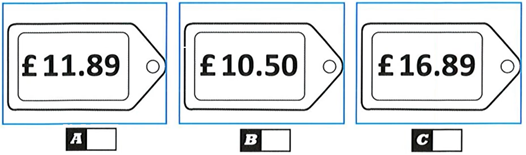
1. How much will the girl pay to buy a new T-shirt? [a, b, c]
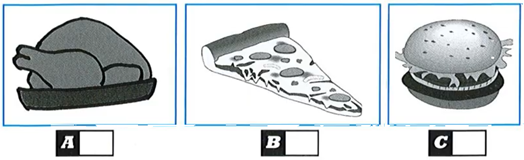
2. What food will the boy have? [a, b, c]
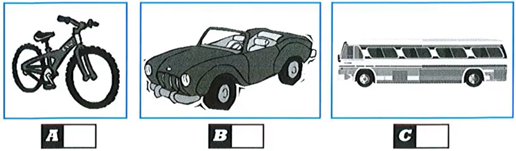
3. How will they get to the park? [a, b, c]
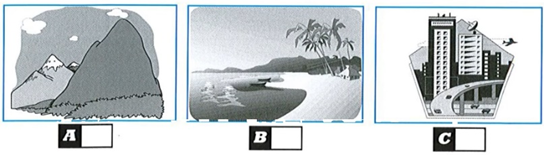
4. Where did the boy go on holiday last summer? [a, b, c]
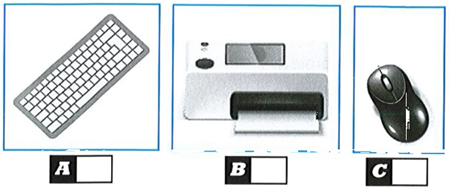
5. What did the girl collect from the shop today? [a, b, c]
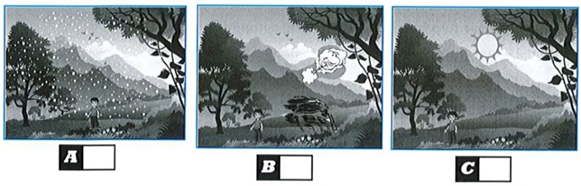
6. What will the weather be like on Saturday evening? [a, b, c]
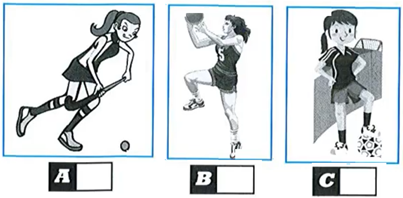
7. What sport will the girl learn? [a, b, c]
11
12 з 144 балів
Listening 2
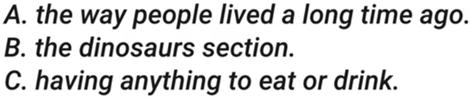
8. You will hear two friends talking about their trip to the museum. The girl isn’t interested in [a, b, c]
9. You will hear a boy telling a friend about his meeting with the headmaster. The headmaster and the history teacher [a, b, c]

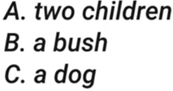
10. You will hear two friends talking about what they did in the show. What did the girl crash into at the bottom of the hill? [a, b, c]
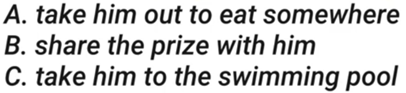
11. You will hear two friends talking about a swimming competition. What will the girl do for the boy after the competition? [a, b, c]
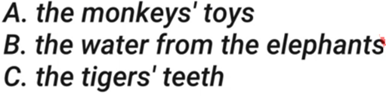
12. You will hear two friends talking about their day at the zoo. What was the girl scared by? [a, b, c]
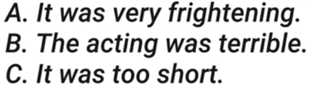
13. You will hear two friends talking about the film they saw at the cinema last night. Why didn’t the boy enjoy the film? [a, b, c]
12
12 з 144 балів
Listening 3
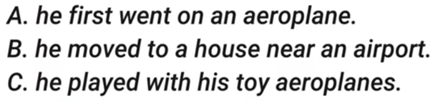
20. Omar first became interested in flying planes when [a, b, c]
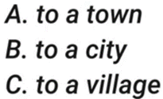
21. Where did Omar’s family move to after living next to the airport? [a, b, c]
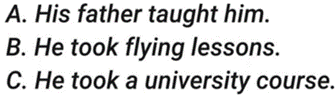
22. How did Omar learn to fly? [a, b, c]
23. Omar started his career as a pilot flying [a, b, c]
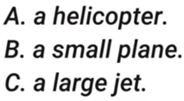
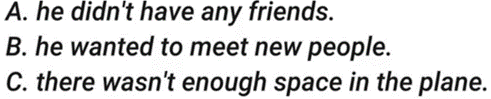
24. Omar wanted to fly around the world on his own because [a, b, c]
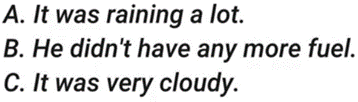
25. Why did Omar have to make an emergency landing? [a, b, c]
Рефлексія від 7 учнів
Сподобався:
0
Так: 7
Ні: 0
Зрозумілий:
0
Так: 6
Ні: 1
Потрібні роз'яснення:
0
Ні: 3
Так: 4