- Всеосвіта›
- Бібліотека тестів›
- Англійська мова›
- HS2 2019 unit6 p108 act2

Тест:
HS2 2019 unit6 p108 act2

08.02.2022
Вміст тесту:
1
2
3
4
5
6
7
8
9
10
11
Тест містить питання скопійовані з: HS2 2019 unit6 p108 act2.
1
12 з 132 балів
Listening 1
Listen to the speakers. For questions choose the correct answer (A, B or C).
1 - What do they need to buy? [A, B, C]
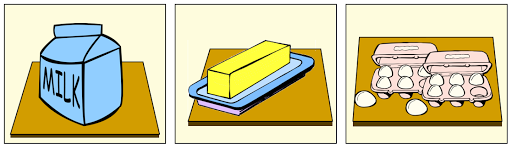
A B C
2 - Where do they do their activity? [A, B, C]
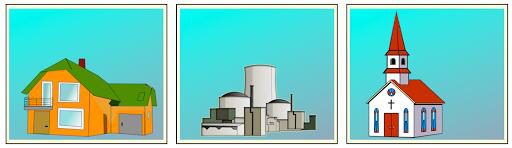
A B C
3 - What cannot the speaker borrow? [A, B, C]
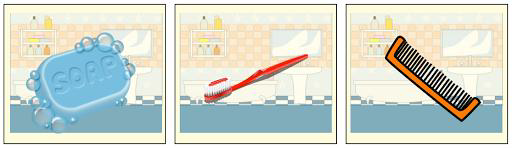
A B C
4 - Which shirt does the speaker prefer? [A, B, C]
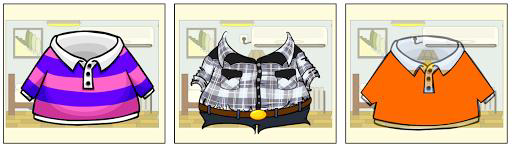
A B C
5 - Which animal were they able to visit? [A, B, C]

A B C
6 - Which sport would the speaker not do on holiday? [A, B, C]
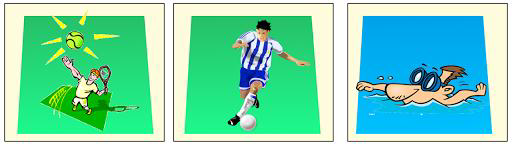
A B C
7 - When will the speaker have the operation? [A, B, C]

A B C
Listening 2
Listen to the text. For questions choose the correct answer (A, B or C).
1. You hear a man talking about a ceramics course he attended. What aspect of the course did he find unsatisfactory?
[A, B, C]
A the level of support from the staff
B the quality of the materials
C the cost for students
2. On a radio programme, you hear some information about a future guest. What will he be talking about?
[A, B, C]
A organising a mountain holiday
B learning mountain-climbing skills
C buying mountaineering equipment
3. You hear part of a talk about how to look fit and healthy. What is the speaker's advice?
[A, B, C]
A check your weight regularly
B build up your muscles
C avoid certain foods
4. You overhear two college students talking about applying for a weekend job. What do they agree about?
[A, B, C]
A It would be an enjoyable thing to do.
B It would be useful experience for the future.
C It would help them with their college expenses.
5. You overhear two people talking about transport. Why has the woman decided to use a bike instead of a car?
[A, B, C]
A She hopes the exercise will improve her health.
B She is concerned about the environment.
C She can no longer afford the cost.
6. On the radio, you hear a woman talking about a sport. What is she doing?
[A, B, C]
A explaining something to us
B warning us about something
C recommending something to us
7. You hear the weather forecast on the radio. How will the weather change tomorrow?
[A, B, C]
A It will get colder.
B It will get sunnier.
C It will get windier.
2
12 з 132 балів
Reading 1
Read the following text. For (1-7) choose T if the statement is true according to the text, F if it is false.
SICK BUILDING SYNDROME
You may notice that whenever you’re at work your eyes get watery, your nose or throat get irritated, your skin becomes dry or itchy. You start to get a headache. Fatigue sets in. It’s hard to concentrate. Colleagues complain of similar symptoms. Yet, an odd thing happens: soon after you leave the building you feel relief.
All are indicators of “sick building syndrome” (SBS). That’s a scary-sounding, catch-all term, which simply describes situations in which building occupants experience acute health and comfort effects that seem linked to time spent in a building, but no specific illness or cause can be identified, according to the US Environmental Protection Agency. Complaints may come from workers in one specific room or zone, or they may come from employees throughout a building. One report cited by EPA says up to 30 percent of new and remodeled buildings worldwide may prompt excessive complaints related to lousy indoor air quality.
“Sick building syndrome probably originated as a result of the oil embargoes that began in the mid- 1970s,” reports the journal Archives of Environmental Health. Buildings erected after that increasingly were built “tight” - with windows that couldn’t open, for instance - to conserve energy. An unexpected consequence: Fungi became trapped indoors, along with chemicals released from cleaning products, ozone from photocopiers, pesticides sprayed by the exterminator, fumes from new carpets, and secondhand cigarette smoke drifting indoors from the ventilation system.
Often, according to the EPA, problems trace to a building being operated or maintained in a manner that is inconsistent with its original design or operating procedures. Sometimes indoor air problems trace to poor building design or occupant activities.
There’s some thought that no one really knows why people get sick; maybe it isn’t the air, but some other reason, like maybe sitting too long in front of a computer (“visual display unit” or “VDU”). One study found increased sick-building symptoms when working at a VDU at least seven hours a day; other studies found an effect after fewer hours, according to the journal Occupational and Environmental Medicine.
To figure out what’s going on, building managers can conduct a walk-through survey to look for obvious issues such as poor cleaning, water damage or overcrowding, then may distribute a questionnaire to employees to get a sense of the extent of the problem.
Solutions can be wide-ranging, including storing paint only in well-ventilated areas and letting new carpets off-gas their airborne pollutants before anyone goes inside the building.
0 The term “sick building syndrome ” has been accurately defined.
1 Only people who permanently stay in certain parts of the building suffer from SBS.
2 No exact causes of SBS have been determined so far.
3 Using low-power technologies in construction blocked fresh air inflow to the building.
4 The architects anticipated the problems with the air indoors.
5 SBS cannot be exclusively explained by the mistakes of the building’s designers.
6 Indoor air problem is the only reason found to cause sick-building symptoms.
7 Workers’ opinions may help understand this problem.
Reading 2
Match choices (A-H) to (1-5). There are two choices you do not need to use.
WHY DO TEENS TAKE RISKS?
When teens drink or do other forbidden things, adults often say we aren’t thinking about the risks of unsafe behaviour. But a recent study shows that teens think things through far more than people realize. I wanted to know more, so I decided to interview Dr. Valerie Reyna, a Cornell University professor. David Schmutzer
Interviewer: 0
Dr. Valerie Reyna: The conventional wisdom has been that kids do these activities because they think they’re invulnerable and they’re going to live forever. The research has shown that’s not the case. In fact, teens think that they’re more vulnerable than adults think they are.
Teens actually take longer than adults to think about the risks and benefits of doing something dangerous They even overestimate their risk. But then they decide the benefits — like peer acceptance — outweigh the risks. That’s why they engage in the risky behaviour.
Interviewer: 1
Reyna: We used to think that you got to be an adult and you began to calculate risks more. But now the evidence suggests that you calculate less as you get older, and that’s why you don’t take risks.
The theory is that adults don’t need to go into the precise details and weigh them to make a decision. Instead, they base their decisions on their bottom-line “gist” of the situation.
Interviewer: 2
Reyna: There are certain situations that adults look at and they say, “Wow, we know how this situation is going to turn out before we hear the rest of the story.” For young people without experience, what happens can be a surprise.
For example, let’s say it’s prom night and some kids are renting a hotel room, there’s a lot of drinking going on, and there’s no adult supervision. Most adults won’t be surprised that there might be some behaviour problems in that situation: an adult immediately gets the gist. The bottom-line decision is that you don’t get into that situation. If you’re not in that situation, nothing bad will happen to you.
Interviewer: 3
Reyna: There are teens who are thrill seekers and others who are more risk-averse and that continues into adulthood. Some teens appear to mature faster, which means they’re getting the “gist” sooner.
Why do some teens get the gist sooner than others? We don’t know, but as you get more experience, you learn more about risky behaviour and your thinking changes. Also, parents are often cited as the most important role models in a child’s life.
Interviewer: 4
Reyna: Believe it or not, but teens overestimate the risk of risky behaviours. The teens surveyed didn’t think they were immortal. In fact, some had a very fatalistic attitude [meaning they think they are powerless to change the future].
What’s the first thing public health officials do when they’re trying to educate teens? They tell teens what the risks are because they want to inform them. It’s very well intentioned, but it could backfire. In fact, if you tell a teen the risk is X and it turns out it’s lower than they thought it was, you could make them more likely to engage in risky behaviour.
Interviewer: 5
Reyna: Examine your values carefully and think about how your everyday life connects to those values. Instead of thinking of values as an abstraction, think about how you would apply them to your encounters with people in concrete situations.
A What makes teens do risky things?
В How can public health officials help to inform teens?
C What surprised you in your research?
D What’s your advice to teens?
E When do teens start making more adult decisions?
F Why do some teens choose not to take risks?
G What’s “bottom-line” decision-making?
H What are the benefits for teens to engage in the risky behaviour?
Reading 3
Read the text below. For questions (1-12) choose the correct answer (А, В, C or D).
THE GAMING INDUSTRY
The game industry of the modem age is (0) . Nearly every young child and teenager in all developed countries (1) a gaming console of some description. I remember my first ever “game” was one of the classic Game Boy’s, by Nintendo. I treasured that (2) of technology for a long time... until the Game Boy colour (3) at least.
So what is it about the games nowadays that (4) everyone so easily? Is it the sheer size of the games, the graphical value of them, or is it just the fact that they’re (5) to play? I, for one, only ever buy a game which satisfies all of those (6) . Imagine having a huge game that’s not fun to play on? Imagine having a fun game, which has (7) embedded from level one onwards? Imagine a game that looks (8) in the show windows, but is (9) awful when you get it back home?
The gaming industry is divided into many sections. You can have (10) from a Role-Playing Game (RPG) to a First-Person Shooter (FPS). (11) of the modern era can vary from being offline to being a massively multiplayer (12) game, which hosts of thousands real-life people around the globe. You’re only young once. Enjoy it while you can.
0 | A | awful | В | exceeding | C | tremendous | D | intensive |
1 | A | owns | В | belongs | C | presents | D | imagines |
2 | A | part | В | section | C | side | D | piece |
3 | A | published | В | sold | C | came out | D | found |
4 | A | treasures | В | embeds | C | hooks | D | enjoys |
5 | A | enjoy | В | fun | C | happy | D | glad |
6 | A | ideas | В | criteria | C | needs | D | sets |
7 | A | levels | В | criteria | C | features | D | glitches |
8 | A | pleased | В | developed | C | fantastic | D | happy |
9 | A | actually | В | essentially | C | substantially | D | easily |
10 | A | nothing | В | everything | C | any | D | others |
11 | A | Games | В | Players | C | Consoles | D | Industries |
12 | A | real | В | practical | C | online | D | offline |
3
12 з 132 балів
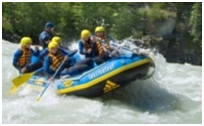
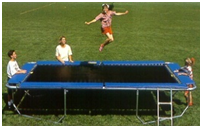
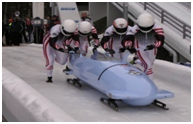
Underwrite the pictures with the words they define.
1

А
Rebound tumbling
2

Б
Car racing
3

В
Curling
4
Г
Slalom
5

Ґ
Rafting
6

Д
Scuba diving
7

Е
Skydiving
8

Є
Martial arts
9

Ж
Skeetshooting
10
З
Archery
11
И
Sporttourism
12

І
Bobsleigh
13
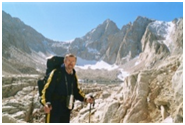
К
Powerboatracing
14

Л
Biathlon
Запитання №4 Із заповненням пропусків у тексті
Запитання №5 Із заповненням пропусків у тексті
Запитання №6 Із заповненням пропусків у тексті
Запитання №7 Із заповненням пропусків у тексті
Запитання №8 Із заповненням пропусків у тексті
Запитання №9 На встановлення відповідності
Запитання №10 Із заповненням пропусків у тексті
Запитання №11 З вибором правильної відповіді у тексті
Рефлексія від 0 учнів
Сподобався:
0
Так: 0
Ні: 0
Зрозумілий:
0
Так: 0
Ні: 0
Потрібні роз'яснення:
0
Ні: 0
Так: 0