- Всеосвіта›
- Бібліотека тестів›
- Англійська мова›
- HS2 2019 unit5 p90 act2

Тест:
HS2 2019 unit5 p90 act2

22.10.2021
Вміст тесту:
1
2
3
4
5
6
7
8
9
10
Тест містить питання скопійовані з: HS 2 Unit 5 – General TEST 2 .
1
12 з 120 балів
British English and American English, match the equivalents.
1
subway
А
line
2
city centre
Б
lift
3
carry-on baggage
В
public toilet
4
one way
Г
schedule
5
return
Ґ
economy class
6
freeway
Д
single
7
rest room
Е
first floor
8
elevator
Є
bill
9
coach class
Ж
booking
10
timetable
З
round trip
11
car park
И
downtown
12
queue
І
motorway
13
check
К
underground
14
reservation
Л
hand luggage
15
ground floor
М
parking lot
2
12 з 120 балів
Write the text in American English. Choose the correct words.
A trip to London
Last week I drove to London by car. As there was an accident on the M25 I had to take a [detour, diversion]. I stopped in front of a [theater, theatre] to ask for directions. A young man told me to turn right at the [crossroads, intersection] and ask again at the [gas station, petrol station]. There a friendly [sales clerk, shop assistant] told me to take the second exit of the [roundabout, traffic circle]. After I had passed a [crosswalk, zebra crossing] I saw a [bookshop, bookstore] and a large [car park, parking lot]. I parked my car there and walked to the [center, centre] of London.
3
12 з 120 балів
Decide whether the sentence is written in British or American English.
1. English is my favourite subject at school. [British English, American English]
2. Have you seen Dick's new truck? [British English, American English]
3. The park is in the center of our town. [British English, American English]
4. Mr Barnes, our caretaker, found my key. [British English, American English]
5. I like French fries, they're very crispy. [British English, American English]
6. Have you seen the latest movie? [British English, American English]
7. I've passed this test. So I'll get my driving licence very soon. [British English, American English]
8. The accident happened because the blue car didn't stop at the traffic lights. [British English, American English]
9. Tom told me to get off the Underground at Tower Hill. [British English, American English]
10. We have to hand in our résumé by Friday. [British English, American English]
4
12 з 120 балів
1. There are not so many hot days this July. In fact there are … [a, b, c, d] of them this summer.
a) less
b) the least
c) little
d) fewer
2. I have known Liz for years. She is … [a, b, c, d] than her sister Jane.
a) not so serious
b) far more serious
c) a bit serious
d) the most serious
3. They’ve got … [a, b, c, d] money than they need.
a) little
b) the least
c) less
d) the most
4. I … [a, b, c, d] Tom since he … school.
a) haven’t seen / left
b) have seen / left
c) hadn’t seen / left
d) see / leave
5. He … [a, b, c, d] me his name but I … it.
a) has told / shall forget
b) told / have forgotten
c) was told / forgot
d) will tell / forgot
6. They … [a, b, c, d] you the money before they … .
a) send / leave
b) sent / had left
c) will send / leave
d) should sent / had left
7. I … [a, b, c, d]already … the doctor about it, but she couldn’t … me.
a) have / seen / help
b) has / seen / helped
c) had / seen / had helped
d) is / having seen / is helping
8. The weather … [a, b, c, d] as nice today as it … yesterday.
a) is / will be
b) was / were
c) is / was
d) were / shall be
9. I could not get a seat, … [a, b, c, d] I came early.
a) as
b) when
c) though
d) once
10. … [a, b, c, d] do we enjoy summer vacation, … we … enjoy winter break.
a) whether / or
b) not only / but also
c) either / or
d) neither / nor
11. Carol wanted to drive to Colorado, … [a, b, c, d] Bill insisted that they fly.
a) and
b) or
c) so
d) but
12. He is a weak leader; … [a, b, c, d] , he has plenty of supporters.
a) nevertheless
b) otherwise
c) moreover
d) accordingly
13. The musicians delivered a rousing performance … [a, b, c, d] they had rehearsed often.
a) though
b) as
c) once
d) when
14. The personnel manager was interested … [a, b, c, d] to quit my present job.
a) why I had decided
b) why I decided
c) why had I decided
d) why I would decide
15. The mother reminded me that I … [a, b, c, d] to feed the dog and take him out for a walk.
a) not to forget
b) don’t have to forget
c) am not to forget
d) shouldn’t forget
16. I wondered how many people … [a, b, c, d] to the parents’ meeting the day before.
a) came
b) had come
c) would come
d) have come
17. Diana answered she … [a, b, c, d] stories and poems all her life since as long as she could remember.
a) had been writing
b) was writing
c) write
d) has been writing
18. Why did you say that Paul … [a, b, c, d] a careful driver?
a) hadn’t been
b) isn’t
c) wasn’t
d) will not be
19. Excuse me, do you know if there's … subway station around here? I'm supposed to meet … [a, b, c, d] couple of friends at … restaurant near … Chrysler Building.
a) the / a / a / the
b) a / a / the / the
c) a / a / the / -
d) a / a / a / the
20. I need … [a, b, c, d] milk for this recipe, but we're out.
a) -
b) a
c) an
d) the
21. He is from … [a, b, c, d]European country, but I don't know which one.
a) -
b) a
c) an
d) the
22. What's … [a, b, c, d] longest river in … world? Is it … Amazon or … Nile?
a) the / the / the / the
b) the / - / an / a
c) the / a / the / the
d) - / the / - / -
23. You’ve never had such a long trip before, … [a, b, c, d] you?
a) have
b) hadn’t
c) haven’t
d) had
24. It rained all day yesterday, … [a, b, c, d]?
a) it didn’t
b) isn’t it
c) didn’t it
d) didn’t they
25. You haven’t been to Italy, … [a, b, c, d]?
a) haven’t you
b) you have
c) you haven’t
d) have you
26. Scientists have found a direct … [a, b, c, d] between smoking and lung cancer.
a) interaction
b) link
c) corporation
d) corresponding
27. John is very shy. That's why he has great difficulties in oral … [a, b, c, d], although he is a very hardworking student.
a) organizations
b) meetings
c) exams
d) speech
28. When we first came to this university they gave us a … [a, b, c, d] room that was so small that we decided to rent a small house instead.
a) gymnasium
b) caravan
c) palace
d) dormitory
29. Countries like Turkey are members of … [a, b, c, d] and send soldiers when necessary, but on the other hand they have no direct say in decision making like the U.S.A.
a) NATO
b) UNESCO
c) OPEC
d) G7
30. We rented a … [a, b, c, d] which could carry 60 passengers and went on a picnic in Abant last week.
a) automobile
b) autobus
c) plane
d) train
31. Higher levels of physical activity … [a, b, c, d] among girls who … near small parks and running tracks.
a) are seen / were living
b) were seen / live
c) had seen / would live
d) are seen / live
32. The building, dating from the late 1200s or early 1300s … [a, b, c, d] to be the palace of the emperor.
a) had been thought
b) has thought
c) is thought
d) had thought
33. When population … [a, b, c, d] by artificial means, i t … and puts more strain on limited natural resources.
a) isn’t checked / increases
b) wasn’t checked / increased
c) hadn’t checked / increased
d) wasn’t checked / has been increased
34. If you visited my country, my people … [a, b, c, d] probably … to have some very strange customs.
a) had / been thought
b) have / been thought
c) will / think
d) would / be thought
35. The bridge I know best … [a, b, c, d] Bosporus.
a) called
b) calls
c) is called
d) has called
36. When a blind person … [a, b, c, d], he … by taking his arm and guiding him.
a) was seen / is helped
b) is seen / should be helped
c) were seen / must be helped
d) could be seen / was helped
37. A school … [a, b, c, d] , on the model of those at Alexandria, in which astronomy and logic … , mostly from Greek texts.
a) set up / were being taught
b) is set up / are taught
c) has been set up / have taught
d) was set up / were taught
38. The injured fan … [a, b, c, d] to hospital after he … in a seated area of the stadium before the start of the game.
a) was taken / was attacking
b) was taking / had been attacked
c) took / would be attacked
d) was taken / was attacked
39. After years of running three miles in 21 minutes, his knees … [a, b, c, d] from the high impact exercise.
a) had ruined
b) were ruined
c) ruined
d) have been ruined
40. A lot of people … [a, b, c, d] early yesterday morning in a car crash that … outside my office.
a) have been killed / was happened
b) have killed / had happen
c) were killed / happened
d) killed / happened
41. How can you breathe in such conditions? … [a, b, c, d] is gloomy and stuffy!
a) Such
b) There
c) Here
d) This
42. I suggest you to take this pill … [a, b, c, d] the week. That is, take it on Monday, Wednesday, Friday and Sunday.
a) every other day
b) each day
c) one day
d) everyday
43. The American people's loss … [a, b, c, d] confidence … their government has reached severe proportions.
a) for / with
b) of / in
c) in / by
d) about / for
44. It took them three hours to get … [a, b, c, d] home.
a) to
b) at
c) by
d) -
45. Of course you can't see it. The village is … [a, b, c, d] the hills.
a) in front of
b) behind
c) beside
d) through
5
12 з 120 балів
Reading 1
Read the texts below. Match choices (A-H) to (1-5). There are three choices you do not need to use.
A Politics
B Private Life
C Science
D Health
E Catastrophes
F Weather
G Cinema
H Shopping
1 Blistering heat caused four more deaths in Spain on Tuesday as Europe baked in relentless weather that has disrupted travel and cooked the Mediterranean enough for one scientist to warn of a proliferation of jellyfish. [A, B, C, D, E, F, G, H]
2 British Columbia Premier Gordon Campbell is framed by two of the largest fires burning in province, in August. Crews battling 'breath-taking forest fires in the parched mountains held their own against the fames on Tuesday but kept a nervous eye on the sky for forecast thunderstorms and lightning strikes. [A, B, C, D, E, F, G, H]
3 Fiji's prime minister expanded the Cabinet on Wednesday to add ministers from the ethnic Indian-dominated opposition, following a Supreme Court order aimed at enforcing a balance in the government of this ethnically divided Pacific island nation. [A, B, C, D, E, F, G, H]
4 Mars is getting ready for its close-up, with the red planet coming as near to Earth this month as it has in almost 60,000 years. [A, B, C, D, E, F, G, H]
5 The Army is telling troops to take precautions as it tries to figure out the cause of pneumonia cases, including two deaths, among forces in the Afghan and Iraqi campaigns. [A, B, C, D, E, F, G, H]
6
12 з 120 балів
Reading 2
Read the text below. For each of the empty spaces choose the correct answer.
THE POPULAR WAY TO LEARN ENGLISH IN JAPAN
The speeches of the new United States President Barack Obama are proving to be a popular aid to learning English in Japan. A special compilation (6) [go, went, has gone, going] on sale lately, quickly becoming a national bestseller.
It's been described by its publishers as a huge hit in Japan - a compilation of the speeches of Barak Obama has been sold in the number of over 400,000 copies, and students at an English class in Tokyo are even memorising the new (7) [President, President’s, Presidents, Presidents'] words to improve their own pronunciation and understanding.
Barak Obama's message of change has been well received in Japan where politics is often (8) [characterise, characterised, characterising, characterises] by grey figures and backroom deals. The clear language of the speeches makes them an obvious choice for teaching material. But the new President's words are said to hold particular appeal.
First of all it's from his personality, and also, his technique, as his rhythms in English sound beautiful to the Japanese people (9) [who, whose, what, when] may not understand English well but still find his English as something they want to learn from.
And so, in shops across Japan the face of the new American President is a fixture on the book-shelves, (10) [as well as, is well as, as better as, as good as] on the bookstalls. And for students, the question of whether they (11) [succeed, will succeed, succeeded, have succeed] in improving their English can be answered - «Yes, we will».
7
12 з 120 балів
Reading 3
Read and complete the text below. For each of the empty spaces (23-34) choose the correct answer (A, B, C or D).
MAXWELL'S JOB INTERVIEW
Maxwell had not had a steady job for almost two years. Today was a big day, because he was going to a job (23) [dialogue, conference, interview, examination] that he felt good about. The secretary he had talked to on the phone sounded friendly and encouraging.
Maxwell was a typist. His fingers danced on the (24) [keyboard, blackboard, smartboard, processor]. However, his social skills were not nearly as good as his typing skills. Sometimes his mouth got in the way of his employment. At his last steady (25) [trade, profession, career, job], his boss had told him to start making coffee every morning. Maxwell laughed. I'm not making coffee», he said. «It's not part of my job description».
«Read the employee manual again», his boss said. Your job description is anything I say it is».
«That's a woman's job», said Maxwell. «Do it yourself».
His boss was still yelling as Maxwell walked (26) [out, in, on, away]of the building. He felt great about telling off the boss. A few days later, the reality of not having a job hit home. He had to (27) [expend, pay, take, buy]the rent and utility bills, and he had to eat. What was he going to do?
He thought about (28) [sorry, forgiveness, apologising, express regret]and asking for his job back. But how would that look? Then again, who cares how it looks when you're almost broke? After thinking about it for another week, he finally called his boss and apologised. His boss accepted his apology, but said that he had already hired a replacement.
Maxwell (29) [get in touch with, contacted, reached, spoke to] a temporary job agency, which provided him enough occasional work to pay his bills. But none of the companies that he was sent to were hiring. So Maxwell was excited about finally getting an interview for a steady job.
Maxwell's drive to the interview was (30) [reasonable, suitable, appointing, disappointing]. The traffic was congested and the neighbourhood looked rough. It took him 45 minutes to get there. The building was covered with graffiti.
The interview started 30 minutes (31) [lost, last, late, later]. Without bothering to apologise, the manager lit a cigarette and took a (32) [sip, drop, taste, mouthful]from his coffee cup. He leaned back in his chair and put his feet up on his desk. He asked Maxwell a lot of questions. Maxwell thought that each question was more ridiculous than the (33) [next, former, preceding, following]one. The final question was, «Where would you like to be 10 years from now?»
What does that have to do with typing?» Maxwell (34) [rambled, meandered, wandered, wondered]. «Silly questions from a rude man in a lousy neighbourhood! Where would he like to be 10 years from now?»
«Anywhere but this dump!» Maxwell said angrily, as he stood up and walked out.
8
12 з 120 балів
Listening 1
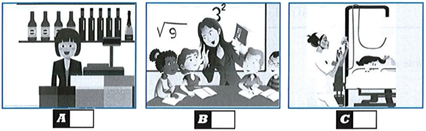
1. Which job has the girl decided to do? [A, B, C]
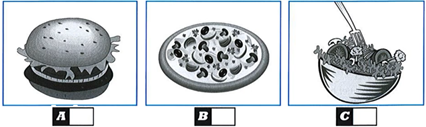
2. What will the boy order? [A, B, C]
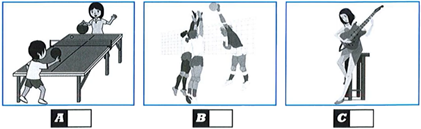
3. Which activity does the girl not do anymore? [A, B, C]
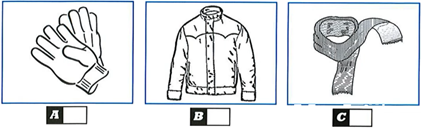
4. What does the boy want to buy tomorrow? [A, B, C]
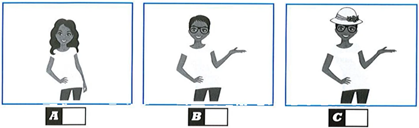
5. Which is the boy’s sister? [A, B, C]
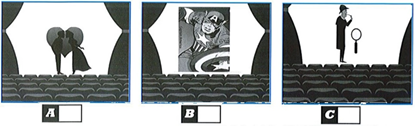
6. What sort of film will they see? [A, B, C]
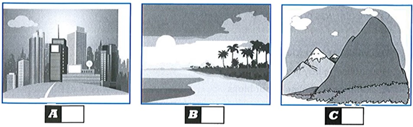
7. Where does the girl want to go on holiday? [A, B, C]
9
12 з 120 балів
Listening 2
8. You will hear two friends talking about a new girl in the class. What is the boy’s opinion of her? [A, B, C]

9. You will hear two friends talking about a group’s new song. They agree that … [A, B, C]

10. You will hear a girl telling a friend about something she bought online. What does the boy say about his experience? [A, B, C]

11. You will hear two friends talking about their teacher. What do they disagree about? [A, B, C]

12. You will hear two friends talking about a new film. What does the boy think? [A, B, C]

13. You will hear two friends talking about blogs. How does the boy feel about his blog now? [A, B, C]

10
12 з 120 балів
Listening 3
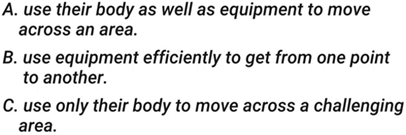
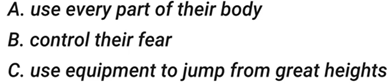
20. What are Parkour athletes expected to do? [A, B, C]
21. What do most athletes find hard to do, according to Miguel? [A, B, C]
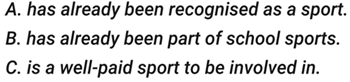
22. Miguel says that, in the UK, Parkour [A, B, C]
23. What does Miguel say about the video? [A, B, C]
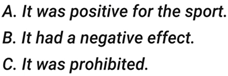
24. What does Miguel say about the competition in Santorini? [A, B, C]
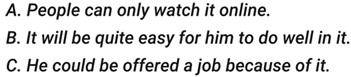
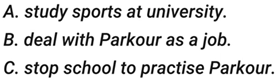
25. In the future Miguel wants to [A, B, C]
Рефлексія від 11 учнів
Сподобався:
0
Так: 10
Ні: 1
Зрозумілий:
0
Так: 9
Ні: 2
Потрібні роз'яснення:
0
Ні: 6
Так: 5