- Всеосвіта›
- Бібліотека тестів›
- Англійська мова›
- HS2 2019 unit5 p88 act9

Тест:
HS2 2019 unit5 p88 act9

20.12.2021
Вміст тесту:
1
2
3
4
5
6
7
8
9
10
Тест містить питання скопійовані з: HS2 2019 unit5 p88 act9.
1
12 з 120 балів
Task 1
Listen to the speakers. For questions choose the correct answer (A, B or C).
1. What was damaged in the storm? [A, B, C]
|
|
|
A | B | C |
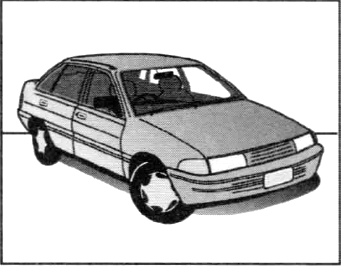

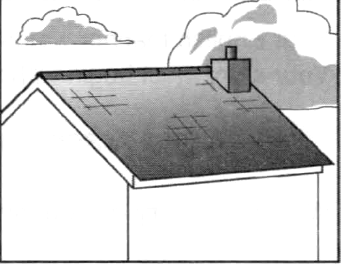
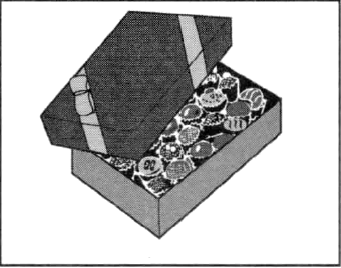
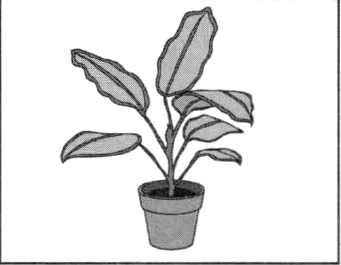
2. What present does the man decide to take? [A, B, C]
|
|
|
A | B | C |

3. Which is the woman's jacket? [A, B, C]
|
|
|
A | B | C |
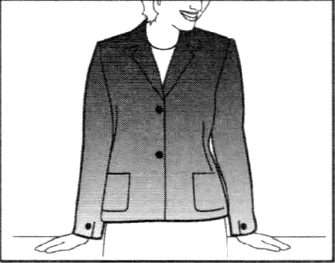
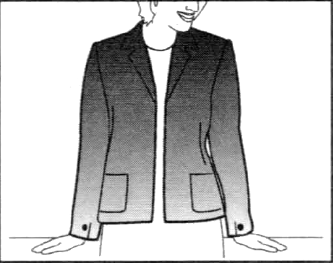
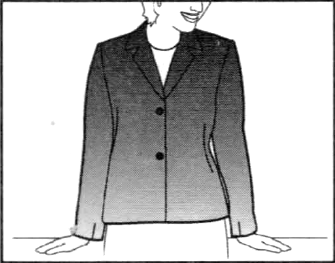
4. Which sport is not included in the price of the holiday? [A, B, C]
|
|
|
A | B | C |
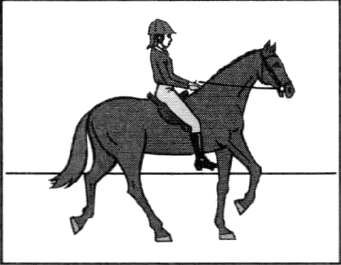

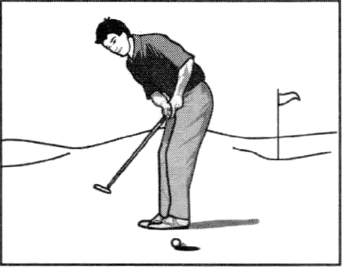
5. Which postcard will they send? [A, B, C]
|
|
|
A | B | C |
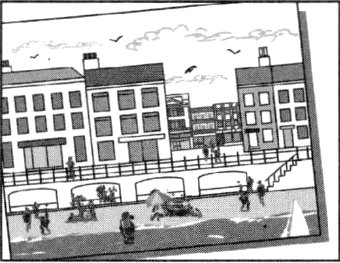


6. Where do they decide to go? [A, B, C]
|
|
|
A | B | C |
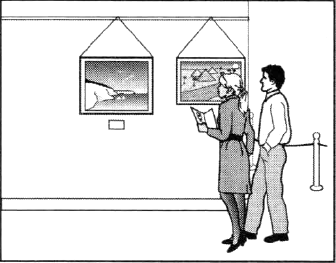
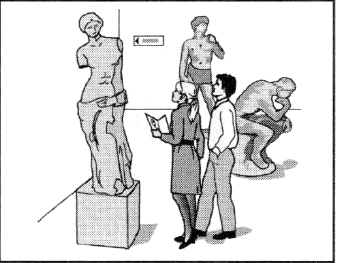
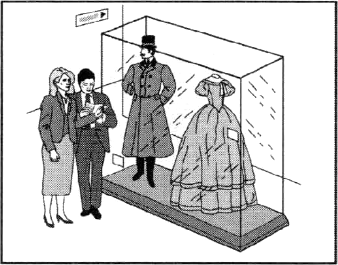
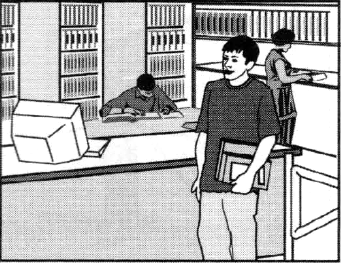
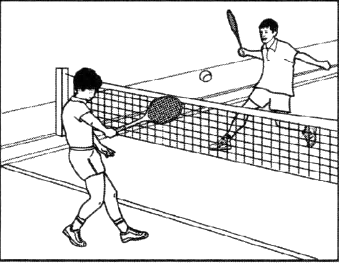
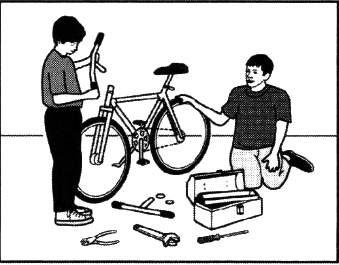
7. What will the boy do first? [A, B, C]
|
|
|
A | B | C |
Task 1_1
1. You hear a critic on the radio talking about a book. What is his main criticism of the book?
[A, B, C]
A) The style is poor.
B) The plot is too complicated.
C) The characters are not believable.
2. You hear someone talking about a time when she was a student abroad. What did she particularly like?
[A, B, C]
A) The school she studied at.
B) The town she stayed in.
C) The family she stayed with.
3. You hear a radio interviewer introducing a guest. Who is the guest?
[A, B, C]
A) A scientist.
B) A businessman.
C) An inventor.
4. You hear a caller on a radio phone-in programme. What feeling does the caller express?
[A, B, C]
A) Sympathy.
B) Self-pity.
C) Envy.
5. You hear a part of a radio interview. Who is being interviewed?
[A, B, C]
A) A customer at a shop.
B) The manager of a shop.
C) Someone who lives near a shop.
6. You hear someone talking on a public telephone. What does she want the other person to do?
[A, B, C]
A) Explain something he said.
B) Apologize to someone.
C) Give an honest opinion.
Task 2
Listen to the text. For statements choose T if the statement is true according to the text, F if it is false. Write your answers on the separate answer sheet. You will listen to the text twice.
1 - Juan paid 10 pounds for his seat. [T, F]
2 - Juan has a season ticket for the matches. [T, F]
3 - Before the match, Juan thought the result might be different. [T, F]
4 - They knew they were going to lose as soon as the match started. [T, F]
5 - Both speakers knew the date for the exam had been changed. [T, F]
6 - Only one of the speakers went to the party. [T, F]
Task 3
Listen to the text. For questions choose the correct answer (A, B or C). Write your answers on the separate answer sheet. You will listen to the text twice.
1. What helped Pamela to decide to become a fashion designer? [A, B, C]
A working as an assistant in a fashion shop
B doing research into the fashion industry
C attending a course on fashion design
2. What does Pamela say about having a degree in fashion? [A, B, C]
A It's essential for promotion.
B It's evidence of your ability.
C It guarantees you a better income.
3. Pamela says that when starting your own fashion label, it's most important to… [A, B, C]
A enjoy the creative process.
B contact shops that might sell it.
C have a business plan.
4. Where does Pamela usually find inspiration for her fashion designs? [A, B, C]
A in the work of other designers
B in the styles of other countries
C in the clothes her friends wear
5. What aspect of her work does Pamela find most difficult to deal with? [A, B, C]
A the pressure to meet deadlines
B the failure of some of her designs
C the need to attend fashion shows
6. According to Pamela, successful designers need to be able to [A, B, C]
A predict future fashions.
B recognise all past styles.
C get their designs published.
7. What advice does Pamela have for people who want a career in fashion? [A, B, C]
A Be aware of the options available.
B Don't be afraid of sudden fame.
C Learn from your own errors.
2
12 з 120 балів
Reading 1
Advantages of learning English in the UNITED KINGDOM
Today, millions of people want to learn or improve their English but it is difficult to find the best method. Is it better to study in Britain or America or to study in your own country?
The advantages of going to Britain seem obvious. Firstly, you will be able to listen to the language all the time you are in the country. You will be surrounded completely by the language wherever you go. Another advantage is that you have to speak the language if you are with other people. In Ukraine, it is always possible to speak Ukrainian in the class if you want and the learning is slower.
On the other hand, there are also advantages of staying at home to study. You don’t have to make big changes to your life. As well as this, it is also much cheaper than going to Britain but it is never possible to achieve the results of living in the UK. If you have a good teacher in Ukraine, I think you can learn in a more concentrated way than being in Britain without going to a school.
So, in conclusion, I think that if you have enough time and enough money, the best choice is to spend some time in the UK. This is simply not possible for most people, so being here in Ukraine is the only viable option. The most important thing to do in this situation is to maximise your opportunities: to speak only English in the class and to try to use English whenever possible outside the class.
1)Choose the best answer
1. What is the article about? [a, b, c]
A How many people learn English.
B English schools in England and America.
C The best way to learn English.
2. What is one of the advantages of going to the UK to learn English? [a, b, c]
A There are no Ukrainians in Britain.
B You will have to speak English and not your language.
C The language schools there are better.
3. What is one of the advantages of staying in your country to learn English? [a, b, c]
A The teachers aren’t very good in Britain.
B You have to work too hard in Britain.
C Your life can go on without changes.
4. People who don’t have a lot of time and money should… [a, b, c]
A Try and speak English in class more often.
B Learn English in Britain.
C Go to Italy to learn English.
2) Choose the word in the set that has the same meaning as the main word.
1. to maximize [a, b, c, d]
a) to determine
b) to proclaim
c) to exploit
d) to enlarge
2. concentrated [a, b, c, d]
a) intense
b) separate
c) uncoordinated
d) dissimilar
3. viable [a, b, c, d]
a) fragile
b) insecure
c) practical
d) unstable
4. advantage [a, b, c, d]
a) obstacle
b) benefit
c) complication
d) impediment
5. possible [a, b, c, d]
a) potential
b) inaccessible
c) unattainable
d) out-of-reach
Reading 2
Read the text below. Match choices (A-H) to (1-5). There are two choices you do not need to use.
A Understand School Dress Codes В Become Involved
C Read Policy
D Start a Petition
E Update the Rules
F Have a crack at it
G Start Picketing
H Communicate with Administrators
AGAINST SCHOOL DRESS CODES
If you are against school dress codes, you are not the only one. Many students hate the restrictions administrators place on them every year. Learn ways you can deal with these clothing attire guidelines in this article.
0 [A, B, C, D, E, F, G, H]
You may not care why school officials created some of the dress codes, but understanding why they exist may help you feel a little better about them. One of the biggest reasons for these guidelines on clothing attire is to make sure everyone comes to school dressed appropriately as to not offend other students. If there were no rules, some students would wear t-shirts with controversial messages or not wear much clothing at all. Keeping students focused on their classes, rather than what the person next to them is wearing, is one of the biggest reasons for dress codes.
1 [A, B, C, D, E, F, G, H]
Unfortunately, the fight against dress codes is difficult. Many times it can be hard to sway administrators to make changes to their policy. However, you can try some things that could help you gain some leeway as far as your clothing goes.
2 [A, B, C, D, E, F, G, H]
Become familiar with all of the rules. You may find some of them are outdated and could use an update. This will also help your case when you start talking to administrators.
3 [A, B, C, D, E, F, G, H]
Set up a meeting with your principal to discuss exactly what you believe is unfair about the policy. Ask him or her for suggestions on how you can have certain guidelines changed.
4 [A, B, C, D, E, F, G, H]
If other students agree with you, enlist their help in your campaign in having the policy changed. Write a short introduction about what changes you would like to see on a piece of paper and then have other students sign it.
5 [A, B, C, D, E, F, G, H]
If there are board meetings you can attend, make a point to go with a parent. Making yourself known by people that create the rules will help you gain some advantage.
Reading 3
Read the text below. For (1-5) choose T if the statement is true according to the text, F if it is false.
FIREFIGHTER SPEAKS AFTER 10 YEARS OF BEING MUTE & BRAIN DAMAGED
ORCHARD PARK, N.Y. — Nearly 9 1/2 years after a firefighter was left brain-damaged and mostly mute during a 1995 roof collapse, he did something that shocked his family and doctors: He asked for his wife. Staff members of the nursing home where Donald Herbert has lived for more than seven years raced to get Linda Herbert on the telephone.
It was the first of many conversations the patient had with his wife, four sons and other family and friends Saturday during a 14-hour stretch, Herbert’s uncle Simon Manka said. “How long have I been away?” Herbert asked. “We told him almost 10 years,” the uncle said. “He thought it was only three months.”
Herbert, who will turn 44 Saturday, was fighting a house fire Dec. 29, 1995, when the roof collapsed, burying him under debris. After going without air for several minutes, Herbert was comatose for 2 1/2 months and has undergone therapy ever since.
News accounts in the days and years after his injury describe Herbert as blind and with little, if any, memory. Video shows him receiving physical therapy but apparently unable to communicate and with little awareness of his surroundings.
Manka declined Monday to discuss his nephew’s current condition, or whether the apparent progress was continuing this week. The family was seeking privacy while doctors evaluated Herbert, he said. “He’s resting comfortably,” the uncle said.
As word of Herbert’s progress spread, a steady stream of visitors arrived at the Father Baker Manor nursing home in this Buffalo suburb. “He stayed up ‘til early morning talking with his boys and catching up on what they’ve been doing over the last several years,” firefighter Anthony Liberatore told WIVB-TV, Herbert’s sons were 14, 13, 11 and 3 when he was injured.
Staff members at the nursing facility recognized the change in Herbert, Manka said, when they heard him speaking and “making specific requests.” “The word of the day was 'amazing,’” he said.
Dr. Rose Lynn Sherr of New York University Medical Center said when patients recover from brain injuries, they usually do so within two or three years. “It’s almost unheard of after 10 years,” she said, “but sometimes things do happen and people suddenly improve and we don’t understand why.”
Manka said visitors let Herbert set the pace of the conversations and did not bring up the fire in which he was injured. “The extent and duration of his recovery is not known at this time,” Manka said. “However we can tell you he did recognize several family members and friends and did call them by name.”
There have been a few other widely publicized examples of brain-damage patients showing sudden improvement after a number of years. In 2003, an Arkansas man, Terry Wallis, returned to consciousness 19 years after he was injured in a car accident, stunning his mother by saying “Mom” and then asking for a Pepsi. His brain function remained limited, his family said months later.
Tennessee police officer Gary Dockery, who was brain damaged in a 1988 shooting, began speaking to his family one day in 1996, telling jokes and recounting annual winter camping trips. But after 18 hours, he never repeated the unbridled conversation of that day, though he remained more alert than he had been. He died the following year of a blood clot on his lung.
0 Donald Herbert spoke with Linda Herbert just after a roof collapsed in 1995. [T, F]
1 Donald Herbert was unconscious during almost 10 years in the hospital. [T, F]
2 Herbert was in his mid thirties when he got injured by the collapsed roof. [T, F]
3 There was evidence that Herbert could not talk, see and remember what had happened to him. [T, F]
4 Father Baker is one of Herbert’s visitors who spread the word about his progress. [T, F]
5 Though amazed, the doctors know some reasons to explain improvement of his condition. [T, F]
6 Herbert’s uncle gave the Associated Press journalist some facts of his nephew’s recovery. [T, F]
7 Herbert’s story is quite rare, but it is not a single case of a patient’s coming to oneself after a long period in a coma. [T, F]
3
12 з 120 балів
Translate.
подібний, схожий -
рідна мова -
живий -
спільне підприємство -
глобальний, загальний -
поведінка, манери, вчинки -
супутниковий -
торгівельні відносини -
гідний, що заслуговує, вартий -
звичайний, пересічний, середній -
незначний, другорядний -
відбивати, відображати -
Запитання №4 Із заповненням пропусків у тексті
Запитання №5 Із заповненням пропусків у тексті
Запитання №6 Із заповненням пропусків у тексті
Запитання №7 Із заповненням пропусків у тексті
Запитання №8 Із заповненням пропусків у тексті
Запитання №9 З вибором правильної відповіді у тексті
Запитання №10 Із заповненням пропусків у тексті
Рефлексія від 0 учнів
Сподобався:
0
Так: 0
Ні: 0
Зрозумілий:
0
Так: 0
Ні: 0
Потрібні роз'яснення:
0
Ні: 0
Так: 0