- Всеосвіта›
- Бібліотека тестів›
- Англійська мова›
- HS2 2019 Unit4 p81 act6

Тест:
HS2 2019 Unit4 p81 act6

10.02.2022
Вміст тесту:
1
2
3
4
5
6
7
8
9
10
11
12
Тест містить питання скопійовані з: hs222222.
1
12 з 144 балів
Translate into English:
розривати
збільшення, приріст
загострювати, підсилювати
хижак
природне середовище
частота
користь, вигода
вплив, імпульс
споживання
вторгнення
земля, грунт
потреба, попит
льодовик
постачання, забезпечення
впливати, діяти на
вимирання, зникнення
2
12 з 144 балів
Find one Odd Word Out and write it in the gap.
1. tropical, mediterranean, arctic, consumption
2. region, replacement, district, area
3. to decrease, to reduce, demand, to decline
4. frequency, frosty, icy, chilling
5. hail, a snowflake, benefit, an icicle
6. heavy rain, flood, tsunami, drought
7. suitable, to ruin, to destroy, to abolish
8. crops, to threaten, harvest, yield
9. sunshine, sunlight, sunrays, a predator
10. surface, violent, destructive, damaging
11. to occur, to happen, an avalanche, to arise
12. lightning, eruption, thunder, rainbow
3
12 з 144 балів
Choose and tick the CAUSES of natural disasters.
4
12 з 144 балів
Match the word combinations with their equivalents.
1
наявність води для людського споживання
А
heavily-populated coastal regions
2
вимирання видів
Б
to threaten large cities
3
підвищений ризик повеней
В
floods and rock avalanches
4
розростання лісу
Г
water availability for human consumption
5
густо населені прибережні райони
Ґ
impact on local fisheries and tourism
6
танення льодовика
Д
species extinction
7
зазнавати нестачу води
Е
changes in rainfall patterns
8
вплив на місцеве рибальство та туризм
Є
economic development
9
погрожувати великим містам
Ж
increased flood risk
10
запаси їжі
З
to experience water shortages
11
розвиток економіки
И
decreases in soil water
12
повені та каменепади
І
forest productivity
13
зміни у випаданні дощів
К
glacier melting
14
зниження рівня вологи у ґрунті
Л
food supplies
5
12 з 144 балів
Fill in the gaps with told or said.
1. They us not to wait for a long time.
2. They to us not to wait for a long time.
3. They not to wait for a long time.
4. Peter Jane would come soon.
5. Peter to Jane to come soon.
6. Peter Jane to come soon.
7. I my sister to clean the room.
8. My boss everybody to do their work.
9. The teacher to the class to hand in their homework.
10. The principal the class would go on an excursion soon.
6
12 з 144 балів
1.The teacher (to correct) mistakes for an hour when pupils come into the classroom.
2. By seven o'clock he (to drive) for nine hours.
3.I (not to think) that it (to be) comfortable to ring him now. He (just/to arrive) from Europe and he (to unpack) his things at the moment.
4. They (to pass) passport control when I saw them yesterday.
5.Who (to take) exam by this time?
6. Did you find your security tag which you (to lose) before?
7. This work must (to finish) in an hour.
8. If we (not to like) his suggestion, we (to tell) him about it.
9.How many months (they/to build) this house?
10. When they (to leave) the airport, the rain (already/to start) .
11. The child (to take) to the swimming pool by his mother yesterday.
12. They (to find) the solution, if they (to understand) the problem.
13.Peter (to write) letters now. He (to write) since seven o'clock. He (not to finish) writing yet.
14.I (never/to suppose) that he can cook. He (to be) in the kitchen now. He (to cook) for an hour and he (already/to prepare) some tasty dishes.
15.He was tired as he (to play) badminton for several hours.
7
12 з 144 балів
Read the text below. Match choices (A-H) to (1-5). There are three choices you don’t need to use.
A Keep operational goals small.
B Be precise.
C Set practical goals.
D Express each goal as a positive statement.
E Set performance goals, not outcome goals.
F Write goals down.
G Set priorities.
H Derive today's goals from larger ones.
FIND YOUR DIRECTION
Goal setting is a powerful process for thinking about your ideal future, and for motivating your-self to turn this vision of the future into reality.
The process of setting goals helps you choose the ways you want to follow in life. By knowing precisely want you want to achieve, you know where you have to concentrate your efforts.
GOAL SETTING TIPS
The following broad guidelines will help you to set effective goals:
(1) [A, B, C, D, E, F, G, H]Express your goals positively - “Apply this technique well” is a much better goal than “Don't make this stupid mistake”.
(2) [A, B, C, D, E, F, G, H]Set an exact goal, putting in dates, time points and amounts so that you can measure achievement. If you do this, you will know exactly when you have achieved the goal, and will be able to get complete satisfaction from having achieved it.
(3) [A, B, C, D, E, F, G, H]When you have several goals, assign a priority to each one. This helps you avoid feeling overwhelmed by too many goals, and to direct your attention to the most important things.
(4) [A, B, C, D, E, F, G, H]When you see your goals on paper, it will let you sort them out and it gives them more force.
(5) [A, B, C, D, E, F, G, H]It is important to set goals that you can achieve. All sorts of people (employers, parents, media, society) can set unrealistic goals for you. They will often do this in ignorance of your own desires and ambitions.
Well, properly-set goals can be incredibly motivating, and as you get into the habit of setting and achieving goals, you'll find that your self-confidence grows fast.
8
12 з 144 балів
Read the text below. For questions (6-1)choose the correct answer (A, B, C or D).
INFORMATION SOCIETY
Once upon a time societies were organised on the base of religion, farming, trade or industry. In many parts of the world today this is still true, but something else is becoming more important - the exchange of information, and the technologies that we use to do this. Twenty-four-hour news, e-commerce, international call-centres, mobile phones, Global Positioning Systems … all these are making the world smaller and faster.
But how can everybody in the world share the recent technological advances? Millions of people cannot read these words because they don't have access to a computer. They don't understand English either, the language that 80 % of the information is written in. They don't even have a telephone. They are more worried about how far they will have to walk today to get clean water or if they can feed themselves and their families. For most people on this planet, information is not a priority.
The contrast between countries that have information technology and those that don't is called the «digital divide». Scandinavia and South East Asia have a high number of people who use Information Communication Technologies (ICT). Central Africa and the Pacific have almost none.
The United Nations is trying to make the information society a reality for most of the developing world. This organisation wants to see rich countries transfer new technology and knowledge to poorer nations.
Ten years from now, the plan is that everybody in the world will have a radio or television and that 50 % of the world's population will have access to the Internet from schools and universities, health centres and hospitals, libraries and museums. This will improve medical care and education, science and agriculture, business opportunities and employment. At the same time, they say, local communities, languages and cultures will become stronger.
Just a dream? Certainly there are some contradictions. Does only good come with freedom of information? If information is power, why will people share it? Doesn't more technology mean fewer jobs? And how can the exchange of information keep local cultures alive if most of that information exists only in one language?
It is much easier to get people connected to broadband or put government online in Europe than in South America or the Middle East. However, developing countries often leapfrog the process which richer nations went through, and avoid their mistakes. Brazil collects most of its taxes online these days. There are cyber cities in Dubai and Mauritius. And Taiwan and Hong Kong have better access to ICT than the United Kingdom. Maybe the English language isn't so important after all.
Can the world create an information society for all? If a farmer in Bangladesh can read this in the year 2015, then maybe the answer is «yes».
6 The main idea of the text is that [A, B, C, D]
A everybody in the world shares the recent technological advances.
B the exchange of information and technology development are extremely important for today's world.
C Many years ago societies didn't need the exchange of information.
D Many people cannot read because they don't have access to a computer.
7 For many people in developing countries information is not a priority because [A, B, C, D]
A they don't want to learn English.
B they think that the use of a computer can have bad influence on their health.
C they prefer face-to-face communication.
D they have so many problems in satisfying their physical needs that they don't have time to think about modern technologies.
8 The term «digital divide» is used to describe [A, B, C, D]
A the contrast between countries that have information technology and those that don't.
B people who principally ignore ICT.
C the regular use of ICT.
D any digital device.
9 The main reason why the United Nations wants the new technology to be spread in developing countries is to [A, B, C, D]
A let everybody in the world have access to the Internet.
B improve the exchange of information.
C make local communities, languages and cultures stronger.
D provide the freedom of information in every place of the world.
10 According to the text, one of the challenges of spreading the informational technology is that [A, B, C, D]
A the spread of technology doesn't obviously mean the growth of working places.
B the local cultures don't need any support.
С everybody in the world will have a radio or television.
D the freedom of information is a utopia.
11 Developing countries [A, B, C, D]
A typically repeat the mistakes of richer nations.
B have never outstripped the richer nations in technological development.
C always have worse access to ICT than richer nations.
D sometimes leapfrog the process which richer nations went through.
9
12 з 144 балів
Read the text below. Match choices (A-H) to (12-16). There are three choices you do not need to use.
A How to Avoid Flu
B How It Is Spread
C Seasonal Flu and Its Symptoms
D Seasonal Flu Jab
E Complications of Seasonal Flu
F The Infectious Period
G How Common Is It?
H Flu or a Cold?
SEASONAL FLU
(12) [A, B, C, D, E, F, G, H]
Seasonal flu (also known as influenza) is a highly infectious illness caused by a flu virus.
The virus infects your lungs and upper airways, causing a sudden high temperature and general aches and pains.
You could also lose your appetite, feel nauseous and have a dry cough. You may need to stay in bed until you feel better.
Babies and small children with flu may also appear drowsy, unresponsive and floppy.
(13) [A, B, C, D, E, F, G, H]
The most common complication of seasonal flu is a bacterial chest infection. Occasionally, this can become serious and develop into pneumonia.
A course of antibiotics usually cures the bacterial infection, but it can very occasionally become life-threatening, particularly in the frail state and old age.
Other serious complications are uncommon.
(14) [A, B, C, D, E, F, G, H]
Many of the symptoms of flu are similar to those of the common cold, and many people incorrectly refer to a heavy cold as flu.
Symptoms of a cold appear gradually, are not severe and affect just your nose and throat.
Symptoms of flu are more severe, causing fever and aching muscles. You will not be able to do your usual activities.
(15) [A, B, C, D, E, F, G, H]
Preventing the spread of germs is the most effective way to slow the spread of flu. Always:
ensure you wash your hands regularly with soap and water,
clean surfaces regularly to get rid of germs,
use tissues to cover your mouth and nose when you cough or sneeze, and
put used tissues in a bin as soon as possible.
(16) [A, B, C, D, E, F, G, H]
Seasonal flu immunisation, or the flu jab, is the injection of a vaccine against flu. It gives good protection from flu that lasts for one year.
The flu jab is offered to people in at-risk groups, who are at greater risk of developing serious complications from flu. To stay protected, they need to have it every year.
The vaccine, normally available in autumn, is made from the strains of flu expected in winter.
The flu vaccines currently available give 70-80 % protection against infection, with flu virus strains closely matching those in the vaccine.
For the elderly, protection against infection may be less, but immunisation reduces the chances of pneumonia, hospital admissions and death from seasonal flu.
10
12 з 144 балів
Listening 1
Listen to a student, Marcel, discussing accommodation with the accommodation officer at a university. Choose the correct answer.
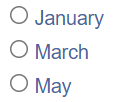
1 Students should arrange their accommodation for September in… [A, B, C]
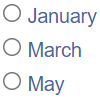
2 Now it is… [A, B, C]
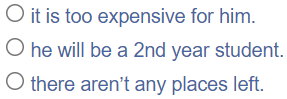
3 Marcel cannot stay in university hall in September because… [A, B, C]
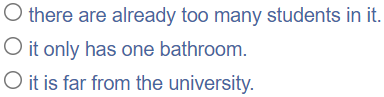
4 Marcel dislikes the room on Old Road because… [A, B, C]
5 The accommodation on Edward Street… [A, B, C]
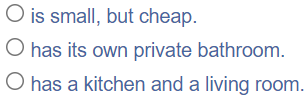
6 What will Marcel probably do next? [A, B, C]
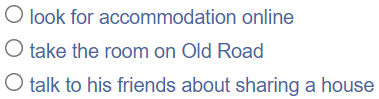
11
12 з 144 балів
Listening 2
A rep on a cruise ship is describing the activities on offer to holidaymakers.
Listen. Choose true or false.
1 The swimming pool is open 24 hours a day. [true, false]
2 You cannot use the sauna in the mornings. [true, false]
3 You need to book to use the gym. [true, false]
4 There are four squash courts on board. [true, false]
5 The art class is at 2 o’clock. [true, false]
6 There is a class in Italian cooking today. [true, false]
7 There are limited places on the art and cooking classes. [true, false]
8 You don’t have to pay extra to see the jazz band and comedy show. [true, false]
9 You need a ticket to see the shows. [true, false]
10 Today’s lecture is the same as tomorrow’s lecture. [true, false]
12
12 з 144 балів
Listening 3
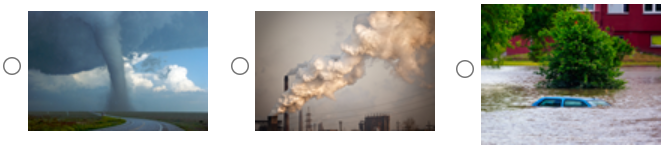
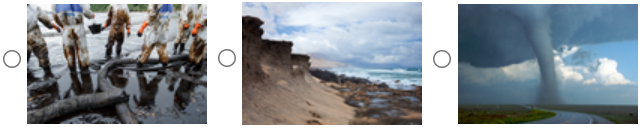
Listen to 6 short news reports about environmental problems. Match the report to the correct photo.
1.
[A, B, C]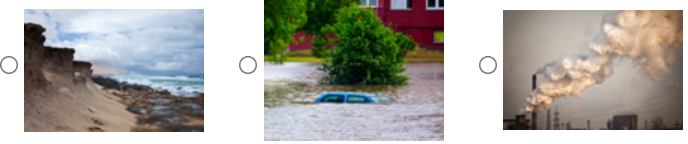
2.
[A, B, C]
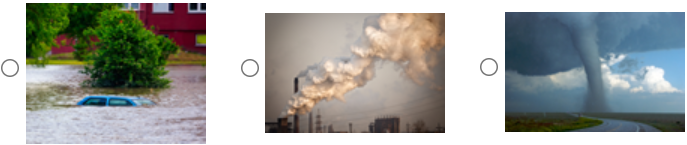
3.
[A, B, C]

4.
[A, B, C]

5.
[A, B, C]
6.
[A, B, C]
Рефлексія від 0 учнів
Сподобався:
0
Так: 0
Ні: 0
Зрозумілий:
0
Так: 0
Ні: 0
Потрібні роз'яснення:
0
Ні: 0
Так: 0