- Всеосвіта›
- Бібліотека тестів›
- Англійська мова›
- HS2 2019 unit4 p75 act2

Тест:
HS2 2019 unit4 p75 act2

24.09.2021
Вміст тесту:
1
2
3
4
5
6
7
8
9
10
Тест містить питання скопійовані з: HS 2 Unit 4 General TEST 3.
1
12 з 120 балів
Choose the correct word or word combination to complete the sentences.
1. The [clearance, disposal, removal] of rubbish is always a problem.
2. Pollution could cause changes to [weather patterns, weather arrangements, weather diagrams] on a global scale.
3. There are reports of [widespread flooding, widespread overflowing, widespread tiding] in northern France.
4. He has carried out extensive research into [renewable energy origins, renewable energy sources, renewable energy foundations]
5. The motorcycle's [environmentally friendly design, green design, eco-friendly design] should help sell it to consumers.
6. Clean water is [crucial, vital, integral] for our body.
7. All these things will make a small difference individually, but taken together they might shave a few percent off your total [carbon footprint, graphite footprint, coal footprint].
8. [Endless energy, Continual energy, Renewable energy] will become progressively more important as time goes on.
9. The [off shore wind farms, seaward wind farms, inshore wind farms] sprouting around the continent provide another opportunity.
10. [Green fines, Green taxes, Green prices] are a double dividend option: they could cut environmental damage whilst promoting welfare.
11. All the measures that I arranged earlier will help to reduce [vehicle emissions, vehicle productions, vehicle releases]
12. Irreversible [climate transform, climate modification, climate change] is disrupting the regularity of the seasons.
2
12 з 120 балів
Complete the Word Combinations (a copy - The Environment)
disposal of household
patterns
absolutely
flooding
irreversible climate
our carbon footprint
vehicle
alternative energy
off shore farms
renewable
eco-friendly
taxes
3
12 з 120 балів
Match the English Variant with its Ukrainian Equivalent.
1
to prevent climate change
А
за останніми оцінками
2
rising concentrations of greenhouse gases
Б
перейти на звичайний транспорт
3
rapid reductions in carbon emissions
В
для запобігання зміні клімату
4
to accelerate changes in behaviour
Г
відводити економіки країн від горючих корисних копалин
5
irreversible on the timescale of human lifetimes
Ґ
зростання концентрації парникових газів
6
according to the latest estimates
Д
підвищення природних можливостей лісів та океанів
7
to cause major climate changes
Е
є незворотним у часовому діапазоні людського життя
8
it demands international leaders’ co-operation
Є
швидке скорочення викидів вуглецю
9
switch to sustainable transport
Ж
викликати серйозні зміни клімату
10
move the countries' economies away from fossil fuels
З
на щастя, є багато рішень
11
fortunately, there are plenty of solutions
И
прискорити зміни в поведінці
12
increasing the natural ability of forests and oceans
І
вимагає співпраці міжнародних лідерів
4
12 з 120 балів
Choose phrases that reffer to Formal Letters.
5
12 з 120 балів
1. Have you got time to discuss your work now or are you … to leave?
[a) thinking, b) round, c) planned, d) about]
2. She came to live here … a month ago.
[a) quite, b) almost, c) beyond, d) already]
3. Once the plane is in the air, you can … your seat belts if you wish.
[a) undress, b) unfasten, c) unlock, d) untie]
4. I left my last job because I had no … to travel.
[a) place, b) position, c) opportunity, d) possibility]
5. It wasn't a bad crash and ...... damage was done to my car.
[a) little, b) small, c) light, d) mere]
6. I really enjoy stories that are … in the distant future.
[a) found, b) set, c) put, d) placed]
7. That old saucepan will come in ...... when we go camping.
[a) handy, b) convenient, c) fitting, d) suitable]
8. Anyone … after the start of the play is not allowed in until the interval.
[a) arriving, b) arrives, c) has arrived, d) arrived]
9. I didn't … driving home in the storm so I stayed overnight in a hotel.
[a) desire, b) prefer, c) imagine, d) want]
10. Marianne seemed to take … at my comments on her work.
[a) annoyance, b) insult, c) indignation, d) offence]
11. Mr. Watson was satisfied with the results of speaking to … father.
[a) Bob’s and Mike’s, b) Bob’s and Mike, c) Bob and Mike’s, d) Bob and Mike]
12. … scientists try to make sense of our senses, they also seek to imitate or even improve on them to serve us in new ways.
[a) As soon as, b) As, c) Seeing that, d) Despite the fact that]
13. Some creatures found as fossils in the Shale are ancestors of animals alive today, … others have gone extinct and are not like any existing living thing.
[a) while, b) before, c) until, d) whenever]
14. It would have been a more tactful decision to leave them alone when they told us to have a break, … ?
[a) shouldn’t we, b) didn’t they, c) wouldn’t they, d) wouldn’t it]
15. When I entered the room I saw her sitting alone, she was talking … .
[a) with himself, b) to herself, c) by herself, d) for herself]
16. I think he … can solve this problem of … own.
[a) his / him, b) him / his, c) himself / his, d) by himself / himself]
17. Where is … glove?
[a) the other, b) an other, c) the others, d) an others]
18. One of … students missed … test.
[a) a / the, b) the / a, c) the / -, d) the / the]
19. We have run out of … sugar.
[a) -, b) a, c) an, d) the]
20. Nancy is such a … girl. She can't even read what's on the blackboard.
[a) all-too-common, b) cold-blooded, c) short-sighted, d) green-eyed]
21. This orange tasted very bad.
[a) attractive, b) awful, c) delicate, d) nice]
22. I started to feel very hungry.
[a) satisfied, b) enthusiastic, c) full, d) starving]
23. We've become very attached … this house. We don't want to move.
[a) about, b) to, c) in, d) at]
24. He looks mean, but he's capable … great generosity.
[a) at, b) for, c) of, d) to]
25. Liverpool used to be … port city in England.
[a) important, b) the importantest, c) the more important, d) the most important]
26. They … just … and … supper now.
[a) have / come / are having, b) had / come / are having, c) have / come / is having, d) had / come / had]
27. I usually … there by train but this week-end I … by bus.
[a) went / go, b) go / am going, c) go / are going, d) go / was going]
28. You … very thoughtful. What … you … about?
[a) look / are / thinking, b) looked / was / thinking, c) looking / are / thinking, d) have looked / had / thought]
29. His situation … since spring. Now he … much better.
[a) has improved / feel, b) improve / is feeling, c) has improved / feels, d) improved / has felt]
30. It’s evening. People … to their house and … TV.
[a) are coming / have watched, b) have come / are watching, c) has come / are watching, d) come / are watching]
31. They normally agree about where to go every year but this time they … problems finding something that … all of them.
[a) might have had / must satisfy, b) must be having / ought to satisfy, c) had better have / is to satisfy, d) may have / will satisfy]
32. You … so fast on such a busy road. You … an accident.
[a) shouldn’t have driven / might have ha, b) couldn’t have driven / could have, c) mustn’t have driven / should have had, d) can’t have driven / would die]
33. Would you mind … her to accompany me at the party tomorrow? I am too busy to do that.
[a) having invited, b) inviting, c) if I invited, d) invite]
34. The pupil explained to the teacher that he couldn't come to school that day because he … .
[a) had been ill, b) is ill, c) has been ill, d) was ill]
35. Ann told me that she … them to arrive so soon and was very much surprised when they had.
[a) doesn’t expect, b) hadn't expected, c) didn’t expect, d) wouldn’t expect]
36. The mother reminded me that I … to feed the dog and take him out for a walk.
[a) not to forget, b) don’t have to forget, c) shouldn't forget, d) don’t forget]
37. Mary warned his parents that … home late that night.
[a) she would come, b) came, c) had come, d) has come]
38. The shop assistant showed me a book and said that the book … the museums of our town.
[a) described, b) was describing, c) had described, d) has described]
39. Cecily answered she … stories and poems all her life since as long as she could remember.
[a) was writing, b) has been writing, c) wrote, d) had been writing]
40. Why did you say that Paul … a careful driver?
[a) wasn't, b) hadn’t been, c) isn’t, d) weren’t]
41. Kelly told me that while she had been eating her sandwiches at the station bar two strangers … .
[a) would come in, b) came in, c) had come in, d) have come in]
42. Seeing that I was nervous, Sue advised me … for the answer till the following day.
[a) must wait, b) to wait, c) would wait, d) be waiting]
43. I knew Linda … around Europe for three months already.
[a) was travelling, b) had been travelling, c) is travelling, d) had travelled]
44. Wanda complained to me that the children … very naughty that evening.
[a) were, b) was, c) had been, d) are]
45. Mr. Clemence said that because of the fire part of the building had gone completely, and the rest of it … .
[a) had been falling down, b) fell down, c) is falling down, d) was falling down]
6
12 з 120 балів
Read the text below. Match choices (A-H) to (1-5). There are three choices you don’t need to use.
A Keep operational goals small.
B Be precise.
C Set practical goals.
D Express each goal as a positive statement.
E Set performance goals, not outcome goals.
F Write goals down.
G Set priorities.
H Derive today’s goals from large ones.
FIND YOUR DIRECTION
Goal setting is a powerful process for thinking about your ideal future, and for motivating yourself to turn this vision of the future into reality.
The process of setting goals helps you choose the way you want to follow in life. By knowing precisely what you want to achieve, you know where you have to concentrate your efforts.
GOAL SETTING TIPS
The following broad guidelines will help you to set effective goals:
(1) __ [A, B, C, D, E, F, G, H] Express your goals positively - “Apply this technique well” is a much better goal than “Don’t make this stupid mistake”.
(2) __ [A, B, C, D, E, F, G, H] Set an exact goal, putting is dates, time points and amounts so that you can measure achievements. If you do this, you will know exactly when you have achieved the goal, and will be able to get complete satisfaction from having achieved it.
(3) __ [A, B, C, D, E, F, G, H] When you have several goals, assign a priority o each one. This helps you to avoid feeling overwhelmed by too many goals, and to direct your attention to the most important things.
(4) __ [A, B, C, D, E, F, G, H] When you see your goals on paper, it will let you sort them out and it gives them more force.
(5) __ [A, B, C, D, E, F, G, H] It is important to set goals that you can achieve. All sorts of people (employers, parents, media, society) can set unrealistic goals for you. They will often do this in ignorance of your own desires and ambitions.
Well, properly-set goals can be incredibly motivating, and as you get into a habit of setting and achieving goals, you’ll find that your self-confidence grows fast.
7
12 з 120 балів
Read the text below. For questions (6-11) choose the correct answer (A, B, C or D).
INFORMATION SOCIETY
Once upon a time societies were organized on the base of religion, farming, trade or industry. In many parts of the world today this is still true, but something else is becoming more important - the exchange of information, and the technologies that we use to do this. Twenty-four-hour news, e-commerce, international call-centres, mobile phones, Global Positioning Systems … all these are making the world smaller and faster.
But how can everybody in the world share the recent technological advances? Millions of people cannot read these words because they don’t have access to a computer. They don’t understand English either, the language that 80% of the information is written in. they don’t even have a telephone. They are more worried about how far they will have to walk today to get clean water or if they can feed themselves and their families. For most people on this planet, information is not a priority.
The contrast between countries that have information technology and those that don’t is called the “digital divide”. Scandinavia and South East Asia have a high number of people who use Information Communication Technology (ICT). Central Africa and the Pacific have almost none.
The United Nations is trying to make the information society a reality for most of the developing world. This organization wants to see rich countries transfer new technology and knowledge to poorer nations.
Ten years from now, the plan is that everybody in the world will have a radio or television and that 50% of the world’s population will have access to the Internet from schools and universities, health centers and hospitals, libraries and museums. This will improve medical care and education, science and agriculture, business opportunities and employment. At the same time, they say, local communities, languages and cultures will become stronger.
Just a dream? Certainly there are some contradictions. Does only good come with freedom of information? If information is power, why will people share it? Doesn’t more technologies mean fewer jobs? And how can the exchange of information keep local cultures alive if most of the information exists only in one language?
It is much easier to get people connected to broadband or put government online in Europe that in South America or the Middle East. However, developing countries often leapfrog the process which richer nations went through, and avoid their mistakes. Brazil collects most of its taxes online these days. There are cyber cities in Dubai and Mauritius. And Taiwan and Hong Kong have better access to ICT that the United Kingdom. Maybe the English language isn’t so important after all.
Can the world create an information society for all? If a farmer in Bangladesh can read this in the year 2028, then maybe the answer is “yes”.
6. The main idea of the text is that … [A, B, C, D]
A everybody in the world shares the recent technological advances.
B the exchange of information and technology development are extremely important for today’s world.
C Many years ago societies didn’t need the exchange of information.
D Many people cannot read because they don’t have access to a computer.
7. For many people in developing countries information is not a priority because … [A, B, C, D]
A they don’t want to learn English.
B they think that the use of a computer can have bad influence on their health.
C they prefer face-to-face communication.
D they have so many problems in satisfying their physical needs that they don’t have time to think about modern technologies.
8. The term “digital divide” is used to describe … [A, B, C, D]
A the contrast between countries that have information technology and those that don’t.
B people who practically ignore ICT.
C the general use of ICT.
D any digital device.
9. The main reason why the United Nations wants the new technology to be spread in developing countries is to … [A, B, C, D]
A let everybody in the world have access to the Internet.
B improve the exchange of information.
C make local communities, languages and cultures stronger.
D provide the freedom of information in every place of the world.
10. According to the text, one of the challenges of spreading the informational technology is that … [A, B, C, D]
A the spread of technology doesn’t obviously mean the growth of working places.
B the local cultures don’t need any support.
C everybody in the world will have a radio or television.
D the freedom of information is a utopia.
11. Developing countries … [A, B, C, D]
A typically repeat the mistakes of richer nations.
B have never outstripped the richer nations in technological development.
C always have worse access to ICT than richer nations.
D sometimes leapfrog the process which richer nations went through.
8
12 з 120 балів
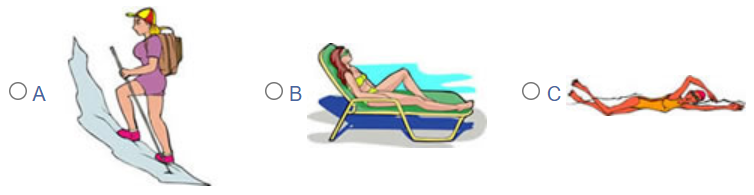
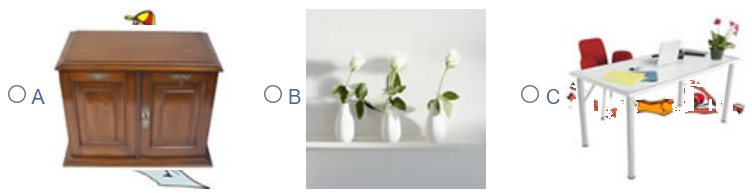
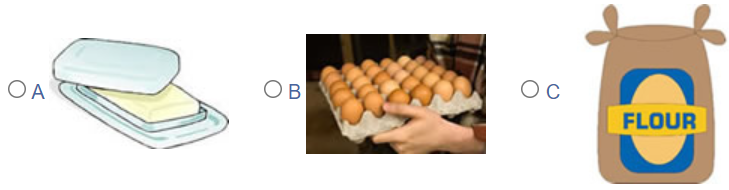
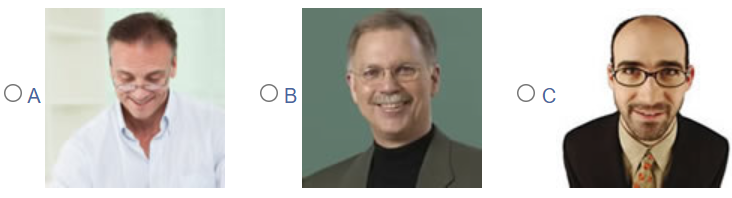
In part 1 of the Preliminary English Test (PET) you listen to seven short recordings and for each recording you have to choose the best of three pictures. You can listen to the audio twice.
1. What will the weather be like at the weekend? [A, B, C]

2. What did the woman do on holiday? [A, B, C]
3. Where is the man’s book? [A, B, C]
4. What do they need to buy? [A, B, C]
5. What is the woman’s son studying at the moment? [A, B, C]

6. What is in the suitcase? [A, B, C]

7. What does the man’s brother look like? [A, B, C]
9
12 з 120 балів
In part 2 of the Preliminary English Test (PET) you listen to six short recordings for attitudes and opinions, and choose the right option (A, B, C). You can listen to the audio twice.
1. You will hear two friends talking about buying a new camera. Where does the woman recommend buying one? [A, B, C]

2. You will hear two friends talking about a film they have just seen. They agree that the film would be better if... [A, B, C]

3. You will hear a man talking about a job he has just been offered. Why does he feel happy about it? [A, B, C]
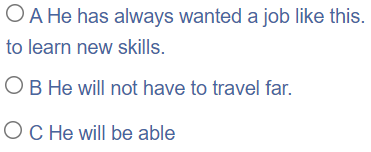
4. You will hear two people talking about an arrangement they have made with a friend. The woman thinks that if their friend is late, they should ... [A, B, C]

5. You will hear two people talking about local curry restaurant. They both agree that ... [A, B, C]

6. You will hear two people talking about climbing. The woman wants the man to ... [A, B, C]
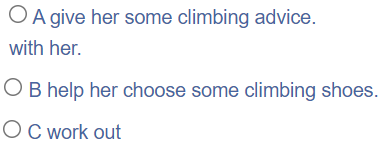
10
12 з 120 балів
You will hear a radio interview with the manager of a summer activity course. For each question, choose the correct answer.
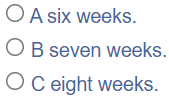
1 This year, the course will run for... [A, B, C]
2 The problem last year was that... [A, B, C]
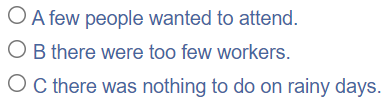
3 This, year, for the first time, children will... [A, B, C]
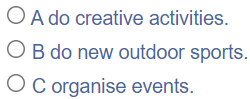
4 Molly doesn’t think children will come for six weeks because... [A, B, C]
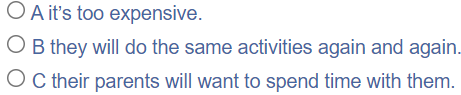
5 The course isn’t open to teenagers because... [A, B, C]

6 It’s important that parents of children attending the course... [A, B, C]

Рефлексія від 12 учнів
Сподобався:
0
Так: 12
Ні: 0
Зрозумілий:
0
Так: 7
Ні: 5
Потрібні роз'яснення:
0
Ні: 6
Так: 6
