- Всеосвіта›
- Бібліотека тестів›
- Англійська мова›
- HS2 2019 unit4 p67 act6

Тест:
HS2 2019 unit4 p67 act6

02.09.2021
Вміст тесту:
1
2
3
4
5
6
7
8
9
10
1
12 з 120 балів
Choose the equivalent to the word and word combinations in bold type.
EARNING AND SPENDING
There will always be people who have money to burn [money they spend, save, very rich, save money for difficult times, money people earn, poor] as well as those who can't make ends meet [money they spend, save, very rich, save money for difficult times, money people earn, poor]. The more money people have, the more they tend to spend - in some cases people's expenditure [money they spend, save, very rich, save money for difficult times, money people earn, poor] is greater than their earnings [money they spend, save, very rich, save money for difficult times, money people earn, poor]. Particularly, if they are addicted to spending money, so they are shopaholics. However, if more money is earned than spent, you may put aside [money they spend, save, very rich, save money for difficult times, money people earn, poor] money regularly and save it for a rainy day [money they spend, save, very rich, save money for difficult times, money people earn, poor]. This means you are a good money manager.
2
12 з 120 балів
Mark conditions associated with compulsive shopping.
3
12 з 120 балів
Reading. Advice to a shopaholic.
Complete the gaps with correct form of the words:
Dear Jenifer,
Thank you for your letter. No, it doesn't sound silly at all. It sounds awful, and I have great sympathy for you. What you describe is called [shopaholism, shopaholic]. It's a recognised [addict, addiction], and like other addictions, it's hard to break. Hard, but not [impossible, possible]. It boils down to your having two choices. I invite you to take time to sit down with pen and paper and make two lists. One of them is headed “Continuing as a shopaholic” and the other is “Life where I shop only for basic [physically, physical] needs”. For each of your lists you have 3 columns, headed “Good points”, “Bad points” and “Consequences”. Really think about them, [included, including] the scary “Consequences” ones, because most shopaholics are [impulsive, impulse] and haven’t stopped to think about the [real, reality] of the outcome. The only clue I offer is that the consequences of continuing as a shopaholic include spiraling debt, lying to friends and family, possible [relation, relationship] breakdown, and what your kids might feel about it. Do you want them growing up as shopaholics too?
So why do you do it? [shopaholism, shopaholic] is a response to either an [fulfilled, unfulfilled] life, low self-esteem or a perception of the world as an [happy, unhappy] place.
4
12 з 120 балів
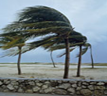
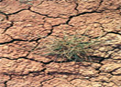
Write the names of the pictures.
|
|
|
|
1 | 2 | 3 | 4 |
|
|
|
|
5 | 6 | 7 | 8 |
|
|
|
|
9 | 10 | 11 | 12 |
|
|
|
|
13 | 14 | 15 | 16 |
|
|
|
|
17 | 18 | 19 | 20 |

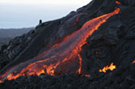

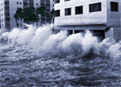


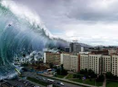
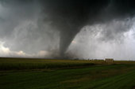


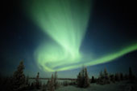


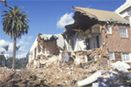


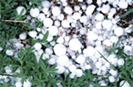
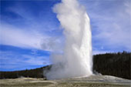
5
12 з 120 балів
Match the parts to make a word combination.
1
a piece
А
of advice
2
a bar
Б
of money
3
a head
В
of bread
4
a gang
Г
of furniture
5
a word
Ґ
of cheese
6
an article
Д
of soap
7
a tube
Е
of chocolate
8
a flash
Є
of lemon
9
a sum
Ж
of toothpaste
10
a breath
З
of cabbage
11
a slice
И
of salt
12
a bar
І
of lightning
13
a loaf
К
of robbers
14
a packet
Л
of air
15
a few sheets
М
of paper
6
12 з 120 балів
HS 2, Unit 4 – General TEST 1
1. His eyes were …
[such, so, too, very]bad that he couldn't read the number plate of the car in front.
2. The company needs to decide … [here, once, first, finally] and for all what its position is on this point.
3. Don't put your cup on the … [outside, boundary, edge, border]of the table – someone will knock it off.
4. I'm sorry - I didn't … [mean, hope, think, suppose] to disturb you.
5. The singer ended the concert … [by, in, as, with] her most popular
6. When a car pulled out in front of her, Jane did well not to … [miss, fail, lose, drop] control of her bicycle.
7. According to Richard's … [opinion, advice, knowledge, information] the train leaves at 7 o'clock.
8. When you stay in a country for some time you get used to the people's … [way, habit, custom, system] of life.
9. The builders are … [getting, doing, making, taking] good progress with the new house.
10. She is now taking a more positive … [behaviour, attitude, manner, style] to her studies and should do well.
11. My … [sister's-in-law, sisters's-in-law, sister-in-law's, sister-in-law] car is new.
12. At the meeting, the president of the association will represent Turkey … [on behalf of, in addition to, with a view to, on the verge of] the Turkish government.
13. Monica Tabalon graduated from nursing school in the Philippiness two years ago, but she still has not found a job … [despite, while, although, for] the growing demand both locally and internationally.
14. He … [didn't study, had studied, studied, doesn't study] hard for the exam, didn't he?
15. Neither of you can survive in this jungle, if you don't help … [someone else, by yourself, one, each other] .
16. No, please don't blame … [oneself, yourself, you, himself]. You are not responsible for his injury.
17. … boy that has stolen … purse, was caught. [The\a, -\-, The\the, A\the]
18. … Earth moves around … Sun. [An\a, The\a, The\the, -\-]
19. … wheel of … car was missing. [The\a, The\the, The\-, A\a]
20. When Brian got his promotion, he bought a … [well-mannered, brand-new, short-sighted, old-fashioned] car.
21. It was very big. [tiny, miniature, insignificant, huge]
22. The ice-cream I bought was very cold. [warm, freezing, boiling, heated]
23. I’m not enthusiastic … [about, to, in, with] fishing, but I’ll come anyway.
24. We were all pleased … [to, in, with, of] our exam results.
25. Liverpool is home to one of Britain’s … [great, greatest, greater, the greatest] football clubs.
26. My sister … in Florida for one year when we … to New York.
[had lived / came, has lived / came, lived / come, have lived / come]
27. He came to the writing table and … through the letters which … for him.
[looks / are waiting, looked / waiting, looks / has been waiting, looked / were waiting]
28. Ann … her work by 4 o’clock and … shopping.
[finished / went, has finished / go, had finished / went, will finish / went]
29. He … he … lunch an hour before.
[said / had had, said / had, says / shall have, said / would have]
30. When we … the station the train … already … .
[reach / has/ left, reach / was / leaving, reached / chad/ left, were reaching / were / leaving]
31. When we lived in the East Anatolia, the water pipes … every winter, and we … in a plumber.
[were freezing / used to call, would freeze / had to call, might have frozen / have had to call, used to freeze / were calling]
32. He had such bad flu that he… breathe through his nose.
[didn’t have to, shouldn’t, wouldn’t, couldn’t]
33. Now that Doris has been living in France for a decade she …
[used to do, got used to doing, is used to doing, was accustomed to do]things differently, but it hasn’t been always the case.
34. His grandfather died …
[during, since, for, while] the war.
35. My parents have played chess together every Saturday …
[since, for, while, during] 5 years.
36. I have known about their problems …
[for, while, since, during]April. I will help them.
37. He …
[hadn’t told, hadn’t being told, wasn’t being told, hadn’t been told]about the decision and got angry.
38. The car isn’t here anymore. It …
[must being, must be, must have being, must have been]stolen.
39. This kind of job used …
[to being done, to be done, to do, to been done]only by professionals in the past.
40. The new product …
[is now being examined, is now been examined, is now examining, is now examined]by the FDA.
41. If necessary …
[measures, decisions, prevents, bans]are not taken immediately, there will be more teenagers smoking in the near future.
42. His confidence is just a way of hiding his …
[safety, happiness, insecurity, pride] .
43. I think there is no …
[sincerity, justification, time, right] for his vulgar behaviour because it is completely his own fault.
44. In big supermarkets one can find a good …
[alternatives, timetable, distinguished, selection]of goods.
45. Investigation …
[indicates, requires, presents, takes] that long separation of a child from his mother can lead to psychological problems.
7
12 з 120 балів
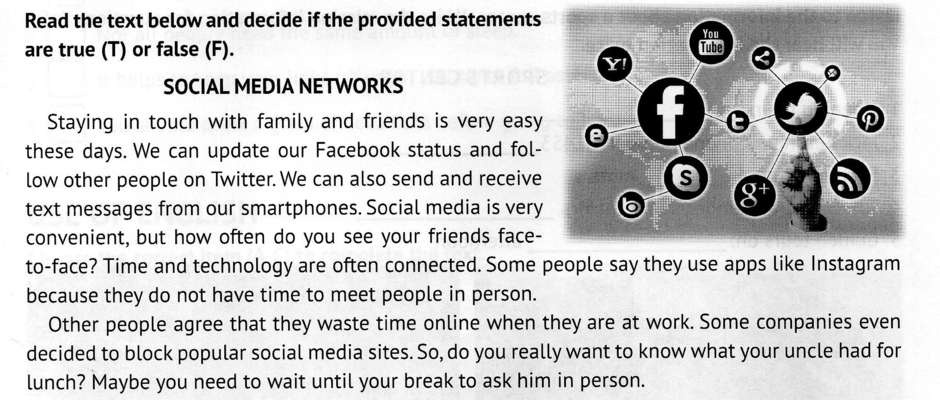
| [true, false] |
| [true, false] |
| [true, false] |
| [true, false] |




8
12 з 120 балів
READING
Read the text and mark if the statements are T (true) or F (false) as in the example.
PLANNING THE PERFECT PARTY
There's no better way to have fun than by throwing a party. Everyone loves to spend time with their friends and have fun in a relaxed atmosphere. However, as anyone who has ever thrown a party will know, a lot of hard work goes into hosting a party. The following tips will help you to plan the perfect party.
Parties need to be planned carefully. Make sure you allow yourself plenty of time to prepare for your party. Make a list of everything you need to do and be organised, because things can get very busy as the day of your party gets closer.
If you are serving food at your party, choose foods which go together. You could pick atheme for your party and make food which fits that theme, for example, Mexican or Chinese. Make sure you don’t serve foods which are going to the one who will have to clean it up the next day!
Written invitations are a great idea, especially if you can make them fun or different. Don't forget to put important information like the time date and address on your invitations. Tell your guests when the party starts and when it will end. Also, let them know if they should wear a certain type of clothes (e.g. fancy dress).
You can use decorations, lighting and music to create the perfect party atmosphere. Choose your favourite music and play it in the background as your guests arrive. It is a good idea to remove your television if it is in the party area. You can also replace some of your light bulbs with coloured lamps.
Just follow these simple steps have a fantastic party that everyone will
enjoy! Good luck!
You shouldn't do much work while preparing to a party. [T, F]
You should prepare for the party in advance. [T, F]
You should serve foods with a mixture of themes. [T, F]
You should clean up the mess after the party. [T, F]
You need to let your guests know when the party will finish. [T, F]
You should not play music until all your guests have arrived. [T, F]
You should switch on a TV set during the party. [T, F]
9
12 з 120 балів
Afel was only a very small boy when he (1) [last, previous, next, first]saw snow. But it wasn’t (2) [factual, original, real, valid]snow that he saw. No, there was no real snow (3) [where, when, how, what]he lived. He saw the snow in a picture book. The book had lots of pictures of children playing in big white fields. He (4) [replied, requested, asked, answered]his mother, “What are those white fields?” and his mother laughed and said, “That’s snow!” She tried to explain to him what snow was, but Afel didn’t really understand. (5) [However, Usually, Sometimes, So]there was rain where he lived, but not very much, so it was very difficult for him to understand what this cold, ice rain that his mother described was.
He dreamed about snow all the time, trying to imagine how it really was.
Then, when Afel was twelve years old, the following thing happened. One day he was watching TV at his uncle’s house, and a programme came on, and there were people flying across the snow. They looked (6) [like, as, such, so]strange animals, or fantastic birds. They had hats which covered all their heads and big goggles over their eyes. And on their (7) [hands, arms, heads, feet], they had things that look like strange shoes.
“What are those?” he asked his uncle excitedly. “Skis”, replied his uncle, “and those people are cold (8) [skters, skiers, swimmers, racers]”. At that moment, Afel decided. He wanted to be a skier.
He asked his uncle what the programme was.
“The Winter Olympics”, said his uncle. “It’s like the normal Olympics, but for sports where you need snow - skiing, ice skating, bobsleigh, those sorts of things. They have it every four years”.
Afel (9) [found, knew, learned, looked]out that the next Winter Olympics were in Vancouver in Canada, in 2010.
“Perfect”, he thought. “Enough time for me to become a brilliant skier. Then I’ll go to the Winter Olympics, and win the gold medal for skiing”. “But there’s no snow here!” people told him. “Where are you going to ski?”
Afel didn’t care. He (10) [acted, performed, did, made]himself a pair of skis from two pieces of wood. He tied them to his feet and practised skiing holding two sticks in his hands. At first he couldn’t move, but he practised, and practised, and practiced until he could move quite quickly across the sand or the earth where he lived. He tried to fly down the hills like the people on TV, but he couldn’t. he could only to move slowly.
“Never (11) [mind, be, see, say]”, he thought. “It’s just a start …”.
So every night, out in the middle of the desert, Afel now practises skiing down sand dunes. He dreams that the yellow sand and brown earth of the desert is the white, white snow of the mountains he saw (12) [out, of, in, on]the television. He dreams that the yellow sand and brown earth are as gold as the medal he will bring home with him, when he is the world champion.
10
12 з 120 балів
Listening:
You are given a piece of audio and six questions which correspond to the audio.
Each given question has three options A, B and C.
Click on the button to choose the best option for each question.
1. - What, according to the speaker, should you do after about half an hour? [a, b, c]
a) Have something to eat
b) Have a break
c) Listen to music
2. - What does the speaker say about sleep? [a, b, c]
a) You should sleep well after studying.
b) You should sleep well before studying.
c) You should sleep well before and after studying.
3. - What kind of notes are best, according to the speaker? [a, b, c]
a) Your friend's because they are tidy.
b) The book is better than notes.
c) Yours because you had to listen to take them.
4. - The speaker says that distractions [a, b, c]
a) are not a serious problem.
b) should be removed from your mind.
c) are difficult to avoid.
5. - What is the best way to get rid of distractions? [a, b, c]
a) Repeating a key word.
b) Having something to eat.
c) Listening to music.
6. - Where is the best place to start, when studying? [a, b, c]
a) At the beginning.
b) At the end.
c) With the most important ideas.
Рефлексія від 19 учнів
Сподобався:
0
Так: 19
Ні: 0
Зрозумілий:
0
Так: 16
Ні: 3
Потрібні роз'яснення:
0
Ні: 6
Так: 13