- Всеосвіта›
- Бібліотека тестів›
- Англійська мова›
- HS2 2019 Unit3 p56 act26

Тест:
HS2 2019 Unit3 p56 act26

15.12.2021
Вміст тесту:
1
2
3
4
5
6
7
8
9
10
1
12 з 120 балів
Translate into English, mind the ARTICLES and PARTICLE TO
оглядати
браковані товари
договір, торгівельна угода
бути наполегливим
розвалитись
здіймати метушню
вести переговори щодо розумного вирішення
повне повернення коштів
ринкова якість
відповідати призначенню
вказувати
купувати щось в магазині
мати право на компенсацію
працювати належним чином
2
12 з 120 балів
Fill in the gaps with the correct letters:
A barg n
to make a f ss
m chan le qu lity
f lty
A p pose
to nego e
to be p tent
r sonable
a complete ref nd
D ry products
3
12 з 120 балів
Guess the words by the definitions (don't forget about articles)
A shop where you can buy meat and sausages
A shop where you can buy buns and bread
A shop where you can buy fresh vegetables and fruits
A shop where you can buy cloth and materials for clothes
A shop where you can buy cereals, flour and macaroni
A big shop(mainly food store) where you can buy different goods, like food, clothes, cleaners, etc.
A shop which is composed of many different departments
A shop where they mainly sell medical drugs
A department/shop where they sell different perfumes
4
12 з 120 балів
Fill in the gaps with - or the where necessary.
1. Woody Allen is a famous film director who also plays saxophone.
2. I’ve booked a seat on a flight which leaves at 8 o'clock in evening.
3. Mary speaks Japanese fluently.
4. She stayed out in sun too long.
5. According to latest press reports, Prime Minister is going to resign.
6. Can you tell me way to nearest hospital, please?
7.Leopards live in jungle.
8. The whale is biggest mammal in world.
9.Life in big cities can be very difficult for elderly.
10. We always have dinner at 7 o'clock.
11. Did you pay much for Computer you bought?
12. my Dad often listens to radio in morning
13. She is only child in family.
14. Are you travelling to Paris by train?
15. James is always first person to arrive at a party.
5
12 з 120 балів
Read the text below. Put in a, an, one or the into each gap. Use one word only in each space.
This is a true story about (1) man who chose (2) worst possible time for his crime. It happened in London in (3) summer of 1972. (4) man stole a barge on (5) River Thames (in case you don't know, (6) barge is a river boat used for carrying goods). (7) owner of (8) barge soon discovered that it was missing and immediately informed (9) police so that they could look for it. Normally (10) river is quite (11) busy place, and it would be difficult to find what you were looking for. On this day, however, there was (12) dock strike, and so there was only (13) barge on (14) river. (15) thief was quickly found and arrested.
6
12 з 120 балів
match these future forms with their functions
1
Future Simple
А
for events happening around a certain time in the future, or that will happen in the normal course of events, rather than being part of your plans and intentions.
2
to be going to
Б
for longer events happening before a certain time in the future, but not necessarily finished.
3
Present Continuous
В
for actions that have already been decided, plans, intentions
4
Present Simple
Г
for timetabled and scheduled events
5
Future Continuous
Ґ
for events that will be completed before a certain time in the future
6
Future Perfect
Д
for decisions made at the time of speaking, predictions, promises
7
Future Perfect Continuous
Е
for arrangements(e.g. it's in your diary)
7
12 з 120 балів
Open the brackets and put the verbs into Future Simple/Continuous/Perfect or Future-in-the-Past Simple/Continuous/Perfect.
1. He says he (to phone) me in two days.
2. He said he (to phone) me in two days.
3. She says she (to arrive) at six.
4. She said she (to arrive) at six.
5. I think they (to work) from two till seven on Friday.
6. I thought they (to work) from two till seven on Friday
7. He is sure he (to finish) translating by the evening.
8. He was sure he (to finish) translating by the evening.
9. We suppose Beth (to play) the piano at six.
10. They were sure he (to arrive) by nine o'clock.
11. He understood she (not to forget) him.
12. We believe we (to pass) our exam.
13. I heard Nick (to return) by Sunday.
14. We knew he (to bring) good music.
16. I am sure he (to help) to get the party ready.
16. She supposed she (not to wait) for him after work.
17. I hope you (not to jump) to conclusions.
18. We were sure our child (to sleep) at ten o'clock.
19. My brother was sure his wife (to cook) dinner by his coming.
20. She was afraid her son (not to remember) about her.
8
12 з 120 балів
Choose the correct variant:
1. The company … some new equipment before the strike … . [a, b, c, d]
a) have ordered / begin
b) is ordering / began
c) had ordered / began
d) will order / had begun
2. I … he … it interesting. [a, b, c, d]
a) hoped / would find
b) hoped / find
c) hopes / would find
d) hoped / finds
3. Mark Twain … that they … about him. [a, b, c, d]
a) understood / are speaking
b) understood / were speaking
c) will understand / spoke
d) understands / speaks
4. On our way home we … the problem if we could … the fine celebration of our mother’s birthday. [a, b, c, d]
a) discussed / organized
b) had discussed / organize
c) have discussed / were organizing
d) were discussing / organize
5. The greater part of London … of wood, but after the great fire wider streets and brick houses … . [a, b, c, d]
a) was / were built
b) had been / were built
c) is / have been built
d) has been / is built
6. After my parents … home my life … better. [a, b, c, d]
a) had returned / became
b) will return / become
c) return / have become
d) return / would become
7. Why … you come yesterday? We … a good time. [a, b, c, d]
a) don’t / can have
b) will / might have
c) did not / shall have
d) didn’t / could have had
8. I … never … to Cambridge, but I once … Oxford. [a, b, c, d]
a) did / go / visit
b) was / visiting / had been visiting
c) will / have gone / don’t visit
d) have / been / visited
9. We … to wait because the man … . [a, b, c, d]
a) were told / is questioned
b) were told / was being questioned
c) told / was questioned
d) told / was being questioned
10. They didn’t know that he … from the University in 1990 and then … abroad. [a, b, c, d]
a) had graduated / is working
b) graduated / works
c) had graduated / worked
d) was graduating / worked
11. You can buy it at the … [a, b, c, d]
a) chemist’s
b) chemist
c) chemists
d) chemists’
12. This is my … room. [a, b, c, d]
a) children
b) childrens
c) childrens’
d) children’s
13. My … friend is in Kiev now. [a, b, c, d]
a) father
b) father’s
c) fathers’
d) fathers’s
14. The old woman lived alone, with … to look after … . [a, b, c, d]
a) no one / her
b) someone / her
c) anyone / herself
d) anyone / she’s
15. … two rings here on my little finger belonged to … grandmother. [a, b, c, d]
a) Those / me
b) The / myself
c) These / my
d) That / mine
16. When the little boy grabbed the lizard, … tail broke off in … hand. [a, b, c, d]
a) it’s / his
b) its / his
c) it / him
d) it / one’s
17. I saw he had a gun, but I didn't think he … . [a, b, c, d]
a) was going to shoot
b) will shooting
c) will shoot
d) had shoot
18. I knew you … the exam. You didn’t make any effort! [a, b, c, d]
a) were failing
b) are going to fail
c) would fail
d) had failed
19. I lost my passport the day before we … for our honeymoon. [a, b, c, d]
a) would leave
b) left
c) had left
d) were leaving
20. Sorry, I … you today, but I forgot. [a, b, c, d]
a) was calling
b) was going to call
c) would call
d) would be calling
21. She promised she … an end to the situation, but failed to do so. [a, b, c, d]
a) would put
b) was putting
c) would have put
d) were putting
22. Oh, my goodness! I haven't brought my wallet with … . [a, b, c, d]
a) I
b) it
c) me
d) my
23. Here is the exact place … I first saw you. [a, b, c, d]
a) whose
b) where
c) here
d) there
24. If I were in your shoes, I would drink … cool in this hot weather. [a, b, c, d]
a) anything
b) anyone
c) somewhere
d) something
25. Can you see the black clouds up in the sky? So, let's go … to protect ourselves from the rain. [a, b, c, d]
a) somebody else
b) anyone else
c) somewhere else
d) nobody else
26. They … packed their suitcases for the travel. [a, b, c, d]
a) every
b) none
c) all
d) them
27. Yesterday, the thieves broke … my house and stole my watch and money. [a, b, c, d]
a) into
b) inside
c) with
d) out of
28. You are … the wrong floor, this is the fifth floor. You should walk … to the 4th floor. [a, b, c, d]
a) on / down
b) at / up
c) through / over
d) in / onto
29. You should finish your school with good grades … the sake of your future. [a, b, c, d]
a) as
b) because
c) of
d) for
30. The man … his hands in his pockets is staring … you. [a, b, c, d]
a) in / in
b) with / at
c) by / to
d) as / at
31. You can learn best … listening to your teacher … school. [a, b, c, d]
a) with / in
b) as / onto
c) by / at
d) for / within
32. I should have told you! You … the entire house. Our cleaning lady phoned she's coming tomorrow. [a, b, c, d]
a) needn’t have cleaned
b) didn’t need to clean
c) shouldn’t have cleaned
d) might not have cleaned
33. You … and let that old lady have your seat. That's the decent thing to do, don't you think so? [a, b, c, d]
a) must have got up
b) would prefer get up
c) may get up
d) should get up
34. Students … to manage the bookstore soon. [a, b, c, d]
a) were to be allowed
b) shall be allowed
c) will be allowed
d) should have been allowed
35. Anthony said he was really busy this week, but he … at her sister’s wedding at least half an hour. [a, b, c, d]
a) could show up
b) should have shown up
c) has to show up
d) should show up
36. The children were playing the new teacher … . [a, b, c, d]
a) along
b) up
c) down
d) in
37. Before you go to bed don’t forget to … all the lights. [a, b, c, d]
a) turn over
b) turn away
c) turn in
d) turn out
38. Before we start the lesson, I’d like to … what we did yesterday. [a, b, c, d]
a) run through
b) run up
c) run along
d) run into
39. We shall have to … if we want to go to Florida this summer. [a, b, c, d]
a) put away
b) put aside
c) save up
d) lay up
40. I went to the Train Station to see my uncle … to Dublin. [a, b, c, d]
a) across
b) off
c) home
d) through
41. Can I park here? [a, b, c, d]
a) Sorry, I did that.
b) It’s the same place.
c) I’m glad you asked me that.
d) Only for half an hour.
42. What colour will you paint the children’s bedroom? [a, b, c, d]
a) We can’t decide.
b) I hope it was right.
c) It wasn’t very difficult.
d) We must bear that fact in mind.
43. I can’t understand this email. [a, b, c, d]
a) Don’t you know?
b) I suppose you can.
c) Would you like some help?
d) This won’t take more than a few seconds.
44. I’d like two tickets for tomorrow night. [a, b, c, d]
a) How much did you pay?
b) Afternoon and evening.
c) I’ll just check for you.
d) This is the point I’m trying to make.
45. Shall we go to the gym now? [a, b, c, d]
a) It’s very good.
b) I’m very tired.
c) Not at all.
d) You’re welcome.
9
12 з 120 балів
Reading
Text 1.
Social media, magazines and shop windows bombard people daily with things to buy, and British consumers are buying more clothes and shoes than ever before. Online shopping means it is easy for customers to buy without thinking, while major brands offer such cheap clothes that they can be treated like disposable items – worn two or three times and then thrown away.
In Britain, the average person spends more than £1,000 on new clothes a year, which is around four per cent of their income. That might not sound like much, but that figure hides two far more worrying trends for society and for the environment. First, a lot of that consumer spending is via credit cards. British people currently owe approximately £670 per adult to credit card companies. That's 66 per cent of the average wardrobe budget. Also, not only are people spending money they don't have, they're using it to buy things they don't need. Britain throws away 300,000 tons of clothing a year, most of which goes into landfill sites.
People might not realise they are part of the disposable clothing problem because they donate their unwanted clothes to charities. But charity shops can't sell all those unwanted clothes. 'Fast fashion' goes out of fashion as quickly as it came in and is often too poor quality to recycle; people don't want to buy it second-hand. Huge quantities end up being thrown away, and a lot of clothes that charities can't sell are sent abroad, causing even more economic and environmental problems.
However, a different trend is springing up in opposition to consumerism – the 'buy nothing' trend. The idea originated in Canada in the early 1990s and then moved to the US, where it became a rejection of the overspending and overconsumption of Black Friday and Cyber Monday during Thanksgiving weekend. On Buy Nothing Day people organise various types of protests and cut up their credit cards. Throughout the year, Buy Nothing groups organise the exchange and repair of items they already own.
The trend has now reached influencers on social media who usually share posts of clothing and make-up that they recommend for people to buy. Some YouTube stars now encourage their viewers not to buy anything at all for periods as long as a year. Two friends in Canada spent a year working towards buying only food. For the first three months they learned how to live without buying electrical goods, clothes or things for the house. For the next stage, they gave up services, for example haircuts, eating out at restaurants or buying petrol for their cars. In one year, they'd saved $55,000.
The changes they made meant two fewer cars on the roads, a reduction in plastic and paper packaging and a positive impact on the environment from all the energy saved. If everyone followed a similar plan, the results would be impressive. But even if you can't manage a full year without going shopping, you can participate in the anti-consumerist movement by refusing to buy things you don't need. Buy Nothing groups send a clear message to companies that people are no longer willing to accept the environmental and human cost of overconsumption.
Task 1. Read the sentences and mark if they are true or false:
1. People buy clothes because they want to throw them away. [T, F]
2. The writer thinks it is worrying that people spend money on things they do not need. [T, F]
3. The amount the average Briton owes on credit cards is one third of the amount they spend on clothes each year. [T, F]
4. Only a very small proportion of unwanted clothes are thrown away. [T, F]
5. Charities can find ways to use clothes even if they are not very good quality. [T, F]
6. Buy Nothing Day is a protest against credit cards. [T, F]
7. The two friends who did the 'buy nothing' experiment only bought food for 12 months. [T, F]
8. If everyone followed the Buy Nothing idea, the environment would benefit. [T, F]
Task 2. Fill in the gaps with the correct words:
a)hand
b)away
c)shops
d) spending
e) fashion
f) sites
1.Fast _ [a, b, c, d, e, f]is made quickly and cheaply.
2.Some clothing is so cheap that people can afford to wear it a couple of times and throw it_ [a, b, c, d, e, f]
3.There is a worrying trend for more consumer _ [a, b, c, d, e, f] on credit cards.
4.Giving clothes to charity_ [a, b, c, d, e, f] does not completely solve the problem.
5.Make sure you only donate clothes that people will want to buy second- [a, b, c, d, e, f]
6.A lot of clothes donated to charity cannot be reused and end up in landfill [a, b, c, d, e, f]
Text 2.
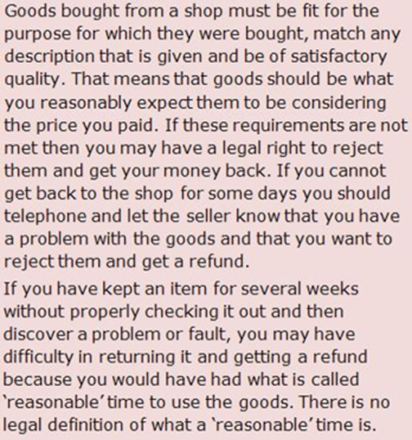
Task 3. Read the statements and decide whether they are true (T) or false (F).
1. Goods bought from the shop mustn’t be always fit for the purpose for which they were bought. [T, F]
2. When the product is of a satisfactory quality it means that it meets the requirements. [T, F]
3. Every customer has a legal right to reject the product and get his/her money back. [T, F]
4. If the customer can’t get back to the shop he/she doesn’t have any opportunity to get a refund. [T, F]
5. You can’t let the seller know that you have a problem by phone. [T, F]
6. Without proper checking the item out at the shop you may have difficulty in returning it. [T, F]
7. There is no legal definition of what a ‘reasonable’ time is. [T, F]
Task 4. Read the text below. Choose from (A-H) the one which best fits each space (1-6). There are two choices you do not need to use.
The banking profession doesn't have a very good reputation for customer service at the moment, and it’s not just due to loss of savings. High street branches are shutting down and where banks are available, their opening hours are inconvenient. Staff at the desks are surly, increasingly under-qualified and often unable to answer questions. And if customers try to contact the bank by telephone, (1) [A, B, C, D, E, F, G, H]where they have to speak slowly in order to be understood. Astonishingly, however, 86 % of the customers at one bank are either extremely satisfied or 'very satisfied' with the service they receive. And what is even more surprising is that the bank in question has no High Street outlets at all.
First National bank is run entirely through the telephone and the Internet. And its success shows that customer service is just about face-to-face contact with clients. The primary concern of the bank is recruiting the right people. They have the attitude (2) [A, B, C, D, E, F, G, H]but a member of staff can't be taught to be a nice person. So they only recruit people who already exhibit good communication skills.
And unlike other services that operate primarily over the telephone, the staff at First National do not use scripts. The managers recognise (3) [A, B, C, D, E, F, G, H]. What this bank asks for is that staff be themselves and establish a rapport with their customers. Part of this is recognizing people's needs. (4) [A, B, C, D, E, F, G, H] a chatty, friendly service. Some want the process to be swift and efficient. The member of staff has to pick up on the caller’s mood and react accordingly.
First National is also preparing (5) [A, B, C, D, E, F, G, H] . The idea that customer service can be improved on a medium where there is no actual contact with a member of staff may seem strange at first. However, the website designers at First National spend a great deal of time understanding their customers and offering services which meet their needs. (6) [A, B, C, D, E, F, G, H] , this will change in the future. First National is already taking steps to fill this demand. They already offer a service in which customers receive a text when funds are received or when their account falls below a certain level. In the future, online systems may pre-empt customers' needs in even more sophisticated ways.
A Although people do not expect much from the Internet these days
B that customers find them impersonal and unnatural
C to adopt this personal approach to its internet banking
D that some skills, such as keyboard skills and so on, can be taught
E because staff are speaking to people on their own territory
F they are put through to a call centre in another country
G Not everyone wants
H telephones are very personal
10
12 з 120 балів
Listening
Task 1. Listen to the audio and choose the correct picture
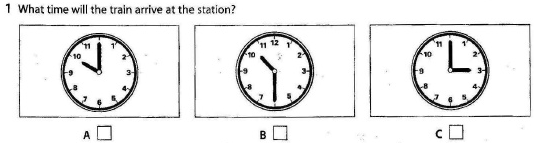 [a, b, c]
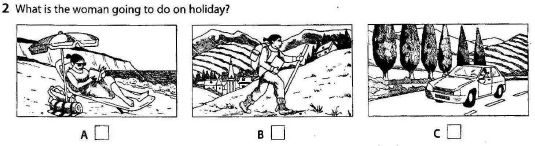 [a, b, c]
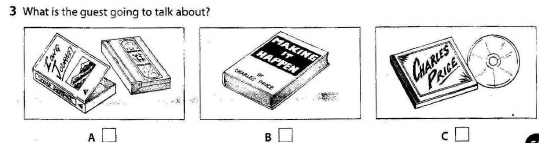 [a, b, c]
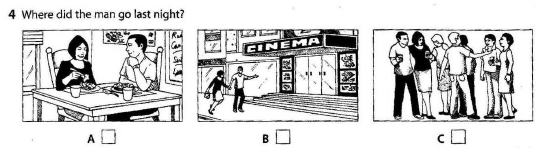 [a, b, c]
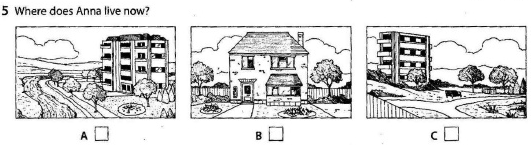 [a, b, c]
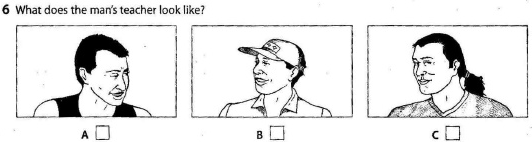 [a, b, c]
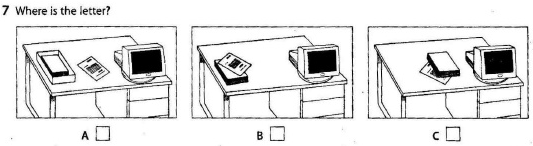 [a, b, c]
Task 2. Listen to the interview and choose the correct letter (a,b or c)
 [a, b, c]
 [a, b, c]
 [a, b, c]
 [a, b, c]
 [a, b, c]
 [a, b, c]
Рефлексія від 0 учнів
Сподобався:
0
Так: 0
Ні: 0
Зрозумілий:
0
Так: 0
Ні: 0
Потрібні роз'яснення:
0
Ні: 0
Так: 0