- Всеосвіта›
- Бібліотека тестів›
- Англійська мова›
- HS1 unit1 General TEST3, TEST4; unit6 #1; К4 33; К4 91

Тест:
HS1 unit1 General TEST3, TEST4; unit6 #1; К4 33; К4 91

01.09.2021


Вміст тесту:
1
2
3
4
5
6
7
8
9
10
11
12
13
14
15
16
1
12 з 192 балів
1. We spent a lot of time swimming in … Black Sea on holiday.
[a, -, the, many]
2. London is on … River Thames.
[-, the, a, they]
3. It’s … most expensive hotel in this town.
[a, an, -, the]
4. He never listens to … classical music.
[the, -, a, me]
5. My flat is on … second floor.
[the, a, an, -]
6. This car doesn’t go as fast as my old one … .
[do, did, have, will]
7. The weather is … than the last week. It’s so windy!
[worse, bad, the worst, badder]
8. What is your busiest day of the week? – It’s … .
[every month, last week, in the morning, Tuesday]
9. I come home … school in the afternoon.
[at, in, from, with]
10. My old cat died last year, and I still … her.
[lack, fall, miss, lose]
11. We … her a happy birthday.
[wished, said, told, wanted]
12. I … from Mike for more than a week.
[didn't hear, don't hear, doesn't hear, haven't heard]
13. Los Angeles is … a nice place that they want to live there.
[such, so, so that, such as]
14. Your room is a mess! … it up at once!
[drive, make, tidy, wash]
15. As far as I know, she … back yet.
[hasn't come, will come, doesn't come, don't come]
16. Are you sure Miss Smith … use the new equipment?
[knows to, knows the, knows how to, knows how]
17. I don’t believe he can … it properly.
[do, to do, is doing, doing]
18. I’m afraid I’ve got … my doctor today.
[see, to see, to see to, seeing]
19. Please go to … to pick up your ID card.
[third window, the window three, window third, the third window]
20. If it .. rain, we’ll hang out with peers outside.
[hasn't, doesn't, didn't, won't]
21. The child hurt himself badly when he fell … the bedroom window.
[out from, out of, out down, out over]
22. “Have you repaired the computer?” “Yes, I … it yesterday”.
[do, have done, did, am doing]
23. … many high buildings in the city.
[They are, There is, It is, There are]
24. Your sister is very kind … me.
[to, at, with, of]
25. He will take us to the town … we can see old churches.
[which, where, that, at it]
26. We’ll start reading it as soon as she … .
[will arrive, arrives, have arrived, arrived]
27. We’ll be greatly surprised if he … this test.
[will pass, have passed, get, passes]
28. When I noticed it, they … on the phone.
[was talking, were talking, talked, have talked]
29. One of our clients … decided to leave.
[have, is, are, has]
30. … every child in the school passed the swimming test.
[near to, near of, next to, nearly]
31 She can look back on her career with great … .
[satisfied, satisfaction, done, bad]
32. Each learner of English … a good dictionary.
[is, are, need, needs]
33. You must listen very … in order to understand what the speaker has said.
[carefully, careful, care, careless]
34. The professor was surprised at how many mistakes Ron could … at once.
[make, do, made, did]
35. His mother forced him to … his homework every night after supper.
[make, do, made, did]
36. Ralph was late … work again. He may be fired.
[on, at, for, to]
37. Naomi fully concentrates … working in Africa this coming year.
[of, for, on, at]
38. All of Chris’ teachers agree that he is very good ... Maths.
[with, for, at, on]
39. Simon isn’t at school this week. He’s … vacation (holiday)
[in, between, on, to]
40. Can you tell me the difference … butter and margarine?
[in, with, between, about]
41. Have you got any photos … your girlfriend?
[about, between, of, which]
42. Please, meet me at the train station in … hour.
[a, an, the, much]
43. My brother won an award for being … best speller in our school.
[a, an, the, some]
44. We need … kilo of apples.
[a, some, any, much]
45. I’ve got … sandwiches for my lunch.
[a, some, any, much]
2
12 з 192 балів
1. He’ll buy it as soon as he … enough money for it.
[will have, have, has, swims]
2. When his mother arrived, he … for his book.
[were still looking, was still looking, has looked, have looked]
3. The colorful picture of the flowers is … .
[their, your, I, mine]
4. The computer quickly stores information on … huge memory.
[yours, theirs, its, hers]
5. I’m sorry, James isn’t … at the moment. Can I take a message?
[in, away, up, off]
6. Agatha Christie … write poems in her childhood.
[is used to, used to, wasn't used to, hasn't been used to]
7. Are you looking forward … visiting the latest musical by Andrew Lloyd Webber?
[on, -, at, to]
8. If one of the participants in a conversation wonders … no real communication has taken place.
[what said the other person, what the other person said, what did the other person any, what was the other person saying]
9. Have you looked … the rich history of Boston lately?
[after, back on, forward, of]
10. I like … flowers you bought me.
[a, an, -, the]
11. Bob always looks … his baby brother when the parents eat out.
[after, through, forward to, over]
12. The policeman has no idea … .
[what I want, what I do want, what want I, what did I want]
13. It takes me 30 minutes … to the country.
[going, to going, to go, go]
14. I didn’t buy … in the end.
[nothing, something, everybody, anything]
15. … you hear the fireworks from your house last night?
[Can, Can't, Could, Hadn't]
16. She used to take a bus to work and now she can… .
[driven, driving, to drive, drive]
17. He … while I was washing the dishes.
[is baking, were baking, baked, was baking]
18. It’s the first time she … mittens.
[buys, has bought, is buying, bought]
19. We can’t go to Julia’s party … we’re going to the country that weekend.
[because, but, despite, in spite of]
20. We must be quick. There is … spare time left.
[much, many, a lot of, little]
21. The exam … wasn’t difficult, but the room was horrible.
[himself, herself, myself, itself]
22. Justin, … parents live in Manchester, has gone to Southampton.
[whom, which, to whom, whose]
23. The US has an air base in ... Indian ocean.
[the, -, a, an]
24. Maria … the Ontario Secondary School from 2008 till 2010.
[was attended, has attended, was attending, attended]
25. Darren was running as … as he could.
[faster, fast, the fastest, fastly]
26. Locals are asking the city to build a fence … the central park.
[to, around, of, over]
27. … my humble opinion, the plot of this book is overloaded.
[in, at, to, on]
28. More and more school-leavers … foreign colleges nowadays.
[enter, will enter, are entering, have entered]
29. We live a boring life. We never go … .
[where, everywhere, somewhere, anywhere]
30. John often says he … boxing because it … a cruel sport.
[looks down on / is, looked down on / were, did not look down on / is, has not looked on / was]
31. Please put the shoes on the baby’s … .
[feet, foots, hands, arms]
32. Jean used to be an … man.
[energy, energetic, energetically, energetics]
33. He’s sorted out and done his laundry, …?
[hasn't he, didn't he, doesn't he, isn't he]
34. Most of the … have already changed colours.
[leaf, leaves, leafs, tree]
35. One of the … broke his glasses.
[man's, men, men's, man]
36. I don’t type very well, but my boyfriend … .
[did, do, is, does]
37. He organized lots of … for his guests.
[entertainment, entertain, entertaining, entertainer]
38. The only sport I enjoy is … judo.
[-, the, a, an]
39. Please try to be more … .
[careful, carefully, shy, funny]
40. She plays the piano … .
[perfect, bad, good, perfectly]
41. He is a … talker, but he never listens.
[quickly, quick, fastly, badly]
42. She shouted … at him.
[angry, angrily, angrely, angryly]
43. … talk to?
[Who you did, Who did you, Who you, Where you]
44. When was the last time you went shopping?
[Tomorrow, Near the station, Yesterday, In the office]
45. I met … him at the station yesterday afternoon.
[-, with, about, between]
3
12 з 192 балів
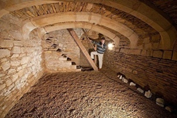
Match the words with the pictures:
1

А
a driveway
2

Б
a cellar
3

В
a porch
4

Г
an entry hall
5

Ґ
an attic
6
Д
a path
7

Е
a roof
4
12 з 192 балів
Fill in the blanks:
A room, where you can take a shower and brush your teeth, is called .
A place, where people usually leave their cars. It can be inside the house, under the house or at it. It is called .
A room in the house, where you can cook food, is called … .
A room, where people usually gather together to have meals, is called .
It’a a territory near the house, where people plant and grow different fruit trees. It’s .
A level in the house is called .
5
12 з 192 балів
Match the verbs with the prepositions according to the translation:
1
зайти до когось ще раз – to call
А
out
2
викликати – to call
Б
down
3
скасувати – to call
В
up
4
заїхати за кимось – to call
Г
off
5
відвідати когось ненадовго – to call
Ґ
back
6
з'являтись, виходити (про фільм чи книгу) – to come
Д
along
7
йти разом, супроводжувати – to come
Е
for
8
спускатись – to come
Є
out to be
9
зробити гучніше – to turn
Ж
on
10
виявлятись – to turn
З
over
11
перегортати (сторінки) – to turn
И
to
12
звертатись – to turn
І
in
6
12 з 192 балів
Complete the sentences by changing the form of the word in capitals:
I would like to buy the latest of this famous bestseller, do you have it? TO EDIT
Alice has been telling me about the world of her favourite fairytale for two hours already. TO IMAGINE
My cousin had told me about all his before he phoned you. TO INTEND
Tomorrow at this time Lily will be telling me about her holidays in Spain. MEMORY
Have you already got the answer from the about your novel? – Yes, I have. He is now going to work with me. TO PUBLISH
Who is going to deal with the of this cartoon after release? TO DISTRIBUTE
I must say, his speech on the stage was quite . TO IMPRESS
Do you really think, that all these will forget your fail? TO SPECTATE
I saw on his face and he couldn’t say a word to me. TO ASTONISH
Look at his projects! This boy is full of and is able to give this company the second chance. TO CREATE
7
12 з 192 балів
Tick all the words that can be used only in singular:
8
12 з 192 балів
Match the tense form with its indicator:
1
Present Simple
А
yet
2
Present Continuous
Б
by the time he arrived at the station
3
Past Simple
В
Look!
4
Future Simple
Г
all my life
5
Present Perfect
Ґ
in a year
6
Past Continuous
Д
while Jack will be watching a new documentary
7
Future Continuous
Е
at 4 p.m. three days ago
8
Past Perfect
Є
usually
9
Future Perfect
Ж
by next Friday
10
Present Perfect Continuous
З
last month
9
12 з 192 балів
Fill in the gaps with the correct predicate. Mind the tense form.
Lily (to speak) on the phone on the porch for half an hour already. Is she going to have supper with us?
Mother (to come) down to the cellar now, so she won’t hear you calling.
I hope, your nephew (to clean) the rooms on the upper storey by tomorrow morning.
The workers (to repair) the basement of this old historical building by the beginning of last spring.
My niece (to ride) a bike along this path every morning.
Yesterday the wind was so strong, that it (to break) the roof of our neighbours’ house.
All our family (to have) supper in this dining room at this time tomorrow.
While Jackie (to cut) the lawn, I (to sweep) the driveway.
Who just (to close) the garage? I can’t open it now.
They (to bring) the new wardrobe to the entry hall tomorrow.
10
12 з 192 балів
Top Bookshops
Read the following information and for each number (1-6) choose letter (A-H). There are two choices you don’t need to use.
1 [A, B, C, D, E, F, G, H]
Wild Rumpus
Wild Rumpus is filled with books and... Tilly and Pip are two little rats who live under the floorboards in a glass cage, so you can watch them running around. There are also two chinchillas, three cats, two doves, two chickens, a lizard and a tarantula who goes by the name of Thomas Jefferson. And the bookshop door has a purple, child-sized door built into it, so children can let themselves in!
2 [A, B, C, D, E, F, G, H]
Books For Cooks
If you notice a smell when you enter Books For Cooks, don't be alarmed. It’s the kitchen at the back, for testing the recipes in the books they sell. Books For Cooks has more than 8,000 food-related titles on topics such as nutrition, chemistry, sociology, history, art (even foodie fiction and biography) besides an outstanding selection of recipe books.The shop provides free wrapping.
3 [A, B, C, D, E, F, G, H]
GW Hurley
A stone's throw from the seafront, GW Hurley stands in the middle of the high street, a glass-fronted building you simply cannot miss. The shop started life as a newsagent’s in the 1920s and has been in the same family ever since, expanding over time to sell books,toys and sportswear. The bookshop is modern and spacious. The shop has an excellenttransport history section.
4 [A, B, C, D, E, F, G, H]
Stanfords
Stanfords is the world’s largest specialist travel bookshop. It was set up by Edward Stanford in 1853. Arthur Conan Doyle wrote about it in Hound of the Baskervilles. After more than 100 years in its former home, the bookshop relocated to its current site just around the corner at 7 Mercer Walk, where customers can find the same selection of travel stock. Now, it welcomes thousands of prospective explorers who come to browse their huge collection of maps, globes and travel guides.
5 [A, B, C, D, E, F, G, H]
Dulwich Books
Light, airy and modern, with an active presence on Twitter and Facebook, DulwichBooks could be a model for the future of independent bookselling. Internet orders are handled by the “shop locally online” service, while friendly and knowledgeable staff are in store to offer the personal approach. Established 30 years ago, it regularly holds evening talks, signings and kids’ activities.
6 [A, B, C, D, E, F, G, H]
Kenilworth Books
This bookshop has a strong children’s section, with activity books, annuals and fiction titles selling particularly well. Hardback novels are popular with adults. KenilworthBooks has a large area devoted to fiction, cookbooks, travel guides, maps and books onlocal history. Every year the shop also arranges a number of cookery demonstrations. It also sells classical and jazz music.
Which of the shops _______?
A) was mentioned in detective fiction
B) gives you a chance to save on packaging
C) used to be a place for travellers’ stay
D) offers a diverse event programme
E) sold magazines and papers
F) has a special colourful entrance for kids
G) gives you a chance to buy a pet
H) organises culinary shows
11
12 з 192 балів
Read the texts below. Open the brackets by choosing the correct item.
Providing the Right Conditions
I think more teachers and students need to [do, experience, survive, select] a real connection to each other. School should be a space where we can meet eye to eye and understand where everyone [comes from, comes off, comes over, comes up]. Growing up and life aren’t easy, no [fact, sense, matter, thing] what someone's age, gender, or race is. More people need a crash course on being in someone else's [boots, steps, feet, shoes]. Classes like this should be more widespread. We all [deserve, produce, offer, win] the chance to learn in a safe and supportive environment. We are not just a statistic, We are real people with real issues. We need teachers who care.
Incan Bridges
When the Spanish came to South America, they tried to build bridges. But they tried to construct the [breed, kind, ring, view] of bridges they used in Europe. These bridges were made of stone, And they always [turned down, put down, fell down, brought down] and broke. The Inca people were very [educated, learned, informed, skilled] with stone. They knew that stone would not [let, give, work, take] for bridges like this. The river canyons were too large. So, the Incan engineers used another [resource, support, equipment, vision] they knew: they used grass, cloth fibres, and animal hair. Their rope bridges stretched more than 50 metres across large canyons. This was farther than any European stone bridge of that time.
12
12 з 192 балів
Read the text. Match the sentences with the words in bold type into Ukrainian.
| Tea Dream .
Nowadays everybody knows that tea is very popular all ‘over the world. Every country has its own sea-drinking habits. But not everybody knows that the British tea history is long and exciting. It is more than three hundred and a half years old. Vasyl, a pupil of one of the city schools, didn’t know about it either, But one day his English teacher asked him to make a report about the history of tea.
The boy is a little lazy, so he was upset about it. He came home and decided to listen to his favourite audio book first. He opened the file and saw a funny Fastener which often helped him work with a computer. The Fastener always rode a bike and made the boy smile. Now the “helper” was attached to a clean sheet of paper. The magic voice of the speaker began to tell fairy story, and Vasyl forgot about everything...
Suddenly the boy found himself in an unknown place. He couldn’t understand anything. And just at this moment he saw the Fastener. It decided to make a tour of the Internet and show the boy some historical places.
They began with the time when tea was first brought to England. People didn’t know how to use it. They boiled the leaves, put them on the pieces of bacon and ate. It was so unusual. .
Then the travellers found themselves in the 17th century when Tea Houses were popular in England, and they came into one of them. The Englishmen drank tea with milk at that time. The waiter brought two cups of hot tea. It was very tasty because of one secret. Here it is: pour some milk into the cup and then add some tea.
In some minutes Vasyl and the Fastener saw the Duchess of Bedford in her beautiful palace. It was she who began the so called “afternoon tea” tradition in the middle of the 19" century. The Duchess started having tea with bread and butter served to her at 5 o'clock. You see, in those days, lunch was
served at 12 a. m. but dinner was not eaten until 8 or even 9 o'clock at night. The Duchess got hungry during those long afternoon hours. Later she began to invite other ladies for an afternoon cup of tea. Thus, “five o'clock tea” appeared.
At last Vasyl and his gifde arrived in Manchester, at Aunt Emily’s house. It was about 6 p. m. Aunt Emily invited them to have dinner with her. She called it High Tea. The old woman said that high tea was a part of the daily evening meal for workers and farmers. Tea was still served, but there was also meat, fish or cheese, bread and butter, and different eleggeria That’s why High Tea was often called “meat tea”.
After a cup of strong aromatic tea Vasyl found himself in his room. He saw a Fastener on its usual place, It seemed to the boy it was smiling. Vasyl looked around and understood that was only a fascinating dream. But the report was almost ready. WOW!
1
nowadays
А
так званий
2
everybody
Б
ситна вечеря з чаєм
3
exciting
В
раптово, раптом, несподівано
4
so called
Г
у наш час, у наші часи тепер
5
because of
Ґ
що збуджує, хвилює, захоплюючий
6
a fastener
Д
щоденний
7
was attached to
Е
так, таким чином, отже
8
suddenly century
Є
був поданий, подавали
9
century
Ж
кожен, всі
10
a tradition
З
сторіччя, століття
11
was served
И
традиція
12
thus
І
через
13
High Tea
К
скріпка
14
daily
Л
був приєднаний до
13
12 з 192 балів
Find the English equivalents of the following phrases in the text.
| Tea Dream .
Nowadays everybody knows that tea is very popular all ‘over the world. Every country has its own sea-drinking habits. EBut not everybody knows that the British tea history is long and exciting. It is more than three hundred and a half years old. Vasyl, a pupil of one of the city schools, didn’t know about it either, But one day his English teacher asked him to make a report about the history of tea.
The boy is a little lazy, so he was upset about it. He came home and decided to listen to his favourite audio book first. He opened the file and saw a funny Fastener which often helped him work with a computer. The Fastener always rode a bike and made the boy smile. Now the “helper” was attached to a clean sheet of paper. The magic voice of the speaker began to tell fairy story, and Vasyl forgot about everything...
Suddenly the boy found himself in an unknown place. He couldn’t understand anything. And just at this moment he saw the Fastener. D It decided to make a tour of the Internet and show the boy some historical places.
KThey began with the time when tea was first brought to England. People didn’t know how to use it. AThey boiled the leaves, put them on the pieces of bacon and ate. It was so unusual.
IThen the travellers found themselves in the 17th century when Tea Houses were popular in England, and they came into one of them. The Englishmen drank tea with milk at that time. The waiter brought two cups of hot tea. BIt was very tasty because of one secret. FHere it is: pour some milk into the cup and then add some tea.
HIn some minutes Vasyl and the Fastener saw the Duchess of Bedford in her beautiful palace. CIt was she who began the so called “afternoon tea” tradition in the middle of the 19" century. The Duchess started having tea with bread and butter served to her at 5 o'clock. You see, in those days, lunch was served at 12 a. m. but dinner was not eaten until 8 or even 9 o'clock at night. The Duchess got hungry during those long afternoon hours. Later she began to invite other ladies for an afternoon cup of tea. Thus, “five o'clock tea” appeared.
At last Vasyl and his gifde arrived in Manchester, at Aunt Emily’s house. It was about 6 p. m. Aunt Emily invited them to have dinner with her. She called it High Tea. GThe old woman said that high tea was a part of the daily evening meal for workers and farmers. Tea was still served, but there was also meat, fish or cheese, bread and butter, and different eleggeria That’s why High Tea was often called “meat tea”.
LAfter a cup of strong aromatic tea Vasyl found himself in his room. He saw a Fastener on its usual place, It seemed to the boy it was smiling. JVasyl looked around and understood that was only a fascinating dream. But the report was almost ready. WOW!
1. Налийте молока у чашку, а потім додайте чай. [A, B, C, D, E, F, G, H, I, J, K, L]
2. Скріпка вирішила провести екскурсію по Iнтернету та показати хлопцеві деякі історичні місця. [A, B, C, D, E, F, G, H, I, J, K, L]
3. То був лише чарівний сон. [A, B, C, D, E, F, G, H, I, J, K, L]
4. Люди варили листя, клали його на бекон та їли. [A, B, C, D, E, F, G, H, I, J, K, L]
5. Потім мандрівники опинились у 17-му столітті, коли в Англії були популярні чайні. [A, B, C, D, E, F, G, H, I, J, K, L]
6. Чай був дуже смачний через один секрет. [A, B, C, D, E, F, G, H, I, J, K, L]
7. Не кожний знає, що історія чаю у Британії довга та захоплююча. [A, B, C, D, E, F, G, H, I, J, K, L]
8. Василь та Скріпка побачили герцогиню Бедфордську. [A, B, C, D, E, F, G, H, I, J, K, L]
9. Саме вона розпочала так звану традицію післяобіднього чаю. [A, B, C, D, E, F, G, H, I, J, K, L]
10. Ситне чаювання було частиною повсякденного вечірнього прийняття їжі у робітників та фермерів. [A, B, C, D, E, F, G, H, I, J, K, L]
11. Після чашки міцного ароматного чаю Василь опинився у своій кімнаті. [A, B, C, D, E, F, G, H, I, J, K, L]
12. Вони почали з тих часів, коли чай уперше було завезено до Англії. [A, B, C, D, E, F, G, H, I, J, K, L]
14
12 з 192 балів
Match the sentences with the words in bold type into Ukrainian.
Friends - Real or Virtual?
Last Sunday Ed came to the café and met his friend Ted there. There was a laptop on his table.
Ed: Hi, Ted! How are you?
Ted: Oh, Ed! I'm OK. Take this place, please.
Ed: Thanks. Waitress, a cup of tea, please. I see, Ted, you are fine.
Ted: You are right. I've connected to the Internet recently. And I am really enjoying it! Now I can make friends with boys and girls from different countries.
Ed: I've heard there are a lot of social networks. And I joined some of them, but I don’t think they are very useful. Don’t you think so?
Ted: Of course not! I’ve joined Vkontakte, one of the biggest social networks in Ukraine. You know, that it’s a great chance to make friends and exchange different information about cooking, collecting things, reading and other users’ interests. You can also download pictures, music, video or interesting games.
Ed: Making friends? I don’t think it’s a good idea if you don’t see them.
Sometimes you don’t know their real names.
Ted: It doesn’t matter if they are real or virtual. I can find people with the same interests and hobbies. Besides, it’s easy to communicate with virtual friends when you are very shy and it’s difficult for you to make friends.
Ed: Do you like to share your feelings with people you have never met in your life? As for me, I can do it only with my close friends. Of course, e-mail is an excellent thing, but sometimes I want to write a usual letter.
Ted: It is not popular now and it also takes a lot of time.
Ed: I agree with you. It takes 8 or 10 days to receive a letter. But in spite of it a bright postcard from your real friend is an unforgettable thing. Ted, it seems to me you spend a lot of time with your laptop and your virtual friends.
Try to stop. I advise you to meet your real friends and have fun with them.
Ted: I think you are right. My real life is more important than the virtual one.
By the way, Ed, do you like reading?
While Ted was switching his laptop off, Ed was retelling him one of his favourite American writers’ story.
1
a social network
А
(множ) почуття, переживання
2
a chance
Б
до речі, між іншим
3
to share
В
соціальна мережа
4
feelings
Г
можливість
5
by the way
Ґ
ділити(ся)
6
users’ interests
Д
листівка
7
a postcard
Е
інтереси користувачів
15
12 з 192 балів
Find the English equivalents of the following phrases in the text.
Friends - Real or Virtual?
Last Sunday Ed came to the café and met his friend Ted there. There was a laptop on his table.
Ed: Hi, Ted! How are you?
Ted: Oh, Ed! I'm OK. Take this place, please.
Ed: Thanks. Waitress, a cup of tea, please. I see, Ted, you are fine.
Ted: You are right. I've connected to the Internet recently. And I am really enjoying it! Now I can make friends with boys and girls from different countries.
Ed: I've heard there are 6a lot of social networks. And I joined some of them, but I don’t think they are very useful. Don’t you think so?
Ted: Of course not! I’ve joined Vkontakte, one of the biggest social networks in Ukraine. 1You know, that it’s a great chance to make friends and exchange different information about cooking, collecting things, reading and other 4users’ interests. 8You can also download pictures, music, video or interesting games.
Ed: Making friends? I don’t think it’s a good idea if you don’t see them.
5Sometimes you don’t know their real names.
Ted: It doesn’t matter if they are real or virtual. I can find people with the same interests and hobbies. Besides, it’s easy to communicate with virtual friends when you are very shy and it’s difficult for you to make friends.
Ed: Do you like to share your feelings with people you have never met in your life? As for me, I can do it only with my close friends. Of course, e-mail is an excellent thing, but sometimes I want to write a usual letter.
Ted: It is not popular now and it also takes a lot of time.
Ed: I agree with you. It takes 8 or 10 days to receive a letter. 3But in spite of it a bright postcard from your real friend is an unforgettable thing. Ted, it seems to me you spend a lot of time with your laptop and your virtual friends.
Try to stop. I advise you to meet your real friends and have fun with them.
Ted: I think you are right. 7My real life is more important than the virtual one.
2By the way, Ed, do you like reading?
While Ted was switching his laptop off, Ed was retelling him one of his favourite American writers’ story.
Інтереси користувачів [1, 2, 3, 4, 5, 6, 7, 8]
Справжне життя важливіше за віртуальне. [1, 2, 3, 4, 5, 6, 7, 8]
Це чудова можливість подружитися та обмінюватися pізною інформацісю. [1, 2, 3, 4, 5, 6, 7, 8]
Спілкуватися з віртуальними друзями; закачувати малюнки, музику, відео або цікаві ігри. [1, 2, 3, 4, 5, 6, 7, 8]
Отримати листівку [1, 2, 3, 4, 5, 6, 7, 8]
Багато соціальних мереж [1, 2, 3, 4, 5, 6, 7, 8]
До речі, ти любиш читати? [1, 2, 3, 4, 5, 6, 7, 8]
Іноді ви не знаєте іхніх справжніх імен. [1, 2, 3, 4, 5, 6, 7, 8]
16
12 з 192 балів
Choose the correct item.
1. My real life is more important ... the virtual one.
[than, then, as]
2. Instagram is one of the biggest ... in Ukraine.
[TV programmes, travel agencies, social networks]
3. I've connected ... the Internet recently.
[with, to, in]
4. While Ted was ... his laptop off, Ed was retelling him a story.
[turning, switching, putting]
5. A bright postcard from your real friend is an ... thing.
[useless, dangerous, unforgettable]
6. It ... matter if they are real or virtual.
[doesn't, isn't, won't]
Рефлексія від 6 учнів
Сподобався:
0
Так: 2
Ні: 4
Зрозумілий:
0
Так: 2
Ні: 4
Потрібні роз'яснення:
0
Ні: 2
Так: 4