- Всеосвіта›
- Бібліотека тестів›
- Англійська мова›
- HS1 Unit 6 part 3

Тест:
HS1 Unit 6 part 3

29.09.2021
Вміст тесту:
1
2
3
4
5
6
7
8
9
Тест містить питання скопійовані з: Listening A1, Тексти ДПА, HS 1 – UNIT 5 - General TEST 3.
1
12 з 108 балів
HS 1 – UNIT 6 - General TEST 3
1. The inspector stopped and asked us where … [a), b), c), d)] .
a) we are going
b) were we going
c) are we going
d) we were going
2. John slipped on a piece of orange … [a), b), c), d)] broke his leg.
a) peel b) shell c) layer d) coat
3. Her sister works at a well-known hospital. She’s … [a), b), c), d)] .
a) a nurse b) the nurse c) nurse d) an nurse
4. He said he didn’t derive … [a), b), c), d)] from working.
a) any joy b) some joys
c) joys d) no joy
5. Where … [a), b), c), d)]? – In Vietnam.
a) did you born
b) have you been born
c) were you born
d) are you born
6. Parents should be … [a), b), c), d)] for teaching their children the difference between right and wrong.
a) responsibly b) responsible
c) responsibility d) responsive
7. What’s the name of the man … [a), b), c), d)] ?
a) his car you borrowed
b) whose car you borrowed
c) which car you borrowed
d) you borrowed his car
8. Two of these books are mine, … [a), b), c), d)] are John’s.
a) others b) the others c) another d) rest
9. … [a), b), c), d)] fairy stories, stepmothers are always unkind … their stepchildren.
a) in/to b) on/for c) on/to d) in/for
10. When the time came to … [a), b), c), d)] the bill at the hotel she found her purse had been stolen.
a) pay for b) pay up c) pay out d) pay
11. We missed the ferry. It … [a), b), c), d)] by the time we arrived at the pier.
a) went b) was going c) has gone d) had gone
12. How … [a), b), c), d)] now? Better than before?
a) you feel b) you are feeling c) are you feeling
d) do you feel
13. … [a), b), c), d)] amount of money can buy love and liberty.
a) No b) Never c) Not only d) None
14. She works eight hours … [a), b), c) ), d)] day.
a) for b) a c) in d) the
15. The firemen brought several long … [a), b), c), d)] to save some people on the roof.
a) stairs b) steps c) staircases d) ladders
16. She’s so lazy that she never does … [a), b), c), d)] work.
a) some b) any c) none d) no
17. She isn’t … [a), b), c), d)] well with the new manager.
a) taking on b) going on
c) keeping on d) getting on
18. Do you think it’s going to rain heavily? - … [a), b), c), d)].
a) I won’t hope so
b) I don’t hope
c) I don’t hope so
d) I hope not
19. I would like to invite … [a), b), c), d)] to my party if they want.
a) theirs b) their c) they d) them
20. I … [a), b), c), d)] to find a well-paid job but I had no luck.
a) hardly tried b) tried hard
c) tried hardly d) hard tried
21. He has a … [a), b), c), d)] cut on his face.
a) horrible b) afraid
c) logical d) ill-prepared
22. Colin has been married for a long time. She got married … [a), b), c), d)] she was 29 years old.
a) since b) while c) as d) when
23. … [a), b), c), d)] nor animals can survive without oxygen.
a) Neither can plants
b) Plants neither
c) Neither plants
d) Plants can neither
24. What a boring weekend! … [a), b), c), d)] anything!
a) I don’t b) I didn’t c) I didn’t do d) I don’t do
25. Our flat is … [a), b), c), d)] the third floor of the building.
a) in b) on c) above d) at
26. You don’t know why Angela is absent today, … [a), b), c), d)] ?
a) do you b) don’t you c) is she d) does she
27. … [a), b), c), d)] he went to the party last night is still a mystery to me.
a) How b) Since c) While d) Although
28. Be careful! Don’t … [a), b), c), d)] your drink on the floor.
a) spread b) flood c) spill d) flow
29. Where’s the book I gave you? What … [a), b), c), d)]with it?
a) have you done
b) have you been doing
c) were you doing
d) are you doing
30. We’re late. The film … [a), b), c), d)] by the time we get to the cinema.
a) will already start
b) will be already started
c) will already have started
d) will be starting
31. He was always very quick … [a), b), c), d)] learning languages.
a) on b) in c) at d) about
32. Why do you say we are fond of luxuries? – The streets of Bangkok are full of private cars, … [a), b), c), d)]are expensive.
a) most of what b) most they
c) most of which d) all those
33. How long … [a), b), c), d)] here? – Exactly four years today. I’m thinking of changing my job next year.
a) did you work
b) do you work
c) are you working
d) have you worked
34. Don’t worry … [a), b), c), d)] late tonight.
a) if I’ll be b) when I’ll be
c) if I am d) when I am
35. I … [a), b), c), d)] my hand when I was cooking the lunch.
a) have burnt b) was burning
c) had burnt d) burnt
36. As … [a), b), c), d)] as I know, we have not received a bill for this new printer.
a) soon b) far c) much d) long
37. They’re close friends. They … [a), b), c), d)]each other for a long time.
a) have been knowing
b) know
c) have known
d) knew
38. This child … [a), b), c), d)] his soup all over the tablecloth.
a) spilt b) scattered c) stained d) set
39. What was wrong with you? Why … [a), b), c), d)]see the doctor?
a) had you to b) did you have to
c) must you d) will you
40. She may be old but she’s still … [a), b), c), d)]control of all that is happening.
a) with b) under c) in d) over
41. What time did they … [a), b), c), d)] the hotel?
a) get to b) both a and c are correct
c) arrive at d) arrive in
42. Karen has been working here … [a), b), c), d)].
a) since six months
b) for six months
c) for six monthes
d) six months ago
43. I’ll be in London next week. I hope to see Tom … [a), b), c), d)]there.
a) while I will be
b) during my visit
c) while I am
d) both b and c are correct
44. She wondered … [a), b), c), d)] her uncle looked like now, after so many years she hadn’t met him.
a) that b) what c) whose d) how
45. Let’s get a taxi. It’s … [a), b), c), d)] to walk.
a) a quite long way
b) rather a long way
c) quite a long way
d) both b and c are correct
2
12 з 108 балів
Connect the words and the translation
1
A huge raw
А
Причина стати
2
To be cross
Б
винагорода
3
To lose one`s temper |
В
Метушитись навколо
4
A reward
Г
Втратити терпець
5
To drive somebody crazy
Ґ
Сильна сварка
6
To fuss around
Д
Вірити
7
To confide
Е
розізлитися
8
A point becoming |
Є
Звести з розуму
3
12 з 108 балів
Fill in the sentences with the suitable translation
Her actions (зводять мене з розуму)
We had been taking part in the competition for 2 week before we won, my parents (винагородили) me.
She screamed at me and ( втратити her терпець)
There was no reason to ( розізлитися)
My mom loves ( метушитися навколo) me
Their ( зведений брат ) had been reading the text for 2 hours when I finished reading
They are ( двійнята) they always change their ( точка зору)
The boy had been having ( сильна сварка) with his mother for 10 minutes when I came
4
12 з 108 балів
Correct the mistakes
My uncle was waiting for me for 15 minutes when I came
Who lives in that house for 2 months by that time?
Our Godson will serve in the army for a year by the time his daughter was born had been serving.
The phone bill was huge. My sister-in-law is calling her husband in Australia for a week by the time the bill was delivered
Their stepfather did wait for his wife for half an hour when she finally came
Their uncle was ill because he worked so hard
The children were very hungry. When I came they ran around the garden all afternoon
The sister-in-law was looking after her Goddaughter for 2 hours when I came
My niece has been discussing the issue for 20 minutes by the time he left
My brother-in-law worked in the laboratory for 3 months by the time he got fired
My mom put the weight back because she didn`t eaten a diet for a month before I noticed it
Our cousins were building the factory for a year by that time.
5
12 з 108 балів
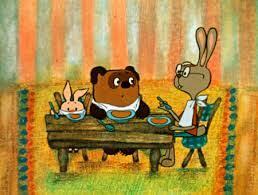
Sign the pictures






6
12 з 108 балів
A good night’s sleep
Before listening review the unknown words:
а tip - порада
hard - важкий, тяжкий
brain - мозок
full of - повний (чогось)
possible - можливий
loud - голосний
Listen to the radio interview and do the exercises to practice and improve your listening skills.
Task 1. Match the definition with the correct word.
a. useful information or advice - [an exam, bedtime, a listener, low, a tip, the hardest, busy, loud]
b. a test to show what a person knows or can do - [an exam, bedtime, a listener, low, a tip, the hardest, busy, loud]
c. the time you go to bed - [an exam, bedtime, a listener, low, a tip, the hardest, busy, loud]
d. the most difficult - [an exam, bedtime, a listener, low, a tip, the hardest, busy, loud]
e. quiet - [an exam, bedtime, a listener, low, a tip, the hardest, busy, loud]
f. a person who listens - [an exam, bedtime, a listener, low, a tip, the hardest, busy, loud]
g. making a lot of noise - [an exam, bedtime, a listener, low, a tip, the hardest, busy, loud]
h. doing something - [an exam, bedtime, a listener, low, a tip, the hardest, busy, loud]
Task 2. Choose True or False for these sentences.
1. The guest in the studio is a teacher. [True, False]
2. Some people can sleep well with a television on. [True, False]
3. It is bad to think a lot before going to bed. [True, False]
4. It is good to play video games before bed. [True, False]
5. It is good to turn your mobile off when you go to sleep. [True, False]
6. It is bad to play loud music while you sleep. [True, False]
Task 3. Complete the sentences with a word from the box.
1. [earlier in the evening, Welcome, Turn off, useful advice, great to be here, down low] to the show, Doctor Baker.
2. Thank you. It’s [earlier in the evening, Welcome, Turn off, useful advice, great to be here, down low]. Let’s start with tip one.
3. Do your hardest homework [earlier in the evening, Welcome, Turn off, useful advice, great to be here, down low].
4. [earlier in the evening, Welcome, Turn off, useful advice, great to be here, down low] your mobile when you go to bed.
5. Play music if you like. But turn the sound [earlier in the evening, Welcome, Turn off, useful advice, great to be here, down low].
6. That is very [earlier in the evening, Welcome, Turn off, useful advice, great to be here, down low] for our young listeners.
7
12 з 108 балів
TEST 22
READING
Read the text and mark if the statements (1-6) are T (true) or F (false) as in the example.
NORWICH
Norwich, the capital of East Anglia, has existed as a place to live for more than two thousand years. It began as a small village beside the River Wensum. At the time of the Norman invasion in 1066 it had grown to become one of the largest towns in England.
With two cathedrals and a mosque, Norwich has long been a popular centre for various religions. The first cathedral was built in 1095 and has recently celebrated its 900 anniversary, while Norwich itself had a year of celebration in 1994 to mark the 800th anniversary of the city receiving a Royal Charter. This allowed it to be called a city and to govern itself independently.
Today, in comparison with places like London or Manchester, Norwich is quite small, with a population of around 150,000, but in the 16th century Norwich was the second city of England.
In 1964 the University of East Anglia was built in Norwich. With its fast-growing student population and its success as a modern commercial centre, the city now has a wide choice of entertainment. There is also a football team, whose colours are green and yellow. The team is known as The 'Canaries', though nobody can be sure why.
Now the city's attractions include another important development, a modern shopping centre called "The Castle Mall'. The people of Norwich lived with a large hole in the middle of their city for over two years. Lorries moved nearly a million tons or earth so that the roof of the Mall could become a city centre park, with water pools and trees. But the local people are really pleased that the old open market remains, right next to the new development. Both areas continue to do good business, proving that Norwich has managed to mix the best of the old and the new.
The River Wensum flows through East Anglia. [True, False]
People have lived by the River Wensum for at least 2000 years. [True, False]
Norwich was a small village in the 11th century. [True, False]
Norwich has been a city since its first cathedral was built. [True, False]
The number of students in Norwich is increasing. [True, False]
The Norwich City football team is called 'The Canaries' because of colours they wear. [True, False]
"The Castle Mall' took more than two years to build. [True, False]
8
12 з 108 балів
Name the time tenses accordibg to the formulas
S+do\does+not+V+sps
Will\shall+ S+V+sps
S+Ved\2+sps
Have\has+ S+Ved\3+ sps?
S+to be(past)+Ving+sps
S+shall\will+Ving+sps
S+had+Ved\3+ sps
Have\Has+S+been+Ving+sps
S+had+not+been+Ving+sps
S+will have+Ved\3+sps
9
12 з 108 балів
READING
Read the text and mark if the statements (1-6) and T (true) or F (false) as in the example.
THE GREEN SEA TURTLE
The green sea turtle is a large turtle which is found in warm coastal waters around the world, but the largest populations today are in Florida, the Caribbean, Hawaii, and Borneo. In all these areas the turtles are at risk. Although in the past there were probably several million green sea turtles in the world, today scientists believe that fewer than 200,00 adult females main. Below we list some of the reasons why numbers of this and other sea turtles have declined.
People around the world have used the meat of the green sea turtle for food since ancient times and it is the main ingredient in turtle soup. The eggs, which the female turtles bury on sandy beaches, are also collected by hunters. Unfortunately, although laws banning the hunting have been passed in many countries, people continue to do so illegally.
Every year, more than 10,000 sea turtles are accidentally trapped in fishing nets. Unable to breathe, these turtles soon drown. Many of these deaths could he avoided if the fishermen made minor changes to their equipment that would allow the turtles to escape. For some reason, many fishermen seem unwilling to do this, although the law requires them to do so.
The seas are littered with rubbish which can prove deadly to the turtles. They can become entangled in old fishing lines and nets or they may mistake pieces of plastic for food. When the turtles swallow the plastic, it can block their digestive systems and then the turtles starve to death.
More and more beaches, used by the turtles as nesting areas, are lost every year as tourist areas are developed. This means that the females do not have a familiar place in which to lay their eggs and as a result some females may not nest at all.
There are more than two million green sea turtles in the world. [True, False]
The number of green sea turtles is getting smaller. [True, False]
A lot of countries do not allow people to hunt the turtles. [True, False]
Fishermen do their best to avoid catching the turtles. [True, False]
The turtles are sometimes caught in old fishing lines. [True, False]
The turtles like to eat plastic. [True, False]
There are not enough beaches for turtles to lay their eggs. [True, False]
Рефлексія від 0 учнів
Сподобався:
0
Так: 0
Ні: 0
Зрозумілий:
0
Так: 0
Ні: 0
Потрібні роз'яснення:
0
Ні: 0
Так: 0