- Всеосвіта›
- Бібліотека тестів›
- Англійська мова›
- HS1 2021 unit9 p180 act11

Тест:
HS1 2021 unit9 p180 act11

18.02.2022
Вміст тесту:
1
2
3
4
5
6
7
8
9
10
11
Тест містить питання скопійовані з: HS1 2021 General Tests, HS 2021 5/94/48.
1
12 з 132 балів
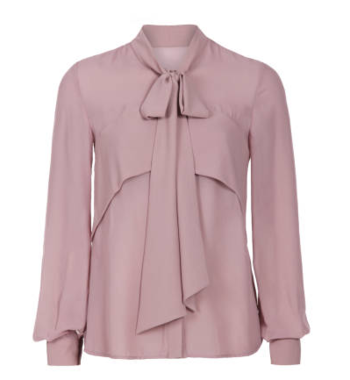
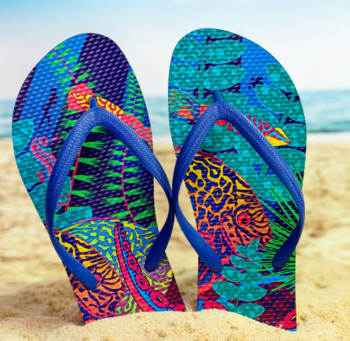
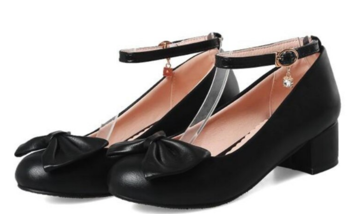
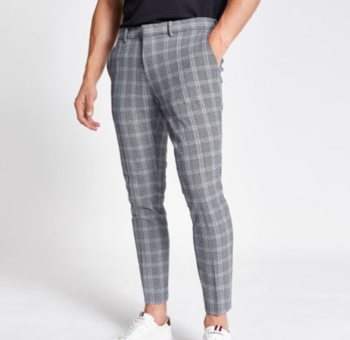
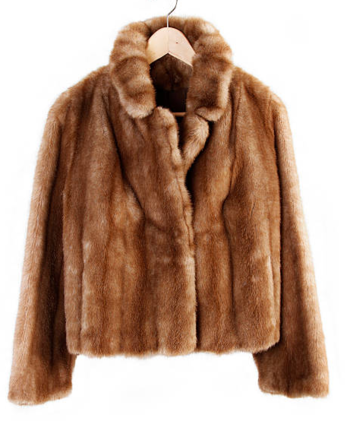
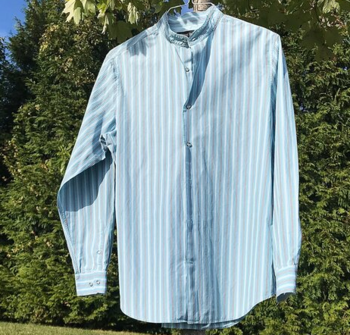
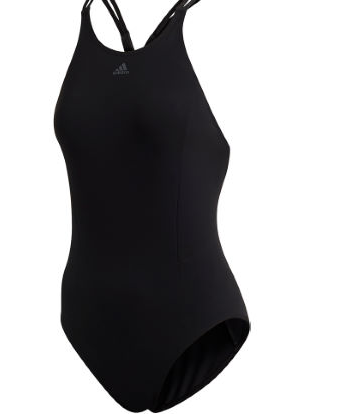
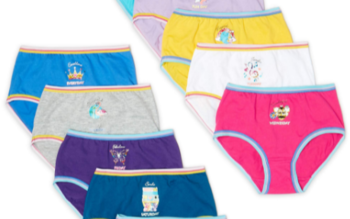
Connect the words with the pictures.
1
high heeled shoes
А
2
a swimsuit
Б
3
flip-flops
В
4
a bow tie
Г
5
underwear
Ґ
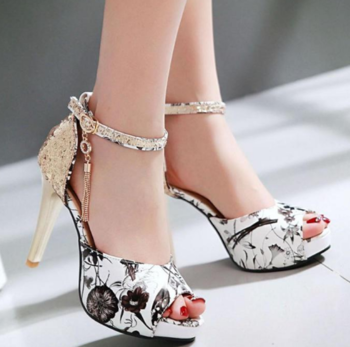
6
pants/trousers
Д
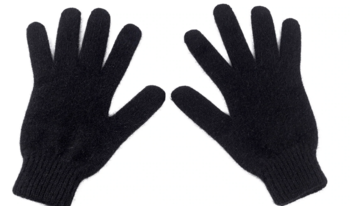
7
low heeled shoes
Е
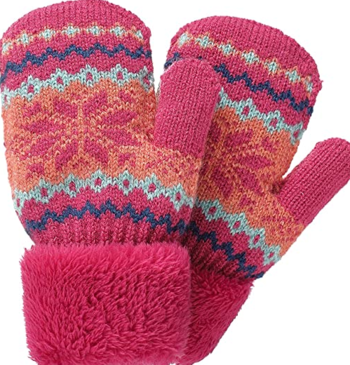
8
gloves
Є
9
mittens
Ж
10
a blouse
З
11
a fur coat
И
12
a shirt
І

2
12 з 132 балів
Translate the words into Ukrainian. Don't forget to use the article where necessary.
худі
босоніжки
колкотки
панчохи
комбінезон
кросівки
ремінь
краватка
комір
рукав
майка
бюстгалтер
3
12 з 132 балів
Complete the sentences with the most suitable word from the box.
promotion | employment | occupation |
retired | retirement | employee |
unemployed | delivery | refusal |
They were shocked by his to discuss the problem.
How long have you been looking for ?
is free on orders over £30.
Both my parents are .
Many teachers over the age of 50 are taking early .
She's a former of the department.
It seems to me his favourite is eating.
He's been for over a year.
There was a in the supermarket and they were giving away free glasses of wine.
4
12 з 132 балів
Fill in the gaps with the necessary preposition to fit the meanings.
to take брати назад/повертати
to take починати/братись до
to take злітати (про літак)
to take вважати за
to take брати до уваги
to call відвідати когось ненадовго
to call заїхати за кимось
to call скасувати
to turn перевертатись/перегортати (сторінки)
to turn звертатись до
to turn повернутись/змінитись на краще
5
12 з 132 балів
Choose the correct form of can, could, be able to, will be able to (affirmative or negative).
1. Can you read this for me? I ['m not able to, can't, couldn't, will not be able] see without my glasses.
2. I've never [been able to, can, could, will be able to] speak Spanish as well as my brother.
3. After 2 years in China, I ['m able to, could, can, will be able to] speak quite fluently now.
4. When he was 40, he [was able to, could, can, will be able to] speak six languages.
5. I'm sure Doctor [is able to, could, can, will be able to]examine her tomorrow.
6. When I was a child I used to [be able to, can, could, will be able to] stand on my head.
7. Yesterday I lost my keys and I looked for them everywhere, but I [wasn't able to, couldn't, can't, will be able to]find them.
8. [Could, Can, Were able to, Will be able to]you hear the fireworks from your house last night?
9. Only you [are able to, could, can, will be able to] write the letter the right way in two hours.
10. [Can, To be able to, Will you be able to, Couldn’t]play professional tennis, you must be extremely fit.
11. I'm afraid I [will be able to, won’t be able to, can, couldn't] attend the meeting, I’m on business in Japan.
12. We [will be able to, could, can, was able to] the mountains yesterday, but today we can't.
6
12 з 132 балів
Choose the correct variant to complete the sentences. Don't forget about the sequence of tenses.
1. I knew that she [had visited, visited, has been visiting, has visited]Madrid before, so I asked her to recommend a good hotel.
2. She promised to help me if I [haven't found, didn't find, won't find, wouldn't find] the answer myself.
3. He said that they [know, have known, knew, had known] each other for many years.
4. I saw that she [tries, is trying, has been trying, was trying] to hold back her tears.
5. I asked her whether she [goes, is going, will go, would go]there with me, but she said no.
6. I wanted to see her but I didn't know if she [is, was, were, had been] in town.
7. He told me that he would visit them when he [has returned, returned, will return, would return]from Spain.
8. My younger daughter learned in class yesterday that the Earth [revolves, is revolving, revolved, was resolving] around the Sun.
9. They told us they [visited, visit, would visit, had visited] the Tretyakov gallery next Sunday.
10. She noticed she [is, was, had been, will be] already late.
11. He said he would buy a new house as soon as he [will be, is, was, has been] richer.
12. The pickpocket confessed that he [pick, would pick, had picked, picked] my pocket.
7
12 з 132 балів
Fill in the gaps with the 2nd and the 3rd forms of the verb of the given irregular verbs.
1st form | 2nd form | 3rd form |
to think |
|
|
to drive |
|
|
to come |
|
|
to ride |
|
|
to become |
|
|
to begin |
|
|
to break |
|
|
to catch |
|
|
to choose |
|
|
to drink |
|
|
to forget |
|
|
to grow |
|
|
to leave |
|
|
to run |
|
|
to wake |
|
|
to stand |
|
|
to spend |
|
|
to meet |
|
|
to teach |
|
|
8
12 з 132 балів
Open the brackets using the Past Perfect/the Past Simple.
After Fred (to spend) his holiday in Italy he (to want) to learn Italian.
Jill (to phone) Dad at work before she (to leave) for her trip.
Susan (to turn on) the radio after she (to wash) the dishes.
When she (to arrive) the match already (to start).
After the man (to come) home he (to feed) the cat.
Before he (to sing) a song he (to play) the guitar.
She (to watch) a video after the children (to go) to bed.
After Eric (to make) breakfast he (to phone) his friend.
I (to be) very tired because I (to study) too much.
They (to ride) their bikes before they (to meet) their friends.
9
12 з 132 балів
HS unit 9
General 1
1. Jane looked … upset: “Yes. She lost her job this morning”.
[terrible, terribly, so terrible, such a terrible]
2. Jeremy showed us the photos … he took while on holiday. [that, who, why, when]
3. I had … great time on holiday I didn’t want to come home.
[such, such a, so, still]
4. The president can … confirm nor deny the rumours that he is about to resign.
[nor, both, enough, neither]
5. Our parents … their plans for the holiday for two hours already.
[are discussing, have been discussing, discussed, were discussing]
6. This programme contains language that some viewers might find … [offended, offensive, offence, offencing]
7. Knowing the ending already didn't spoil my … of the movie. [to enjoy, enjoy, enjoyment, enjoyed]
8.Life in Los Angeles has so many … - nightclubs, good restaurants, and so on.
[attractive, attractions, attract, attractivness]
9. I hope my teacher will take … the fact that I was ill just before the exams when she marks my paper.
[up, into account, out, off]
10. If you go to the swimming pool, don`t forget to take your _____ and _____. [jeanse and a cap, flip-flops and a belt, flip-flops and a swimsuit, high heeled shoes]
11. This dark blue _______ suits your suit very much. [tie, vest, jacket, belt]
12. Wearing ___________ on your feet for the whole day is very uncomfortable and can lead to health problems. [flop-flops, speakers, boots, high heeled shoes]
13. These sandals are too tight. Tomorrow they … [to change, will change, changing, changed]into looser ones
14. She doesn’t need any gardeners, she [Has to, can, could, is able to]take care of her lawn herself
15. I _____________buy a new car in a few months as my salary has been boosted today [could, can, should, will be able to]
16. We _____________choose a variety of sweaters at the shop yesterday, because of the sale. [can, could, can, may]
17.Mr. Jones asked me if he [could, can, to be able to, to can] borrow my coat.
18. I [can, may, could, must] run a marathon when I was younger
19. I don’t agree,” he [tell, say, told, said] to me.
20.Why did they [say, told, said, tell]that to you?
21. He her he didn’t agree.
“It’s too late,” they him [tell\told, told\say, say\said, told\told]
22. The train is a perfect [meaning, mean, means, meanes] of transport.
23. She takes ... her parents [for, off, up, after]
24. Please take ____ your shoes before you come inside. [sth off, after, for, back]
25. Before the plane takes ____, the flight attendant makes sure that everyone has their seatbelts. [back, to, out, off]
26. He takes ____ his duties next week. [up, to, into account, for]
27. John's always been difficult. He must take__ [out, into account, off, over]__ his dad.
28.This time next week, I [was taking, will take, am taking, will be taking](to take) photographs with my new camera.
29. She (to work) a lot in London at the moment. [works, is working, will be working, worked]
30. I (to study) English for three years by the end of this course. [will study, will be studying, will have studied, had been studying]
31. We [to make, to do, did, made]fire last summer.
32. She [feeds, is feeding, fed, will feed]her neighbours’ cat every morning
33. He can jump quickly and [high, highly, highler, the highest]
34. She rarely practiced French, so she____________ understand the texts without a
dictionary anymore. [could, couldn’t, may not, isn`t]
35. Excuse me. __________ ask you a question?
[may I, am I able to, was I able to, I able to]
36. They [are know, know, have known, has known] each other since January
37. If the skirt doesn't fit, you can take it … .
[off, up, for, back]
38. Kevin was disappointed because he ____________ get tickets for the football game
without his football friends. [maight, could, couldn`t, will not]
39. She is very skilful and really …. her job [to enjoy, enjoys, enjoyed, enkoyment]
40. It`s hot in summer , I prefer to wear [overalls, tights, a tracksuit, a tank top]
41. ___________ lend me your dictionary? [can you, could you, may you, wasn`t be able]
42. Peter __________ swim when he was a child, but now he __________. In fact, he
swims every day! [couldn`t \will, couldn`t \can, was not able\can, can`t\can]
43. Dear, have you bought … apples? [some, any, anything, an]
44. Our team played … last month. [badful, bad, badly, worse]
45. Pupils must not be late, [must the students not, must they, mustn`t they, they must]?
10
12 з 132 балів
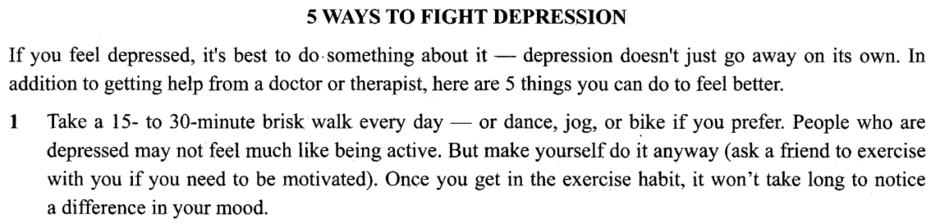
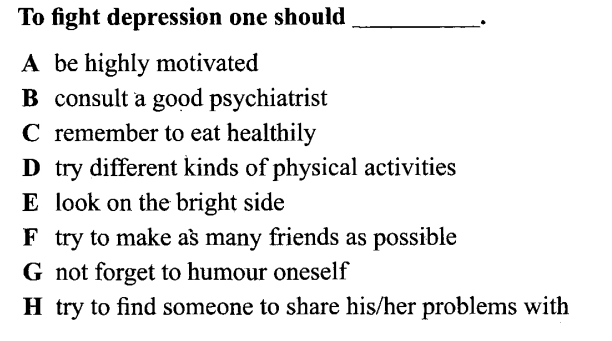
Read the text below. Match choices ( A — H ) to (1—5). There are three choices you don't need to use.
1 [A, B, C, D, E, F, G, H]

2 [A, B, C, D, E, F, G, H]

3 [A, B, C, D, E, F, G, H]

4 [A, B, C, D, E, F, G, H]

5 [A, B, C, D, E, F, G, H]
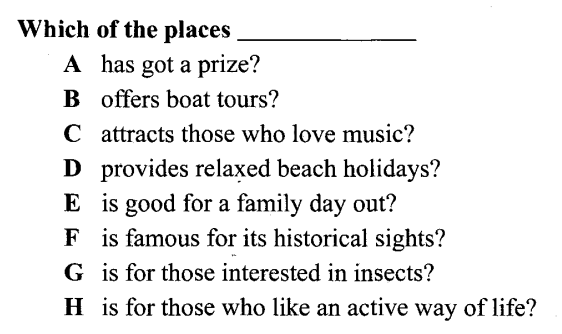
Read the texts below. Match choices ( A — H ) to (11—16). There are two choices you don't need to use.

11 [A, B, C, D, E, F, G, H]

12
[A, B, C, D, E, F, G, H]
13 [A, B, C, D, E, F, G, H]

14 [A, B, C, D, E, F, G, H]

15 [A, B, C, D, E, F, G, H]

16 [A, B, C, D, E, F, G, H]
11
12 з 132 балів
Task 1
Listen to the speakers. For questions choose the correct answer (A, B or C).
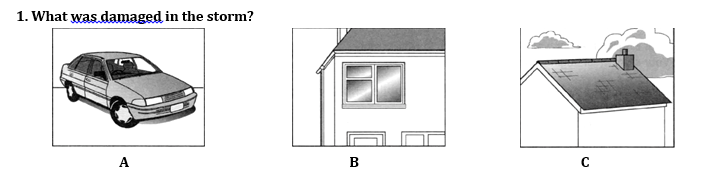
1 [A, B, C]
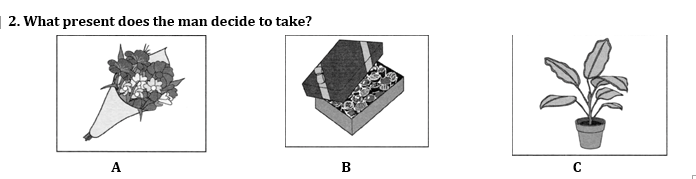
2 [A, B, C]
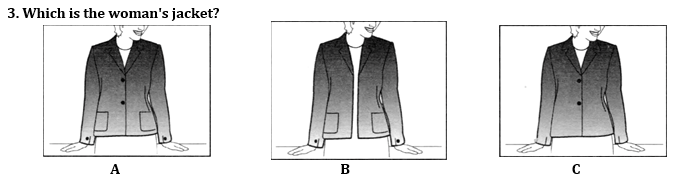
3 [A, B, C]
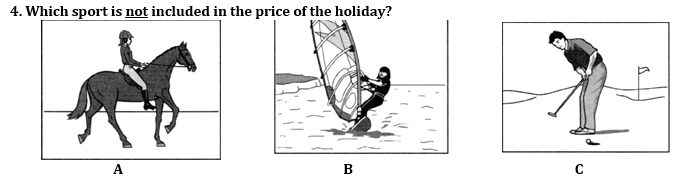
4 [A, B, C]
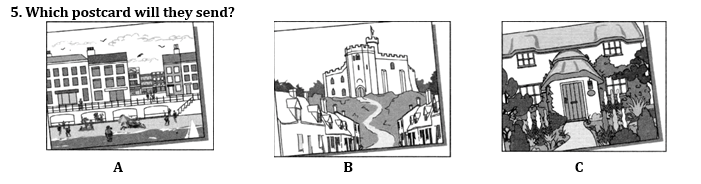
5 [A, B, C]
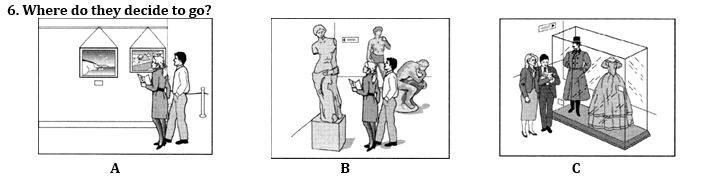
6 [A, B, C]
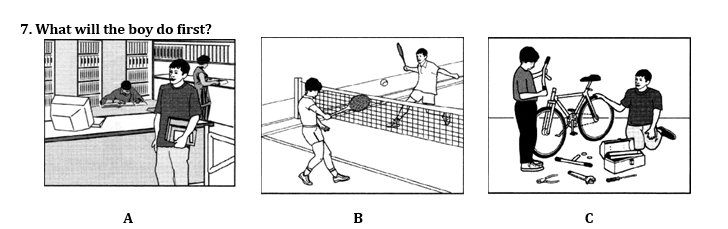
7 [A, B, C]
Task 1_1
1. You hear a critic on the radio talking about a book. What is his main criticism of the book?
[A, B, C]
A) The style is poor.
B) The plot is too complicated.
C) The characters are not believable.
2. You hear someone talking about a time when she was a student abroad. What did she particularly like?
[A, B, C]
A) The school she studied at.
B) The town she stayed in.
C) The family she stayed with.
3. You hear a radio interviewer introducing a guest. Who is the guest?
[A, B, C]
A) A scientist.
B) A businessman.
C) An inventor.
4. You hear a caller on a radio phone-in programme. What feeling does the caller express?
[A, B, C]
A) Sympathy.
B) Self-pity.
C) Envy.
5. You hear a part of a radio interview. Who is being interviewed?
[A, B, C]
A) A customer at a shop.
B) The manager of a shop.
C) Someone who lives near a shop.
6. You hear someone talking on a public telephone. What does she want the other person to do?
[A, B, C]
A) Explain something he said.
B) Apologize to someone.
C) Give an honest opinion.
Рефлексія від 2 учнів
Сподобався:
0
Так: 1
Ні: 1
Зрозумілий:
0
Так: 1
Ні: 1
Потрібні роз'яснення:
0
Ні: 2
Так: 0