- Всеосвіта›
- Бібліотека тестів›
- Англійська мова›
- HS1 2021 Unit4 p72 act45

Тест:
HS1 2021 Unit4 p72 act45

10.02.2022

Вміст тесту:
1
2
3
4
5
6
7
8
9
1
12 з 108 балів
Unscramble the words. Don't forget about articles and particles to, where necessary.
sprb
scr
brllnt
mrvls
dsppntng
thrllng
fbls
xctng
rls
prdcr
sht
crtn
ntrtn
vwr
rmnc
2
12 з 108 балів
Translate into English (mind the articles):
дубльований фільм
глядач
науково-фантастичний фільм
біографічний фільм
художній фільм
художник по костюмах
знімальний майданчик
прем'єра
звукорежисер
гример
оператор
казковий
жахливий
розчаровуючий
нудний
3
12 з 108 балів
Find the odd word:
horrible, marvelous, dull, awful;
excellent, spectacular, disappointing, enjoyable;
a script, a set, a casting director, a release;
to shoot, to entertain, to play, an action
a western, a cartoon, an epic, a drama;
a war film, a producer, a director, a sound producer;
a detective, a soap opera, a film review, a TV series;
a violin, a biography, a trumpet, a guitar;
4
12 з 108 балів
Choose the correct variant:
We're going to the swimming pool - you can come [up, along, across]later if you want.
He came [across, on, along]some of his old love letters in his wife's desk.
Ron came [across, on, over]for dinner the other night.
The snow came [along, down, by]during the night.
Rain in the morning will turn [in, into, on]snow during the afternoon.
I turned the apartment [upside down, across, inside] but I couldn't find the letter.
The missing letter turned [up, for, over]inside a book.
We're going to the cinema. Do you want to come [across, inside out, along]?
I've turned the house [outside out, across, inside out] but I still can't find my keys.
Is your family coming [in, over, by]from Greece for the wedding?
5
12 з 108 балів
Open the brackets and put the verbs into Future Simple, Future Continuous and Future Perfect:
1. I suppose the concert (finish) at about 6 p.m.
2. I (be) very sad if you do that.
3. I (tell) you everything when I go back.
4. This time tomorrow I (fly) to France.
5. In half an hour everybody (watch) the film.
6. Tomorrow she (write) a very important exam.
7. Don't phone me between 8 a.m. and 12 p.m. I (work).
8. John is very upset today. I (try) to talk to him.
9. By the end of the week he (spend) all his money.
10. By the time you arrive, she (go).
11. This time next week I (relax) at the beach.
12. I think she (pass) tomorrow's exam.
13. I can visit you at 5. We (finish) the game by then.
14. Sorry, but I can't come at 5. I (play) football with my friends.
6
12 з 108 балів
Complete the sentences below with each or every.
1. At the beginning of the game player gets six cards.
2. The employer pays the salary to his workers four weeks.
3. Nearly home in the country has television.
4. Here is something tasty for of you, children!
5. I phoned him twice yesterday, but he was out time.
6. They seem to be repairing road in the city.
7. Not student did well last year.
8 of their children got a good education.
9. He tried to take advantage of opportunity to speak English when he was in London.
10. of us ordered delicious beefsteak.
7
12 з 108 балів
General TEST 3
Choose the correct variant:
1. I am going to the market but I can’t think of … to buy for dinner. [a, b, c, d]
a) where b) what c) that d) which
2. She has her own friends. She does not want … . [a, b, c, d]
a) ours b) our c) our’s d) ours’
3. Since the beginning of the storm several trees … down. [a, b, c, d]
a) fell
b) felt
c) have fallen
d) have felt
4. Janet and I live quite near … each other. [a, b, c, d]
a) from b) - c) at d) as
5. The headmaster … several announcements. [a, b, c, d]
a) making b) make c) made d) be making
6. Where are the … ? [a, b, c, d]
a) children their books
b) childrens’ books
c) children’s books
d) books’ children
7. Vara is sick but Chalee is … . [a, b, c, d]
a) weller b) well c) so d) ill
8. They went … ship from Liverpool to Dublin. [a, b, c, d]
a) by b) on c) with d) in
9. – Have you read his new book? – Yes, it’s … [a, b, c, d] interesting than his first four books.
a) the most
b) very much
c) much more
d) the more
10. – You look tired. – Well, it was … that I feel like going to bed. [a, b, c, d]
a) so long test
b) very long test
c) a long test
d) such a long test
11. Stop … such a terrible noise, please! [a, b, c, d]
a) to make b) make c) making d) made
12. This man has dark … . [a, b, c, d]
a) heads b) head c) hairs d) hair
13. He’s … intelligent than his sister. [a, b, c, d]
a) lesser
b) less
c) the least
d) not so
14. Ask him … tea. [a, b, c, d]
a) he likes
b) if he liking
c) does he like
d) if he likes
15. Thunder often … small children. [a, b, c, d]
a) fears
b) frightens
c) frightening
d) frightened
16. The man … the boy to swim. [a, b, c, d]
a) learnt b) thought c) touch d) taught
17. I was … . [a, b, c, d]
a) yesterday at home all day
b) yesterday all day at home
c) at home all day yesterday
d) all day at home yesterday
18. Do not get … [a, b, c, d] the bus when it is still moving.
a) of b) off c) out d) from
19. May I watch the game … we are having lunch? [a, b, c, d]
a) while b) during c) between d) just
20. … since I came back to the office? [a, b, c, d]
a) Did Robinson phone
b) Was Robinson phoning
c) Phoned Robinson
d) Has Robinson phoned
21. I have drunk … today. [a, b, c, d]
a) four cola-bottles
b) four bottles cola
c) cola four bottles
d) four bottles of cola
22. Wedding rings are usually made of … . [a, b, c, d]
a) gold b) a gold c) the gold d) golds
23. That … in 1945. [a, b, c, d]
a) was happened
b) happened
c) did happened
d) had happened
24. Before we finished the exercise, he had told us to … our books. [a, b, c, d]
a) put away
b) push away
c) get away
d) go away
25. I am tired … waiting for him. [a, b, c, d]
a) from b) for c) of d) by
26. Mike is very … of his new car. [a, b, c, d]
a) proudly b) feel c) proud d) happy
27. I’m sorry I … your party: I was away at the time. [a, b, c, d]
a) lost b) failed c) passed d) missed
28. I will get off … the next bus-stop. [a, b, c, d]
a) on b) at c) in d) -
29. After the game, the referee was interviewed … television. [a, b, c, d]
a) at b) on c) in d) to
30. He thanked me for what I … the previous week. [a, b, c, d]
a) had done
b) have done
c) did
d) was doing
31. The postman was … [a, b, c, d] to music all morning yesterday.
a) hearing b) listening c) heard d) listened
32. The way he never listens to .... [a, b, c, d]really gets on my nerves.
a) I b) mine c) me d) my
33. His soap opera was ... interesting ... funny. [a, b, c, d]
a) either..or b) both..and c) neither..nor d) so..as
34. When you do a favour for someone, don’t expect anything … [a, b, c, d].
a) in return
b) instead
c) in place
d) in spite of
35. When I arrived at the cinema, the film … . [a, b, c, d]
a) have started
b) has started
c) had started
d) started
36. She … in China before she went to Thailand. [a, b, c, d]
a) had lived
b) lived
c) has lived
d) will live
37. After they … the fish, they began to feel sick. [a, b, c, d]
a) will eat
b) had eaten
c) had ate
d) have eaten
38. Julie didn’t arrive after I … . [a, b, c, d]
a) left
b) am leaving
c) had leave
d) had left
39. We were late for the plane because we … our passports. [a, b, c, d]
a) have forgot
b) were forgetting
c) had forgotten
d) forgot
40. She told me that she … [a, b, c, d] a lot before the exam.
a) had studied
b) has studied
c) will be studying
d) was studying
41. The lights went off because we … [a, b, c, d] the electricity bill.
a) didn’t pay
b) had paid
c) will be paying
d) hadn’t paid
42. The children … [a, b, c, d] their homework, so they were in trouble.
a) haven’t done
b) hadn’t done
c) won’t do
d) did
43. They … [a, b, c, d] so we went to a restaurant.
a) did eat
b) ate
c) hadn’t eaten
d) haven’t eaten
44. She said that she … [a, b, c, d] the UK before.
a) didn’t visit
b) hadn’t visited
c) hasn’t visited
d) visited
45. He … [a, b, c, d]email before, so I showed him how to use it.
a) hasn’t used
b) wasn’t using
c) didn’t use
d) hadn’t used
8
12 з 108 балів
Reading
Read the texts below. Match choices (A-H) to (1-5), There are three choices you do not need to use.
1 [A, B, C, D, E, F, G, H]Safe, comfortable and, above all, green. Electric-powered cars will not produce any substances which are dangerous for either people or the environment. In 10-20 years all cars will have their own built-in computers. These computers will help choose the best way to go and avoid accidents. You can even sit back and let the computer do the driving!
2 [A, B, C, D, E, F, G, H] As you know, personal computers use a lot of power. In fact, with their printers and monitors, computers in the USA use each year as much electricity as the whole state of Oregon. Not to waste electricity, new green computers are being developed by more than a hundred personal computer firms in the USA. When left on but unused for more than a few minutes, they go down to a standby, using 80 per cent less energy. At a command the PCs return to full power.
3 [A, B, C, D, E, F, G, H] Nowadays, people working in offices use computers, which contain hundreds of documents. Do you know how much space these documents would take up, if they were printed on paper? They’d occupy whole rooms! In many offices computers are linked in a network. This way, employees can exchange information and messages without moving from their tables.
4 [A, B, C, D, E, F, G, H]Technology has allowed more and more people to work from the place where they live. Using a modem on a telephone line connected to their computer, everyone can be linked to the company computer. In this way, they don't waste so much time, because they don’t have to go to the office every day. It also means less pollution in the atmosphere caused by transport.
5 [A, B, C, D, E, F, G, H] Good-bye, pencils! Farewell, sheets of paper! These days cartoons are being made with a computer. The first-ever cartoon to be created by computer was Toy Story produced by Steve Jobs. A typical Walt Disney cartoon usually needs up to 600 designers. "Toy Story" was made using only 100. So, like so much of modern life, today's cinema seems to be falling more and more into the hands of the computer
A An Office at Home
B Computers for Making Films
C “No” to Computer Games
D Computers for Building up Team Spirit
E Saving Energy
F Saving Space
G Driving in the Future
H Computers for Making Music
Read the text below. For questions (1-5) choose the correct answer (A, B, C or D).
There is something every visitor to Ireland must do - kiss the Blarney Stone. On my first visit to Ireland last fall, I accomplished this. On the way to Blarney Castle, our guide tried to discourage us from climbing to the top of the five-story castle where the stone is located. However, I was not to be deterred. Entering the 15th-century castle, it was obvious that it was built as a fortress, not a tourist attraction. The walls are 18 feet thick at the base, and the battlements at the top allowed the defenders to pour boiling water or tar on their visitors.
To reach the stone, I had to scramble up 160 steps around a circular staircase. The steps were built too narrow so only one attacker could advance up them at a time - a great idea for the ancient lords but a bad one for modern-day tourists, especially when we had to squeeze by folks heading down.
A stone walkway runs around the top of the castle offering a panoramic view of the Irish green countryside. I spent a few minutes enjoying the view until I spotted a sign: Blarney Stone. I headed over and observed the unusual goings-on. One does not just kiss the stone; there is a ritual to follow.
First I emptied my pockets. Then I lay on my back and with a guard holding my feet I bent backward down a shaft-with only a grate separating me from a five-story fall until I could smack the magic stone. Was it worth all those contortions? I'm now one of a select group of several million or so who have a document certifying their eloquence.
1 When was Blarney Castle built? [A, B, C, D]
A Four centuries ago.
B Over 500 years ago.
C In the 1500s.
D 1500 years ago.
2 What was the author's complaint about the stairs in the castle? [A, B, C, D]
A They were too old and dangerous.
B They weren't wide enough.
C There were too many.
D They were too steep.
3 How did the soldiers defend the castle ? [A, B, C, D]
A By pouring hot water or tar on their enemies.
B By squeezing up the narrow staircase.
C By throwing sharp pieces of stones.
D By attracting visitors inside the walls of the castle and battling with them.
4 Which statement is true? [A, B, C, D]
A The Blarney Stone has magical powers.
B The castle was designed to attract tourists.
C The use of the castle has changed over time.
D The Blarney Stone has been relocated to make it easier to find.
5 How did the author learn to kiss the Blarney Stone? [A, B, C, D]
A He read the instructions.
B His tour guide taught him how.
C He watched other people kiss it.
D It was obvious. No one had to show him.
9
12 з 108 балів
Listening
Listen to the short conversations and choose the correct variant A, B or C
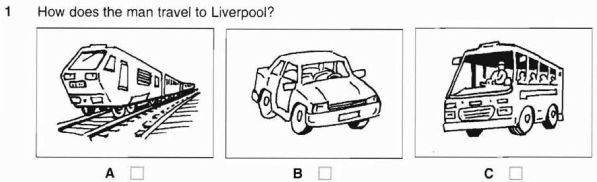 [A, B, C]
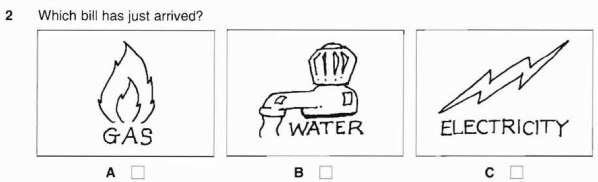 [A, B, C]
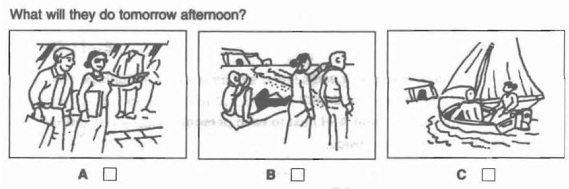 [A, B, C]
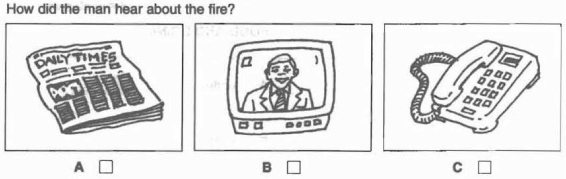 [A, B, C]
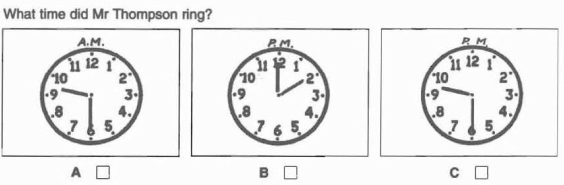 [A, B, C]
Listen to the conversation. To each person (6-10) choose the correct letter (A-H)
6 Barbara [A, B, C, D, E, F, G, H] 7 Paul [A, B, C, D, E, F, G, H] 8 Diana [A, B, C, D, E, F, G, H] 9 Jim [A, B, C, D, E, F, G, H] 10 Julie [A, B, C, D, E, F, G, H] | A coffe B coke C ice-cream D milk E orange juice F sandwich G tea H water |
Listen to the conversation and choose the correct variant A, B or C
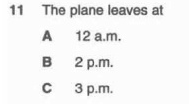 [a, b, c]
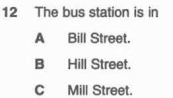 [a, b, c]
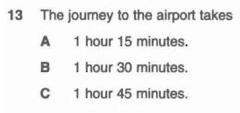 [a, b, c]
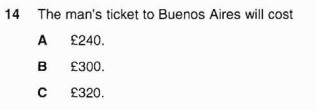 [a, b, c]
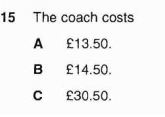 [a, b, c]
Рефлексія від 7 учнів
Сподобався:
0
Так: 7
Ні: 0
Зрозумілий:
0
Так: 7
Ні: 0
Потрібні роз'яснення:
0
Ні: 7
Так: 0