- Всеосвіта›
- Бібліотека тестів›
- Англійська мова›
- HS1 2019 unit6 p106 act14

Тест:
HS1 2019 unit6 p106 act14

10.09.2021

Вміст тесту:
1
2
3
4
5
6
7
8
9
10
1
12 з 120 балів
Match the word or phrase with the definition.
Words and phrases
Definitions
1
siblings
А
a child whose parents are dead
2
an orphan
Б
have a wife or husband
3
to be pregnant
В
the woman who is married to someone's father but who is not their real mother
4
twins
Г
in the Christian religion, a child whose moral and religious development is partly the responsibility of two or more godparents
5
to be married
Ґ
a brother or sister
6
to be divorced
Д
be married in the past but not now married
7
foster parents
Е
to care for a child until he or she is an adult, often giving him or her particular beliefs
8
a Godchild
Є
have a baby or babies developing inside the womb
9
a stepmother
Ж
parents who take care of a child, usually for a limited time, without being the child's legal parent
10
to bring up
З
not married, or not having a romantic relationship with someone
11
a great-grandparent
И
a parent of your grandparent
12
to be single
І
either of two children born to the same mother on the same occasion
2
12 з 120 балів
Decipher the words and write them in the blank space. Mind articles and particle to.
1) fml pttrn -
2) stpfthr -
3) rltnshps -
4) hsbnd -
5) rltv -
6) twns -
7) wf -
8) sblngs -
9) hlf-sstr -
3
12 з 120 балів
Choose the correct variant.
1) A family in which parents and their male children with their families live together and are considered as a single unit is [An extended family, A joint family, A single-parent family, A nuclear family, A stepfamily, A foster family]
2) A family consisting of two parents and their children, but not including aunts,uncles, grandparents is [A nuclear family, A single-parent family, An extended family, A joint family, A stepfamily, A foster family]
3) Foster parents take kids into their homes and take care of them for as long as kids need. Together, they become [A nuclear family, A single-parent family, An extended family, A joint family, A stepfamily, A foster family].
4) A family unit that includes grandmothers, grandfathers, aunts, and uncles, etc. in addition to parents and children is [A nuclear family, A single-parent family, An extended family, A joint family, A stepfamily, A foster family]
5) A family that includes either a mother or a father but not both is [A nuclear family, A single-parent family, An extended family, A joint family, A stepfamily, A foster family]
6) A family that is formed by two people and the child or children of one or both of them from a previous relationship is [A nuclear family, A single-parent family, An extended family, A joint family, A stepfamily, A foster family]
4
12 з 120 балів
Match the tense form with its usage.
1
The Past Perfect Continuous
А
expresses a completed action before another action or a moment in the Future.
2
The Present Perfect Continuous
Б
is used when we talk about something which is happening at the moment of speaking.
3
The Future Perfect Tense
В
shows that something started in the past and continued up until another action in the past
4
The Past Perfect Tense
Г
is used for things, events and actions that are true in general, or for things that happen sometimes or all the time, habits, things that happen again and again.
5
The Present Continuous Tense
Ґ
expresses a completed action before another action or a moment in the Past.
6
The Past Continuous Tense
Д
is used to say that someone was in the middle of doing something at a certain time.
7
The Past Simple Tense
Е
is used to describe an action or event that will happen at some time in the future.
8
The Present Simple Tense
Є
is used to talk about something which has continued to happen for a period of time in the past, and which may still be happening now.
9
The Present Perfect Tense
Ж
is used to express a completed action that has results or consequences in present.
10
The Future Simple Tense
З
is used to describe an action that happened before the present time and is no longer happening
5
12 з 120 балів
Choose the correct tense indicator.
[Today, Last week, In a week], I stayed with my sister for a few days.
I have known him [from 1999 to 2004, while, for a long time].
He had read different kinds of books [before you came, while he came, when he came, while he come].
She has not been waiting for you [when I came, now, for half an hour].
[Last year, Next year, Yesterday] we will have been married for 30 years.
They will go to the cinema, buy some snacks, and watch good movie [next Monday, last Monday, in a Monday].
Her foster parents had come home [after, at, by] 8 o’clock two days ago.
Haven`t you cleaned in the attic [already, yet, lately]? - No, I haven`t.
I [often, lately, yesterday] read different literature. I can read fairytales, poetry and novels.
Carol has been consulting the dictionary [while, when, since] she started to write a report.
Has she been doing aerobics [by three hours, for three hours, at three hours]?
6
12 з 120 балів
Open the brackets. Write down only the form of the predicate.
1) These two young people (to be) a real love match. I think, they (to be) an ideal family in future.
2) My friend has got a girlfriend. He is in love with her appearance and character. he (to want) to marry her? I don’t know.
3) I’m afraid he got involved in a bad company. He (to have) bad relations with parents and he (not to feel) in vain for all the quarrels with them.
4) My great grandfather (not to work) at this factory for seven years when it was closed.
5) His foster parents (to get) married in 1998.
6) Alice’s sister-in-law (to listen) to music, when her brother phoned.
7) My Godfather (to leave) before I came to visit him.
8) Did she use to eat fast food when she (to be) single?
9) Who (to look) after my half-brother at 7 o’clock yesterday?
10) Her siblings (to eat) the cake by 8 o’clock yesterday.
11) Our son-in-law (to solve) this problem for two hours when Tom came and solved everything.
12) While my son (to lay) the table, my daughter-in-law was sleeping in the room.
13) My Godchild and I (to walk) in the park for 40 minutes when we met him.
7
12 з 120 балів
UNIT 6 - General TEST 2
1. Guessing what her [feelings, opinion, capital, reaction] to the news would be difficult.
2. Neither the director nor his assistant [hasn’t come, has come, have come, haven’t come] yet.
3. English is a [compare, comparatively, comparative, comparison] easy language for Swedes to learn.
4. She did all the work [with, for, by, on] her own.
5. There is a [variation, various, variety, variorum] of styles for you to choose from.
6. The children won’t go to sleep [otherwise, except, unless, but] we leave light on outside their bedroom.
7. The police are looking for a man of [tall, medium, extra, special] height.
8. The newspaper report contained [many, another, an, a lot of] important information.
9. The singer ended the concert [with, as, in, by] her favourite song.
10. I did my best to prevent my cat [to, from, against, for] running outside.
11. [since, although, as, because] there was a fierce dog in the house, the thieves managed to break in.
12. Dinner will be ready soon. Can you please [make, settle, put, lay] the table?
13. There are [from time to time, times, at times, a long time] when I have to work very hard.
14. One [dislike, disadvantage, complaint, pity] of my new job is that I’m away from home.
15. He has the [abilities, able, ability, enable] to become a professional football player.
16. This pen is [more expensive as, more expensive than, the most expensive of, as expensive than] the other two pens.
17. The professor explained his ideas with great [clarify, clearly, clarity, clear].
18. [Which, How, What, Who] is your dress, the red one or the green one?
19. He drives so [careless, careful, carefully, carelessly] that he’s sure to have an accident.
20. [Fortunately, Unfortunately, Fortunate, Unfortunate] I came to the station just in time.
21. Of the two new teachers, one is experienced and [other lacks experience, the other is not, the others are not, another is inexperienced].
22. Jack is away on holiday. He [has gone, went, is gone, has been] to Japan.
23. Doctorial students who are preparing to take their qualifying examinations have been studying in the library every night [since, until, for, before] the last three months.
24. Your nephew, [where, whose, which, what] name I can’t remember, made a lot of noise.
25. [Only little nations, Only few nations, Only a little nations, Only a few nations] in the world export diamonds.
26. [The American Revolution began, The beginning of the American Revolution, When the American Revolution began, It was when the American Revolution bega], he was a young school-teacher living in Connecticut.
27. Sonia doesn’t enjoy her job. She’s [a) boring, b) bored, c) a and b are wrong, d) a and b are correct] because she does the same thing every day.
28. I’m going to a wedding on Tuesday. [a) a and c are correct, b) A friend of me, c) A friend of mine, d) One my friends] is getting married.
29. Everyone sent flowers [in addition, except, beside, except for] John.
30. Call an ambulance. There’s been [any accident, accident, an accident, some accident].
31. I don’t understand this sentence. What [does it mean, means it, does mean it, did it mean]?
32. Everything is going well. We [didn’t have, haven’t been having, don’t have, haven’t had] any problems so far.
33. I’ll be at home [at, on, in, all are wrong] Sunday. You can phone me then.
34. Mrs Young is the woman [who, whose, whom, which] you saw at the desk.
35. A [period, few, series, couple] of days before, a terrible explosion took place here.
36. Do you need my signature? - No. [also, both, that, either] you or your manager can sign this.
37. Do you know where [Tom has gone, Tom went, has gone Tom, has Tom gone] ? – No, he didn’t say.
38. I tried to solve the problem [according to, in case of, in spite of, because of] the noise and interruptions.
39. At what time shall we [meet, meet us, meet ourselves, meet ours] this morning?
40. She was carrying a [small black plastic, black small plastic, plastic small black, small and black plastic] bag.
41. What time did you arrive at the match? – A little [less, more, later, time] than usual.
43. Kite has lost her ID card again. It’s the second time this [happened, has happened, had happened] .
44. My father [plays usually, is playing usually, usually plays, is usually playing] badminton three times a week.
45. It’s a fast car. [Otherwise, Besides, Apart from, Beside] it’s got a reliable engine.
8
12 з 120 балів
Watch the video and then choose the correct variants.
1) Christie ... [a, b, c]
a. has been pregnant 23 times.
b. has a one-year-old child.
c. had trouble conceiving her 17th child.
2) She ... [a, b, c]
a. thinks she's addicted to having children.
b. doesn't think she's addicted to having children.
c. doesn't enjoy being pregnant.
3) When Cristie's husband arrives home, he... [a, b, c]
a. takes care of the kids.
b. can't help too much because he's tired.
c. helps Cristie to cook.
4) Cristie says that ... [a, b, c]
a. they are constantly planning their expenses.
b. they can't afford to pay for everything they need.
c. they have too many expenses.
5) They have so many children because ... [a, b, c]
a. of their religious beliefs.
b. Christie and her husband come from very big families.
c. they just like it.
6) What does Christie think about having her 17th child? [a, b, c]
a. She's very surprised.
b. This child wasn't in their plans.
c. She feels calm because she's used to it.
Choose true or false.
1) Apart from their eldest daughter Jessica the whole family lives under the same roof. [True, False]
2) Christi wakes up at 10 p.m. [True, False]
3) The older kids try to help their parents with the housework. [True, False]
4) Christy has to keep a close eye on what family is spending. [True, False]
5) Christy doesn't think ahead and plan their budget. [True, False]
6) The family gets 3 000 eggs, 7 pounds of chicken and kilograms of hamburgers each week. [True, False]
9
12 з 120 балів
Listening - Getting Advice
Task 1. Choose the best answer.
1. What has made Clara check on Ben? [a, b, c]
a. He missed their class that day.
b. He’s missed a few classes.
c. He has a lot of essays to write.
2. What does Ben do at the beginning of the conversation? [a, b, c]
a. He makes the problem sound more than it is.
b. He makes the problem sound less than it is.
c. He is honest about the problem from the start.
3. What is the main way Ben’s anxiety is affecting normal life? [a, b, c]
a. He feels stupid.
b. He can’t remember what day it is.
c. He doesn’t want to go out.
4. What is the surprising thing about panic attacks, according to Clara? [a, b, c]
a. How many people have them.
b. That they make you feel so bad.
c. That people keep their panic attacks private.
5. How does Clara recognise Ben’s problem is panic attacks? [a, b, c]
a. She had the same problem in the past.
b. She has the same problem now.
c. She and Ben live together.
6. What does Clara warn Ben about the advice she will give? [a, b, c]
a. It will be difficult to hear.
b. It won’t be easy to follow.
c. It isn’t very practical.
Task 2. Choose a number (1–6) to put the pieces of advice in the order they are mentioned.
[1, 2, 3, 4, 5, 6] Do regular physical activity as part of your lifestyle.
[1, 2, 3, 4, 5, 6] Do something to make your heart beat too fast.
[1, 2, 3, 4, 5, 6] Do something to keep your mind busy.
[1, 2, 3, 4, 5, 6] Talk to a doctor.
[1, 2, 3, 4, 5, 6] Make yourself breathe too fast on purpose.
[1, 2, 3, 4, 5, 6] Put yourself in a stressful situation.
10
12 з 120 балів
READING
Task 1. Match choices (A—H) to (1—5). There are three choices you don't need to use.
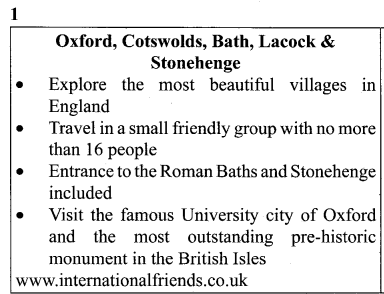 [A. restaurant, В. cinema, C. tour, D. services, E. exhibition, F. shopping, G. pastime, H. sightseeing]
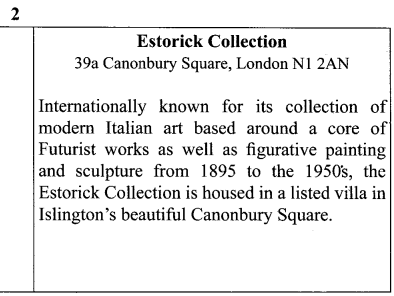 [A. restaurant, В. cinema, C. tour, D. services, E. exhibition, F. shopping, G. pastime, H. sightseeing]
 [A. restaurant, В. cinema, C. tour, D. services, E. exhibition, F. shopping, G. pastime, H. sightseeing]
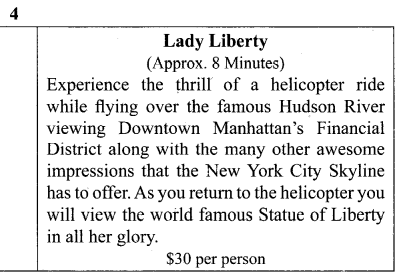 [A. restaurant, В. cinema, C. tour, D. services, E. exhibition, F. shopping, G. pastime, H. sightseeing]
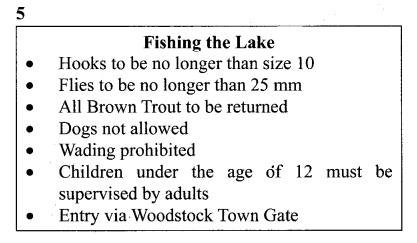 [A restaurant, В cinema, C tour, D services, E exhibition, F shopping, G pastime, H sightseeing]
Task 2. Read the following text about child marriage in Nepal, and decide if statements 1 to 6 are true or false.
Child marriage in Nepal
Nepal has made important progress over the past few years to promote equality, but the country still has one of the highest rates of child marriage in the world. 41% of Nepalese girls are married before the age of 18.
Poverty is both a cause and consequence of child marriage in Nepal. Girls from the wealthiest families marry 2 years later than those from the poorest, who are seen as an economic burden, and who drop out of school and earn little money.
Food insecurity plays an important role too. Nepalese families that do not have enough food to eat are more likely to marry their daughters at a young age to decrease the financial burden. One study shows that 91% of people who had secure access to food married over the age of 19.
Dowry is also common practice in many communities. Parents marry their daughters as soon as possible because the money they have to pay to the groom’s family is higher if their daughter is older.
Since 2010, the legal age of marriage is 20 for both men and women, or 18 with parental consent, according to the Nepalese Country Code.
The law states that punishment for child marriage is imprisonment for up to three years and a fine of up to 10,000 rupees (£102). But reports suggest that this law is rarely applied.
There has been quite a lot of progress in Nepal over the past 3 years with a clear government commitment to ending child marriage and civil society cooperation.
The Ministry of Women, Children and Social Welfare is currently developing Nepal’s first national strategy on child marriage in collaboration with UNICEF Nepal and Girls Not Brides Nepal.
However, the post-earthquake and post-fuel crisis environment has meant progress is slow and the national strategy has been delayed.
1) The age of marriage in Nepal depends on the money the families have. [True, False]
2) Families want to marry their daughters soon to earn money. [True, False]
3) According to the law, people aren't allowed to marry until they are 18. [True, False]
4) Parents who marry their children before the allowed age normally pay a fine. [True, False]
5) The government is not doing much to put an end to child marriage. [True, False]
6) The recent earthquake was negative for the eradication of child marriage. [True, False]
Рефлексія від 9 учнів
Сподобався:
0
Так: 9
Ні: 0
Зрозумілий:
0
Так: 4
Ні: 5
Потрібні роз'яснення:
0
Ні: 5
Так: 4