- Всеосвіта›
- Бібліотека тестів›
- Англійська мова›
- FOCUS REVIEW 1 (Focus 2)

Тест:
FOCUS REVIEW 1 (Focus 2)
15.11.2023

Вміст тесту:
1
2
3
4
5
6
7
8
9
10
11
12
13
14
15
16
17
18
19
20
21
22
23
24
25
26
27
28
29
30
31
32
33
34
35
36
37
38
1
1 з 58 балів
VOCABULARY AND GRAMMAR
1. Complete the sentences with personality adjectives.
Shona never smiles and is always depressed. She’s a really [generous, mean, responsible, outgoing, cheerful, selfish, sensible, hard-working, lazy, miserable] person.
2
1 з 58 балів
Tim looks after his younger brother when their parents are out. He’s so [generous, mean, responsible, outgoing, cheerful, selfish, sensible, hard-working, lazy, miserable] .
3
1 з 58 балів
Zina is such a [generous, mean, responsible, outgoing, cheerful, selfish, sensible, hard-working, lazy, miserable] girl. She cares only about herself.
4
1 з 58 балів
Neil’s never made a silly decision. He’s such a [generous, mean, responsible, outgoing, cheerful, selfish, sensible, hard-working, lazy, miserable] boy.
5
1 з 58 балів
My grandparents often give me money for the cinema or CDs. They‘re so [generous, mean, responsible, outgoing, cheerful, selfish, sensible, hard-working, lazy, miserable] .
6
1 з 58 балів
Has Marion always been so l [generous, mean, responsible, outgoing, cheerful, selfish, sensible, hard-working, lazy, miserable] ? She always stays in bed until midday!
7
1 з 58 балів
2. Complete the sentences with the correct form of the words in capitals.
My brothers are very . They play sports every day! ACT
8
1 з 58 балів
Gino makes new friends easily. He’s so . COMMUNICATE
9
1 з 58 балів
Carla is sometimes , so I don’t believe in her stories. HONEST
10
1 з 58 балів
Volunteers work in different conditions, so they must be to changing situations. ADAPT
11
1 з 58 балів
Leslie is such an girl. She comes up with stories and writes songs. IMAGINE
12
1 з 58 балів
A lot of people decided to help this poor family after that TV programme. INSPIRE
13
2 з 58 балів
3. Complete the questions with the correct form of the verbs in brackets.
you ever any problems with your smartphone? (have)
14
2 з 58 балів
What your new friend ? (look like)
15
1 з 58 балів
Who my tablet? It’s not on my desk. (use)
16
2 з 58 балів
your grandparents listening to heavy metal? (like)
17
2 з 58 балів
What Amy at the moment? Is it a TV show? (watch)
18
1 з 58 балів
Who your dog when you’re on holiday? (look after)
19
1 з 58 балів
4. Use the prompts to write sentences.
My sister / avoid / buy / second-hand clothes.
20
1 з 58 балів
you / ever / refuse / help / your friend?
21
1 з 58 балів
We / not need / wear / a school uniform.
22
1 з 58 балів
They / not afford / buy / a new laptop.
23
1 з 58 балів
I / always / want / dance / in a folk group.
24
1 з 58 балів
you / spend / a long time / study / when you get home from school?
25
1 з 58 балів
USE OF ENGLISH
5. Choose the correct answer.
Johann is [so shy, such shy, such a shy] boy that he has never been to a school party
26
1 з 58 балів
[Who helps Mary, Who is helping Mary, Who does help Mary]with the project today?
27
1 з 58 балів
X: I don’t enjoy shopping for clothes.
Y: [Me too., Me neither., Not me.]
28
1 з 58 балів
Sally is [such an adventurous, such adventurous, so adventurous]. She’s been to Thailand twice.
29
1 з 58 балів
X: My older sister is a charity worker.
Y: [Is she?, Does she?, Has she?]
30
1 з 58 балів
6. Choose the answer that is closest in meaning to the underlined words.
Agnes is so friendly and sociable.
31
1 з 58 балів
What is she like?
32
1 з 58 балів
Jasper can’t stand buying unimportant things.
33
1 з 58 балів
Their grandmother is so caring.
34
1 з 58 балів
Drake is crazy about sports cars.
35
5 з 58 балів
LISTENING
7. Listen to a conversation with Tony, who has taken part in an experiment. Then complete the summary with the missing information. Do not use more than three words in each gap. Listen to the recording twice.
Today’s guest of the weekly programme is Tony Miller, who studies in Zurich. Tony volunteered to help a team of to do a unique experiment. In the experiment, fifty participants received an amount of money and were divided into two groups. People in Group 1 could only spend the money on themselves, while people in Group 2 – on any . During the experiment, the researchers observed those parts of participants' which are responsible for making decisions and feelings. Before, during and after the experiment, the participants from both groups were asked how happy they were. The results of the experiment show that when people do not share what they have with others, they feel generous people.
36
8 з 58 балів
READING
Preparation task
Match the definitions with the vocabulary.
Vocabulary
Definitions
1
to miss out on
А
websites and apps like Facebook, Twitter and Instagram
2
addiction
Б
in a funny or strange way because it’s unexpected
3
constantly
В
different from
4
to be cut off from
Г
to not get the benefits of
5
unlike
Ґ
needing something too much or in an unhealthy way
6
social media
Д
people who are the first to buy or use new technology
7
ironically
Е
all the time without a break
8
early adopters
Є
to have no access to
37
6 з 58 балів
Reading text:
Read an article about how people at different ages use computers and smartphones to practise and improve your reading skills.

Digital habits across generations
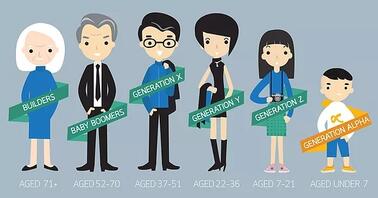
Today's grandparents are joining their grandchildren on social media, but the different generations' online habits couldn't be more different. In the UK the over-55s are joining Facebook in increasing numbers, meaning that they will soon be the site's second biggest user group, with 3.5 million users aged 55–64 and 2.9 million over-65s.
Sheila, aged 59, says, 'I joined to see what my grandchildren are doing, as my daughter posts videos and photos of them. It's a much better way to see what they're doing than waiting for letters and photos in the post. That's how we did it when I was a child, but I think I'm lucky I get to see so much more of their lives than my grandparents did.'
Ironically, Sheila's grandchildren are less likely to use Facebook themselves. Children under 17 in the UK are leaving the site – only 2.2 million users are under 17 – but they're not going far from their smartphones. Chloe, aged 15, even sleeps with her phone. 'It's my alarm clock so I have to,' she says. 'I look at it before I go to sleep and as soon as I wake up.'
Unlike her grandmother's generation, Chloe's age group is spending so much time on their phones at home that they are missing out on spending time with their friends in real life. Sheila, on the other hand, has made contact with old friends from school she hasn't heard from in forty years. 'We use Facebook to arrange to meet all over the country,' she says. 'It's changed my social life completely.'
Teenagers might have their parents to thank for their smartphone and social media addiction as their parents were the early adopters of the smartphone. Peter, 38 and father of two teenagers, reports that he used to be on his phone or laptop constantly. 'I was always connected and I felt like I was always working,' he says. 'How could I tell my kids to get off their phones if I was always in front of a screen myself?' So, in the evenings and at weekends, he takes his SIM card out of his smartphone and puts it into an old-style mobile phone that can only make calls and send text messages. 'I'm not completely cut off from the world in case of emergencies, but the important thing is I'm setting a better example to my kids and spending more quality time with them.'
Is it only a matter of time until the generation above and below Peter catches up with the new trend for a less digital life?
Are the sentences true or false?
More people aged 55 or more use Facebook than people aged 65 or more. [True, False]
Grandparents typically use Facebook less than their grandchildren. [True, False]
Sheila feels grateful to social media. [True, False]
Peter found his own smartphone use affected how he felt about how much his children used their phones. [True, False]
Peter has changed how much he uses his phone during the working day. [True, False]
Peter feels that the changes make him a better parent. [True, False]
38
1 з 58 балів
Write the phrases in the correct group.
Teens
Grandparents
Parents
feel lucky to have the internet
are less keen on Facebook
like to keep their phones near them
the first generation to get smartphones
use social media to find old friends
are returning to older technology
Рефлексія від 16 учнів
Сподобався:
0
Так: 13
Ні: 3
Зрозумілий:
0
Так: 12
Ні: 4
Потрібні роз'яснення:
0
Ні: 14
Так: 2