- Всеосвіта›
- Бібліотека тестів›
- Англійська мова›
- Англійська мова. 11 клас. Завдання річного оцінювання. Екстернат

Тест:
Англійська мова. 11 клас. Завдання річного оцінювання. Екстернат

24.05.2025

Вміст тесту:
1
2
3
4
5
6
7
8
9
10
11
12
13
14
15
16
17
18
19
20
21
Тест містить питання скопійовані з: Англійська мова. 11 клас. Завдання річного оцінювання. Екстернат .
1
1 з 23.5 балів
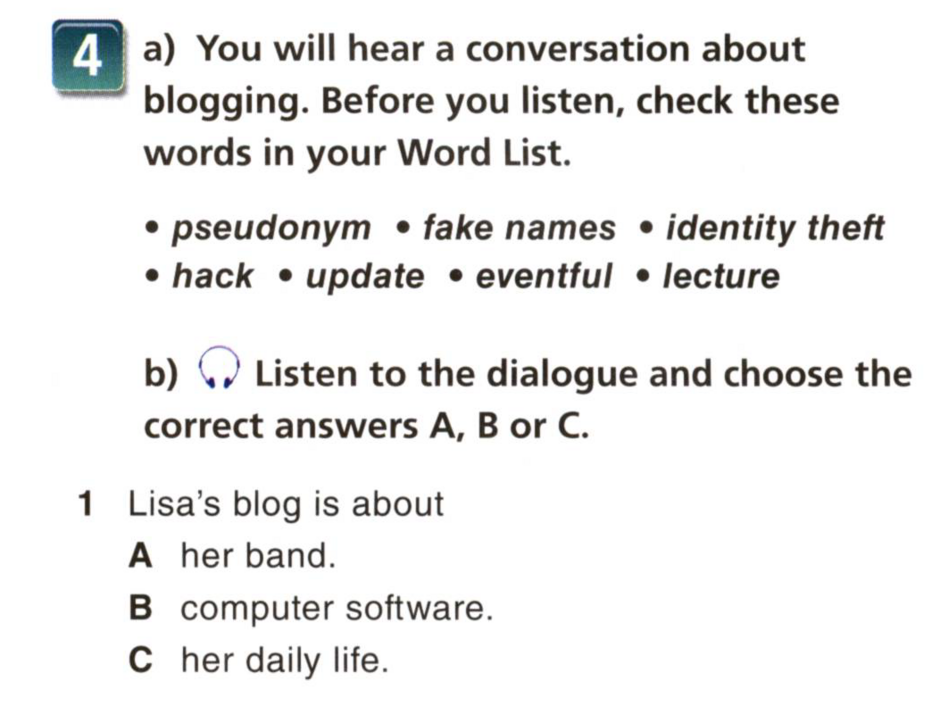
2
1 з 23.5 балів
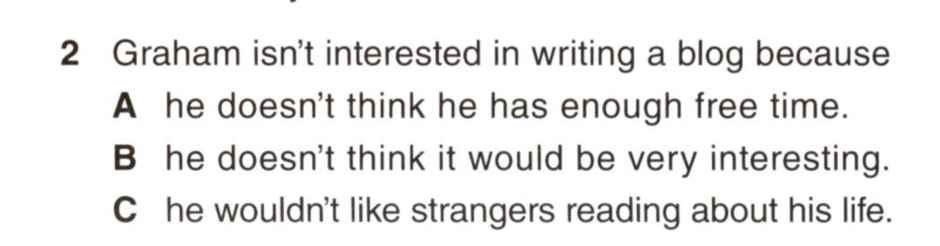
3
1 з 23.5 балів
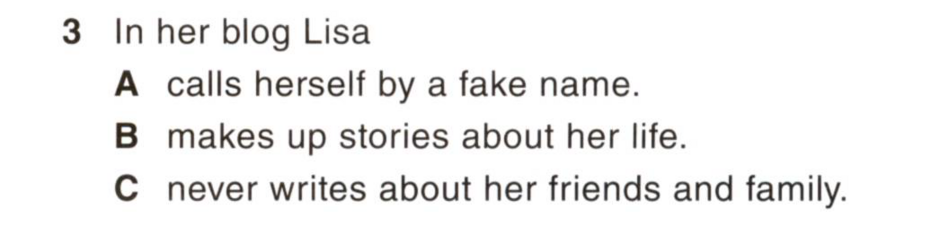
4
1 з 23.5 балів
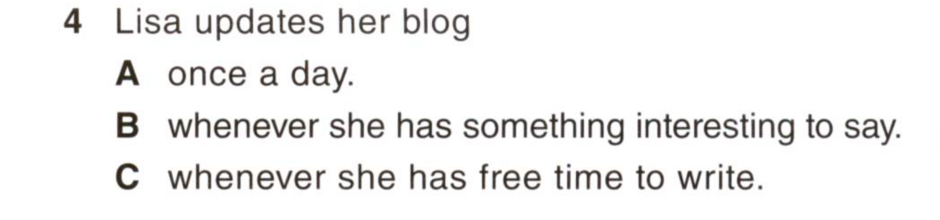
5
1 з 23.5 балів
6
1 з 23.5 балів
Sam [will go, is going, goes] on a trip to Rio de Janeiro next summer. He has already booked a flight.
7
1 з 23.5 балів
I really look [for, forward, to] to your visit.
8
1 з 23.5 балів
We [haven't had, haven't been having] lunch yet.
9
1 з 23.5 балів
Mike [has decorated, has being decorating]his room all day today.
10
1 з 23.5 балів
Would you like to have [everything, something] sweet for dinner?
11
0.5 з 23.5 балів
I --- it if you did not ask me.
12
0.5 з 23.5 балів
If I --- you, I would study Law.
13
0.5 з 23.5 балів
If we have a new car, we --- across Ukraine.
14
1 з 23.5 балів
Helen Keller's deafness and blindness ___________ by a serious illness when she was a baby.
15
1 з 23.5 балів
I have my car ______________ every week.
16
5 з 23.5 балів
Replace the words in bold with an appropriate modal.
sentences
modals
1
He is able to run the 100 metres in 13 seconds.
He ________ run the 100 metres in 13 seconds.
А
can't
2
It isn't necessary to be a member of the sports club to use the pool.
You __________ be a member of the sports club to use the pool.
Б
can
3
She isn't allowed to eat sugar.
She _________ eat sugar.
В
should
4
It's possible that our team will win the match.
Our team _________ win the match.
Г
might
5
It is a good idea to eat healthy food.
You _________ eat healthy food.
Ґ
don't have to
17
1 з 23.5 балів
Read sentence in Direct Speech and choose the corect sentence in Reported Speech.
"I send emails every day", Tom said.
18
1 з 23.5 балів
Read sentence in Direct Speech and choose the corect sentence in Reported Speech.
"We want to go fishing", the boys said.
19
1 з 23.5 балів
Read the text and for questions 1-5, choose the correct answer A, B, or C.
The Future of Language Learning?
Imagine a future where we can instantly understand any language in the world without having a single lesson. In his novel The Hitchhiker’s Guide to the Galaxy, the author Douglas Adams describes a small fish that goes in your ear and translates for you. Of course this is science-fiction, but with new technology the future is closer than you think! For example, if you see a sign or poster in a foreign language, you don’t have to look it up in your phrasebook or even type it into the Internet. All you need to do is take a photo on your smartphone and Google’s translation app will identify the text and translate it for you! Fantastic technology like this is ideal for people travelling in a country for a short amount of time as they don’t have time to learn the language. However it isn’t ideal for students or teachers, since it won’t help you actually learn the language.
If you’re looking for a way to learn a language or improve your vocabulary there are also hundreds of apps and tools that make language learning quicker and easier than ever before. In the same way that teachers use games to make learning more interesting for their students, these new apps use clever techniques to teach you a foreign language. Scientists believe that this is much more useful than just repeating words over and over again. For instance, apps use pictures and animations as well as games to help you remember words or phrases. With one of these apps on your smartphone or tablet, you can practise your vocabulary at any time, wherever you are, not just at home or in the classroom. These apps also motivate you by awarding points when you learn new words.
So while these translation apps sound like a great idea, we are still a long way away from the point where we can stop learning languages. Besides, there are many advantages to learning another language apart from just communicating. Learning a language helps you understand other cultures as well as expanding your brain’s capabilities. So, although automatic translation apps are very useful, it will always be better to learn the language yourself, with or without the help of technology!
How can you translate a foreign sign using a translation app?
20
1 з 23.5 балів
The Future of Language Learning?
Imagine a future where we can instantly understand any language in the world without having a single lesson. In his novel The Hitchhiker’s Guide to the Galaxy, the author Douglas Adams describes a small fish that goes in your ear and translates for you. Of course this is science-fiction, but with new technology the future is closer than you think! For example, if you see a sign or poster in a foreign language, you don’t have to look it up in your phrasebook or even type it into the Internet. All you need to do is take a photo on your smartphone and Google’s translation app will identify the text and translate it for you! Fantastic technology like this is ideal for people travelling in a country for a short amount of time as they don’t have time to learn the language. However it isn’t ideal for students or teachers, since it won’t help you actually learn the language.
If you’re looking for a way to learn a language or improve your vocabulary there are also hundreds of apps and tools that make language learning quicker and easier than ever before. In the same way that teachers use games to make learning more interesting for their students, these new apps use clever techniques to teach you a foreign language. Scientists believe that this is much more useful than just repeating words over and over again. For instance, apps use pictures and animations as well as games to help you remember words or phrases. With one of these apps on your smartphone or tablet, you can practise your vocabulary at any time, wherever you are, not just at home or in the classroom. These apps also motivate you by awarding points when you learn new words.
So while these translation apps sound like a great idea, we are still a long way away from the point where we can stop learning languages. Besides, there are many advantages to learning another language apart from just communicating. Learning a language helps you understand other cultures as well as expanding your brain’s capabilities. So, although automatic translation apps are very useful, it will always be better to learn the language yourself, with or without the help of technology!
In the text, the author argues that
21
1 з 23.5 балів
The Future of Language Learning?
Imagine a future where we can instantly understand any language in the world without having a single lesson. In his novel The Hitchhiker’s Guide to the Galaxy, the author Douglas Adams describes a small fish that goes in your ear and translates for you. Of course this is science-fiction, but with new technology the future is closer than you think! For example, if you see a sign or poster in a foreign language, you don’t have to look it up in your phrasebook or even type it into the Internet. All you need to do is take a photo on your smartphone and Google’s translation app will identify the text and translate it for you! Fantastic technology like this is ideal for people travelling in a country for a short amount of time as they don’t have time to learn the language. However it isn’t ideal for students or teachers, since it won’t help you actually learn the language.
If you’re looking for a way to learn a language or improve your vocabulary there are also hundreds of apps and tools that make language learning quicker and easier than ever before. In the same way that teachers use games to make learning more interesting for their students, these new apps use clever techniques to teach you a foreign language. Scientists believe that this is much more useful than just repeating words over and over again. For instance, apps use pictures and animations as well as games to help you remember words or phrases. With one of these apps on your smartphone or tablet, you can practise your vocabulary at any time, wherever you are, not just at home or in the classroom. These apps also motivate you by awarding points when you learn new words.
So while these translation apps sound like a great idea, we are still a long way away from the point where we can stop learning languages. Besides, there are many advantages to learning another language apart from just communicating. Learning a language helps you understand other cultures as well as expanding your brain’s capabilities. So, although automatic translation apps are very useful, it will always be better to learn the language yourself, with or without the help of technology!
What is the author’s purpose in the text?
Рефлексія від 2 учнів
Сподобався:
0
Так: 2
Ні: 0
Зрозумілий:
0
Так: 2
Ні: 0
Потрібні роз'яснення:
0
Ні: 2
Так: 0