Конструктор тестів
- Всеосвіта›
- Бібліотека тестів›
- Англійська мова›
- (A2+) Getting around + School days

Тест:
(A2+) Getting around + School days

21.02.2024
Вміст тесту:
1
2
3
4
5
6
7
8
9
10
11
12
13
14
15
1
5 з 47 балів
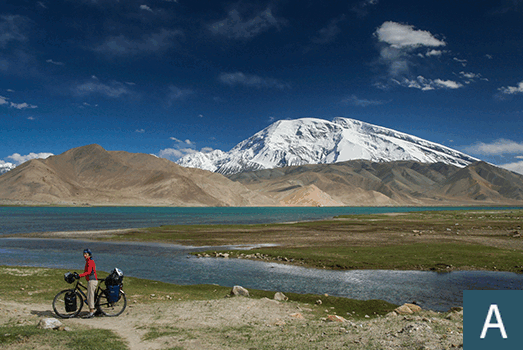
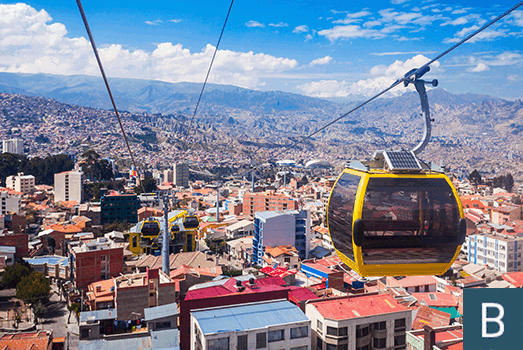
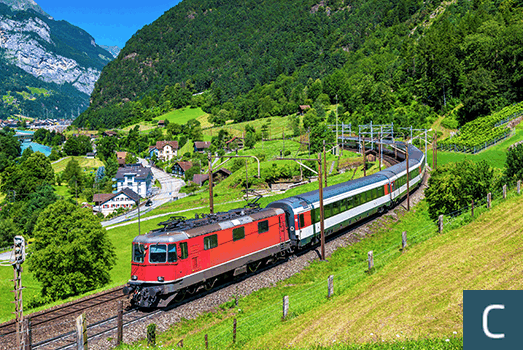
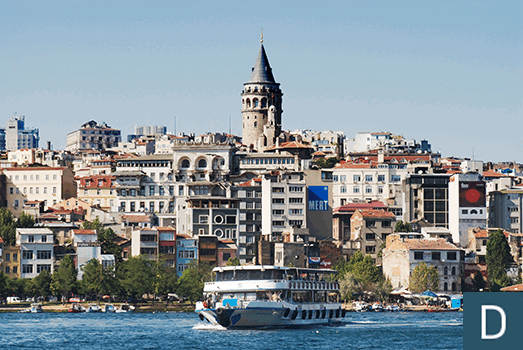
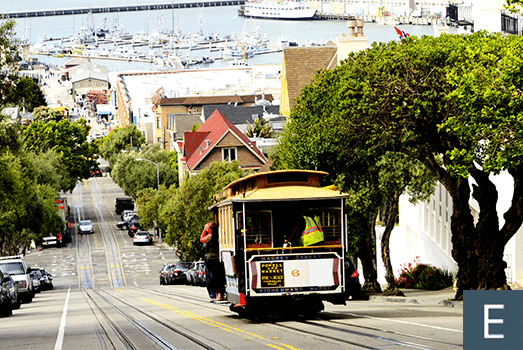
Read the travel article and match each journey 1–5 to a photo A–E.
FANTASTIC journeys
Last month we asked you to tell us about your most memorable journeys around the world. Here are our five favourites:
1 Last year I went to Istanbul for a business trip. I had an afternoon free so I took a ferry across the sea, from one side of the city to the other. It was a lovely journey and I got to see some amazing sights, like the Topkapi Palace. I was having so much fun that I almost missed my flight home!
Nikki, PRAGUE
2 I worked in China for a few years. At the weekends, I used to get on my bike and cycle into the countryside. There was an especially beautiful lake which I used to cycle around. Sometimes I stopped, parked the bike and had a swim. It was a simple journey, but that's also why it was lovely.
Holly, SAN DIEGO
3 I went to La Paz in Bolivia for work. It's the highest capital city in the world and the cable car there is 4,000 metres above sea level. I didn't have much time, so I got in a cable car at the central station and travelled to the end of the line and back. I got out of it only 30 minutes later, but I'll never forget that view of the city.
Wiktor, WARSAW
4 I remember taking a tram in San Francisco. I was 11 and I was on holiday with my mum and dad. One day, we got on a tram near our hotel and got off down by the sea. The view of the sea and the city from the hill was fantastic – we could even see the Golden Gate Bridge!
Mo, SHANGHAI
5 A few years ago, I went skiing with some friends in Switzerland. The public transport there is amazing so we didn't need to take a taxi or rent a car. On the day we arrived, we took a train to our resort and it was such a beautiful journey. We passed by some of the highest mountains in the Alps and some really pretty villages. I enjoyed it almost as much as the skiing!
Dave, BRISTOL
1
ONE
А
2
TWO
Б
3
THREE
В
4
FOUR
Г
5
FIVE
Ґ
2
1 з 47 балів
Read the article again. Write the name of each person next to the questions. Sometimes there is more than one answer. In this case, write only one of the names.
Who travelled for their job?
3
1 з 47 балів
Read the article again. Write the name of each person next to the questions. Sometimes there is more than one answer. In this case, write only one of the names.
Who travelled to do a sport?
4
1 з 47 балів
Read the article again. Write the name of each person next to the questions. Sometimes there is more than one answer. In this case, write only one of the names.
Who saw a famous building?
5
1 з 47 балів
Read the article again. Write the name of each person next to the questions. Sometimes there is more than one answer. In this case, write only one of the names.
Who went with their family?
6
1 з 47 балів
Read the article again. Write the name of each person next to the questions. Sometimes there is more than one answer. In this case, write only one of the names.
Who travelled on water?
7
1 з 47 балів
Read the article again. Write the name of each person next to the questions. Sometimes there is more than one answer. In this case, write only one of the names.
Who made the journey several times?
8
7 з 47 балів
Complete the phrases with the words listed below. Use the article to help you.
get in / get off / get on / get out of / miss / rent / take
park a bike/car
and a cable car/a car/a taxi
and a bike/a bus/a ferry/a tram
a car/a bike/a boat
a flight/a bus/a train
a ferry/a taxi
9
3 з 47 балів
Listen to Mac talking about a journey. Choose the correct alternatives.
They went to the river to [go fishing, take a walk]
They slept in the car because [the hotel was full, they didn't want to walk anywhere]
The car wasn't very comfortable, so Mac [didn't sleep, went for a walk]
10
3 з 47 балів
Read the grammar box and choose the correct alternative.
because, so and to
Use 1
[to, because, so] + infinitive to say why we did something.
We also walked down to a river to go fishing.
Use 2
[so, because, to] to say what made something happen.
They got us there really quickly because they knew the area well.
Use 3
[so, because, to] to talk about the result of something.
It was getting dark, so we slept in the car until morning.
11
8 з 47 балів
Complete each sentence with because, so or to.
We wanted to go to the beach we walked to the nearest bus stop.
The train was late there was a problem on the line.
Our car broke down we walked to the garage.
We walked for two hours find a place to camp.
I went on a cycling tour of Vietnam I wanted to see the country.
Jan drove around for over two hours give me a tour of her city.
Everyone looked out of the train window see the amazing mountains.
There's a big storm they've cancelled all ferries.
12
1 з 47 балів
Read the introduction to the article and choose the best summary.
Yesterday's 'average', today's 'excellent'
We sometimes think that life has always been easy for successful people.
However, is this really true? Let’s look at three successful people who
did well after a difficult start.
13
6 з 47 балів
Read the rest of the article and complete the statements with Nancy (N), Scott (S) or Clara (C).
Yesterday's 'average', today's 'excellent'
We sometimes think that life has always been easy for successful people.
However, is this really true? Let’s look at three successful people who
did well after a difficult start.
Nancy Oliviera is the youngest ever CEO of a media
company. 'I was really bad at maths at school' laughs
Nancy, 'I just couldn't understand it, and I wasn't
interested in it.' But that changed ten years ago when
she joined the company and quickly showed that she
was very good at selling. 'The maths wasn't a problem
anymore because I was having fun with the numbers.'
Scott Wilkins had a difficult time at school. He couldn't
read and write well and his teachers just thought he was
lazy. 'The only thing I could do was use a computer'
he says, 'but the computers were really bad at my school.'
Then, one day, his parents bought him his own computer.
He loved it and spent every evening making computer
programs. Fifteen years later, he designed a computer
game which sold for $20 million.
'I hated writing at school', says Clara Caruso, 'I could
do it, but it took me a long time – much longer than
all the other children.' One day, however, she
discovered she could write more easily if she first
recorded what she wanted to say, then listened
to it one sentence at a time. 'This really worked for
me', says Clara, 'I soon found that my writing really
improved, and I was really good at it!' She studied
literature at university and now works as an
international reporter.
only knew how to do one thing at school.
was slower at something than other students.
found a subject easier in a different situation.
found a way to become very good at what they used to find difficult.
needed to enjoy what they were doing to become good at the subject.
made something which made a lot of money.
14
2 з 47 балів
Read the grammar box and click on the correct alternatives.
could/couldn't
Use could + infinitive to talk about something that we
1
[didn't know, knew] how to do in the past
I could say the alphabet when I was three.
I could ride a bike when I was four.
Use couldn't + infinitive to talk about something that we
2
[knew, didn't know] how to do in the past.
I couldn’t understand science when I was at school.
I couldn’t play any instruments when I was young.
15
6 з 47 балів
Choose the correct alternatives.
I hated most subjects at school. I especially didn't like physics. I didn't find it difficult and [couldn't, could] understand quite a lot of it, but I [could, couldn't] pass the exam because I didn't study enough. I could [play, to play] lots of sports well, but I [could, couldn't] get into any of the teams because I was too small. History was another subject I didn't enjoy – I liked the subject but our teacher was boring. I [couldn't, could] paint really well though, so I really enjoyed art. I [could, couldn't] understand colours and shapes from an early age.
Рефлексія від 1 учня
Сподобався:
0
Так: 1
Ні: 0
Зрозумілий:
0
Так: 1
Ні: 0
Потрібні роз'яснення:
0
Ні: 1
Так: 0