- Всеосвіта›
- Бібліотека тестів›
- Англійська мова›
- 3A for 20.01.23 HS2 2019 Unit3 p61 act3

Тест:
3A for 20.01.23 HS2 2019 Unit3 p61 act3

11.01.2023
Вміст тесту:
1
2
3
4
5
6
7
8
9
10
Тест містить питання скопійовані з: HS1 2021 unit7 act11, HS2 2019 Unit3 p61 act3.
1
12 з 120 балів
Match the words with the corresponding pictures
1
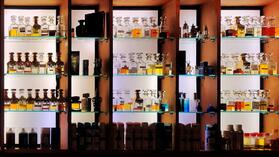
А
a butchery
2
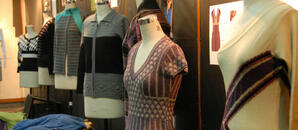
Б
a bakery
3
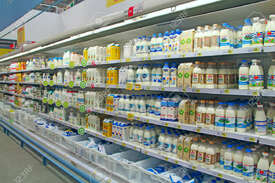
В
a grocery
4
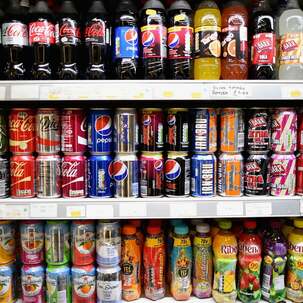
Г
a greengrocery
5

Ґ
a perfumery
6

Д
a pharmacy
7

Е
a knitwear department
8
![100+ Grocery Pictures [HD] | Download Free Images on Unsplash](https://fs02.vseosvita.ua/0201jmzo-657b-285x213.jpg)
Є
dairy products
9

Ж
strong drinks
10

З
soft drinks
11

И
a department store
12
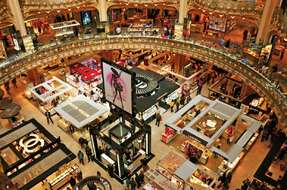
І
men's clothing store
13
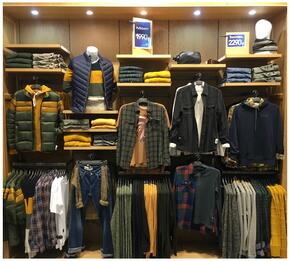
К
sportswear
2
12 з 120 балів
Translate the words into English:
комісійний магазин
продаватись зі знижкою, по акції
коштувати дуже багато
купувати зі знижкою
купити за безцінь
швидкий огляд
померти
заплатити високу ціну
браковані товари
договір, торгівельна угода
метушитися
розклеїтись, розвалитись
працювати належним чином
3
12 з 120 балів
Fill in the gaps with the correct letters:
Conven nt
A dr pery
A var ty
An appl n
to del ver
A bu ery
T letr s
d ry products
q lity
F lty goods
A barg n
to nego te
A disc nt
to flip thr
4
12 з 120 балів
Fill in the correct prepositions:
to pay the nose
to buy a song
to be offer
to buy a discount
to flip
to point to smb
to be entitled some compensation
to be fit a purpose
True its name
to pay leaving the store
to deal
to go store store
to call round
5
12 з 120 балів
Read the dialogue and choose the correct variant:
In the Ladies' Wear Department
Shop assistant: Hello, can I [help, like, sell] you?
Customer: I [look for, am looking for] a pair of jeans.
Shop assistant: What [height, size, greatness] do you take?
Customer: Twenty-nine.
Shop assistant: We have some very nice blue jeans here. They're [in, on, of] offer this week.
Customer: Well, I actually prefer black jeans [more, most, much].
Shop assistant: That's okay. We [too, also] have them in black.
Customer: Where can I [wear, try, pull]them on?
Shop assistant: The [trying-on, undressing, fitting] room is over there.
(The customer tries the jeans on).
Customer: They're [to, too, two] big.
Shop assistant: Would you like a [littler, smaller, tinier] size?
Customer: Yes, [thank you, please, excuse me].
(The customer tries the jeans on).
Customer: These [suit, fit, like] rather well. But I think I look [fat, thick] in them. Don't you think?
Shop assistant: Not at all. These jeans [suit, stand, stay]you very well.
Customer: Well, I think I [try on, will try on, would try on] a blue pair.
(The shop assistant brings a pair of blue jeans and the customer tries the jeans on).
Customer: They are very [tight, tide] and I don't like blue jeans, anyway. Do you mind [take, taking, bring, bringing]me another pair in black?
Shop assistant: No, not at all. ...
6
12 з 120 балів
Fill in the gaps with the correct article (a/an/the/-), where necessary
1. Jason must have gone to
Paris. Can I look at his photos? - Yes, of course. I think it‘s
most beautiful city in
Europe.
2. We could see most of
sights in
London yesterday. What were
most beautiful places which you could see? -
Tate Gallery and
Tower Bridge were my favourites.
3. Danny can play
billiards very well, can‘t he? - No, he can‘t, but he is good at dancing
rumba.
4. What newspapers do you prefer? - I usually buy
Independence, and my wife reads
Times.
5. Where is
station you told me about? – It`s not far from
Independence Square.
6. Hi! Are you in
Bright Street? – No, I‘m in
High Street.
7.Would you like to go to
Alps with us? - No, we have already planned a trip to
Caribbean Islands.
8. I heard that
President prefers to stay at
Plaza Hotel.
7
12 з 120 балів
Open the brackets and put the verbs into the correct form of Future-in-the Past.
1.I hoped I (to find) her at home.
2.He was sure they (to return) soon.
3.Emily thought they (to discuss) the question by the beginning of the meeting.
4.Ted said he (to read) that newspaper the whole evening.
5.Mr.White promised he (to begin) working soon.
6.Yesterday she read in the newspaper they (to build) the new bridge by the following year.
7.The teacher told the pupils they (to translate) the stories from 2 to 3 the following day.
8.I thought they (to invite) us to the party.
9.The accountant said he (not to sign) the financial documents.
10.I was told the wedding (to take) place in St.Mark's Cathedral on the 14th of July.
11.I hoped she (to get) the job she was applying for.
12.The pupils promised their teacher they (to work) on their mistakes by the end of the school year.
8
12 з 120 балів
1. My roommates … [a, b, c, d] dinner by the time I got home.
a) had finished b) finished
c) have finished d) finish
2. Is this car capable … [a, b, c, d] us all way to our hometown?
a) about getting b) of getting
c) in getting d) for getting
3. Choose the right variant [a, b, c, d] .
a) Your knowledge of English good.
b) Your knowledges of English are good.
c) Your knowledge of English is well.
d) Your knowledge of English is good.
4. Mr. Phuong will substitute … [a, b, c, d] the history teacher who is out of town.
a) from b) at c) for d) with
5. We express our thoughts by means … [a, b, c, d] words.
a) of b) to c) in d) on
6. You were responsible … [a, b, c, d]the error.
a) to b) for c) in d) on
7. The suggestions above are just some of the ways to increase your … [a, b, c, d] awareness.
a) culture b) cultural
c) cultured d) culturally
8. Those fellows seem dull and I want to get … [a, b, c, d] of them quickly.
a) chance b) rid c) difficult d) pant
9. There are three categories … [a, b, c, d] answers. You can choose one.
a) in b) with c) of d) about
10. He was … [a, b, c, d] to prevent it.
a) power b) powerly c) powerless d) unpower
11. He returned money to the man who … [a, b, c, d] it.
a) have lost b) loose c) had lost d) lost
12. Either my answer or yours … [a, b, c, d] wrong.
a) have b) are c) has d) is
13. She was unable to speak from … [a, b, c, d] .
a) fearful b) fearsome c) fear d) fearless
14. Prices continue to show an upward … [a, b, c, d] .
a) tendentiously b) tend
c) tendentious d) tendency
15. We felt ashamed … [a, b, c, d] his action.
a) of b) for c) on d) to
16. Radioactivity causes cancer and may … [a, b, c, d] future generations.
a) create b) even help c) develop d) affect
17. The quality of this photograph is not noticeably different … [a, b, c, d] that one.
a) with b) of c) for d) from
18. It is very important to know how … [a, b, c, d] this tool.
a) use b) to use c) using d) used
19. You should get into a habit of … [a, b, c, d] at least one newspaper daily.
a) being read b) reading
c) read d) to read
20. The police ... [a, b, c, d] looking for a dark-haired man in his thirties.
a) is b) - c) are d) did
21. There are ways … [a, b, c, d] that.
a) to be done b) to do
c) done d) doing
22. … [a, b, c, d] is the best of them.
a) The scissors b) Aerobics c) The police d) Jeans
23. Women … [a, b, c, d] to live longer than men.
a) tendency b) tendentiously
c) tendentious d) tend
24. The tourists complained … [a, b, c, d] any sleep.
a) for not getting b) in not getting
c) about not getting d) on not getting
25. She said she … [a, b, c, d] this race.
a) wants to win b) want to win
c) wanting to win d) wanted to win
26. They informed me about it. That’s the … [a, b, c, d] I received.
a) inform b) information c) informs d) informations
27. I want to apply for this job because the money they pay … [a, b, c, d]rather good.
a) have b) is c) are d) has
28. The jury isn’t satisfied … [a, b, c, d] his answer.
a) about b) with c) of d) to
29. Some important characteristics of the baroque style were a renewed interest in ornament and a powerful … [a, b, c, d] of both light and shade.
a) to use b) useless c) useful d) use
30. It may be argued that modern presidents have far … [a, b, c, d] responsibilities than their predecessors did.
a) more great b) most great
c) great d) greater
31. A barometer is a device with a sealed metal chamber designed … [a, b, c, d] the changes in the pressure of air in the atmosphere.
a) to reading b) reading c) read d) to read
32. Almost all life depends … [a, b, c, d] chemical reactions with oxygen to produce energy.
a) for b) on c) with d) to
33. Studies of job satisfaction are unreliable because there … [a, b, c, d] so many variants and because the admission of dissatisfaction may be viewed as a personal failure.
a) was b) are c) were d) is
34. The area where a microchip is manufactured must be the … [a, b, c, d] environment possible.
a) cleaner b) most cleanest
c) more cleanest d) cleanest
35. Mathematics is … [a, b, c, d] and serves so many of the sciences that it is a commitment for studying every scientific discipline.
a) such important field
b) so an important field
c) such a important field
d) such an important field
36. Our uncle has given us … [a, b, c, d] .
a) some really good advice b)some really good advices c)some really good pieces advice d) really good piece of advice
37. Champlain founded a base at port royal in 1605, and … [a, b, c, d] a fort at Quebec three years later.
a) to built b) builds
c) building d) built
38. The Sloths spend most of … [a, b, c, d] time hanging upside down from trees and feeding on leaves and fruit.
a) her b) his c) their d) its
39. I knew I could rely … [a, b, c, d] them to get the job done.
a) with b) in c) of d) on
40. Who is responsible … [a, b, c, d] the project?
a) for b) about c) to d) with
41. Located in New York, apartments cost more to rent than they … [a, b, c, d] in other, smaller cities.
a) did b) do c) will d) would
42. Television has little … [a, b, c, d] for me.
a) attraction b) attractively
c) attractive d) attract
43. This new model not only saves time but also … [a, b, c, d] by operating on two batteries instead of four.
a) save energy b) saving energy
c) to save energy d) saves energy
44. Our stepdaughter has magnificent blue eyes and … [a, b, c, d] .
a) long hair b) long hairs c) a long hair
45. I didn’t enjoy this book on how to succeed in business. It wasn’t very … [a, b, c, d] .
a) well type b) poorly written
c) well written d) good written
9
12 з 120 балів
Listening
Choose the correct answer
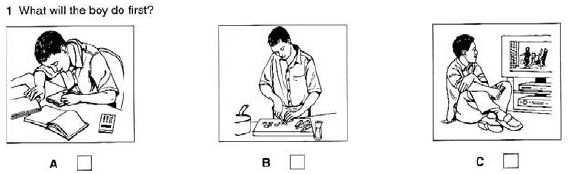 [a, b, c]
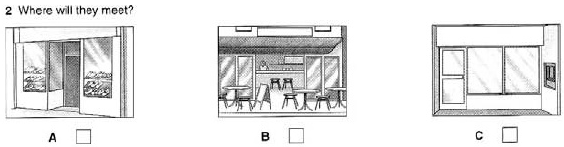 [a, b, c]
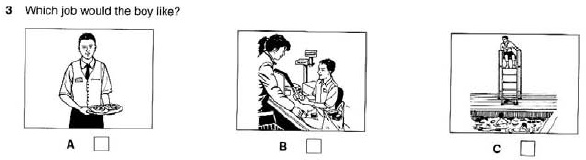 [a, b, c]
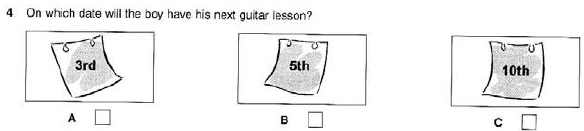 [a, b, c]
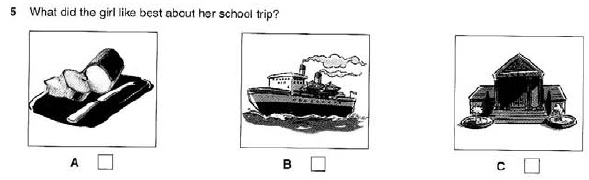 [a, b, c]
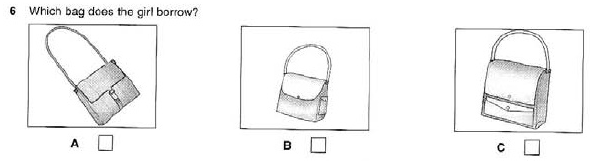 [a, b, c]
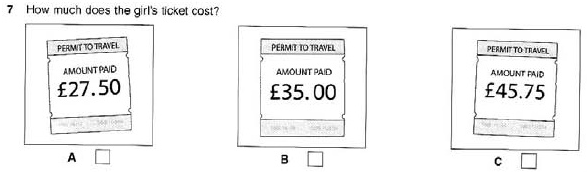 [a, b, c]
 [a, b, c]
 [a, b, c]
 [a, b, c]
 [a, b, c]
 [a, b, c]
 [a, b, c]
10
12 з 120 балів
Reading
Task 1. Read the text below. For questions (1-5) choose the correct answer (A, B, C or D).
Glossary: a busker-a person who entertains in a public place.
As you go after a day’s work in the crowded London underground, suddenly you hear music. You take some money out of your pocket and throw it into the open guitar case of the busker. The musicians bring colour and life to the city's underground.
If you have time and look at the wall behind the busker, you will see the names of the musicians on it with a time near each name. Each musician plays for an hour only and those who want to play write their names on the wall.
From time to time the police come to an underground station and the musicians have to go to another place. If the police ask one of the buskers what he is doing, he usually answers that he is just practising. If the police ask about the money in the guitar case, the musician answers that it fell out of his pocket into his guitar case.
An American girl on a visit to London said that she liked busking; and often played in an underground station where there were many buskers. Some of them played quite close together, but one important rule is that you mustn't stand very close to another musician because people will hear two musicians at the same time.
Why do musicians want to play in the street? Some musicians do it for money, some do it for pleasure. Others say it's a good place to practise because they can't play at home.
1. What does a busker do? [A, B, C, D]
A A busker sells newspapers in the underground.
B A busker plays a musical instrument.
C A busker takes photos.
D A busker sells baskets.
2. How long does each busker play? [A, B, C, D]
A From dusk to dawn.
B For a limited period of time.
C As long as he likes.
D For hours.
3. What do buskers usually write on the walls ? [A, B, C, D]
A Their names and the place where they are going to play.
B The names of musicians famous all over the world.
C Their names and the time when they are going to play.
D Their programme.
4. What is the police attitude to the buskers? [A, B, C, D]
A The police make buskers go to another place.
B The police make buskers pay some money.
C The police listen to music and put some money into the busker's guitar case.
D The police take the buskers to prison.
5. What mustn't the busker do in the street while playing music? [A, B, C, D]
A The busker mustn't play modern music.
B The busker mustn't play two musical instruments.
C The busker mustn't stand close to another busker.
D The busker mustn't play in an underground station.
Task 2. Read the texts below. Match choices (A-H) to (1-6). There are two choices you do not need to use.
1. [A, B, C, D, E, F, G, H]New Years Eve, December 31, is more important to Americans than New Year s Day itself. In the United States, the federal holiday is January 1, but most people begin celebrating on December, 31, Sometimes they have masquerade balls, where guests dress up in costumes and cover their faces with masks. According to an old tradition, guests unmask at midnight. Many Americans watch television as part of the festivities. Most of the television channels show Times Square in the heart of New York City.
2. [A, B, C, D, E, F, G, H]Martin Luther King Jr, a distinguished African American, organized and led the civil rights movement in the United States during the 1960s. During the 1963 march on Washington, he delivered the stirring and memorable “I have a dream” speech to a quarter million people gathered before the Lincoln Memorial.
3. [A, B, C, D, E, F, G, H]This holiday commemorates the birthdays of George Washington, the first President of the United States, and Abraham Lincoln, President during the Civil War (1861-1865).
4. [A, B, C, D, E, F, G, H]Memorial Day is the day on which Americans remember those who died in the service of their country. Many families visit graves and decorate them with flowers, and the day is also marked with patriotic parades. This day is considered the beginning of the summer season.
5. [A, B, C, D, E, F, G, H] Independence Day is the US National Day. It commemorates the day the Declaration of Independence was signed in Philadelphia on July 4, 1776. This holiday is celebrated all over the country with picnics, political speeches, and community get-togethers that culminate in fireworks displays.
6. [A, B, C, D, E, F, G, H]The first Thanksgiving Day was observed by the Pilgrims at Plymouth Colony in Massachusetts in 1621 to give thanks for the bountiful harvest and their triumph of survival over the wilderness. Now it is a time when Americans give thanks for the good life they enjoy and celebrate by getting together with family and friends to eat traditional foods such as turkey, cranberry sauce, sweet potatoes, and pumpkin pie.
Which holiday is known for_____?
A survival victory
B patriotic parades
C commemorating the birthdays of two outstanding Americans
D the unforgettable speech
E being celebrated with picnics and political speeches
F bringing dolls as a present
G dressing in masquerade costumes
H dancing samba
Task 3. Read the text below. Choose from (A-H) the one which best fits each space (1-6). There are two choices you do not need to use.
In the 1930s, when radio was still in its infancy, broadcasting stations in the USA wondered what type of programmes they should put on during the daytime. They came up with the idea of producing serials that would be on the radio every afternoon telling a continuous story. To keep the listeners interest,(1) [A, B, C, D, E, F, G, H]. Knowing that the majority of the audience would be women, the broadcasters decided that the women in the serials would be strong characters and the men weak. The serials were an instant success with listeners. As the radio stations were paid for by advertising, these programmes always carried advertisements and, since one of the most frequently advertised products was soap, the programmes became known as Soaps or Soap Operas.
(2) [A, B, C, D, E, F, G, H]that the soap opera appeared in Britain. The BBC had no interest in producing this type
of programme but during the Second World War it was thought that the Americans should be shown how well the British people were standing up to the war. For this reason, (3) [A, B, C, D, E, F, G, H]. It was called Front Line Family and showed how a typical English family, the Robinsons, was living during the war. (4) [A, B, C, D, E, F, G, H] and asked for it to be broadcast for the British audience. The BBC were unwilling to do this but finally agreed and broadcast the programme in Britain, but changed the name to The Robinsons. The programme ran for six years.
Other soaps were introduced later, one telling the life of a doctor's family and another, The Archers, about life in a country village. The original aim of The Archers was to inform farmers of new developments in agriculture. The serial began in 1951 and is still to be heard on five evenings every week.
Some attempts at soap opera began to appear on television in Britain in the mid-1950s, but it was not until 1961 that the first real soap opera appeared. This was shown not by the BBC, (5) [A, B, C, D, E, F, G, H].
The serial, called Coronation Street was about the lives of people living in a working-class street near Manchester. Although the serial was planned to run for only thirteen weeks, it is still to be seen several nights every week and almost every week (6) [A, B, C, D, E, F, G, H].
The BBC never managed to produce a really successful soap opera until 1984, when it introduced Eastenders. This programme is about life in the area of the east end of London. For a time it had more viewers than Coronation Street and still rivals it as the most popular programme on the British television. There is a major difference between the two programmes, Eastenders concentrates on rather depressing realism whilst Coronation Street, although having serious storylines, always contains a strong element of comedy.
A but by commercial television
B there would be far more crisis happening than in real life
C Some people in Britain managed to hear the programme
D It was really by chance
E has more viewers than any other programme on British television
F a soap opera was written for the North American service of the BBC
G the most popular programme on television
H never been shown on TV
Рефлексія від 9 учнів
Сподобався:
0
Так: 9
Ні: 0
Зрозумілий:
0
Так: 9
Ні: 0
Потрібні роз'яснення:
0
Ні: 8
Так: 1