- Всеосвіта›
- Бібліотека тестів›
- Англійська мова›
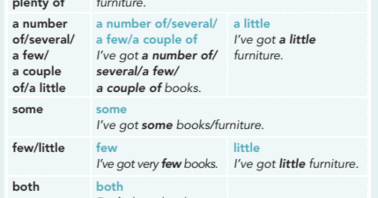
- 3.5 Quantifiers practice

Тест:
3.5 Quantifiers practice
22.02.2023

Вміст тесту:
1
2
3
4
1
8 з 40 балів
Choose the correct answers.
The Rise of Megacities
Until the mid-20th century,
[lots, most of, most] people lived in rural areas, but now the majority of the world’s population lives in urban areas. Cities have grown dramatically and
[every one, some, both] of them have even become ‘megacities’, the name given to urban areas with more than 10 million inhabitants.
According to the United Nations, there are currently 33 megacities, the largest of which is Tokyo, Japan, with a population of 37 million. Unlike Tokyo,
[many of, loads, none of]the megacities are in poor countries. There, people leave rural areas because there are
[many, a few, few] opportunities for work or education, and
[neither, no, none of] hope of a good life.
When there is rapid population growth, poor countries face
[many of, few, a number of] social, economic and environmental problems. Cities need
[a great deal of, a couple of, every] clean water and electricity, as well as hospitals, schools, rubbish removal facilities and transport. But with
[a little, little, plenty] money, it’s almost impossible to keep up with the demands of a growing population.
This is why megacities are one of the world’s greatest challenges. The question we need to ask is, ‘Can our planet survive urban growth?’
2
5 з 40 балів
Complete the second sentence so that it means the same as the first. Use the word in capitals.
1 In my circle of friends there are a number of only children and one set of twins.
SEVERAL
In my circle of friends
and one set of twins.
2 I've got two rain jackets so you can borrow whichever of them you like. EITHER
I've got two rain jackets
them.
3 Every single person who attended agreed that the concert had been a once in a lifetime experience. ALL
agreed that the concert had been a once in a lifetime experience.
4 None of the students were late for the exam. STUDENT
was on time for the exam.
5 Not one animal was hurt during the making of this film. ANIMALS
were hurt during the making of this film.
3
10 з 40 балів
Choose the correct option.
1
[All, None of the, Neither] parent is coming to the school meeting.
2
[Both, All, Every] student receives a certificate.
3 You can call me at work at 8 a.m. I
[will have arrived, will be arriving, will arrive] at the office by 8.
4 This is the town
[where, that, which] he would spend his summer holidays.
5
[I'll still be working, I'll have been working, I'll have worked] in the garden when you arrive so I may not hear the doorbell. Just let yourself in, will you?
6 How long
[will they be building, will they have been building, will they have built] the sports centre by the end of year? It should be ready now!
7 My parents didn't immediately agree
[let, to let, letting]me go on holiday with my friends.
8 She
[waited, was waiting, had been waiting] for almost an hour when she was finally served some food.
9 By the end of June, I
[will have been saving, will be saving, will have saved] for a new bike for five months.
10 Plans
[which made, making, made] in a hurry may prove not to be well-thought-out.
Запитання №4 Із заповненням пропусків у тексті
Рефлексія від 11 учнів
Сподобався:
0
Так: 11
Ні: 0
Зрозумілий:
0
Так: 9
Ні: 2
Потрібні роз'яснення:
0
Ні: 10
Так: 1