Мета уроку: вдосконалювати лексичні навички, навички читання, виховувати зацікавленість здобувачів освіти у розширенні знань.
Конструктор уроків
- Всеосвіта›
- Бібліотека уроків›
- Англійська мова›
- How Materials Influence the Schools of Architecture

Урок:
How Materials Influence the Schools of Architecture
28.03.2023
Опис уроку (учням цей опис не показується):
Вміст уроку:
1
2
3
4
5
6
Опис, який учні побачать перед початком уроку
Good Luck!
1
THEME: How Materials Influence the Schools of Architecture
Read, write and learn the following words:
to note занотувати
briefly коротко
influence вплив
temples храми
to span охоплювати
marble мрамур
lime вапно
clay глина
limestone вапняк
mortar будівельний розчин
to obtain отримувати, здобувати
approximately приблизно
durability довговічність
to abound бути багатим на щось, рясніти
2
Read and translate the text.
It is of interest to note briefly how materials influenced the schools of architecture. Where clay abounded, as in Egypt sun-dried bricks were easily and cheaply made. Stone was also obtainable, and because of its durability it became the material of the temples and palaces; the less pretentious dwellings were built in bricks. In Mesopotamia large brick buildings were constructed, and, in the absence of stone and wood to span their areas, the arch and dome came into being.
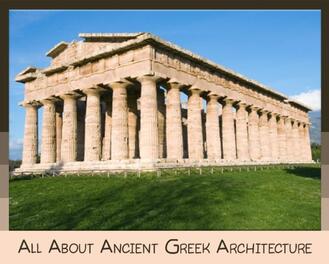
Greece possessed perfect marble for columns and beams and the arch and dome received little attention. A fortunate combination of lime, limestone, clay and pozzolana gave Rome stone and cement, and the great mass of the structures is largely due to the union of stone, brick, strong mortar and concrete. In Northern Europe, Switzerland where forests abounded and other materials were difficult to obtain, wooden architecture was characteristic for buildings of all types.
3
Answer the following questions.
Why did the Egyptians build their temples and palaces from brick and stone?
Why did the arch and dome come into being in Mesopotamia?
Why did the arch and dome receive little attention in Greece?
What materials were structures in ancient Rome built of?
.png)
4
Read and translate the text.
Southern California Institute of Architecture architect-training school. It was founded in 1972 in Santa Monica, California. Enrollment is roughly 500 students, with the numbers of undergraduates and graduate students being almost equal. Men considerably outnumber women. About half the students are state residents, and approximately a quarter are from foreign countries.
The academic calendar is divided into trimesters. A five-year program leads to a bachelor of architecture degree, and a master's degree takes from one and a half to three and a half years to complete (depending on the student's undergraduate experience). Studies focus on architectural history, theory, technology, and practice. A student committee organizes the Design Forum lectures that bring professional architects to campus to exhibit their work and share their perspectives. Students can study abroad at the institute's villa in Switzerland or through exchange programs.
5
Complete the sentences by choosing the correct variant.
1. Southern California Institute of Architecture was founded in ____ in Santa Monica, California.
a) 1976 b) 1972 c) 1872
2. ____ is roughly 500 students.
a) staffing b) enrollment c) conscription
3. Men ______ outnumber women.
a) Significantly b) Considerably c) Notably
4. The academic calendar is _____ trimesters.
a) alienated into b) separated into c) divided into
5. Studies ____ on architectural history, theory, technology and practice.
a) focus b) center c) focal point
6. Students can study abroad at the institute's villa in ___________ .
a) Italy b) c) Switzerland
6
Put the words in each sentence in the correct order.
tall / Nowadays / and / steel / huge / buildings / are / made / of / and / very / concrete.
A / who / designs / and / man / makes / the plans / for / them / buildings / called / is / an architect.
Iron / a building / used / is / as / widely / material.
The / to live / buildings / work / modern / and / help us / in comfort.
are / There / of / many / types / metals / used / for / construction.
Tourists / Cathedral of St. Sophia / come / from / all over the world / to see / famous / the.
Опис, який учні побачать після проходження уроку

Рефлексія від 0 учнів
Сподобався:
0
Так: 0
Ні: 0
Зрозумілий:
0
Так: 0
Ні: 0
Потрібні роз'яснення:
0
Ні: 0
Так: 0