Урок передбачає роботу над статтею “Gentrification: Historical Overview and Current Trends”. Оригінал цієї статті доступний за посиланням http://stmm.in.ua/archive/ukr/2018-3/11.pdf
Конструктор уроків
- Всеосвіта›
- Бібліотека уроків›
- Соціологія›
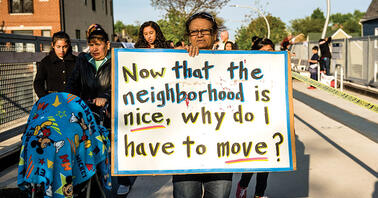
- What is gentrification and why it often harms the poor

Урок:
What is gentrification and why it often harms the poor
14.05.2021
Опис уроку (учням цей опис не показується):
Вміст уроку:
1
2
3
Опис, який учні побачать перед початком уроку
Урок передбачає роботу над статтею “Gentrification: Historical Overview and Current Trends”. Оригінал цієї статті доступний за посиланням http://stmm.in.ua/archive/ukr/2018-3/11.pdf
1
Read the article below:
Gentrification: Historical Overview and Current Trends
Abstract
The article focuses on the phenomenon of gentrification, primarily on its origins, causes and effects. Approaches underscoring the class nature of this phenomenon have been analysed. The author also gives examples of gentrification in cities around the world, including Western Europe and the post-Soviet space.
Keywords: gentrification, urbanisation, city, displacement, middle class, upper middle class
Джентрифікація: історичний огляд та сучасні тенденції
Анотація
У статті розглянуто феномен джентрифікації, передусім його походження, причини та наслідки. Проаналізовано підходи, що підкреслюють класовий характер цього явища. Автор також наводить приклади джентрифікації в деяких містах світу, зокрема в Західній Європі та на пострадянському просторі.
Ключові слова: джентрифікація, урбанізація, місто, витіснення, середній клас, вищий середній клас
It is no secret that positive perception of a city (or a district) where you live is a contributory factor to a person’s emotional comfort. As early as 1960, a famous American urban planner Kevin A. Lynch wrote about this in his work “The Image of the City” [Lynch, 1960], having analysed the impact of the aesthetic qualities of an urban environment on the emotional well-being and behaviour of city dwellers.
Today, strolling down the streets of a city like Kyiv, we notice numerous gates, barriers, turnstiles, etc. in front of apartment houses and residential areas, quite often with security guards patrolling these areas. Such a situation was barely imaginable even 8–10 years ago. It seems that people tend more and more to fence themselves off from the “outside world”. We can even see “towns within the city”, residential blocks along with schools, shops, restaurants, sports clubs, etc., mostly located in Kyiv’s central districts. If this goes on, in 10–20 years the city will be completely divided into areas for “the rich” and “the poor”, and there will be real “ghettos” — like those typical of many Western European metropolises.
People are more and more eager to enclose their houses and courtyards with fences — not only because they like to mix with “their own kind”, but also because they want to protect both themselves and their property. For example, a Mercedes owner having to park his car near the entrance to a block of flats in a bedroom community like “Khrushchevka” will surely feel nervous — knowing that the car might be stolen or damaged. It is quite natural that people want to walk safely around their district and are often ready to pay a tidy sum for this. It is also clear that real estate developers do their best to meet this demand by building high-end apartments, mostly in Kyiv’s central districts, thus making these districts even more prestigious and expensive.
It is common knowledge that demand creates its own supply. The primitive accumulation of capital, which began in Ukraine in early 1990s, soon resulted in the emergence of a class of wealthy people. But luxury housing was in short supply in those days, even in Kyiv. Due to the underdevelopment of suburbs and far-flung districts, along with centralisation as a dominant idea, Kyiv’s central areas became the most attractive to the “new rich”.
Likewise, these areas became the most expensive to live in, pushing out the original residents, who had to sell their homes (or rent them out to well-off tenants) and move to “somewhere cheaper”. In point of fact, that was none other than replacement of less affluent people by more affluent ones — the process that had been occurring in European cities for many years. And it does not seem to be slowing down.
Take a closer look at your neighbourhood. Imagine that one day in your street you can see people who look different, a stylish coffee shop opens instead of a fast food restaurant or canteen, and your landlord notifies you that the rent is going to rise — having grasped that there is a chance of making more money. Such a situation was described by a German sociologist and urbanist Matthias Bernt in an interview to The Village portal [Galkina, 2015].
And these are some undeniable signs that your neighbourhood is being gentrified. Gentrification, which is thought to have originated in the 1960s, in a period of stable economic growth, was first observed by a British sociologist Ruth Glass. The researcher noted that “many of the working class quarters” in inner London had been “invaded by the middle class — upper and lower”, and this process of “gentrification” went on rapidly “until all or most of the working class occupiers were “displaced and the whole social character of the district” was changed [Glass, 1964: pp. xviii–xix]. She coined the term “gentrification”, linking it mainly to middle class regarded as “gentry”1.
Quite a few scholars have tried to document and explain this phenomenon by now. For instance, Elijah Anderson, studying a gentrifying neighbourhood in Philadelphia called the Village-Northon, pointed out that “developers, speculators, and more privileged classes” were gradually buying up “properties inhabited by less well-off people of diverse backgrounds”, and many old and new residents, “gambling on a steady rise in property values”, hoped that the area would become “hot”, trendy, and expensive” [Anderson, 1990]. Chris Hamnett argues that gentrification is “...simultaneously a physical, economic, social and cultural phenomenon”, which “commonly involves the invasion by middle-class or higher-income groups of previously working-class neighbourhoods or multi-occupied ‘twilight areas’ and the replacement or displacement of many of the original occupants” [Hamnett, 2003]. This description is somewhat similar to that of Neil Smith, who deemed gentrification to be “the process by which poor and working-class neighbourhoods in the inner city are refurbished via an influx of private capital and middle-class homebuyers and renters”, “a dramatic yet unpredicted reversal of what most twentieth-century urban theories had been predicting as the fate of the central and inner-city” [Smith, 1996].
Although there is no generally accepted definition of gentrification, this phenomenon is related to a particular social class. Put simply, this is the displacement of lower middle class (usually from neglected or abandoned districts) by middle and upper middle class.
According to Russian social geographers Alla Makhrova and Oleg Golubchikov, gentrification is a global trend of the class-driven remaking of urban areas, part of an overall strategy for attracting investment capital to the city, including the emergence of new objects and places earmarked for the better-off segments of society [Makhrova, Golubchikov, 2012]. This, in turn, entails a change in the social composition within central districts of the city — as the original residents, if they belong to the less well-off strata of society, are gradually (but progressively) moving away. Those who choose to stay in their homes cannot afford anything of what their rich neighbours do. Since the prices are too high, they cannot go shopping or join a sports club, let alone buy a flat in a newly built house. Eventually, they become “invisible” in these districts, having no influence on the dynamics of social life.
So, these are some negative effects of gentrification. But what are the causes of this phenomenon? There are several explanations of what brings it about. For example, the above-mentioned British urbanist Chris Hamnett thinks that gentrification is coupled with changes in industrial structure of big cities — to be more precise, with the shift from manufacturing to services, which is paralleled by changes in occupational structure of those cities [Hamnett, 2003]. The manual labour force begins to shrink rapidly, while the number of white-collar workers (who usually perform job duties in an office setting) is growing. This new middle class tends to move from the suburbs to the city centre, with well-developed infrastructure, where they can satisfy both their vital and cultural needs.
His views are in consonance with those of a German sociologist and social activist Andrej Holm, who sees gentrification as the result of increased interest in a certain environment. The arrival of wealthier people in an existing urban district inevitably leads, due to the free market mechanism, to a rise in rents and property values. The less wealthy residents have to move out — thus, economic displacement occurs. Holm also talks of physical displacement, when an apartment owner wilfully expels their tenants to lease it out to more economically advantaged ones, and cultural displacement, when the social and cultural fabric of a district is dramatically changing and becoming oriented to higher net worth individuals [Holm, 2011a].
Under capitalism, residential land is simply bought out by investors. The old houses are demolished; the new ones are constructed for prosperous consumers, becoming unaffordable for previous residents. This process may be likened to physical displacement. Interestingly, it may happen in socialist countries as well, where state ownership of land is practiced.
For instance, in the late 1970s and early 1980s, Kyiv (the capital of Soviet Ukraine at the time) witnessed renovation of some buildings in its historic districts — like Yaroslaviv Val Street2. The residents of those houses, mainly ordinary Ukrainians, were forcibly resettled to the outskirts. They could not move back to their homes after the renovation had been completed because these buildings were being used for other purposes, serving as a location for a number of foreign embassies. In fact, that was a perfect illustration of state-led gentrification (although this term was unfamiliar to the Soviet authorities) accompanied by physical displacement of original residents.
As for economic displacement, it has been common to many European cities, including Kyiv. By now, many original residents have been priced out of the city’s central areas. Rich Ukrainians are willing to buy a property in the centre — since it is considered prestigious — even if they live outside the city. Of course, as it was said at the beginning of the article, they prefer newly built houses with enclosed courtyards to fence themselves off from “the rest of the world” and enjoy a “parallel reality”. But what a pity that most of these houses are encroaching on the historic buildings and disfiguring the cityscape — as the property developers do not bother to observe any rules, let alone care about the city’s architectural heritage. This practice has nothing in common with gentrification of European cities such as London, where “Victorian houses, downgraded in an earlier or recent period — which were used as lodging houses or were otherwise in multiple occupation — have been upgraded once again” [Glass, 1964: pp. xviii–xix].
Cultural displacement is well exemplified by changes occurring in Kyiv’s other historic district called Podil (otherwise named the Lower Town). Nestled in the lowland of the right bank of the Dnieper River, this district had been a centre of arts, crafts and commerce for centuries. Tanners, blacksmiths, carpenters, woodcarvers, potters and the like lived and worked there, merchants sold various goods, and trading ships landed at its harbours. The old merchants’ trading exchange, known as the House of Contracts, was located in the very heart of Podil. Its most famous part, Andrew’s Descent (Andriivs’kyi Uzviz), has been a haven for painters and artisans since the late Soviet era. However, the atmosphere of this district has undergone some obvious changes in recent years: there are quite a lot of trendy bars, youth pubs and organic grocery stores (where ordinary cafes or shops used to be), as well as contemporary art galleries and street cinemas, apparently supposed to satisfy the demands of new (or prospective) residents.
As mentioned earlier, gentrification of a particular district (say, central) begins when people, usually middle to high income earners, start to show interest in settling in this district [Holm, 2011a]. Their demand for housing can be met by renovating some down-at-heel buildings, converting unused spaces (such as abandoned offices) into residential units and, surely, by building new luxury houses. Purchasing an apartment in a newly built house is advantageous because, first, it will be in excellent condition, second, the high price of a flat is a firm guarantee that your neighbours will belong to the same social class as you. Thus, the central district of the city is transforming into elite one — and this is the social aspect of gentrification.
Another aspect of gentrification is economic. Investing in construction promises healthy profits — again, due to constantly rising housing prices. Therefore, business people are often keen on putting money in the so-called “concrete gold”. On the other hand, gentrification enhances the city’s appearance and thus makes it even more attractive to investors. This is what Andrej Holm refers to as a political aspect [Holm, 2011a]. But there is a risk that cities will be more interested in attracting capital, even from dubious sources, rather than serving their residents’ needs [Minton, 2017].
The above-mentioned American geographer and anthropologist Neil Smith, who thoroughly studied the effects of the rapid growth of gentrification in cities, noted that it is now becoming “a global urban strategy... that takes over from liberal urban policy” [Smith, 2002: p. 427]. In cities of the advanced capitalist world, according to Smith, the neoliberal state plays a crucial role in promoting gentrification. It becomes an agent of the market, rather than its regulator [Smith, 2002: ibid].
An open issue — in both the scientific and the societal discussion — is the connection between culture and gentrification. Andrej Holm wrote about “pioneers of gentrification”, mainly artists and people with high cultural assets, who move in a previously impoverished area, usually in search of free space to try alternative forms of lifestyle (art, political activism and the like). However, they have no intention to push out the original residents. Shortly after, the look of the neighbourhood becomes different: street cafes, art galleries, diverse forms of restaurants and shops tailored for the “pioneers” emerge. Then, other changes can be noticed: rents start to rise, old shops and infrastructures tend to disappear, and the poor residents leave the area. The building stock is being renovated, the street life gets dominated by people from the higher social classes and the infrastructure is progressively catering to their needs [Holm, 2011b]. According to Matthias Bernt, this pattern exemplifies “classic gentrification”, which took place in the 1960s and 1970s: hipsters and artists find a neglected area (which, nonetheless, appeals to them), creatively transform it, and afterwards wealthy people settle in this area [Galkina, 2015]. The soaring rents (and, therefore, the cost of living) make the “pioneers” move away. However, hipsters should not be regarded as triggers of gentrification: rich people choose to live in a particular district for many different reasons.
When it comes to social justice, gentrification poses a serious problem, because it anyhow implies displacement of low-income people, making them even more vulnerable. This point has been emphasised by both Bernt and Holm. Furthermore, gentrification affects social and cultural diversity and is certainly at odds with the concept of open city that provides equal housing opportunities to all inhabitants. Nevertheless, there are several examples of “good” gentrification, which can benefit not only better-off newcomers.
You might have heard about Eindhoven, a Dutch city, where Philips, one of the largest electronics companies in the world, had been headquartered for almost a century. In the late 1970s, the company started to farm out its production to Asia. Hundreds of skilled workers were laid off, and the city was also left with several abandoned and polluted factory complexes, acting as a reminder of the destructive side of global outsourcing [Williams, 2011]. To tackle the industrial downturn, the local authorities initiated special programmes which helped not only to create new jobs but also transform Eindhoven into a “top-technology and design” city [Fernandez-Maldonado, Romein, 2010: pp. 91–92]. The old Philips buildings have evolved into state-of-the-art residential and commercial areas, and the famous Design Academy is now located there. Since 2002, Eindhoven has been hosting the annual Dutch Design Week, bringing together creative people from around the world.
In Kyiv, former industrial facilities can also be reused as multipurpose art spaces. Probably, the most popular of them is “Art Zavod Platforma” that serves as a venue for diverse workshops, festivals and charity fairs. Residential areas are being built on the old industrial sites as well — for instance, in a neighbourhood called Vydubychi or on the Rybalsky (Fishermen) Isle. Interestingly, these areas, despite being situated quite far away from the city centre, have a fair chance of becoming prestigious — as the apartments are intended for middle to high income earners.
Other contributory factors of gentrification include tourism, as well as major cultural and/or sporting events — like the 2014 FIFA World Cup and the 2016 Summer Olympics held in Brazil. The preparation for these events involved construction of new sports facilities and road networks, improvement of transport links, redevelopment of Rio de Janeiro’s waterfront, etc. But this large-scale “upgrade” seriously affected the poorest strata — favela residents, who make up about 6% of the country’s population, or over 11 million people3. Their rickety houses were torn down, and the people themselves were relocated outside the city. Very few favelas — one of them is Babilonia, near Copacabana Beach — seem to have benefitted from gentrification. Having been “spruced up”, they became popular tourist attractions. But then again, not all residents are satisfied with the situation, asserting that tourists do nothing but add to their problems [Griffin, 2016].
So, what (at least preliminary) conclusions can be drawn? On the one hand, gentrification may seem inevitable — and inevitably fraught with displacement and social tensions. On the other hand, gentrification is often associated with “revitalisation”, “revamping” or “beautification” of old urban areas, which they apparently need. Besides, examples of successful gentrification, such as Eindhoven, show that it could be beneficial to ordinary citizens too.
Gentrification is part and parcel of neoliberal urban policy. It is widely discussed in Western sociology, and Ukrainian social scientists are getting familiar with this phenomenon as well. Hence, their task is to study comprehensively how gentrification is being carried out in a particular neighbourhood and perceived by its residents, to consider what actions can be taken to prevent (or at least mitigate) the negative effects of this process.
References
Anderson, E. (1990). Streetwise: Race, Class and Change in an Urban Community. Chicago: The University of Chicago Press.
Fernandez-Maldonado, A. M., Romein, A. (2010). The Role of Organisational Capacity and Knowledge-Based Development: The Reinvention of Eindhoven. Knowledge-Based Development, 1 (1–2), 79–96.
Galkina, Yu. (2015). “It’s Not the Hipster’s Fault”. Sociologist Matthias Bernt Comments on Gentrification in Cities. [In Russian]. The Village. Retrieved from https://www.the-village.ru/village/city/city-interview/215109-gentrification. [= Галкина 2015]
Glass, R. (1964). London: Aspects of Change. London: MacGibbon & Kee.
Griffin, J. (2016). Olympic Exclusion Zone: The Gentrification of a Rio Favela. The Guardian. Retrieved from https://www.theguardian.com/cities/2016/jun/15/rio-olympics-exclusion-zone-gentrification-favela-babilonia.
Hamnett, C. (2003). Gentrification, Postindustrialism, and Industrial and Occupational Restructuring in Global Cities. In G. Bridge, S. Watson (Eds.), A Companion to the City (pp. 331–341). Malden, MA: Blackwell Publishing.
Holm, A. (2008–2017). Gentrification Blog. Nachrichten zur Stärkung von Stadtteilmobilisierungen und Mieter/innenkämpfen. Retrieved from https://gentrificationblog.wordpress.com.
Holm, A. (2011a). “I Would Like to Introduce You to Gentrification”. The New Urban Mainstream: The Case of Berlin. [In Russian]. Public Lecture Within the Framework of the KULT.GOROD CITY.CULTure Project. Retrieved from https://vimeo.com/23859879. [= Хольм 2011a]
Holm, A. (2011b). Gentrification in Berlin: Neue Investionsstrategien und lokale Konflikte. In H. Hermann, C. Keller, R. Neef, R. Ruhne (Eds.), Die Besonderheit des Städtischen: Entwicklungslininen der Stadt(soziologie) (pp. 213–232). Wiesbaden: VS Verlag für Sozialwissenschaften.
Hryshkova, A. (2018). Yaroslaviv Val Street Stands as a Symbol of Ancient Times. Kyiv Post. Retrieved from https://www.kyivpost.com/then-and-now/yaroslaviv-val-street-stands-symbol-ancient-times.html.
Lynch, K. (1960). The Image of the City. Cambridge, MA: M.I.T. Press.
Makhrova, A. G., Golubchikov, O. Yu. (2012). A Russian City Under Capitalism: Social Transformation of Intra-Urban Space. [In Russian]. Moscow University Proceedings. Band 5: Geography, 2, 26–31. [= Махрова 2012]
Minton, A. Who Is the City for? (2017). Verso. Retrieved from https://www.versobooks.com/blogs/3475-who-is-the-city-for.
Smith, N. (1996). The New Urban Frontier: Gentrification and the Revanchist City. London: Routledge.
Smith, N. (2002). New Globalism, New Urbanism: Gentrification as Global Urban Strategy. Antipode, 34 (3), 427–450.
Williams, G. (2011). A Dutch Factory Town, Now a Design Center. The New York Times. Retrieved from https://www.nytimes.com/2011/07/31/travel/eindhoven-netherlands-design.html.
Explanatory notes:
1However, Ruth Glass’s use of the term “gentrification” was deliberately ironic.
2The name of Yaroslaviv Val means in Ukrainian “the rampart of Yaroslav”. It lies where the fortified wall that defended ancient Kyiv once stood, marking the boundary of the old city, and dates back to the early 11th century, when Kyiv was ruled by one of the greatest Kyivan Rus kings, Yaroslav the Wise [Hryshkova, 2018].
3 According to the 2010 census.
2
Write a short essay about urbanisation and gentrification.
.png)
3
Extra task.
12 червня 2021

Рефлексія від 2 учнів
Сподобався:
0
Так: 2
Ні: 0
Зрозумілий:
0
Так: 2
Ні: 0
Потрібні роз'яснення:
0
Ні: 2
Так: 0