Modal verbs help us express ability, necessity, permission, advice, and future actions in the context of natural disasters and helping others. By using them correctly, we can clearly communicate what people must, should, or can do to provide aid and support in emergency situations.
Конструктор уроків
- Всеосвіта›
- Бібліотека уроків›
- Англійська мова›
- Natural Disasters. Helping others. Modal verbs

Урок:
Natural Disasters. Helping others. Modal verbs
13.02.2025
Опис уроку (учням цей опис не показується):
Вміст уроку:
1
2
3
4
Опис, який учні побачать перед початком уроку
When natural disasters occur, people must act quickly and effectively to help those in need. Modal verbs play an important role in expressing necessity, possibility, obligation, and advice in such situations. Let’s look at how we can use modal verbs in the context of Natural Disasters and Helping Others.
1
What did you learn in this video?
2
And now let's study Modal verbs.
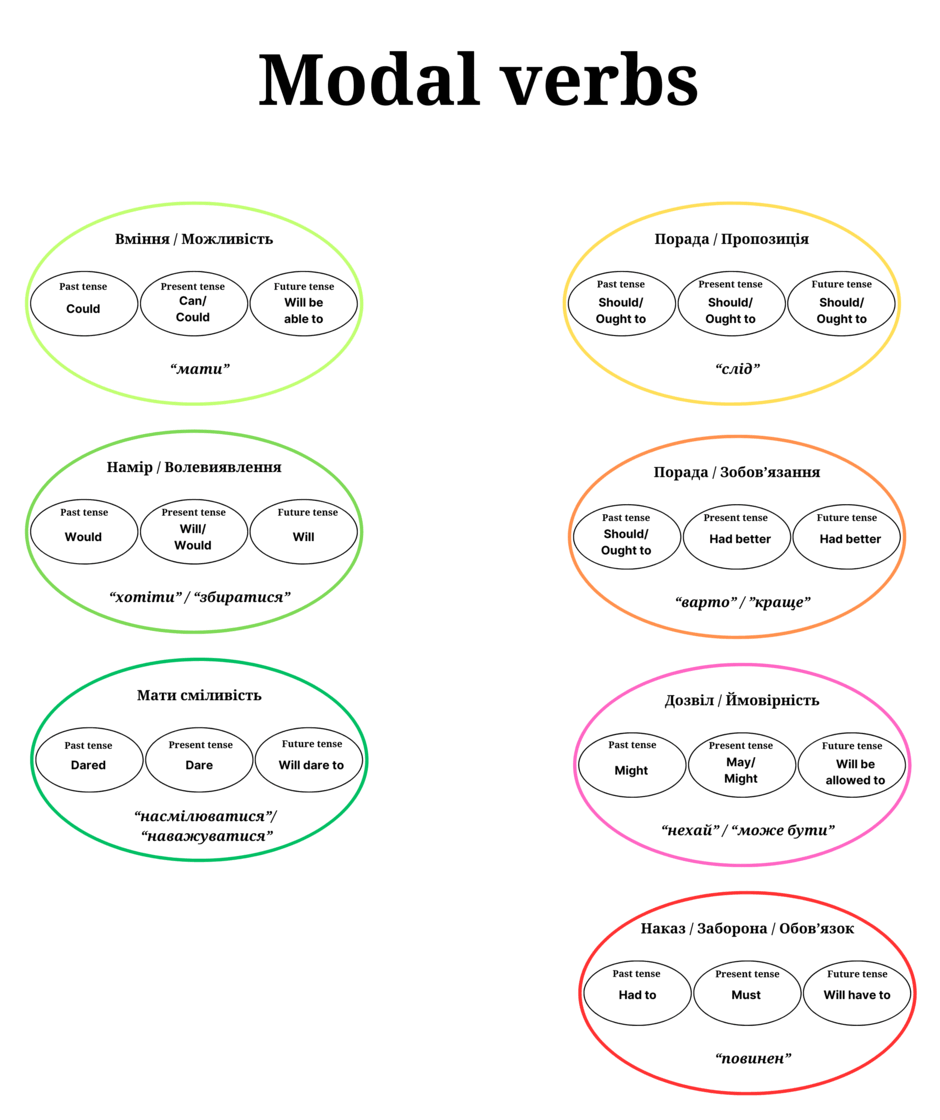
1. Can / Could – Ability, Possibility
Can is used to talk about what people are able to do in an emergency.
Could is the past form and is also used for polite offers.
✅ Rescue teams can save many lives after an earthquake.
✅ Volunteers can provide food and water to victims.
✅ During the flood, people could not leave their houses safely.
2. May / Might – Permission, Probability
May is used to give permission or express possibility.
Might is used to talk about uncertain future events.
✅ You may donate clothes to the shelter. (Permission)
✅ The storm may cause serious damage to the city. (Possibility)
✅ Some people might need medical help after the disaster. (Uncertainty)
3. Must / Have to – Strong Obligation, Necessity
Must is used to express strong necessity or rules.
Have to is also used for obligation, especially when it comes from an external rule.
✅ We must help people affected by natural disasters.
✅ Emergency workers must act quickly to save lives.
✅ People have to evacuate their homes before the hurricane arrives.
4. Should / Ought to – Advice, Recommendation
Should and ought to are used to give advice or make recommendations.
✅ You should donate food and blankets to those in need.
✅ People should stay calm during an emergency.
✅ Volunteers ought to receive first aid training before helping.
5. Had better – Strong Advice / Warning
Had better is used to give strong advice or a warning about possible consequences.
✅ You had better listen to evacuation instructions before the tsunami arrives.
✅ They had better take emergency kits with them.
6. Will / Shall – Future Actions, Promises
Will is used for decisions, promises, and predictions about the future.
Shall (formal) is sometimes used for offers and suggestions.
✅ We will send medical teams to the disaster area.
✅ If we work together, we will help many people recover.
✅ Shall we organize a fundraising event for disaster victims?
7. Dare – Courage, Challenge
Dare is used to express courage or challenge someone to do something.
✅ Who dares to help in the middle of a wildfire?
✅ Many people dared to risk their lives to rescue others during the earthquake.
3
Take the infographic for a better understanding of the topic.
4

13 лютого 2025
Опис, який учні побачать після проходження уроку
Homework :
p. 67, Ex 3 ;
Write a story on the topic: "What do I know about natural disasters?"
Have a good day !
Рефлексія від 1 учня
Сподобався:
0
Так: 1
Ні: 0
Зрозумілий:
0
Так: 1
Ні: 0
Потрібні роз'яснення:
0
Ні: 1
Так: 0