Installing a video surveillance system is the best way to protect your property, family and home. Whether in his main or secondary home, such a system will fulfill both a preventive and a curative role, by deterring possible intrusions and allowing better recovery of stolen goods. However, the installation of a video surveillance system must obey certain basic rules for it to be effective, and to be valid in the eyes of insurance companies.
Here are 6 tips to properly install your cameras, and make your video surveillance system as efficient as possible.
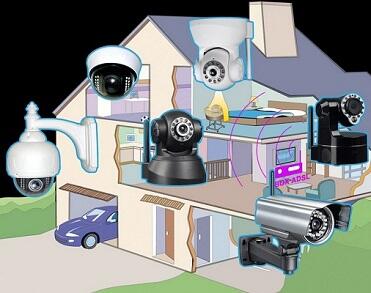
Do not use wide angle cameras.
Wide angle cameras are popular because the width of the field they cover makes their installations easy. However, they become problematic when retrieving images and using them. As these cameras produce wide-field images, the zoom that must be done on a face for example, reduces the quality to the point of no longer being able to discern the details, and therefore use them. It is better to favor cameras with a narrower angle and whose quality remains good for the exploitation of the images. These cameras will be installed in rooms that are better suited to this type of security camera systems in Chicago , such as a hallway that must be used for example.
Don't just film your front door.
Your front door is the door you use to get home but is not necessarily the one that a possible thief will use. Indeed, the entrance doors are often overprotected compared to windows and more discreet doors. Each entry point must be filmed more or less directly.
Protect your camera from the weather.
Although it may seem obvious, cameras don't like humidity. Ultimately, they will be damaged or even destroyed by humidity without having to be directly affected by rain. So place them in a waterproof box if they are outside. Also be sure to protect them from the sun's rays, which in summer can damage them.
Adapt your recorder after installing new cameras.
When you install your video surveillance system, your recorder can receive images from a number of cameras provided during its installation. If you decide to expand your fleet of cameras, consider adapting or changing your recorder, to avoid placing cameras whose films will not be recorded.
Don't place your cameras too high.
Placing your cameras at a height will aim to create an angle that is poorly suited to the use of the images that will be taken from them. The faces will not be very visible, especially if the individual wears a hood for example. Opt for cameras installed at breast height, as close as possible to the height of the face so that the images are as clear as possible. Cameras arranged in this way will also have the consequence of surprising and impressing.
Do not use your gutter as a fulcrum.
Even if the gutters can seem to constitute good points of attachment, the cameras exert a weight on them which, in the long term, can unhook them. In addition, the gutters will gradually sag and therefore change the angle of the camera.
These tips will help you install an effective video surveillance system. In addition, keep abreast of the legislation in this area, in particular offering insurance companies a suitable system.